
 Worksheets
K07 Business Behaviours Bumper Revision Quiz
Total questions: 80
Worksheet time: 3600secs
Charlie is giving a presentation in class. What type of communication is he using when he speaks to his classmates?
Using the body or gestures to convey information to others.
Using the voice to communicate with others in such a way that they understand the message.
Using written notes to communicate.
Using technology to communicate.
What is non-verbal communication?
Using the voice to communicate with others.
Using written notes to communicate.
Using the body or gestures to convey information to others.
Using technology to communicate.
Match the following types of verbal communication with their explanations:
The clarity of your voice refers to how clearly you speak to an individual or audience to convey a message.
Clarity
If an individual is nervous, they may speak quietly, making it difficult to be heard. If they shout, it can put a strain on the voice, and they may come across as angry. It is important to project the voice in a way that is comfortable to maintain throughout any verbal communication and which the audience enjoys listening to.
Voice projection
Formal language is less personal, and uses a variety of rich vocabulary and stimulating words to describe what the person wants to express. Informal language is the type used in conversation with family and friends, perhaps including slang words or abbreviations that you would not use in formal language.
Use of language
This is a verbal skill for presenting information in such a way that it is positively received and helps the speaker achieve their aims.
Persuasiveness
Fill in the blank: During his presentation, Benjamin focused on the clarity of his voice to ensure he conveyed a (a) to the audience.
Fill in the blank: If an individual is nervous, they may speak quietly, making it difficult to be _______.
heard
seen
understood
remembered
In a business meeting, formal language is less personal, and uses a variety of rich vocabulary and stimulating words to describe what the person wants to _______.
express
eat
travel
sleep
During a school debate, Ishaan demonstrated persuasiveness, a verbal skill for presenting information in such a way that it is _______ received and helps the speaker achieve their aims.
positively
negatively
rarely
incorrectly
Arjun was meeting a new client for the first time. To convey his friendliness and agreement with the client's ideas, he decided to shake the client's hand and nod in agreement. Which of the following is a form of signalling to a person to inform them of how we are feeling, such as shaking someone's hand or nodding in agreement?
Facial expression
Gestures
Confidence
Self-awareness
During a school play, Grace noticed that her friend Max was frowning and realized that facial expressions often demonstrate how we are feeling and are an important aspect of ________ communication.
non-verbal
written
mathematical
mechanical
During a group project, Sophie noticed that her team members were communicating without words through their facial expressions, gestures, eye contact, and posture. This type of non-verbal communication gave her an idea of how they would react in different situations. What is this type of communication called?
Gestures
Confidence
Self-awareness
Facial expression
Rohan noticed that when he speaks in a calm and clear manner, his friends tend to listen more attentively. Understanding how his communication style affects others is known as:
Confidence
Gestures
Self-awareness
Facial expression
During a team meeting, Jacob noticed that his colleagues were not fully engaged. To improve the situation, he decided to apply the three As of active listening. What are these three As?
Attention, Attitude, Adjustment
Awareness, Acceptance, Action
Analysis, Application, Assessment
Agreement, Assertion, Assistance
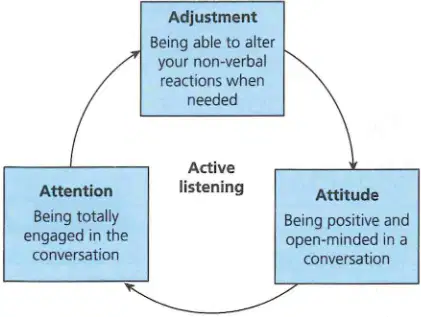
During a group discussion, George noticed that his non-verbal reactions were not aligning with the conversation. Being able to alter these non-verbal reactions when needed is known as ________ in active listening.
Adjustment
Reflection
Summarisation
Clarification
Emily is at a party and she uses her social communication skills to interact with others in various situations.
True
False
James is working in a company where he needs to send reports and documents to his colleagues. Which of the following is the primary form of communication he should use to share these documents as attachments?
Websites
Social media
Emails
Phone calls
Amelia has started an online store to sell handmade crafts. A website gives her the opportunity to sell her products to customers worldwide.
True
False
Chloe loves using social media to share her travel photos and watch videos about cooking, which are her favorite hobbies.
True
False
Which of the following is an example of a written communication form used by businesses to collect information from employees?
Reports
Forms
Memos
Infographics
During a school project, Daniel and Ella are exploring different methods of visual communication. Which of the following is NOT a type of visual aid they might use?
Presentations
Infographics
Memos
Motion graphics
During a school presentation, using visual communication can boost Samuel's _________
confidence
nervousness
distraction
confusion
Isabella is launching a new product and is considering her marketing strategy. The main difference between push marketing and pull marketing is:
Push marketing targets customers directly, while pull marketing attracts customers to the product.
Push marketing is only used online, while pull marketing is only used offline.
Push marketing is more expensive than pull marketing.
Push marketing focuses on customer retention, while pull marketing focuses on customer acquisition.
Emily is starting a new online store and wants to know which of the following is a benefit of having a business website related to the 4 Ps?
Product
Price
Place
All of the above
True or False: Offline methods of promotion, such as leaflets and flyers, are no longer accessible forms of promotion for a business.
True
False
List any three offline methods of promotion mentioned in the text.
Adverts in newspapers, billboard adverts, direct mail
Social media ads, email marketing, influencer partnerships
SEO optimisation, pay-per-click ads, online surveys
Mobile app notifications, website pop-ups, online webinars
Emily is organizing a workshop on effective communication. How many communication methods can she list for the participants?
2
4
6
8
During a group project, Daniel noticed that the requirements suddenly changed. Adaptability is the self-management skill of being able to adjust behaviours or actions to the situation even if it changes. When a situation is uncomfortable, a person who is ______ will be able to cope and still appear to be in control.
adaptable
rigid
impatient
indecisive
Resilience is closely linked to adaptability; having resilience means that an individual is able to recover quickly from a situation and continue in the same or a slightly ______ way.
different
difficult
careless
predictable
Flexibility means being flexible so that an individual can work around a situation that occurs, and adapt what needs to be done to complete a ______.
task
holiday
game
meal
What is the importance of punctuality in self-management? Punctuality is important because it allows an individual to _________.
manage time and avoid delays that could affect their work
ignore deadlines and work at their own pace
focus only on personal interests
avoid taking responsibility for their actions
Evie has a list of tasks to complete for her school project. What does prioritisation mean in the context of self-management? Prioritisation means being able to look at the tasks that need to be completed and deciding which will take the ________ to do or need to be completed first in terms of urgency.
longest
shortest
easiest
least
In a team project at work, what does it mean to be accountable? Being accountable means that team members, like Noah or Ella, take responsibility for the tasks they complete and are liable for its ________ or ________ outcomes.
positive; negative
easy; hard
expected; unexpected
planned; unplanned
In a team project at work, how can accountability improve working relationships? Accountability can improve working relationships, improve job satisfaction and empower individuals to complete tasks well, especially if they gain ________ feedback.
positive
negative
sporadic
delayed
Aarav is a manager at a tech company. He needs to decide on the next project to pursue. Decision making involves weighing up the options available and deciding on the ________ one for the situation.
best
easiest
quickest
cheapest
Why is it important for feedback to be constructive? It is important for the feedback to be constructive but also include ________ comments, so that the person receiving the feedback is motivated and engaged to improve the work further.
positive
critical
neutral
negative
Which of the following is an example of a self-management skill?
Time management
Public speaking
Team leadership
Technical writing
Harry often reflects on his own emotions and behaviours, and understands how these can affect his friends and family. This ability is known as _________
Self-awareness
Empathy
Motivation
Social skills
The ability to control impulses and moods, and know the positive or negative consequences of our actions is called _________. (UK English)
Self-regulation
Self-esteem
Empathy
Motivation
Florence loves painting and spends hours perfecting her art, not because she wants to win awards, but because she finds joy in the process itself. This is an example of _________
Internal motivation
External motivation
Extrinsic reward
Material incentive
Having the ability to recognise and understand others' emotions, motivations and situations, which can help in leading successful teams, is called _________.
Empathy
Apathy
Assertiveness
Indifference
Having the ability to build and manage a range of stakeholder relationships, both internal and external to the business, is known as _________
Social skills
Technical skills
Analytical skills
Numerical skills
In a company, if male employees are given promotions more frequently than female employees with similar qualifications, it is an example of ________ bias.
Gender
Age
Racial
Economic
Showing preference to a person who is very similar to you, e.g. in terms of race, age, shared interests, is called ________ bias.
Affinity
Confirmation
Anchoring
Attribution
Favouring someone because of their physical attractiveness or features is known as ________ bias.
Beauty
Height
Age
Accent
Forming an opinion about a person because they believe in the same things as you is called ________ bias.
Confirmation
Anchoring
Availability
Attribution
When Aarav noticed that his new colleague made a mistake on the first day, he assumed that all of the colleague's traits were negative. This tendency to judge based on one negative trait is called the ________ effect.
horns
halo
mirror
shadow
Priya is looking to enhance her professional skills. Which of the following activities would be considered a form of CPD (Continuing Professional Development) opportunity for her?
Work shadowing
Watching TV
Playing video games
Cooking
Which of the following is a form of CPD development opportunity?
E-learning
Shopping
Gardening
Painting
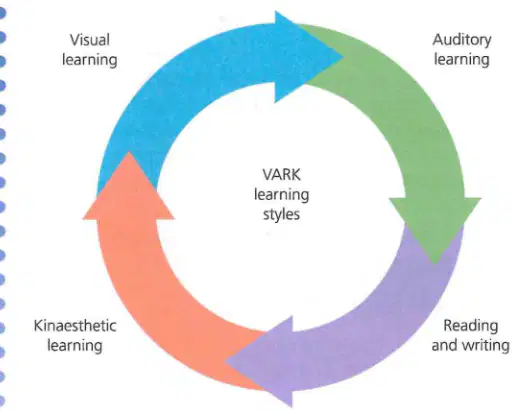
An induction programme needs to be developed for new employees who are starting at your company in the next two months. The potential effectiveness of basing elements of the induction programme on the VARK model can be evaluated as:
It addresses different learning styles, increasing engagement and retention.
It focuses only on visual learners, neglecting others.
It is not relevant to workplace training.
It makes the induction process longer without benefits.
Identify the 3 As of active listening.
Attention, Attitude, Adjustment
Awareness, Action, Agreement
Analysis, Application, Assessment
Acceptance, Assertion, Assistance
Three different forms of non-verbal communication are:
Facial expressions, gestures, and posture
Reading, writing, and speaking
Listening, questioning, and summarizing
Texting, emailing, and calling
The main differences between push and pull marketing are:
Push marketing focuses on promoting products directly to customers, while pull marketing aims to attract customers to seek out the product.
Push marketing relies on customer demand, while pull marketing uses aggressive sales tactics.
Push marketing is only used in digital channels, while pull marketing is only used in traditional channels.
There are no significant differences between push and pull marketing.
Online advertising can benefit the 4 Ps in which of the following ways?
By increasing product visibility, reaching wider audiences, enabling dynamic pricing, and enhancing promotion strategies.
By reducing the need for market research and eliminating competition.
By focusing only on traditional media channels for promotion.
By limiting the product to local markets only.
What does unconscious bias mean?
A conscious preference for certain groups
An unintentional preference or prejudice towards certain groups
A legal requirement to treat everyone equally
A deliberate act of discrimination
Explain two different approaches to self-management.
Time management and goal setting
Delegation and micromanagement
Avoidance and procrastination
Criticism and blame
What is the definition of business policies?
Documents that detail the different steps individuals need to take to complete work-related activities.
A set of guidelines that a business expects workers to adhere to when working for the organisation.
A list of job roles within the business.
A summary of the business's financial status.
What is the definition of business procedures?
A set of guidelines that a business expects workers to adhere to.
Documents that detail different steps individuals take to complete work-related activities
A list of company rules.
A summary of the business's financial status.
When working for a business, it is important to adhere to the _______ and _______ that it has in place.
business policies; business procedures
business profits; business losses
business hours; business locations
business owners; business customers
Which of the following is NOT a typical business policy?
Behaviour
Equality, diversity and inclusion
Social media
Financial investment
List two possible problems that could arise within a business if employees do not adhere to business policies and procedures.
Loss of productivity and legal issues
Increased profits and better teamwork
Improved customer satisfaction and higher sales
Enhanced innovation and reduced costs
A business may encourage a period of ________, which is when an individual meets a supervisor, team leader or manager to discuss an ongoing issue.
self-reflection
training
recruitment
promotion
Which of the following is a method for individuals to meet the standards that the business sets?
Ignoring feedback
360-degree feedback
Avoiding formal conversations
Increasing workload
Not adhering to business policies and procedures could lead to an increase in employee turnover.
True
False
What is business culture?
The beliefs, values, practices and behaviours that employees and employers adhere to.
The products a business sells.
The location of a business.
The number of employees in a business.
Fill in the blank: A business culture could be a (a) -based culture, where management encourages employee participation at every level so that employees feel valued and that their opinions count.
Which of the following is a benefit of having a strong business culture?
A) Employees work towards the same goal and use the same methods that are favoured by management.
B) Employees are discouraged from sharing their opinions.
C) The business ignores environmental sustainability.
D) Employees are not motivated.
What is the main goal of an environmentally aware and sustainable business culture?
To encourage all staff to adopt the most environmentally friendly and sustainable methods for the business.
To increase profits at any cost.
To reduce employee participation.
To ignore environmental issues.
A business may choose to recognise and/or reward its employees for the work that they complete at different times of the year, which can help to promote ______ change.
behaviour
physical
seasonal
technological
What is integrity?
Being honest and having high moral principles.
Making as much profit as possible.
Ignoring stakeholder concerns.
Reducing employee benefits.
What is trust in a business context?
The belief that someone is honest and sincere.
The ability to make quick decisions.
The process of hiring new employees.
The act of selling products online.
Which of the following is NOT a benefit of integrity in business?
Helps improve engagement and sales
Means that decision making can become easier
Can improve the business's reputation
Can increase complaints
Building trust in business is just as important as demonstrating ______.
integrity
wealth
popularity
ambition
An individual can demonstrate integrity at work by:
Being honest and ethical in all actions
Arriving late to work regularly
Taking credit for others' work
Ignoring company policies
A business can demonstrate to stakeholders that it is trustworthy by:
Being transparent and ethical in its operations
Maximizing profits at all costs
Keeping information secret from stakeholders
Ignoring stakeholder concerns
Explain how a business not adhering to its own policies and procedures can be detrimental to the business.
It can lead to legal issues, loss of reputation, and decreased employee morale.
It will always increase profits.
It guarantees customer satisfaction.
It has no impact on the business.
Which of the following is a key component of effective time management?
Disorganization
Prioritization
Indecision
Procrastination
Empathy is the ability to understand and share the feelings of another person. Which of the following is a sign of empathy?
Ignoring others' emotions
Listening actively
Interrupting frequently
Being dismissive
Which of the following is an example of non-verbal communication?
Writing an email
Speaking on the phone
Sending a text message
Using hand gestures
Which of the following is a key component of effective teamwork?
Isolation
Competition
Collaboration
Individualism
What is the primary purpose of using visual aids in a presentation?
To confuse the audience
To distract the audience
To fill time
To enhance understanding
In a professional setting, which form of communication is most effective for conveying complex information?
Written communication
Verbal communication
Non-verbal communication
Visual communication

