
 Worksheets
3rd grade science review part 2
Total questions: 49
Worksheet time: 25mins
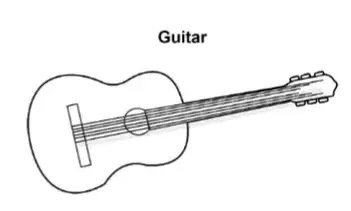
Robert enjoys playing the guitar. He uses his fingers to strum and pluck the strings. The motion of the string causes the air around the guitar to vibrate.
heat (thermal)
light
sound
electrical
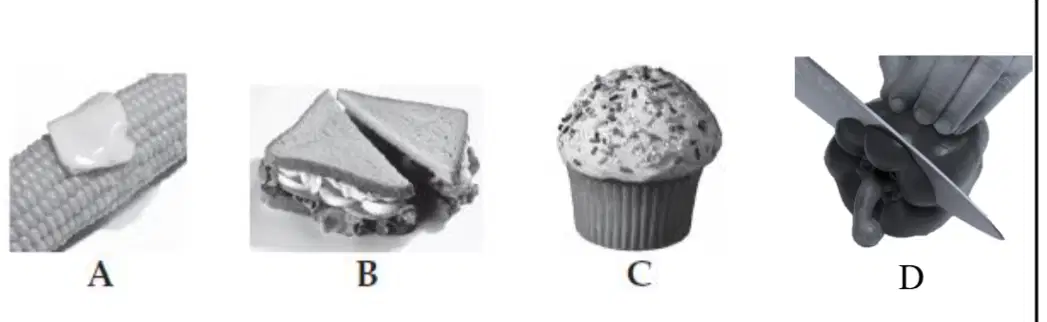
Which picture shows heat (thermal) energy causing a change?
Hot corn melting butter.
Making a sandwich.
Putting icing and sprinkles on a cupcake.
Cutting a pepper.
Frank uses a bowling ball to demonstrate how energy can cause changes. Which of the following actions would NOT demonstrate a change caused by Frank applying energy to the ball?
He holds the bowling ball in both hands.
He spins the bowling ball with one hand.
He rolls the bowling ball across the floor.
He lifts the bowling ball to place it on a shelf.
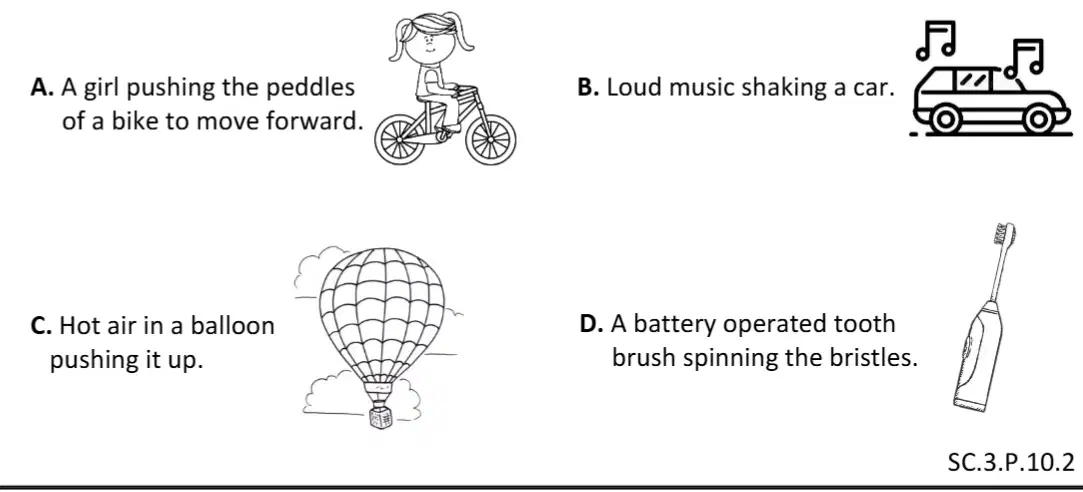
Which of the following is an example of electrical energy causing motion?
A. A girl pushing the pedals of a bike to move forward.
B. Loud music shaking a car.
C. Hot air in a balloon pushing it up.
D. A battery operated tooth brush spinning the bristles.
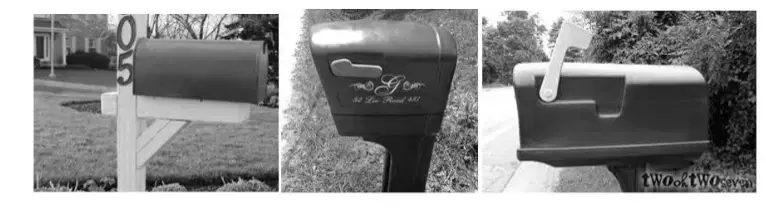
Jose was riding his bike around his neighborhood when he noticed something strange about the mailboxes on his street. The tops of many of the mailboxes looked faded and lighter in color. When he got home, he looked at his mailbox, which his mom just bought, he noticed it was not faded at all. What most likely explains why some of his neighbors' mailboxes were faded, but his mailbox was not?
His neighbors bought the mailboxes already faded, and his mom bought one that was not faded.
The energy from the sun caused his neighbors' mailboxes to fade over time, and since his mailbox was new, it was not faded yet.
Something was probably rubbing the tops of all of his neighbors' mailboxes but not his mailbox.
Sound energy from passing cars caused the paint on the top of the mailboxes to fall off, and since his mailbox was new, the paint has not fallen off yet.
Explain how you could use electricity to cause change or create motion in a useful way. (Describe how you use electricity to do things around the house or school.)
By using electricity to power devices like fans and lights.
By using water to clean surfaces.
By using sunlight to heat rooms.
By using wind to move objects.
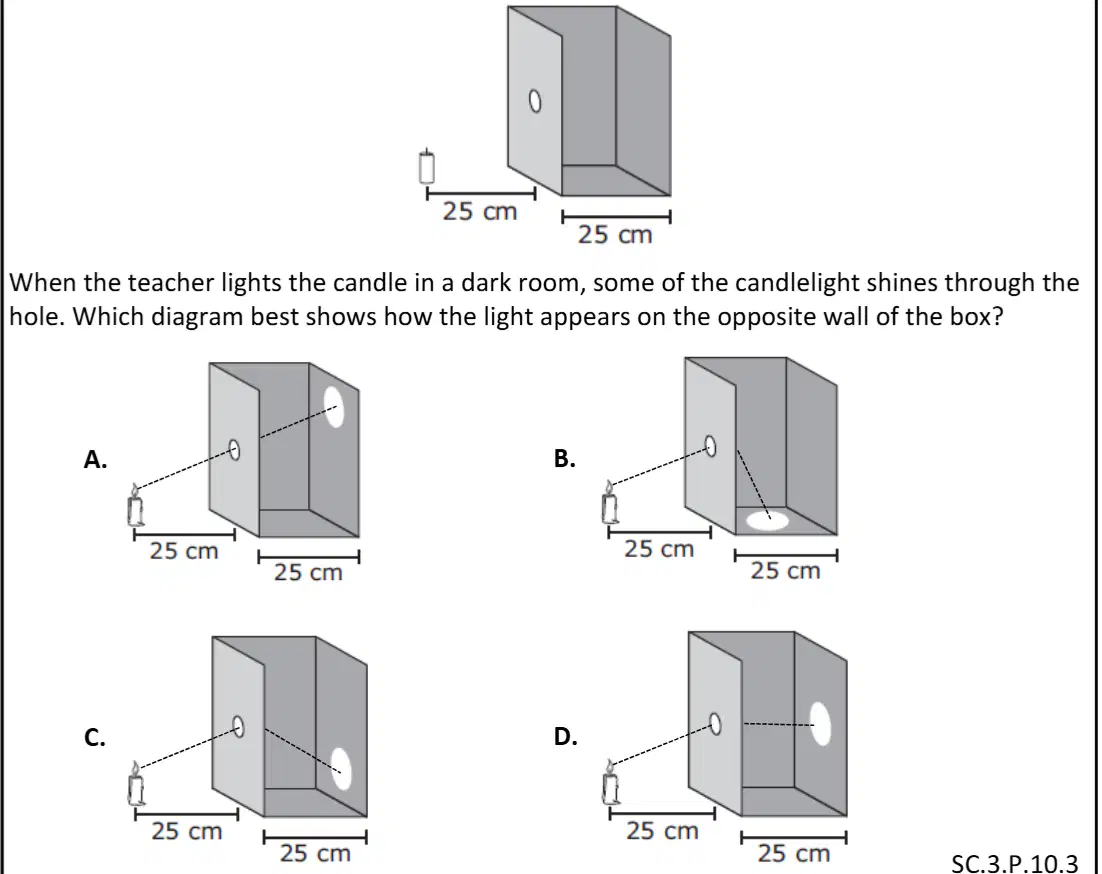
A teacher takes the top and side off of a box. She cuts a hole in another side and puts a candle outside the box, as shown below. When the teacher lights the candle in a dark room, some of the candlelight shines through the hole. Which diagram best shows how the light appears on the opposite wall of the box?
(diagram A)
(diagram B)
(diagram C)
(diagram D)
Which of these describes how light travels through empty space?
It travels straight but may change direction to avoid objects.
It changes direction often, even if there are no objects.
It comes to a stop after it travels a certain distance.
It travels in a straight line without stopping.
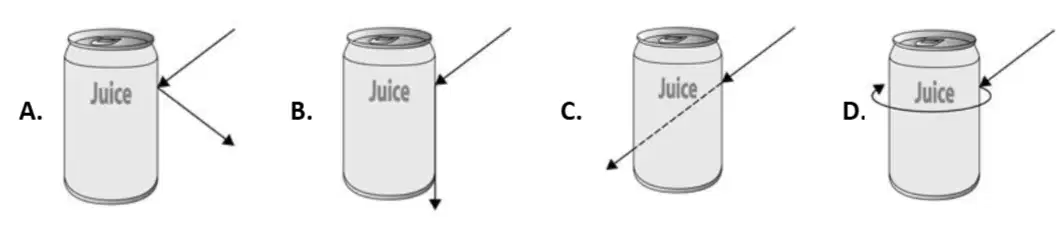
A ray of light hits a can of juice sitting on a table. Which picture shows what will happen to the ray of light?
[Arrow bounces off can]
[Arrow passes through can]
[Arrow bounces off can in a different direction]
[Arrow stops at can]
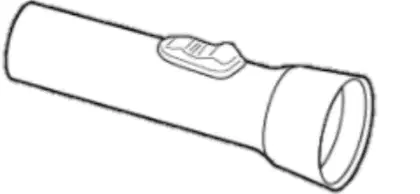
Jonah turns on a flashlight, and light comes out. How will the light move when it comes out of the flashlight?
In a zigzag
In a straight line
Back and forth
In a circle
Ava is shining a flashlight at a mirror. Which of these happens when the light strikes the mirror?
It goes around the mirror.
It goes through the mirror.
It spreads out on the mirror.
It bounces back from the mirror.
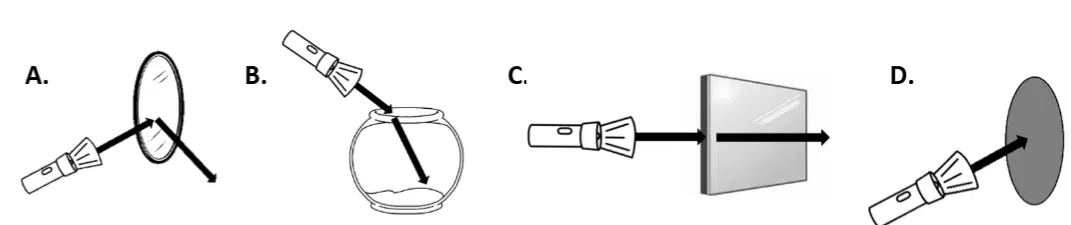
This illustration shows a flashlight shining on different objects. Which object absorbed the light?
A. [Light bounces off mirror]
B. [Light passes through glass bowl]
C. [Light passes through glass]
D. [Light is absorbed by dark object]
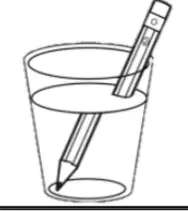
Tyrell placed a pencil in a glass of water. He noticed that the pencil appeared to be broken.
Light always splits into two paths when it travels.
Light bends when it passes from air to water.
Light makes the water in the glass evaporate
Light reflects the pencil on the water’s surface
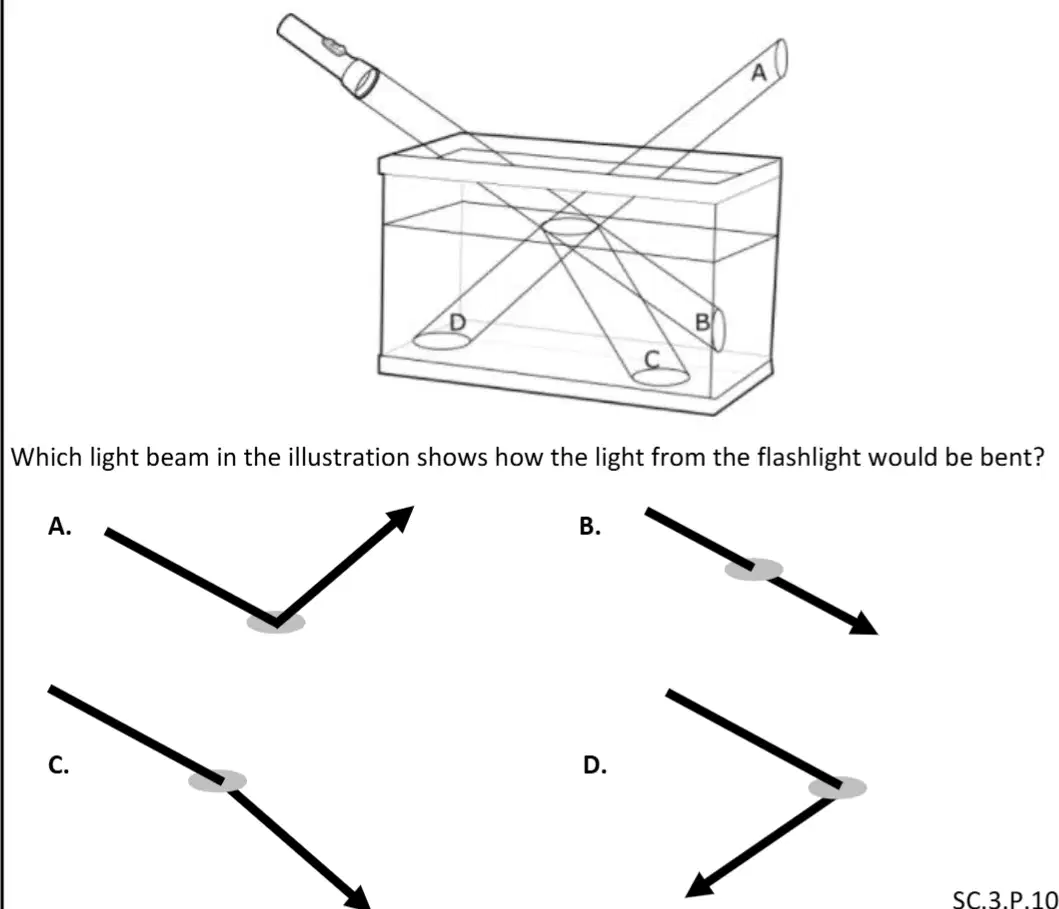
Mr. Barron is demonstrating how light can bend to his students. He shines a flashlight into a fish tank filled with water. Which light beam in the illustration shows how the light from the flashlight would be bent?
(shows a beam bending upward)
(shows a beam bending downward at a shallow angle)
(shows a beam bending downward at a steep angle)
(shows a beam bending downward at a moderate angle)

Henry’s mom wanted to boil a pot of water on the stove. He knows she turned on one of the burners, but he is not sure which one. Henry is too far away from the stove to feel the heat from the burner. Other than feeling the heat from the burner, how else can Henry recognize which burner is hot?
It will begin to shake.
It will be glowing.
It will make a loud noise.
It will turn into a liquid.
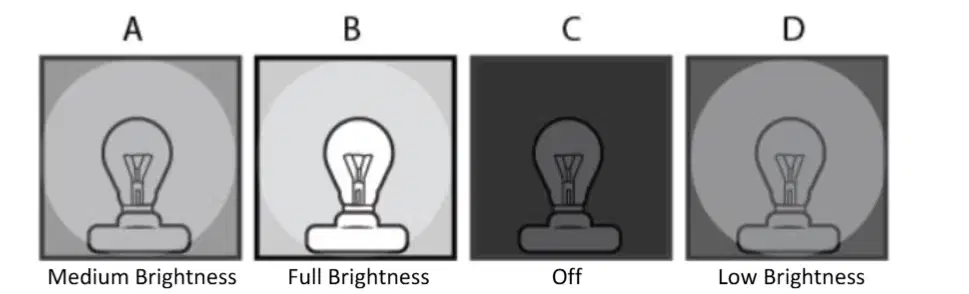
Rylee was testing a lightbulb at different settings. The lightbulb was put on a dimmer switch, so the amount of light it gave off could be changed from dimly lit to brightly lit. At which brightness was the bulb MOST LIKELY the hottest?
Medium Brightness
Full Brightness
Off
Low Brightness
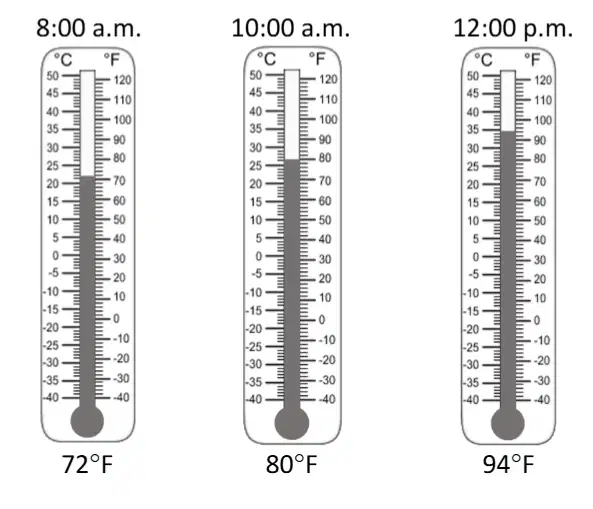
Peter placed a thermometer in the sunlight by a window without shades in his house. He checked the temperature reading on the thermometer three times during the day. Look at the thermometer readings he took. 8:00 a.m. - 72°F 10:00 a.m. - 80°F 12:00 p.m. - 94°F How did the temperature change during the day, and what caused this change in temperature?
The temperature increased because heat from the kitchen warmed up the room at lunchtime.
The temperature decreased because a cold front came in, and it began to snow.
The temperature increased because the sun was shining in the window and caused the temperature to rise.
The temperature decreased because there were many clouds in the sky, causing the temperature to drop.
Jasmine notices that her house is very hot. She decides to turn off devices in her house that might be giving off heat. Which devices are MOST LIKELY giving off heat?
The ones that are in the kitchen.
The ones that are moving.
The ones that give off light.
The ones that make noise.
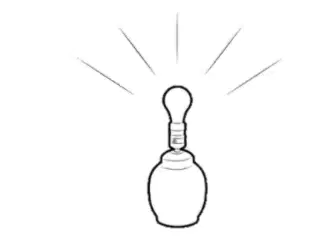
Jeremy is closely examining the lightbulb in a lamp. Other than light, what other form of energy will Jeremy most likely observe coming from the bulb?
Electric energy
Heat energy
Sound energy
Magnetic energy
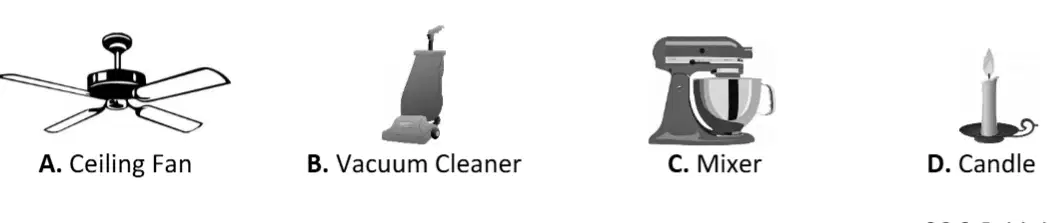
Which object below gives off both light and heat?
Ceiling Fan
Vacuum Cleaner
Mixer
Candle
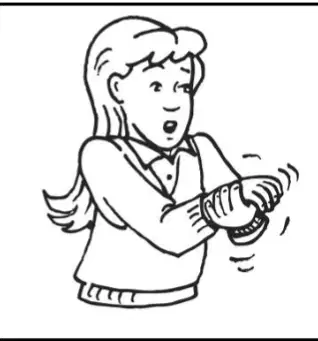
What type of energy is shown in this picture?
conduction
friction
insulation
temperature
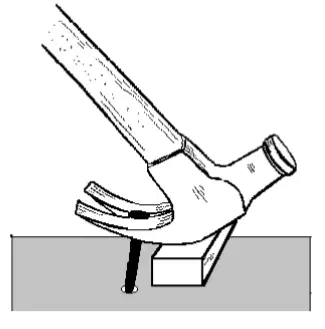
Right after a nail is pulled from a piece of wood, it feels hot. What makes the heat?
The wood rubs against the nail
The nail is made of iron, a kind of metal
The air around it heated the nail
The wood is made from a tree, a living thing
Which of the following is a way to produce friction?
Plug in a hairdryer.
Rub two sticks together.
Use solar panels to heat water.
Mix two different chemicals.
Thomas rode his bicycle on a sidewalk on his way home one night. He used his brakes to stop. The bicycle skidded before stopping. When Thomas felt his tires, he noticed that their temperature had changed. What kind of temperature change did the tires have, and what caused the temperature change?
The temperature of the tires increased because the friction between the tires and the sidewalk created heat.
The temperature of the tires decreased because there was no friction between the tires and the sidewalk, which caused them to get colder.
The temperature of the tires increased because the sun was shining bright, and that heated the tires.
The temperature of the tires decreased because it was a cold day, and the cold air caused the tires to get colder.
How could your class help the principal choose the best slide using science?
By guessing which slide looks best
By testing which slide has the least friction
By choosing the most expensive slide
By picking the slide with the brightest color
Which statement about the sun is true?
It is the closest star to earth.
It is the brightest star in the sky.
It is a planet that gives off light.
It is the brightest planet in the solar system.
The Sun is a star that gives off energy. Which forms of the sun's energy reach the earth?
light and heat
light and sound
heat and electricity
light and electricity
The Sun is the same size as many stars we see at night. Why does it look so much bigger and brighter?
because it is very hot
because it is closer to earth
because it is yellow in color
because it shines during the day
Betelgeuse is a star that is much larger than our sun. Betelgeuse appears as only a bright point of light in the night sky. Which best explains why the sun appears so much brighter than Betelgeuse?
A. Betelgeuse is millions of miles away.
B. Betelgeuse is much older than the sun.
C. Betelgeuse is moving towards earth.
D. Betelgeuse is not as hot as the sun.
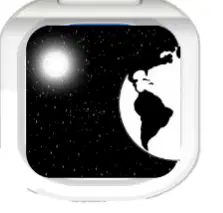
How would the appearance of the sun compare to the other stars seen by the astronaut?
The sun would appear dimmer than the stars because the sun has a higher temperature.
The sun would appear brighter than the stars because the sun is closer to earth.
The sun would appear smaller than the stars because the sun is a medium-sized star.
The sun would appear larger than the stars because the sun is a planet.

Mr. Pierre's class was doing an experiment to learn how long it takes ice cubes to melt. Each group was asked to take a 1 oz. ice cube and choose a spot outside to conduct their experiment. The data his class collected is below. Group Time Group 1 4 min 15 sec Group 2 7 min 38 sec Group 3 4 min 25 sec Group 4 4 min 5 sec Which group most likely put their ice cube in the shade?
Group 1
Group 2
Group 3
Group 4
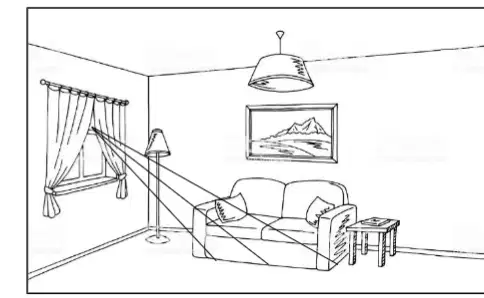
Miranda likes to read on her couch after school, but the sun always makes her hot. How could Miranda still curl up on the couch and read without the sun making her too hot?
She could turn the lights off.
She could move the couch closer to the window.
She could open the curtains all the way.
She could close the curtains all the way.

Mrs. Muñoz takes her class outside on a sunny day to measure temperature. Four students decide to place thermometers on or near a tree. The places they put their thermometers are shown in the picture. The thermometer placed in which labeled spot will most likely get the hottest?
Location A
Location B
Location C
Location D
A star named Sirius appears as the brightest star in the nighttime sky, even though a star named Pollux actually gives off more light. Which of the following best explains why Sirius appears brighter than Pollux in our nighttime sky?
Sirius has a different color than Pollux has.
Sirius has different gases than Pollux has.
Sirius is closer to Earth than Pollux is.
Sirius is larger than Pollux is.
Betelgeuse is a star that is 400 times larger than our sun. Betelgeuse appears as only a small, bright point of light in the night sky. Which best explains why the sun appears so much bigger than Betelgeuse?
A. Betelgeuse is trillions of miles away.
B. Betelgeuse is much older than the sun.
C. Betelgeuse is moving towards Earth.
D. Betelgeuse is not as hot as the sun.
Jerome notices that two stars appear to have the same brightness. He knows that one of the stars is much farther away than the other. What could he claim about the two stars?
The one that is closer must be older.
The one that is farther away must be bigger.
Both stars must have exactly the same brightness.
Both stars must give off exactly the same amount of energy.
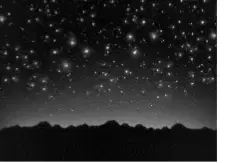
Natalia is looking at two stars in the night sky. She knows that both stars are the same size. How can she tell which star is closest to Earth?
Use a telescope to measure how far each star is.
The star that is the brightest is the closest.
If the stars are the same size, they must also be the same distance from Earth.
Measure how high in the sky each star is.
Andy and Ryan enjoy looking at the stars at night when they go to their grandparents’ farm out in the country. They can see so many stars out there! Andy and Ryan are trying to come up with one thing that is true for all the stars they see. What is true about all the stars that Andy and Ryan can see in the night sky?
They are all the same brightness.
They are all the same size.
They are all smaller than Earth.
They are all farther away than the sun.
What is the name for a tool that makes faraway objects in the night sky appear closer and larger?
Telescope
Hand lens
Microscope
Magnet
Heidi is looking at stars with a telescope on a clear night. She notices that she can see many more stars in the same part of the sky when she looks through the telescope than when she looks just with her eyes. Which claim explains why she can see more stars with a telescope?
The telescope creates more light to make the stars easier to see.
The telescope causes the dimmer stars to give off more light energy.
The telescope lets her see through clouds that block the light coming from stars.
The telescope will magnify the light of dimmer stars that she cannot see without the telescope.

How will the night sky look different to Sara and her mother through the telescope as compared to looking only with their eyes?
The stars will appear to be farther away.
Most of the stars will seem to be much smaller.
They will be able to see many more stars.
Stars that looked red will now seem to be blue in color.
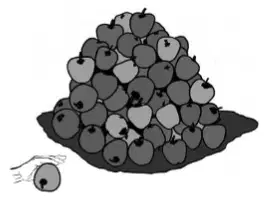
Lola pulls an apple from the bottom of a pile. All the other apples fall to the ground. What force brought the apples down?
gravity pulling on each apple
gravity pulling on the first apple
gravity pulling on the top apple
gravity pulling on the ground
When a baseball player hits a fly ball high into the air, the fielder must wait for gravity to pull the ball back down to catch it. If there were suddenly no gravity on Earth, how would a fly ball be different?
It would not go as high.
It would stick to the bat.
It would never come down.
It would come down more slowly.
Which is true about birds and gravity?
Birds avoid gravity by flying very quickly.
Birds fly by using the force of their wings to overcome gravity.
Birds fly by using heat to overcome gravity.
Birds are too light in weight to be pulled by gravity.
Chenoa is a third-grade student who has been studying the force of gravity in science class. Her teacher, Mrs. Park, has asked her to list examples of situations that demonstrate how gravity can be overcome. Which of the following does NOT belong on Chenoa’s list?
an airplane flying through the air
shooting a basketball towards the hoop
a plastic bag being blown across the sky
a leaf falling to the ground
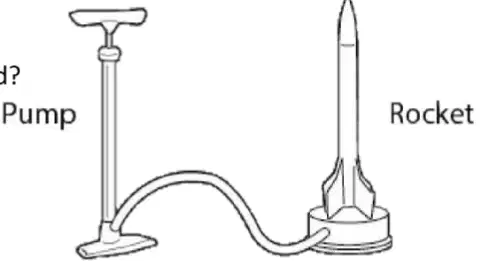
What force causes them to return toward the ground?
wind pushing up
pull of Earth’s gravity
heat from the sun
magnetic north pole
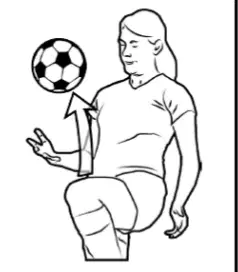
Gabriela plays on a soccer team. Soccer is played with a ball that is round and is made up of black and white shapes. Gabriela can kick the soccer ball a long distance on the field. She practices every day. She is able to use one knee to hit the soccer ball up just a little bit, and then hit it again with the other knee. Which answer can be explained as a result of the force of gravity?
The soccer ball moves downward between knee hits.
The soccer ball is round.
The soccer ball rolls a long distance on the field.
The soccer ball is black and white.
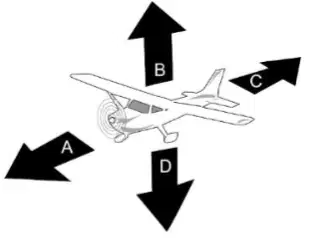
The diagram shows arrows representing forces acting on an airplane. Which arrow shows the force of gravity?
A. Arrow A
B. Arrow B
C. Arrow C
D. Arrow D
Some students are enjoying a fall carnival at their school. They notice that some of the balloons near the carnival entrance have come loose and are rising higher and higher into the sky. The students start to discuss why the balloons are rising. Which student provides the best explanation for why the balloons rise into the sky?
Angelina: Round objects, like balloons, are not pulled down by gravity.
Victor: Energy from the sun pulls the balloons into space.
Jose: There is an upward force on the balloons that is stronger than gravity.
Rabia: The force of gravity does not act on objects that are outside.

