
 Worksheets
Cardiovascular System
Total questions: 37
Worksheet time: 37mins
What is the most essential function of oxygen transportation in the body?
Supplying carbon dioxide to the body
Supplying oxygen to the body
Removing oxygen from the body
Removing nutrients from the body
What happens to carbon dioxide during exhalation?
It is absorbed into the stomach
It is absorbed into the blood and transported to the lungs
It is absorbed into the liver
It is absorbed into the kidneys
How do nutrients like oxygen move from the bloodstream into body cells?
Through veins
Via capillaries
Through arteries
Via lymph nodes
What role does the circulatory system play in disease protection and healing?
It acts as a barrier to germs.
It serves as a highway for immune system components.
It produces white blood cells.
It directly fights infections.
What are hormones?
Chemical messengers produced by endocrine glands
Nutrients absorbed by the digestive system
Cells that fight infections
Proteins that build muscles
How do thyroid hormones affect the body?
They help direct childhood growth
They control the brain and other endocrine glands
They affect the metabolic rate of almost every body organ and tissue
They transport nutrients
What is the average body temperature in Fahrenheit?
97°F
98.6°F
99°F
100°F
What happens to blood vessels when body temperature begins to rise?
They constrict to conserve heat.
They dilate to release excess heat.
They remain unchanged.
They shrink to increase heat.
Which of the following is a part of the circulatory system?
Stomach
Heart
Liver
Kidneys
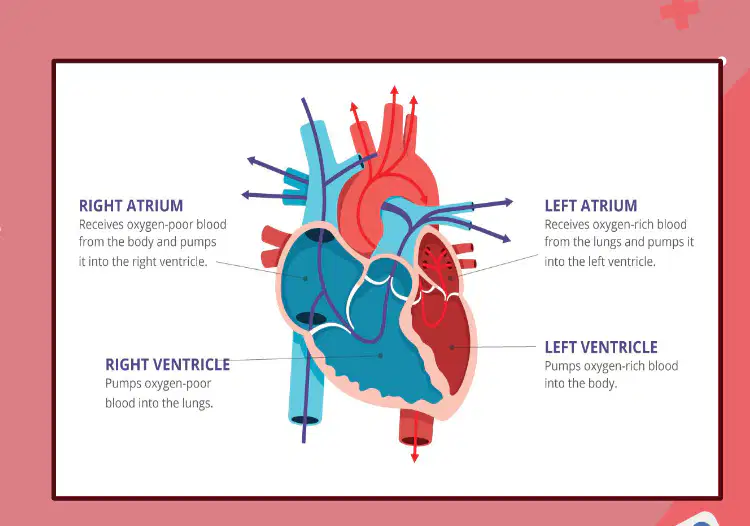
What are the four chambers of the heart called?
Left and right atria, left and right ventricles
Upper and lower atria, upper and lower ventricles
Left and right atria, upper and lower ventricles
Upper and lower atria, left and right ventricles

What is the function of the right atrium (RA) in the heart?
Pumps oxygen-rich blood to the body
Receives oxygen-poor blood from the body
Pumps oxygen-poor blood to the lungs
Receives oxygen-rich blood from the lungs
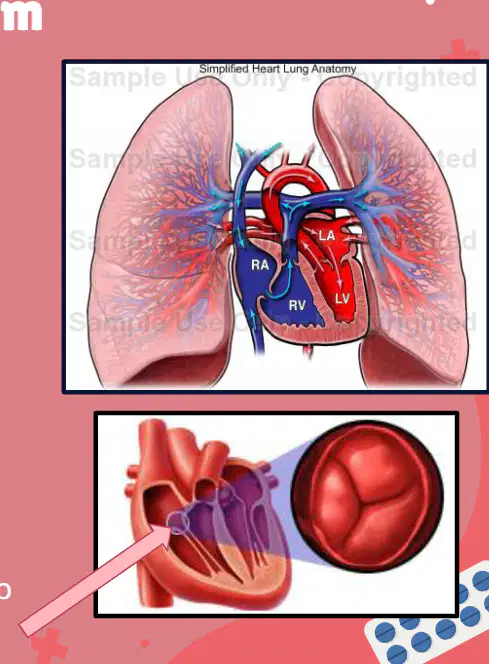
Which chamber of the heart pumps oxygen-poor blood toward the lungs?
Left atrium (LA)
Right atrium (RA)
Left ventricle (LV)
Right ventricle (RV)

How do valves help in the functioning of the heart?
They pump blood to the lungs
They receive blood from the body
They direct the flow of blood to prevent backward pumping
They oxygenate the blood
What is the main function of the right side of the heart?
To collect oxygen-rich blood from the body
To pump oxygen-poor blood into the lungs
To deliver oxygen to the cells of the body
To carry oxygen-rich blood back from the lungs
What is the primary function of arteries in the circulatory system?
Carry blood away from the heart
Carry blood to the heart
Exchange gases in the lungs
Filter blood in the kidneys

What direction do veins carry blood in the body?
Away from the heart
To the heart
To the lungs
Away from the lungs
What is the smallest type of blood vessel where gas exchange occurs?
Arteries
Veins
Capillaries
Aorta

What substances are exchanged between cells and blood in capillaries?
Proteins and fats
Oxygen and CO2
Vitamins and minerals
Sugars and starches
What are the main components of blood?
Red blood cells, white blood cells, platelets, and plasma
Red blood cells, white blood cells, platelets, and water
Red blood cells, white blood cells, platelets, and oxygen
Red blood cells, white blood cells, platelets, and carbon dioxide
What is the primary function of white blood cells (WBCs)?
Carry oxygen
Defend the body against infection
Transport nutrients
Remove waste products
What structure helps to clot blood?
White Blood Cells
Red Blood Cells
Platelets
Plasma
What do platelets release to help form a clot?
Antibodies
Clotting factors
Hormones
Enzymes
Which of the following is a cause of atherosclerosis?
Low-fat diet
High cholesterol
Regular exercise
Low blood pressure
What type of blood vessel does Atherosclerosis occur in?
Arteries
Veins
Capillaries
Lymphatic vessels
What can a blocked blood vessel in the heart cause?
A stroke
A heart attack
High blood pressure
Diabetes
Which of the following is the fluid part of blood?
red blood cells
white blood cells
platelets
plasma
When you get a scrape, _________ clump together and form a plug that reduces blood loss.
red blood cells
white blood cells
platelets
plasma
(a) blood cells destroy pathogens.
The fluid that delivers oxygen, hormones, and nutrients to the cells and carries away wastes
Platelets
Blood
Plasma
Hemoglobin
White Blood Cells
Where are red blood cells produced?
Bone Marrow
Heart
Lungs
Brain
________ is made up of 90% of water
Plasma
Red Blood Cells
White Blood Cells
Platelets
Atherosclerosis is a leading cause of other cardiovascular disease (CVD) and it happens when arteries become clogged by _______
sugar
plaque
blood pressure
insulin
If a blood clot prevents blood from reaching the heart, we call this a ________
stroke
pulse
heart attack
hypertension
If a blood clot prevents blood from reaching the brain, we call this a _______
stroke
heart attack
tumor
hernia
What are the names of the two types of WHITE BLOOD CELL:
phagocytes and lymphocytes
lymphocytes and platelets
platelets and phagocytes
phagocytes and plasma
Which part of the blood carries oxygen from the lungs to the rest of the body?
White blood cells
Platelets
Plasma
Red blood cells

