
 Worksheets
Cardio 17
Total questions: 25
Worksheet time: 13mins
What is the function of the right-side pump of the heart?
It is a high pressure system that pumps oxygenated blood through the systemic circulation.
It is a low pressure system that receives deoxygenated blood and pumps it through the lungs.
It separates the right and left sides of the heart.
It directs the flow of blood through the heart chambers.
How does the left-side pump of the heart function?
It receives deoxygenated blood and pumps it through the lungs.
It is a low pressure system that directs blood flow.
It receives oxygenated blood from the lungs and pumps it through the systemic circulation.
It separates the right and left sides of the heart.
What is the purpose of the cardiac valves in the heart?
They pump deoxygenated blood through the lungs.
They separate the right and left sides of the heart.
They direct the flow of blood through the heart chambers.
They receive oxygenated blood from the lungs.
Through which valve does blood leave the right ventricle to enter the pulmonary artery?
Tricuspid valve
Mitral valve
Pulmonic valve
Aortic valve
Why is the pulmonary artery unique compared to other arteries?
It carries oxygenated blood.
It carries deoxygenated blood.
It connects directly to the left atrium.
It does not connect to the heart.
What is the function of the mitral valve in the heart?
It receives deoxygenated blood from the body.
It controls the flow of blood from the left atrium to the left ventricle.
It pumps blood into the pulmonary arteries.
It ejects blood into the aorta.
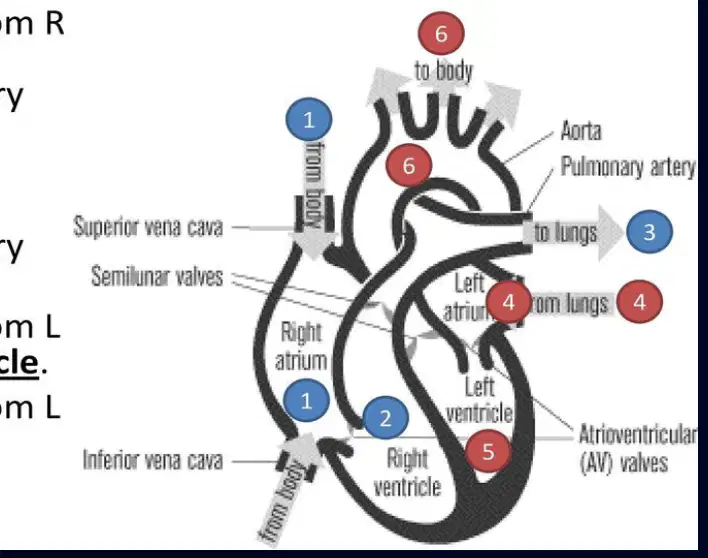
What is the correct sequence of blood flow through the heart starting from the right atrium?
Right atrium → Right ventricle → Lungs → Left atrium → Left ventricle → Body
Right ventricle → Right atrium → Lungs → Left ventricle → Left atrium → Body
Right atrium → Left atrium → Right ventricle → Left ventricle → Lungs → Body
Right ventricle → Lungs → Right atrium → Left ventricle → Left atrium → Body
Through which vessel does blood leave the left ventricle to supply the body?
Pulmonary artery
Vena cava
Aorta
Pulmonary vein
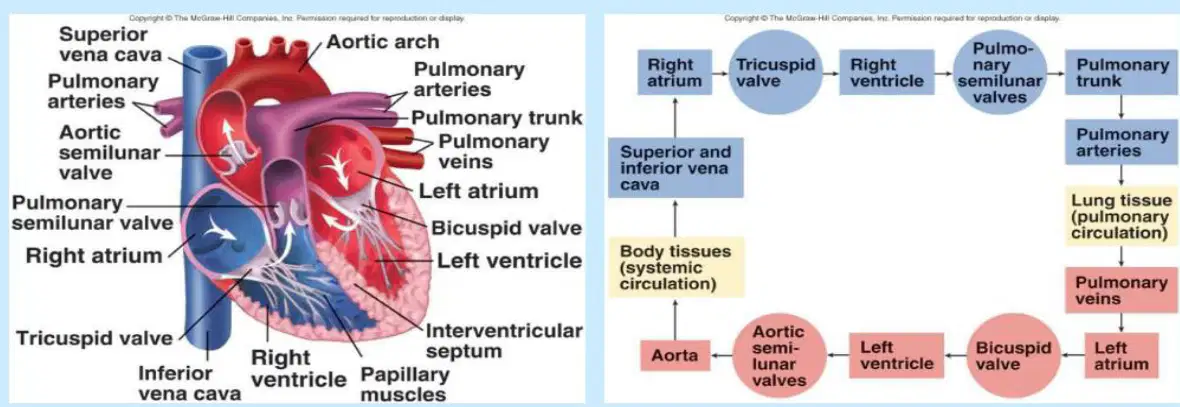
Which chamber of the heart receives oxygenated blood from the lungs?
Right atrium
Left atrium
Right ventricle
Left ventricle
Which of the following structures carries oxygenated blood?
Right ventricle
Left atrium
Pulmonary artery
Inferior vena cava
Identify the structure that carries deoxygenated blood.
Aorta
Pulmonary vein
Right atrium
Left ventricle
Which structure is responsible for transporting oxygenated blood from the heart to the rest of the body?
Pulmonary artery
Aorta
Right ventricle
Superior vena cava
What is the main function of the pulmonary vein?
Carry deoxygenated blood to the lungs
Carry oxygenated blood to the heart
Carry deoxygenated blood to the heart
Carry oxygenated blood to the lungs
What is the primary function of the coronary arteries?
To supply the lungs with oxygen
To supply the cardiac muscle with blood, oxygen, and nutrients
To remove waste products from the body
To regulate blood pressure
What is the primary function of the Sinoatrial (SA) Node in the heart?
It acts as the pacemaker of the heart.
It slows down the heart rate.
It strengthens the heart muscle.
It regulates blood pressure.
What is the primary function of systole in the cardiac cycle?
Relaxation of heart muscles
Contraction of heart muscle
Ventricles fill with blood
Blood returns to the heart
During diastole, what happens to the ventricles?
They contract
They eject blood into the aorta
They fill with blood
They pump 5 L of blood
What is the "lubb" sound in the cardiac cycle associated with?
The sound of the aortic and pulmonic valves closing
The sound of the mitral and tricuspid valves closing
The sound of the ventricles contracting
The sound of the atria filling
What does the "dupp" sound in the cardiac cycle indicate?
The sound of the mitral and tricuspid valves closing
The sound of the aortic and pulmonic valves closing
The sound of the heart muscle relaxing
The sound of blood entering the atria
Define cardiac output.
Amount of blood the heart pumps each minute
Amount of blood the heart pumps each hour
Amount of blood the heart pumps each second
Amount of blood the heart pumps each day
What is the ejection fraction?
The percentage of blood ejected from the heart during systole
The amount of blood remaining in the heart after diastole
The total volume of blood in the heart
The rate at which the heart beats
What is considered a normal ejection fraction range?
30% to 50%
50% to 70%
70% to 90%
10% to 30%
What happens to tissue perfusion as ejection fraction decreases with heart failure?
Tissue perfusion increases
Tissue perfusion remains the same
Tissue perfusion diminishes
Tissue perfusion becomes erratic
Which lab is the most specific for an MI?
BNP
Troponin
LDL
Myoglobin
This test monitors EKG activity during exercise.
EKG Stress Test
Chemical Stress Test
Electrocardiogram
Echocardiogram

