
 Worksheets
Social Studies 7B Final Exam Prep
Total questions: 84
Worksheet time: 28mins
After Charlemagne died and his government collapsed, most of the power shifted to the
kings
missionaries
bishops
The manors of the lords and ladies were primarily financed through _________.
trade
hunting and fishing
inheritance
farming
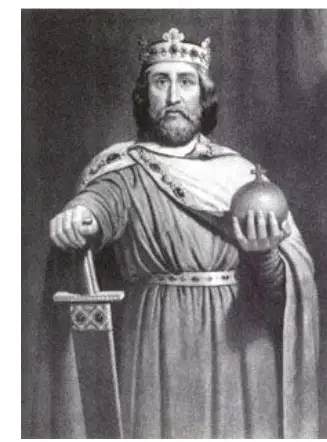
Charlemagne conquered a large amount of land mainly through:
peaceful negotiations
marriages and alliances
military campaigns and conquests
trade agreements
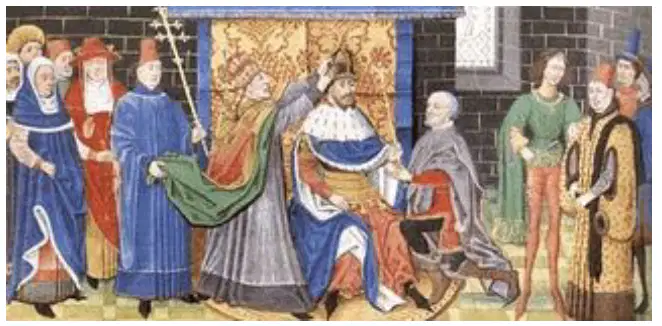
The Pope crowning Charlemagne was a big deal because:
It symbolized the unity of church and state in Europe.
It marked the end of the Roman Empire.
It started the Protestant Reformation.
It led to the fall of Constantinople.
As you read, highlight at least TWO accomplishments of the Vikings. Fill in at least TWO accomplishments of the Vikings: ____________
Opened new trade routes, taught seafaring skills, captured parts of Britain and France, ruled cities in Russia, set up colonies in the North Atlantic, visited North America, set up kingdoms of Norway, Sweden, and Denmark.
Invented the printing press, built the Great Wall of China, discovered penicillin, created the Olympic Games.
Conquered the Roman Empire, invented democracy, built the Pyramids of Giza, wrote the Magna Carta.
Discovered electricity, invented the steam engine, painted the Mona Lisa, built the Eiffel Tower.
The Vikings attacked and raided other parts of Europe because:
they wanted to explore new lands.
they sought wealth and resources.
they were invited by local rulers.
they wanted to spread their religion.

The decline of central government after Charlemagne’s death was mainly due to:
the rise of local lords and feudalism
the expansion of the empire
increased trade with the East
strong leadership from Charlemagne’s successors
The emperor who reunited China after the Period of Disunion and began the Sui Dynasty.
Confucianism
Yang Jian (Emperor Wen of Sui)
Grand Canal
Equal Field System
Empress Wu (Wu Zetian)
Yang Jian (Emperor Wen)
founded Confucianism
Founder of the Sui dynasty
Emperor of the Yang dynasty
Was an officer under Genghis Khan
The only female emperor in Chinese history
The only female emperor in Chinese history was Empress Wu
True
False
Which of the following was a major achievement of the Tang dynasty?
Building the Great Wall
The construction of the Forbidden City
The expansion of China's borders
The invention of the printing press
Who wrote poetry that often focused on nature?
Du Fu
Genghis Khan
Li Bo
Xuanzong
What system did the Chinese use to select government officials during the Tang and Song dynasties?
Civil service exams
Birthright
Random selection
Military rank
What was the name of the large waterway system used during the Sui dynasty to transport goods?
The Silk Road
The Great Wall
The Grand Canal
The Yellow River
Who led China during the seven voyages around Asia under the Ming dynasty?
A. Zheng He
B. Zhu Yuanzhang
C. Kublai Khan
D. Genghis Khan
Genghis Khan ended the Period of Disunion and founded the Sui dynasty
True
False
Genghis Khan was the founder of the Mongol Empire
True
False
Who denied the divine right of kings to rule?
John Locke
Thomas Hobbes
Jean-Jacques Rousseau
Karl Marx
Which book did John Locke publish in 1690?
Two Treatises of Government
Leviathan
The Spirit of the Laws
The Social Contract
What is the purpose of government according to John Locke?
To protect people's natural rights
To expand the territory of the country
To increase the wealth of the rulers
To enforce religious conformity
Which rights did John Locke believe included the right to life, liberty, and property?
Natural rights
Civil rights
Legal rights
Political rights
According to John Locke, what is the true basis of government?
A social contract (or agreement) among free people
Divine right of kings
Military conquest and control
Hereditary succession
Hobbes believed that people are naturally kind and trustworthy.
True
False
Which book did Hobbes publish in 1651?
Leviathan
The Republic
Utopia
The Prince
Who argued that too much power in the hands of any one person or group will lead to tyranny?
Baron de Montesquieu
John Locke
Thomas Hobbes
Jean-Jacques Rousseau
What is the name of the book published by Montesquieu in 1748?
The Spirit of Laws
The Social Contract
Leviathan
The Prince
Cesare Beccaria believed that capital punishment should be used for serious crimes.
True
False
Who wrote A Vindication of the Rights of Women?
Mary Wollstonecraft
Jane Austen
Virginia Woolf
Emily Brontë
What percentage of Japan's land was suitable for farming in medieval times?
20%
70%
10%
50%
Who hired the samurai hired to protect land?
Merchants
Daimyo
Foreign Invaders
Farmers
What do sumo wrestlers throw to "purify" the ring before a match?
Water
Salt
Sand
Rice
What does ju-jitsu mean?
Fast art
Gentle art
Fierce art
Strong art
Select one example of Charlemagne’s public works accomplishment and explain why it was important to the Frankish kingdom.
Charlemagne built a network of roads and bridges, which improved trade and communication in the Frankish kingdom.
Charlemagne established a new currency system to stabilize the economy.
Charlemagne created a new code of laws for the Frankish people.
Charlemagne expanded the Frankish kingdom through military conquest.
Highlight the qualities and actions of Charlemagne that led to the success of the Frankish Kingdom. According to the passage, how did Charlemagne add to the glory of his reign?
By building many palaces
By gaining the goodwill of several kings and nations
By writing books
By traveling to Greece
Many ideas of the European Renaissance were based on the cultures of ancient
Egypt and Mesapotamia
Greece and Rome
India and Ghana
China and Japan
Who painted the Mona Lisa?
Da Vinci
Michaelangelo
Medici
Giotti
Isaac Newton
first to theorize the heliocentric theory - that the earth revolves around the sun
recorded the position of the stars and emphasized the idea of careful observation
the first person to study the sky using a telescope
introduced the Law of Gravity
introduced a systematic approach to Science that became the basis of the Scientific Method
Galileo Galilei
first to theorize the heliocentric theory - that the earth revolves around the sun
recorded the position of the stars and emphasized the idea of careful observation
the first person to study the sky using a telescope
introduced the Law of Gravity
introduced a systematic approach to Science that became the basis of the Scientific Method
First to theorize the heliocentric theory - that the earth revolves around the sun
Nicolas Copernicus
Tycho Brahe
Galileo Galilei
Isaac Newton
Francis Bacon
recorded the position of the stars and emphasized the idea of careful observation
Nicolas Copernicus
Tycho Brahe
Galileo Galilei
Isaac Newton
Francis Bacon
Who designed the Florence Cathedral dome and is considered the "first Renaissance architect"?
Van Eyck
Brunelleschi
Giotto
Dante
The festival of Lent during the Renaissance involved attending festivals, sporting events, and playing games
True
False
What was the significant invention by Johannes Gutenberg around 1450?
The steam engine
The compass
The printing press
The telescope
What was the new way of thinking during the Renaissance called?
Rationalism
Existentialism
Humanism
Romanticism
The Indian number and decimal systems were used by Muslim mathematicians during the Renaissance
True
False
By the 1400s, the Renaissance was spreading throughout Europe primarily through:
The efforts of political leaders.
The spread of the Italian language.
The travels and merchants who returned from Italy.
The conquests of Italian city-states.
Only royalty could wear Ermine fur in the Renaissance
True
False
The Father of Humanism
Petrarch
Medici
Giotto
Carnival
Ermine
Powerful family in Florence; patrons of the arts
Petrarch
Medici
Giotto
Carnival
Ermine
What was Magellan trying to accomplish when he proposed an expedition to King Charles I, of Spain?
He wanted to prove that the Earth was round
He wanted to find a passage connecting East and West
He wanted to find a western route to the Spice Islands
He wanted to find a cure for scurvy
Which of the assertions below is not true with regard to Ferdinand Magellan?
He sailed for Spain, but was Portuguese national
He was the first man to circumnavigate the globe
He had been to Malacca in a previous expedition
He was killed in the island of Mactan
Which of the following is NOT one of the "Four Gentlemen" in Japanese brush painting?
A. Orchid
B. Plum
C. Rose
D. Bamboo
Which crop is well-suited to Japan's environment due to its need for ample water?
Potatoes
Corn
Rice
Barley
This group of people were from Scandinavia and sailed in to attack Europe
Vikings
Chivalry
Lords (or nobles)
Peasants
Fief
this class of people were ABOVE the knights and BELOW the king
Vikings
Chivalry
Lords (or nobles)
Peasants
Fief
the lowest class of people in Medieval Europe
Vikings
Chivalry
Lords (or nobles)
Peasants
Fief
Who started the Protestant Reformation?
Martin Luther
Martin Luther King Jr
The Pope
A monk from America

Viking warriors -
formed an excellent infantry and attacked by land
fought many battles but did not win many
were not powerful until the 1500s
attacked by sea in longboats
Which innovation during the Song dynasty greatly improved communication and record-keeping?
Silk weaving
Compass
Gunpowder
Movable type printing
Who is credited with developing the idea of separation of powers in government?
John Locke
Thomas Hobbes
Voltaire
Montesquieu

Why were Martin Luther and the Protestants upset with the Catholic Church? 2 answers
the Lutherans took away Church members
sale of indulgences
the Church sent people to Italy
the way the Church earned and spent money
The movement of opposition to the Catholic church is called
the Reformation
the Enlightenment
the Great Schism
the Protestant Revolution
What did someone who bought an indulgence receive?
a blessing from the pope
a pardon for sin
the right to attend church
the right to commit a sin

The Vikings were
northern people who made raids on European villages
Muslims who traded goods from the Middle East
Germanic people who attacked Rome from the north
central European people who came from Asia
What was one major reason for the construction of the Grand Canal during the Sui dynasty?
To connect northern and southern China for trade
To defend against Mongol invasions
To mark the border with Korea
To provide water for rice fields
Which ruler was crowned Emperor of the Romans by the Pope in 800 CE?
Louis XIV
Justinian
Charlemagne
Otto I


What was a shogun in medieval Japan?
a military dictator who ruled in place of the emperor
a general who served as commander of the emperor's army
the high priest and head of the Shinto religion
the name given to the emperor of Japan
Which of the following was not an impact of Charlemagne on Medieval Europe?
The creation of the Holy Roman Empire
The establishment of Christianity as the dominant religion in his empire
The mutually beneficial relationship between the King and the Pope.
He lead the first crusade and made peace with the Muslim leader Saladin.
This person spent their whole life training to fight and then pledged his loyalty to a lord.
cavalry
noble
knight
townsman
Which of these was NOT an effect of feudalism
land given for service
trade increased
shortage of food
knights protected land
Which of the following locations was NOT affected by the “Black Death”?
America
Europe
China
Middle East
Which of these caused feudalism to end in Europe?
Crusades & plague killed many workers
serfs always ran away from manors
kings became homeless
knights often stole their lord’s land

