
 Worksheets
Visual Arts Comp. II Final Exam Art History Review
Total questions: 83
Worksheet time: 42mins
What is the main subject of the document shown in the image?
Visual Arts Comp. II Final Exam Art History Review
Mathematics Final Exam
Science Project Guidelines
English Literature Review
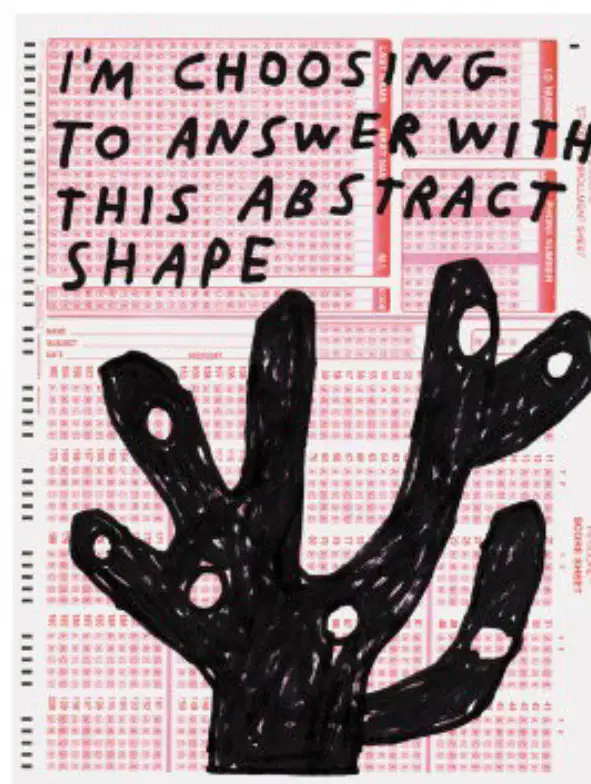
What does the abstract shape in the image represent in the context of the text?
A literal answer to a test question
An example of abstract art
A famous historical painting
A realistic drawing of a tree
Why might an artist choose to answer with an abstract shape, as shown in the image?
To express creativity and individuality
To follow strict test instructions
To copy a famous artist’s work
To avoid using any shapes at all
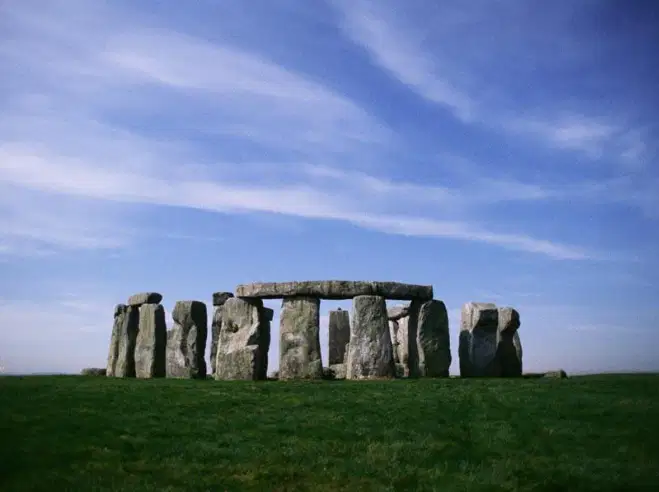
What is the title of the monument shown in the flash card?
Stonehenge
The Parthenon
The Colosseum
The Great Pyramid
During which time period was Stonehenge constructed?
Pre-historic
Medieval
Renaissance
Modern
What is the term for the round grouping of stones at Stonehenge?
Cromlech
Dolmen
Menhir
Obelisk
Based on the information provided, why might the artist of Stonehenge be listed as "Unknown"?
It was built in a time before written records of artists existed.
The artist chose to remain anonymous.
The monument was destroyed and records were lost.
The artist was a famous king.
If you were to explain why Stonehenge is considered "Pre-historic," which of the following would be the best reason?
It was constructed before written history began.
It was built by a famous architect.
It was used as a palace.
It was made entirely of wood.
Who were the artists responsible for designing the Parthenon?
Iktinus and Kallikrates
Phidias and Praxiteles
Leonardo and Michelangelo
Socrates and Plato
In which city is the Parthenon located?
Athens, Greece
Rome, Italy
Cairo, Egypt
Paris, France
What architectural style are the columns of the Parthenon an example of?
Doric style columns
Ionic style columns
Corinthian style columns
Tuscan style columns
During which period was the Parthenon built?
Classic Period
Baroque Period
Renaissance Period
Modern Period
Between which years was the Parthenon constructed?
447-432 BC
500-480 BC
300-250 BC
100-50 BC
Why is the Parthenon considered an important example of ancient Greek architecture?
It features Doric style columns and represents the Classic Period.
It was the first building made of marble.
It was used as a palace for Greek kings.
It was built entirely underground.
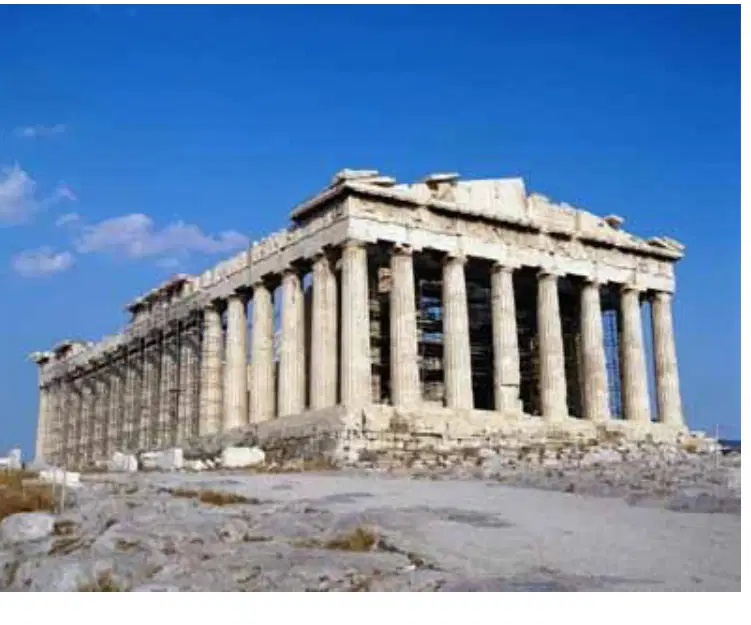
What does the image above represent?
The Parthenon in Athens, Greece
The Colosseum in Rome, Italy
The Pyramids of Giza in Egypt
The Eiffel Tower in Paris, France
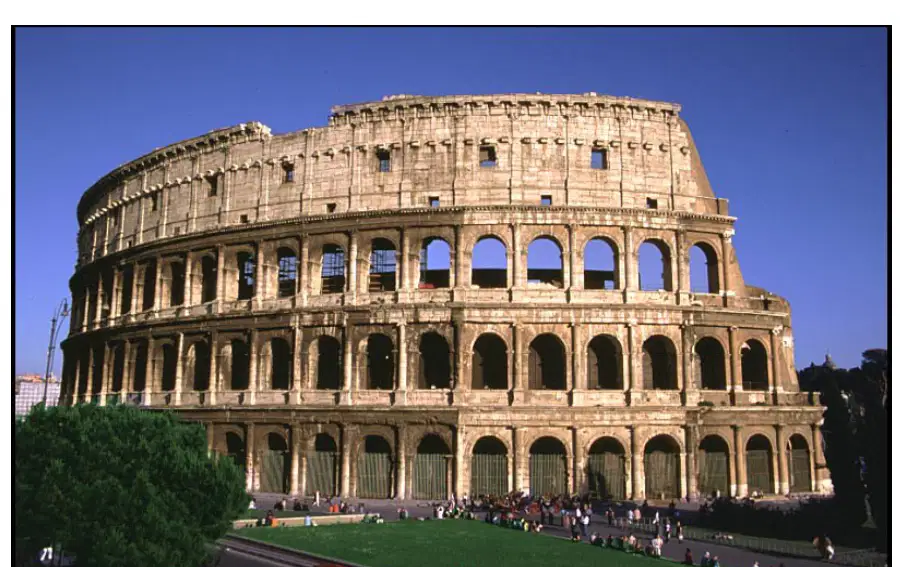
What is the name of the ancient structure shown in the image?
Colosseum
Parthenon
Pantheon
Great Wall
During which years was the Colosseum built?
Between 72 and 80 AD
Between 100 and 110 AD
Between 50 and 60 AD
Between 200 and 210 AD
Which civilization is associated with the architectural style of the Colosseum?
Greek
Roman
Egyptian
Byzantine
What is significant about the size of the Colosseum?
It is the tallest building in Rome
It is the largest amphitheater in the world
It is the oldest temple in Italy
It is the smallest arena in Europe
Why might the Colosseum be considered an important example of Roman engineering and architecture?
Because it was built by a single artist
Because it is a modern stadium
Because it demonstrates advanced construction techniques and could hold large crowds
Because it was used only for religious ceremonies
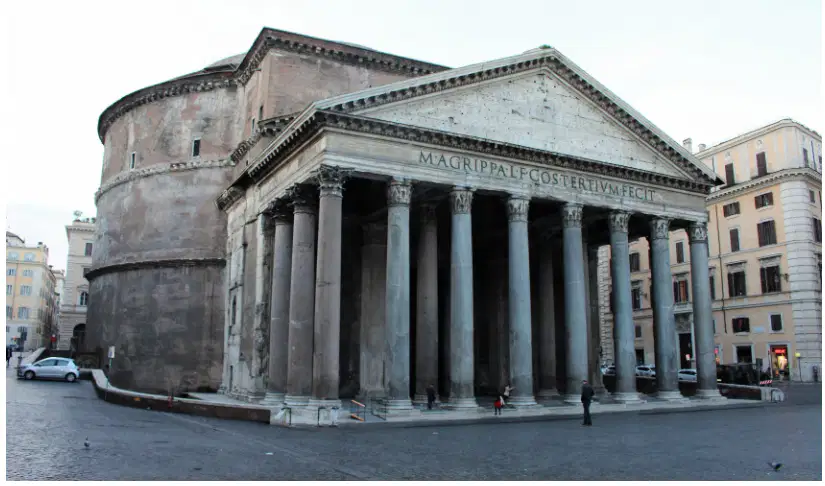
What is the title of the structure shown in the image?
Pantheon
Colosseum
Parthenon
Acropolis
Which civilization built the Pantheon?
Roman
Greek
Egyptian
Persian
What was the primary purpose of the Pantheon?
To honor the gods
To serve as a palace
To be a marketplace
To house government offices
Why is the Pantheon considered architecturally significant?
It was one of the first structures with a large interior space
It was the tallest building in Rome
It was made entirely of gold
It was the first building with stained glass windows
Explain why the Pantheon is an important example of Roman architecture. Use evidence from its design and purpose.
It was built to honor the gods and featured a large interior space, showcasing Roman engineering and religious practices.
It was used as a sports arena and had many statues.
It was a private residence for Roman emperors.
It was a military fortress with thick walls.
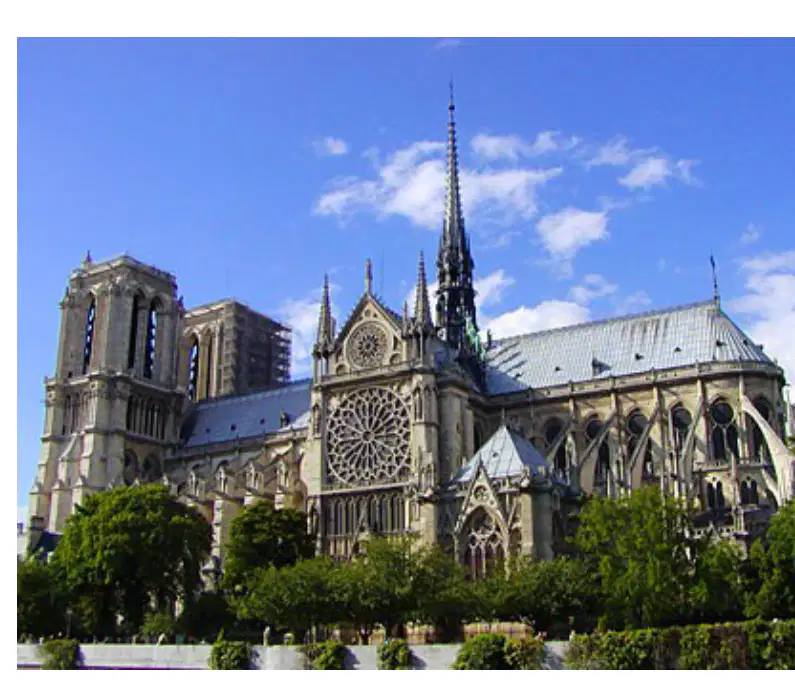
What is the title of the artwork shown in the flash card?
Notre Dame
The Louvre
St. Peter's Basilica
Westminster Abbey
Who is the artist associated with the construction of Notre Dame?
Maurice De Sully
Leonardo da Vinci
Michelangelo
Frank Lloyd Wright
Which architectural style is Notre Dame an example of?
Baroque
Romanesque
Gothic
Renaissance
Which of the following is NOT a feature that characterizes the Gothic style of Notre Dame?
Flying buttresses
Pointed arches
Ribbed vaults
Domed roofs
Explain how the use of flying buttresses contributed to the design and function of Notre Dame.
They provided external support, allowing for higher walls and larger windows.
They were purely decorative and had no structural purpose.
They were used to store water for the cathedral.
They served as living quarters for the clergy.

What is the title of the monument shown in the image?
Taj Mahal
Red Fort
Qutub Minar
Lotus Temple
Which emperor commissioned the construction of the Taj Mahal?
Shah Jahan
Akbar
Aurangzeb
Babur
The Taj Mahal is an example of which type of artistic balance?
Asymmetrical balance
Symmetrical balance
Radial balance
Informal balance
What style or time period does the Taj Mahal represent?
Gothic Art
Islamic Art
Renaissance Art
Baroque Art
Why is the Taj Mahal considered to be the "jewel" of Islamic art? (DoK Level 3: Strategic Thinking)
Because it is made of gold
Because of its architectural beauty and significance in Islamic art
Because it is the largest building in India
Because it was built by a famous artist
Who is the artist of the Kauffman House, also known as Falling Water?
Frank Lloyd Wright
Le Corbusier
Ludwig Mies van der Rohe
Zaha Hadid
What architectural style is Falling Water an example of?
Organic architecture
Gothic architecture
Baroque architecture
Postmodern architecture
Which of the following best describes the relationship between Falling Water and its environment?
The building seems to grow out of its environment.
The building is isolated from its environment.
The building dominates its environment.
The building ignores its environment.
What type of balance does the home Falling Water demonstrate?
Asymmetrical balance
Symmetrical balance
Radial balance
No balance
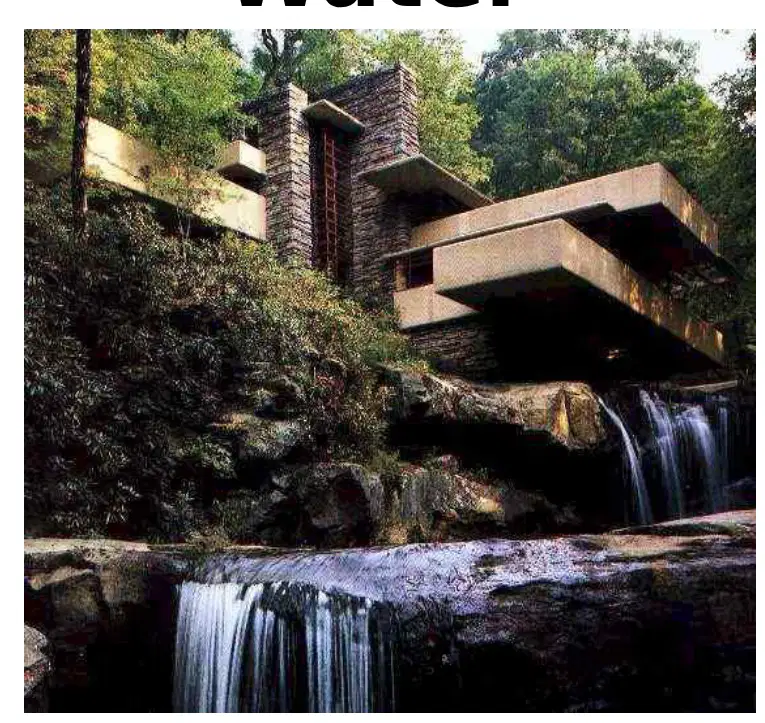
Which feature of the design in the image best illustrates the concept of organic architecture?
The integration of the building with the natural landscape
The use of bright, artificial colors
The presence of tall, pointed towers
The use of classical columns
Who is the artist of the Heydar Aliyev Center?
Zaha Hadid
Frank Gehry
Le Corbusier
Rem Koolhaas
What architectural style is the Heydar Aliyev Center associated with?
Deconstructivism
Baroque
Gothic
Modernism
Which of the following best describes the forms incorporated in the Heydar Aliyev Center?
Fluid, organic forms suggesting a landscape
Rigid, geometric forms suggesting a cityscape
Symmetrical, classical forms suggesting tradition
Minimalist, rectangular forms suggesting simplicity
How do the organic forms in the Heydar Aliyev Center contribute to its design?
They work to create asymmetrical balance.
They create perfect symmetry.
They emphasize verticality.
They focus on traditional ornamentation.
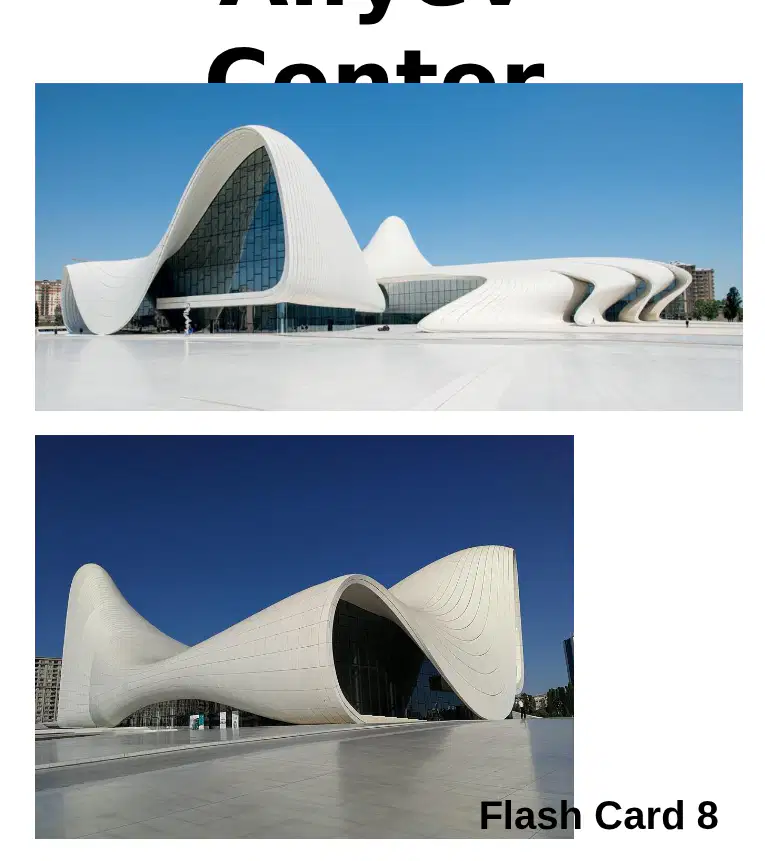
Based on the images, what visual effect do the building's forms most likely achieve?
A sense of movement and landscape
A sense of rigidity and order
A focus on sharp angles and corners
A traditional, symmetrical appearance
What is the title of the artifact described in the learning material?
The Law Code of Hammurabi
The Rosetta Stone
The Code of Justinian
The Stele of Gilgamesh
Which culture is associated with the Law Code Stele of King Hammurabi?
Babylonian culture
Egyptian culture
Greek culture
Roman culture
What material is the Law Code Stele of King Hammurabi carved into?
Solid black stone
Marble
Bronze
Wood
Who is depicted with Hammurabi at the top of the stele in the relief sculpture?
Shamash, the Babylonian sun god and god of justice
Anubis, the Egyptian god of the dead
Zeus, the Greek god of the sky
Marduk, the Babylonian god of creation
Why might the artist of the Law Code Stele of King Hammurabi be listed as "Unknown"?
Because the artist's name was not recorded in history
Because the stele was destroyed
Because it was made by a group of artists
Because it was created in modern times
What is the significance of the relief sculpture at the top of the Law Code Stele of King Hammurabi?
It depicts Hammurabi receiving authority from Shamash, symbolizing divine approval of the laws.
It shows Hammurabi fighting in a battle.
It illustrates the daily life of Babylonian citizens.
It displays the construction of the stele.
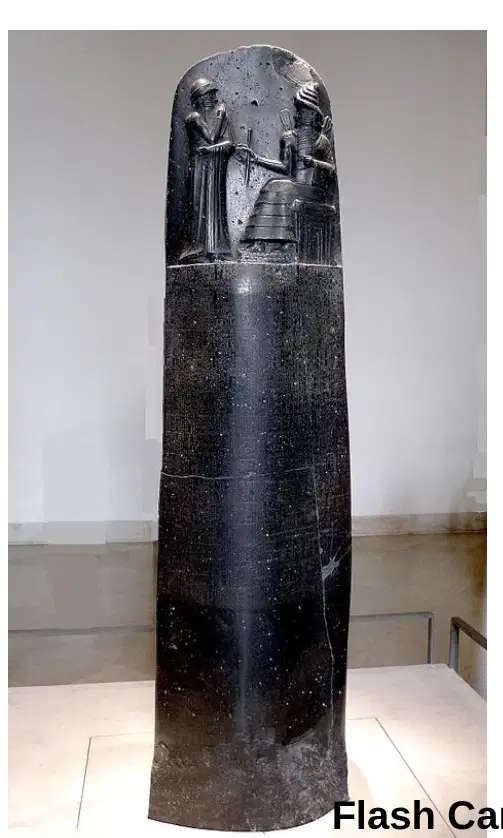
What is the shape of the Law Code Stele of King Hammurabi?
A pillar
A cube
A sphere
A pyramid
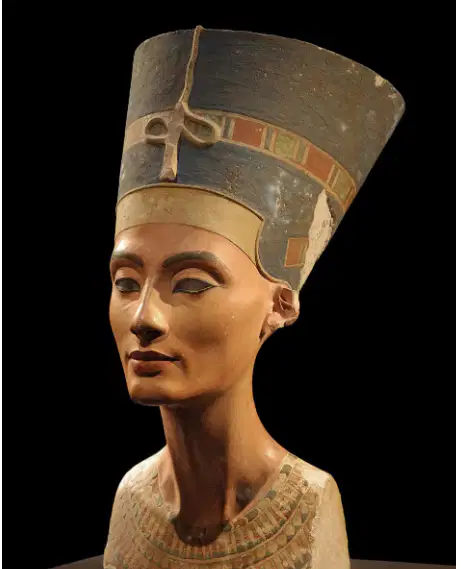
What is the title of the sculpture shown in the flash card?
Queen of Nefertiti
Queen of Cleopatra
Queen of Sheba
Queen of Egypt
Who is the artist of the "Queen of Nefertiti" sculpture?
Unknown
Leonardo da Vinci
Michelangelo
Tutankhamun
During which time period or style was the "Queen of Nefertiti" sculpture created?
Armana Period
Renaissance Period
Baroque Period
Modern Period
Which artistic principle is demonstrated by the sculpture of Queen of Nefertiti?
Symmetrical balance
Asymmetrical balance
Radial balance
Contrast
What type of subject matter does the "Queen of Nefertiti" sculpture represent?
Portrait
Landscape
Abstract
Still life
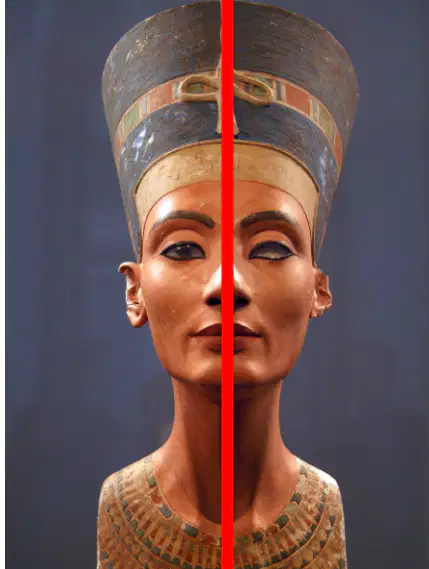
Explain how the use of symmetrical balance is shown in the sculpture of Queen of Nefertiti.
The sculpture is evenly balanced on both sides of a central line.
The sculpture is heavier on one side than the other.
The sculpture uses a circular arrangement.
The sculpture has no balance at all.

What is the title of the artwork shown in the image?
Nike of Samothrace
Venus de Milo
The Thinker
David
During which time period or style was the Nike of Samothrace created?
Renaissance
Baroque
Hellenistic
Classical
What does the Nike of Samothrace symbolize?
Peace and harmony
Winged victory
Wisdom and knowledge
Love and beauty
Which principle of design is incorporated in the Nike of Samothrace?
Balance
Contrast
Movement
Unity
Explain how the Nike of Samothrace demonstrates the principle of design known as "movement."
The statue is standing still with no sense of motion.
The flowing drapery and forward stance create a sense of dynamic motion.
The statue is symmetrical and balanced.
The statue uses bright colors to attract attention.
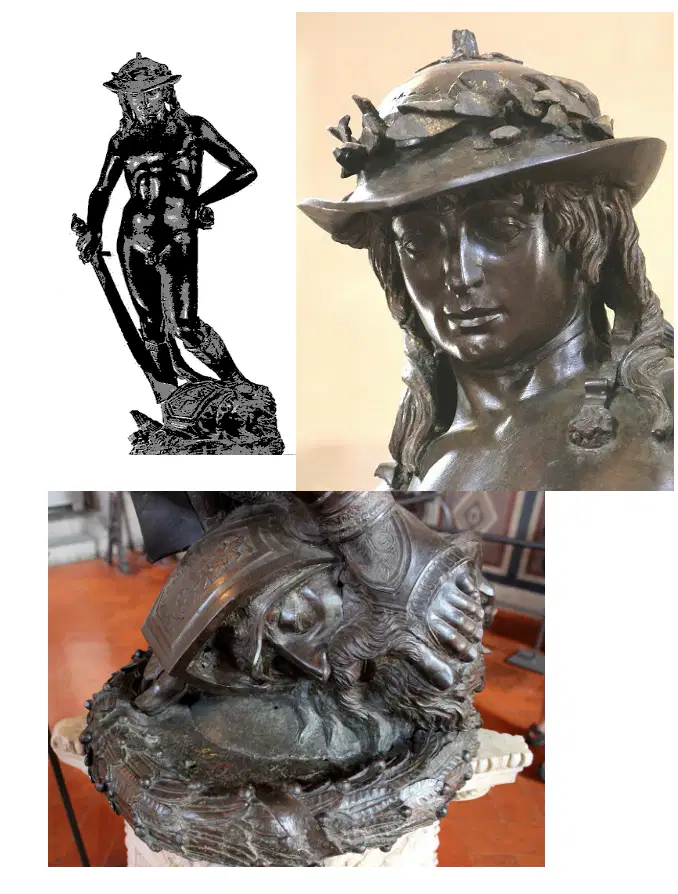
Who is the artist of the bronze sculpture titled "David"?
Donatello
Michelangelo
Leonardo da Vinci
Raphael
During which art period was Donatello's "David" created?
Baroque
Renaissance
Modern
Gothic
What is the term for the pose in which the weight is shifted onto one foot, as seen in Donatello's "David"?
Sfumato
Fresco
Contrapposto
Chiaroscuro
Which material was used to create Donatello's sculpture "David"?
Marble
Wood
Bronze
Clay
Explain how the use of "contrapposto" in Donatello's "David" reflects the artistic values of the Renaissance period.
It shows a focus on religious symbolism over realism.
It demonstrates an interest in naturalism and the study of human anatomy.
It emphasizes abstract forms and patterns.
It avoids any reference to the human body.
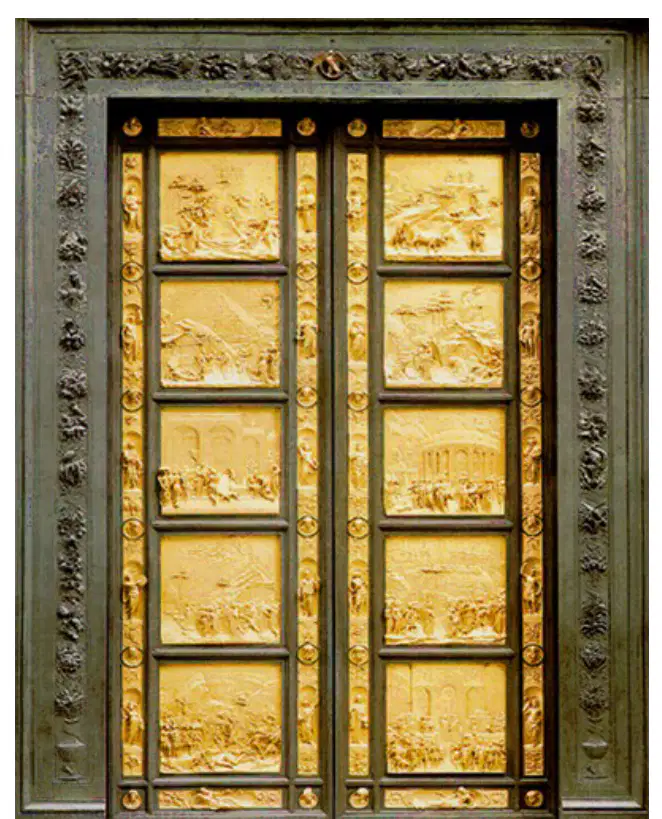
Who is the artist of the "Gates of Paradise"?
Lorenzo Ghiberti
Michelangelo
Leonardo da Vinci
Donatello
During which art period were the "Gates of Paradise" created?
Early Renaissance
Baroque
Gothic
Modernism
What type of sculpture is the "Gates of Paradise" an excellent example of?
Relief sculpture
Free-standing sculpture
Kinetic sculpture
Abstract sculpture
Which of the following best describes the subject matter of the "Gates of Paradise"?
Religious subject matter
Mythological subject matter
Political subject matter
Scientific subject matter
The "Gates of Paradise" took more than twenty years to complete. What does this suggest about the complexity and dedication required for this artwork?
The artwork was highly complex and required significant dedication.
The artwork was simple and quickly made.
The artist worked on many projects at once.
The doors were made using modern machinery.
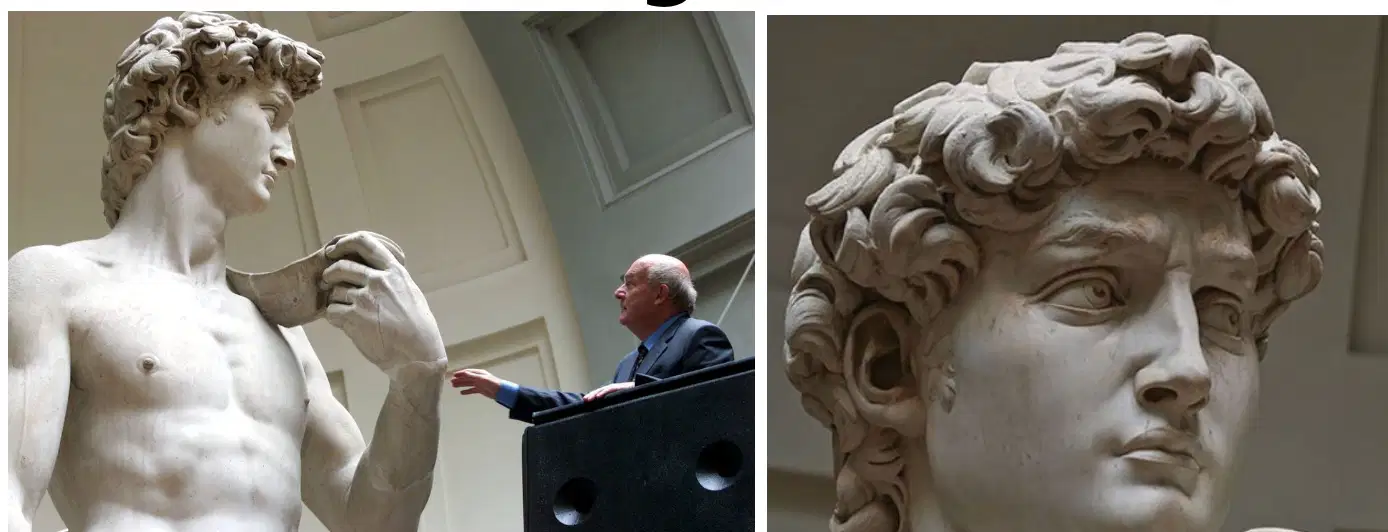
Who is the artist of the sculpture titled "David"?
Leonardo da Vinci
Donatello
Michelangelo
Raphael
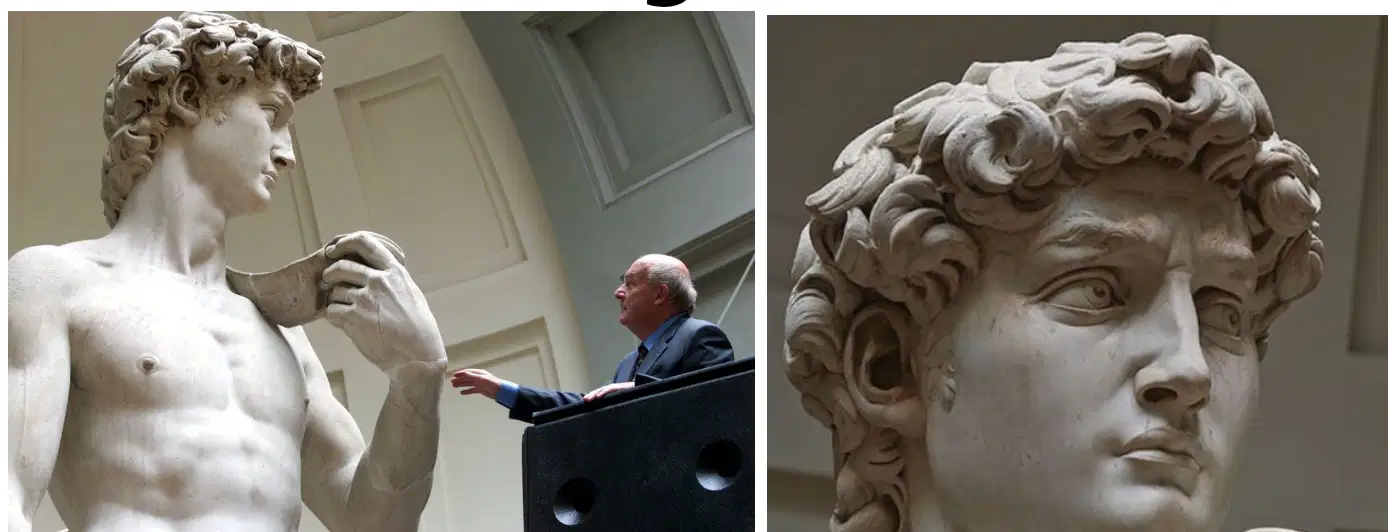
During which art period was Michelangelo's "David" created?
Baroque
High Renaissance
Gothic
Romanticism
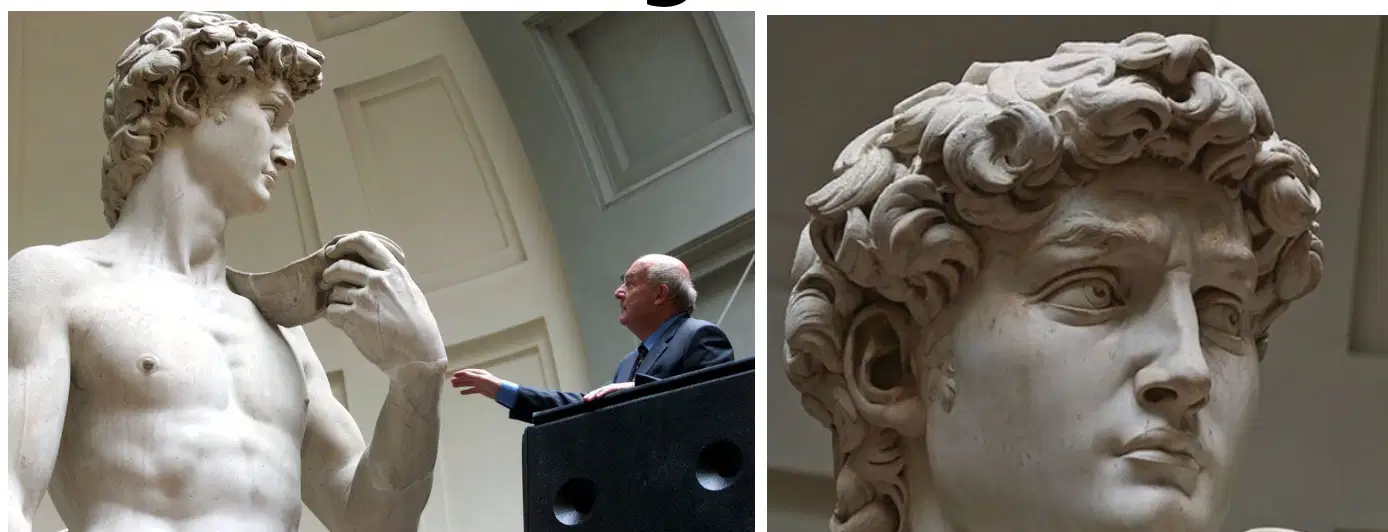
What technique was used to create Michelangelo's "David"?
Additive technique
Subtractive technique
Casting technique
Assemblage technique
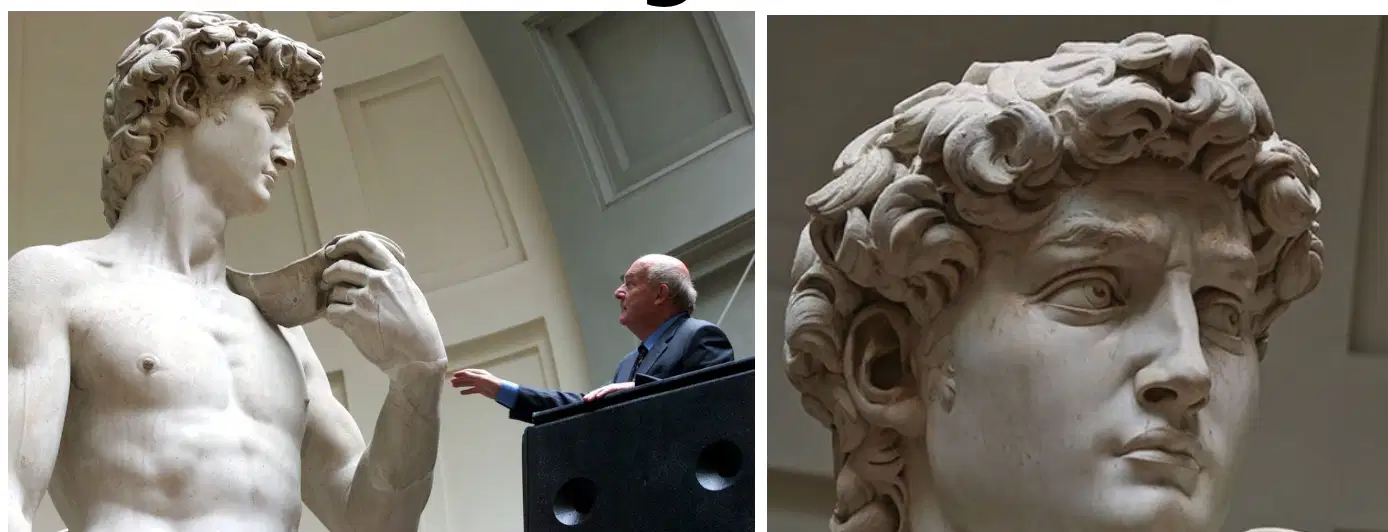
Which of the following best describes the figure depicted in Michelangelo's "David"?
A figure with exaggerated features
A figure with idealized proportions and body
A figure with abstract shapes
A figure with animal characteristics

Explain why the subtractive technique is significant in the creation of Michelangelo's "David." (DoK Level 3)
It allows the artist to add material to the sculpture.
It requires the artist to carefully remove material, making mistakes difficult to fix.
It uses clay to build up the form.
It involves painting the surface of the sculpture.
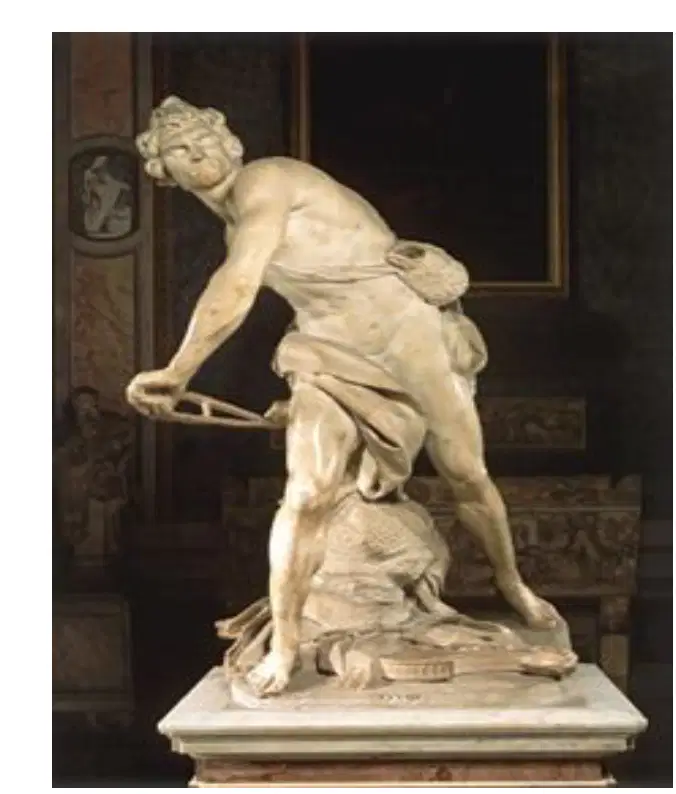
What is the title of the artwork created by Bernini during the Baroque period?
David
Apollo
Moses
Perseus
Which artistic style or time period does Bernini's "David" belong to?
Renaissance
Baroque
Neoclassical
Gothic
Which principle of design is incorporated in Bernini's "David" through the use of diagonal forms?
Balance
Movement
Unity
Contrast
How does Bernini's "David" express the spirit of drama and energy? Use evidence from the design principles mentioned.
By using calm, vertical lines
By incorporating movement through diagonal forms
By focusing on symmetry and stillness
By using only horizontal lines
Why is Bernini's "David" considered an example of Baroque art? Provide reasoning based on its characteristics.
It is symmetrical and calm
It expresses drama, energy, and movement
It uses only straight lines
It is painted in bright colors

