Worksheets
End of the Year Review - Science 2025
Total questions: 77
Worksheet time: 39mins
What causes the Moon to appear as if its shape changes over time?
The Moon’s position relative to the Earth and Sun.
The Moon’s distance from other planets.
The Moon’s temperature changes.
The Moon’s rotation speed.
How much of the Moon is always being lit by the Sun?
All of it
One quater
None of it
Why do we see different phases of the Moon?
We see different phases of the Moon’s sunlit side as it orbits Earth.
The Moon changes its shape as it moves.
Clouds cover parts of the Moon at different times.
The Moon moves closer and farther from the Sun.
What have people across time and cultures done in relation to the Moon?
Observed and studied its pattern.
Lived on its surface.
Harvested crops from it.
Built cities on it.
The Moon makes its own light, which is why we can see it at night.
True
False
The Moon always has half of its surface lit by the Sun, even if we can’t always see it from Earth.
True
False
The phase of the Moon depends on how much of the sunlit side we see from Earth.
True
False
We can only see the Moon during the night.
True
False
People in different cultures have observed the Moon and noticed patterns in its appearance.
True
False
What does the Moon orbit?
The Earth
The Sun
Mars
Jupiter
How long does it take for the Moon to go through a complete cycle?
About 29 days.
About 7 days.
About 365 days.
About 12 hours.
What does the Earth orbit?
The Sun
The Moon
Mars
Jupiter
How long does it take for the Earth to make one revolution around the Sun?
365 days
24 hours
30 days
10 years
How long does it take for the Earth to make one full rotation?
365 days
29 1/2 days
30 hours
What causes day and night on Earth?
The rotation of the Earth
The revolution of the Earth around the Sun
The tilt of the Earth's axis
The phases of the Moon
What does perspective help us understand?
Different viewpoints
Mathematical formulas
Historical dates
Chemical reactions
Many cultures on Earth have stories related to the ________________ to keep track of what we know.
Sky
Ocean
Mountains
Desert
Why does the North Star appear not to move?
Earth’s axis is pointed toward it.
It is the brightest star in the sky.
It is closer to Earth than other stars.
It moves faster than other stars.
Both the Sun and the Moon appear to ‘move’ ________________ to ________________.
East to West
West to East
North to South
South to North
Stars move ________________ in a circular pattern around the North Star.
counterclockwise
clockwise
upward
downward
What direction does the Earth spin on its axis when looking down on it from the North Pole?
Counterclockwise
Clockwise
Upward
Downward
What is another name for the angle of the Sun?
The elevation of the Sun
The diameter of the Sun
The color of the Sun
The distance to the Sun
When we have higher elevation of the Sun we also have higher ________________.
Concentration of daylight
Amount of rainfall
Wind speed
Cloud cover
What causes the seasons in the Northern Hemisphere?
The tilt of the Earth’s axis
The distance from the Sun changes
The Moon’s gravity
Earth’s rotation speed
More direct or concentrated sunlight results in ________________ temperatures on Earth.
higher
lower
constant
fluctuating
The Winter Solstice is important because that is the day we receive the ________________ sunlight and the ________________ darkness.
most, lease
half a day of, half a day of
too much, too much
How many hours of daylight do most places receive if they are located on the equator?
12 hours
6 hours
18 hours
9 hours
What is it called when the North Pole and/or South Pole receive 24 hours of daylight for an extended period of time?
The Midnight Sun
Polar Eclipse
Aurora Borealis
Equinox
When there is lower solar elevation it results in sunlight being more ____________ out.
Spread
Focused
Blocked
Reflected
When the Northern Hemisphere is experiencing summer, the Southern Hemisphere is experiencing what?
Winter
Spring
Autumn
Summer
Manhattanhenge occurs how many times a year?
Twice
Once
Four times
Ten times
The summer solstice occurs on what day?
June 20th/21st
December 21st/22nd
March 20th/21st
September 22nd/23rd
The winter solstice occurs on what day?
December 20th/21st
March 20th/21st
June 20th/21st
September 22nd/23rd
What causes the symmetry in the pattern of change in the amount of sunlight we receive and the elevation of the sun between the summer and winter solstice?
The Earth’s tilt and orbit around the Sun
The phases of the Moon
The distance between the Earth and the Moon
The rotation of the Sun on its axis
Why does Manhattanhenge happen on July 11th every four years?
Due to leap year
Because of the Earth's tilt
Because of daylight saving time
Due to the position of the moon
The angle of the Earth’s axis is ________________.
23.5 degrees
0 degrees
45 degrees
90 degrees
What is another name for the North Star?
Polaris
Sirius
Betelgeuse
Vega
What does solar mean?
Relating to the sun
Relating to the moon
Relating to water
Relating to wind
What causes a solar eclipse?
The Moon blocks the Sun’s light and casts a shadow on Earth.
The Earth moves between the Sun and the Moon.
The Sun moves between the Earth and the Moon.
The Moon reflects sunlight directly onto the Earth.
Why don’t we have a solar eclipse every month?
The Moon’s orbit is tilted.
The Sun is too far away.
The Earth rotates too quickly.
The Moon is always full.
During a solar eclipse, where is the Moon located in the Sun-Earth-Moon system?
The Moon is between the Sun and Earth.
The Moon is behind the Sun.
The Moon is behind the Earth.
The Moon is next to the Earth, away from the Sun.
What do we call the area of the Earth where the Moon’s shadow falls during a solar eclipse?
Path of totality
Ring of fire
Umbra belt
Solar corridor
A solar eclipse happens when the Earth passes between the Moon and the Sun.
False
True
The Moon’s orbit is slightly tilted compared to Earth’s orbit around the Sun.
True
False
The Moon can cast a shadow on the Earth.
True
False
Every New Moon allows us to experience a solar eclipse.
True
False
During a solar eclipse, it can become dark in the middle of the day.
True
False
The Sun and Moon are the same size.
True
False
50. We can see a solar eclipse ______________.
Twice a year
Every month
Once in a lifetime
Every week
The Moon and Earth have the same orbit shapes.
True
False
52. The Earth, Sun and ________ work together to create both solar and lunar eclipses.
Moon
Mars
Venus
Jupiter
The Moon’s phases can cause eclipses to happen.
True
False
Lunar eclipses happen more often than solar eclipses.
True
False
The Moon needs to be in the ____________ phase for a lunar eclipse to happen.
full
new
crescent
gibbous
The Earth is covered with a ‘land’ layer known as the ____________________.
Crust
Mantle
Core
Atmosphere
57. The Earth’s crust is broken into pieces known as ____________________.
Plates
Rocks
Continents
Islands
The two types of crust on Earth’s surface are _________________ and __________________.
Continental and Oceanic
Igneous and Sedimentary
Mantle and Core
Inner and Outer
Heat and pressure cause this to happen in the mantle.
Creep
Melting
Evaporation
Condensation
The ______________ is the layer of the Earth we walk on.
Crust
Mantle
Core
Inner core
61. Mountain movement can be caused by _____________.
Plate movement
Rainfall
Wind erosion
Volcanic ash
What plate interaction did we discover is causing Mt. Everest to grow taller?
Two plates moving toward each other, pushing up where they meet
Two plates moving away from each other, creating a gap
One plate sliding past another plate horizontally
One plate sinking beneath another plate
Which mountain did NOT have evidence of a volcano?
Mt. Everest
Mt. Nardonya
Mt. Hotaka
Which mountain is NOT growing? ____________.
Mt. Mitchell
Mount Everest
Mount Kilimanjaro
Mount Fuji
Volcanoes are located on every _________________.
Continent
Ocean
Country
Island
A ______________ is formed when a denser oceanic plate collides with a less dense continental plate.
mountain
fissure
cliff
________________ processes break down land and rocks and scatter these materials.
Destructive
Constructive
Chemical
Biological
When volcanoes erupt in __________ ways, new earth material is created.
Constructive
Destructive
Explosive
Passive
A fault line is also known as a ________________.
Plate boundary
Earthquake zone
Volcanic ridge
Seismic wave
Basalt is more ______________ than granite.
Dense
Porous
Brittle
Light
Which two choices can be CAUSED by plate movement? ______________ and ______________.
Volcanoes and earthquakes
Rain and snow
Tornadoes and hurricanes
Floods and droughts
The layer of Earth that plates 'float' upon is known as the _______________.
Mantle
Crust
Core
Atmosphere
Which mountain did we discover was an ACTIVE volcano? _______________.
Mt. Hotaka
Mt. Everest
Mt. Fuji
Mt. Kilimanjaro
Basalt is a type of ______________ that is denser than granite.
Bedrock
Mineral
Metal
Fossil
The place where two plates meet is known as a ________________.
Fault line
Mountain peak
River delta
Volcanic crater
Pieces of rock, sand and earth material on the top of Earth's surface are known as __________ .
sediment
lava
fossil
crystal

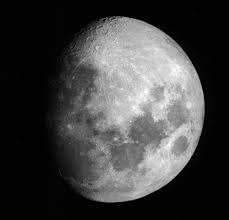
This is
Full Moon
1st quarter
New Moon
3rd quater