
 Worksheets
Objectives of Aircraft Project Financial Analysis
Total questions: 92
Worksheet time: 46mins
An aircraft project is considered financially successful if:
It generates profits exceeding its costs
It is completed ahead of schedule
It uses the latest technology
It receives government approval
Aircraft average cost varies with production run in which of the following ways?
It decreases as production run increases
It increases as production run increases
It remains constant
It fluctuates randomly
The typical purchase price cost breakdown for a civil transport includes:
Airframe, engines, avionics, and interior
Only airframe and engines
Only avionics and interior
Only maintenance costs
Which of the following best describes the difference between direct and indirect operating costs and the factors used to calculate direct costs?
Direct costs are directly attributable to a specific project and are calculated using labor, materials, and equipment, while indirect costs are shared across multiple projects.
Direct costs are shared across multiple projects, while indirect costs are specific to one project and calculated using overhead expenses.
Direct costs include only overhead expenses, while indirect costs include labor and materials.
Direct costs and indirect costs are both calculated using the same factors.
The typical DOC breakdown for a civil transport includes:
Fuel, maintenance, crew, depreciation, insurance, and airport charges
Only fuel and maintenance
Only crew and insurance
Only depreciation and airport charges
What is the main financial criterion on which aircraft designs should be judged?
Return on investment (ROI) for the company
Total number of aircraft produced
Maximum speed of the aircraft
Passenger comfort rating
For most new civil aircraft projects, how many years does it typically take from the start of the project to break even?
10 years
3 years
20 years
30 years
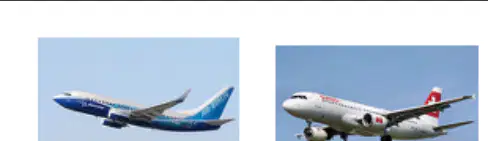
As of 2009, which aircraft had more units built?
Boeing 737
Airbus A320
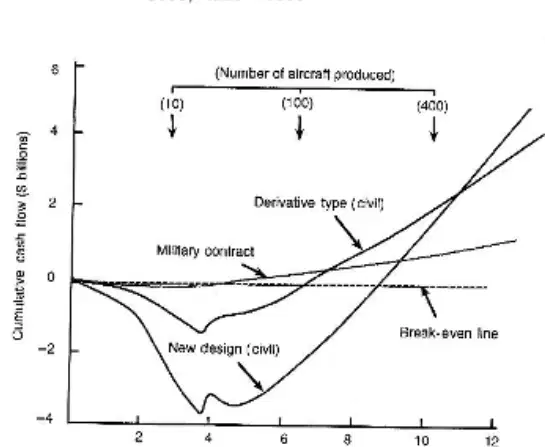
According to the graph, which type of aircraft project reaches the break-even point faster?
new design (civil)
derivative type (civil)
Break even time is shorter for derivative types, but potential returns are reduced.
True
False
In which year did Airbus deliver the first A380-800?
2007
2005
2010
2012
What significant event in the A380 development timeline happened in 2005?
Maiden flight
First commercial delivery
Design finalization
First public unveiling
Which of the following years marks the commercial launch of the A3XX?
2000
2002
2005
2007
What happened in 1993 according to the A380 development timeline?
Boeing cancels similar project
Airbus delivers first A380
A380 makes its maiden flight
Airbus announces the A380 project
The first engine for the A380 was delivered in 2004.
True
False
When was the 'Large Aircraft Division' formed?
1996
1985
2001
2010
Which event occurred first in the A380 development timeline?
Airbus consortium is merged
Market demand researched
Certification and delays
Component-manufacturing starts
What year did certification and delays occur in the A380 development timeline?
2006
2004
2008
2010
According to the timeline, what was researched in 1991?
Market demand
Product design
Financial planning
Customer feedback
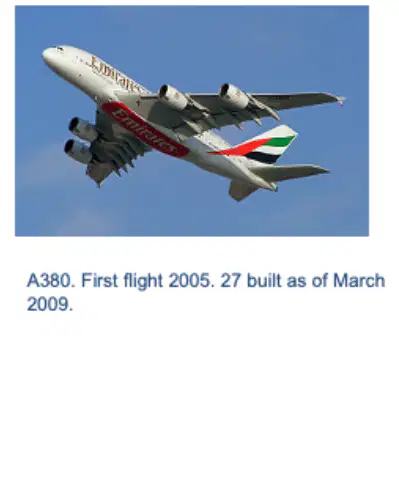
How many A380s had been built as of March 2009?
27
15
42
60
Which year did component-manufacturing for the A380 start?
2003
2001
2005
2007
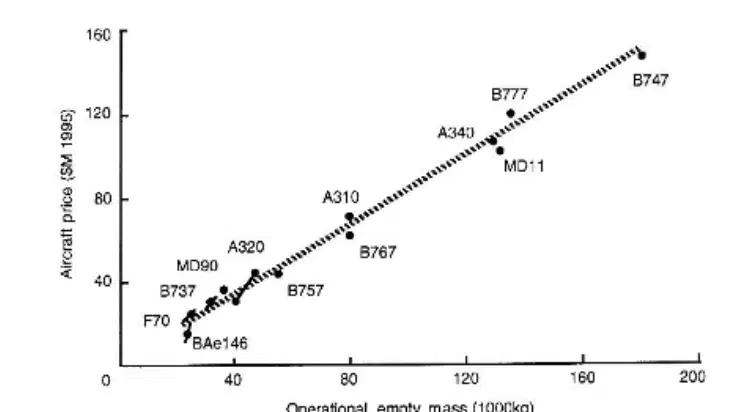
According to the information provided, the cost of an aircraft is approximately proportional to which of the following?
Number of passengers
Operational empty weight
Maximum speed
Fuel capacity
What is the current list price for an A380 according to the information provided?
$325M
$250M
$400M
$500M
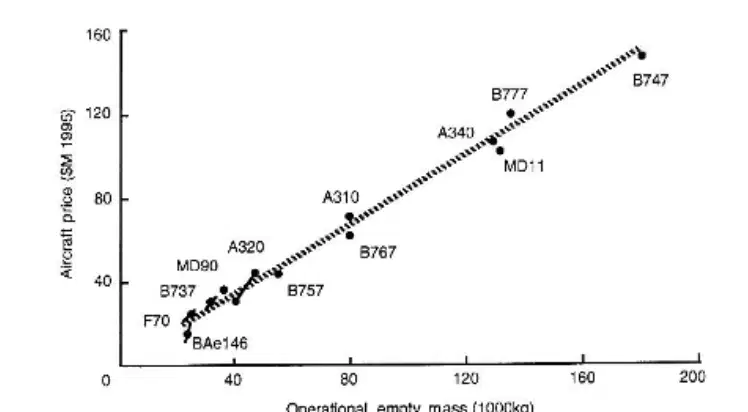
Based on the graph, which aircraft has the highest operational empty mass and price?
B747
A320
B737
MD11
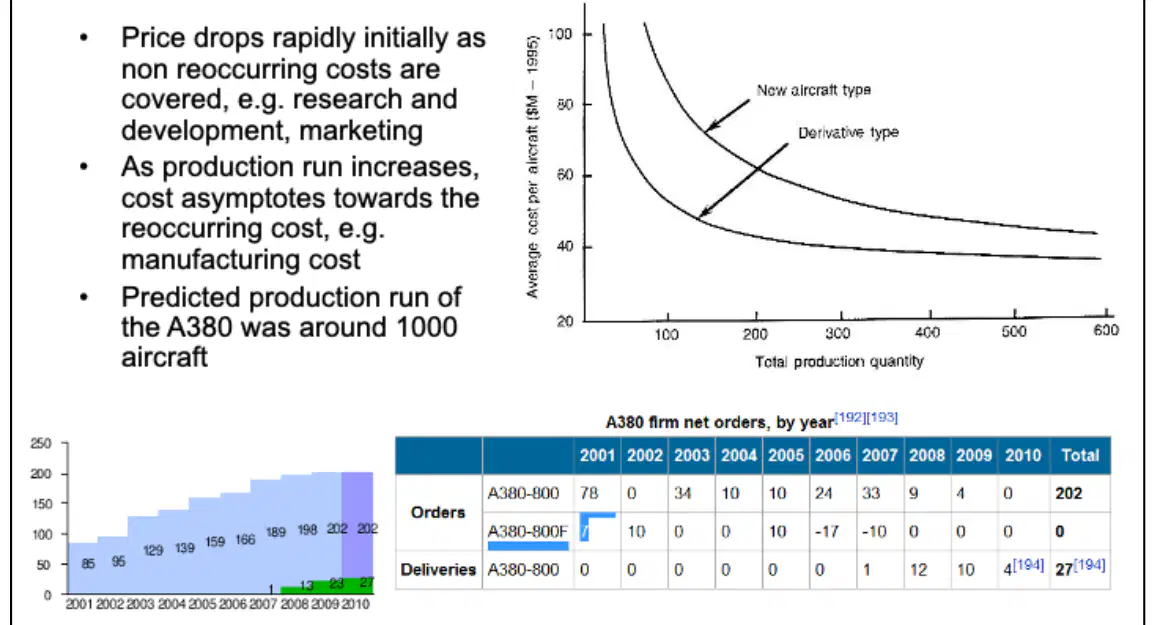
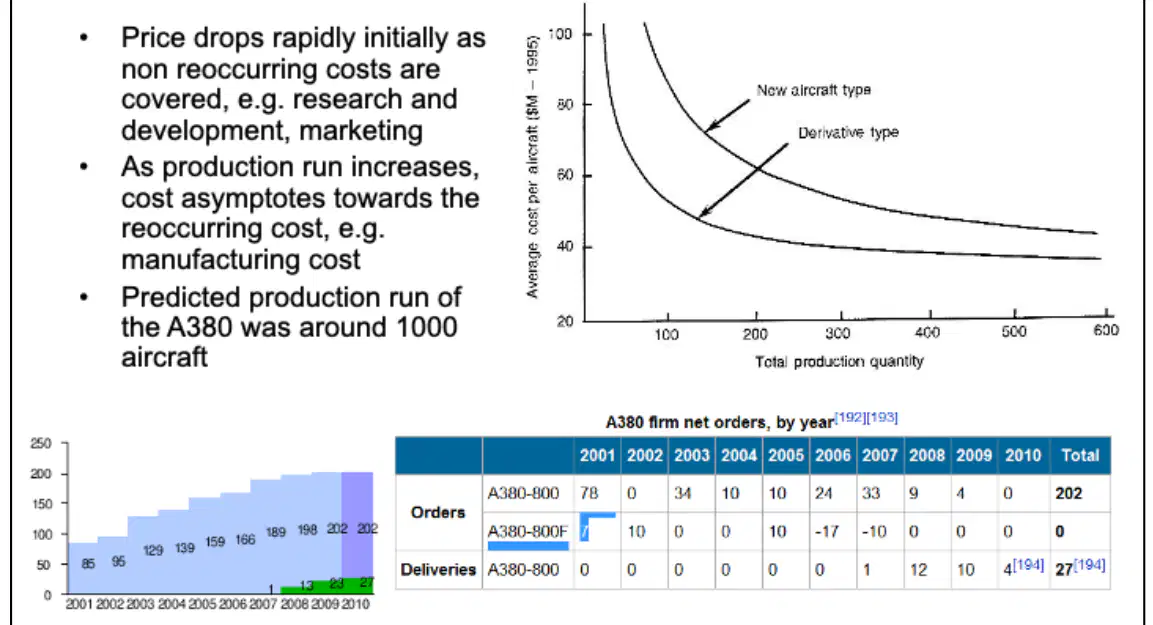
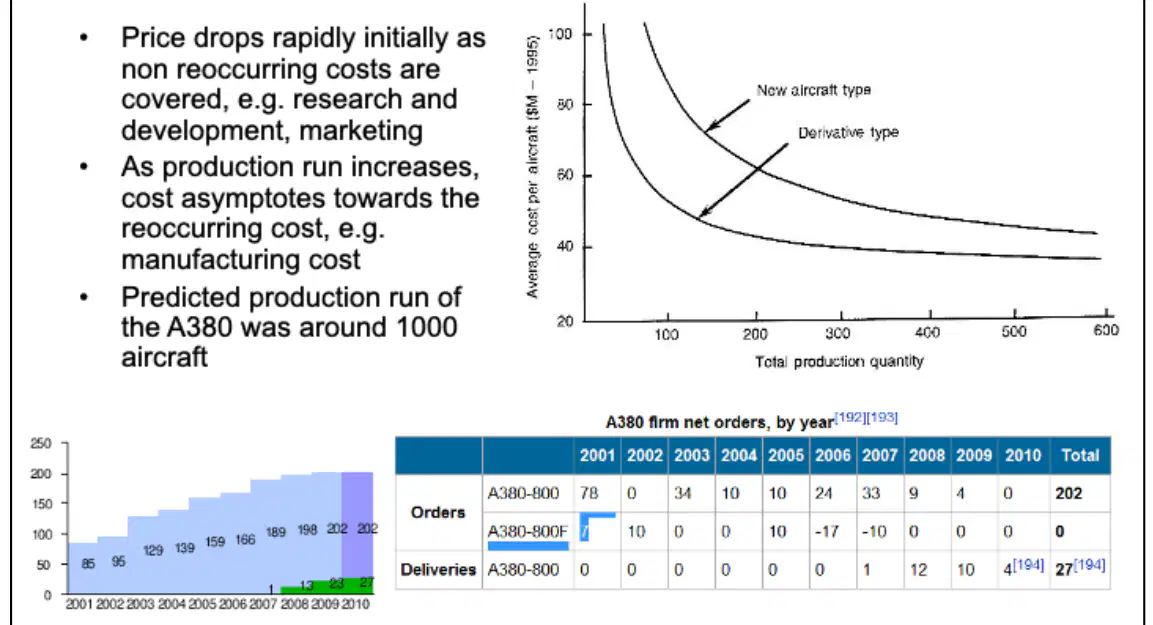
According to the information provided, why does the price drop rapidly initially as production begins?
Because of increased manufacturing costs
Because non reoccurring costs are covered, such as research and development, marketing
Because of higher demand
Because of government subsidies
As production run increases, cost asymptotes towards the ________ cost, e.g. manufacturing cost.
reoccurring
fixed
variable
incremental
What was the predicted production run of the A380?
Around 1000 aircraft
Around 200 aircraft
Around 5000 aircraft
Around 300 aircraft

Which type of aircraft shows a steeper initial drop in average cost per aircraft as production quantity increases?
New aircraft type
Derivative type
Based on the table 'A380 firm net orders, by year', how many A380-800 aircraft were ordered in 2001?
78
50
120
34
The total number of A380-800F orders from 2001 to 2010 was zero.
True
False
How many A380-800 aircraft were delivered in 2010 according to the table?
4
6
8
10
Engine value (and hence price) is based on a combination of which two factors?
Cruise thrust and efficiency (SFC)
Engine weight and fuel type
Engine color and manufacturer
Number of seats and altitude
For RR Trent 900, the cost works out at approximately $____ per Newton of thrust.
$800
$1200
$500
$2000
What is the typical engine cost per seat?
$0.8M
$2.5M
$1.2M
$3.0M
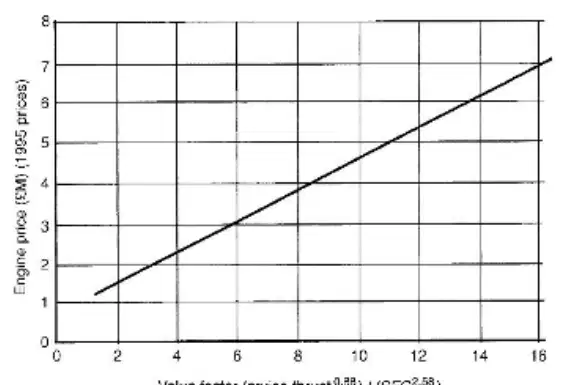
As the value factor (cruise thrust^0.88 / SFC^2.58) increases, what happens to the engine price?
It decreases
It remains constant
It increases
It fluctuates randomly
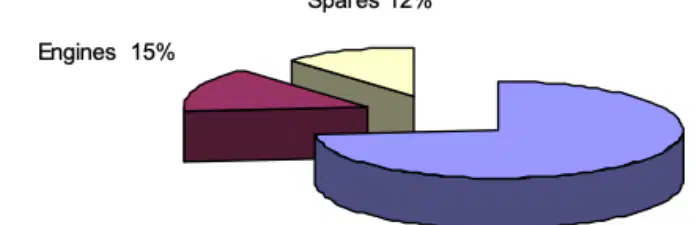
According to the pie chart titled 'Typical purchase price cost breakdown', what percentage of the total cost is attributed to the Airframe?
74%
55%
28%
12%
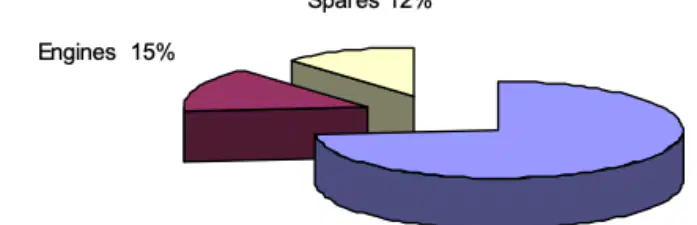
According to the pie chart titled 'Typical purchase price cost breakdown', what percentage of the total cost is attributed to Engines?
15%
25%
35%
45%
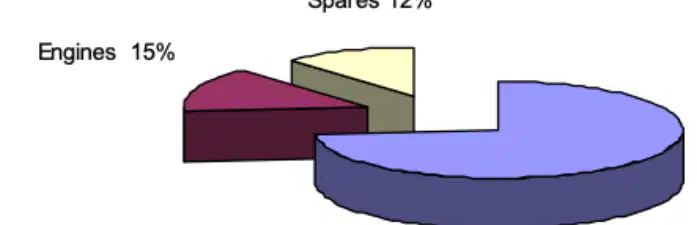
According to the pie chart titled 'Typical purchase price cost breakdown', what percentage of the total cost is attributed to Spares?
12%
5%
20%
30%
What are the principle customers for the civil aircraft?
The airlines
The leasing companies
The manufacturers
The passengers
Indirect Operating Costs (IOC) for an airline are associated with those costs not directly attributable to a particular aircraft or the flying costs of a particular operation. Which of the following is an example of an IOC?
Ground equipment
Aircraft ownership
Fuel
Maintenance
Direct operating costs (DOC) are related to costs directly associated with flying, such as ________, fuel, and maintenance.
aircraft ownership
airport taxes
passenger meals
in-flight entertainment
Interest & Insurance are typically included in Operating Costs for airlines.
True
False
What does DOC+I stand for in the context of airline costs?
Direct Operating Costs plus Interest & Insurance
Direct Overhead Costs plus Insurance
Domestic Operating Charges and Insurance
Discounted Operating Costs and Insurance
What is the typical maintenance cost per flight hour in 2005?
$1500 per flight hour
$500 per flight hour
$3000 per flight hour
$10000 per flight hour
Compare the typical maintenance cost per flight hour for 2005 with that for B2. Which is higher?
B2 ($100,000 per flight hour) is higher than the typical $1,500 per flight hour (2005).
2005 ($1,500 per flight hour) is higher than the B2 ($100,000 per flight hour).
Both have the same maintenance cost per flight hour.
The maintenance cost for B2 is lower than that of 2005.
What are the typical crew costs per flight hour in 2005?
$2000 per flight hour
$500 per flight hour
$8000 per flight hour
$12000 per flight hour
What are the typical fuel and oil costs per flight hour in 2005?
$3000 per flight hour
$500 per flight hour
$10,000 per flight hour
$100 per flight hour
Which of the following is NOT included in airport charges?
Landing at $10 per tonne
Navigation charges $7000 per flight
Passenger handling charges $15 per passenger
Crew accommodation charges
List price is typically depreciated to what percentage over a 16 year operational life?
10%
25%
50%
70%
What is the typical percentage of investment cost per year for interest charges?
5%
2%
10%
15%
Typically, what percentage of aircraft price per year is considered for insurance cost?
1%
5%
10%
0.1%
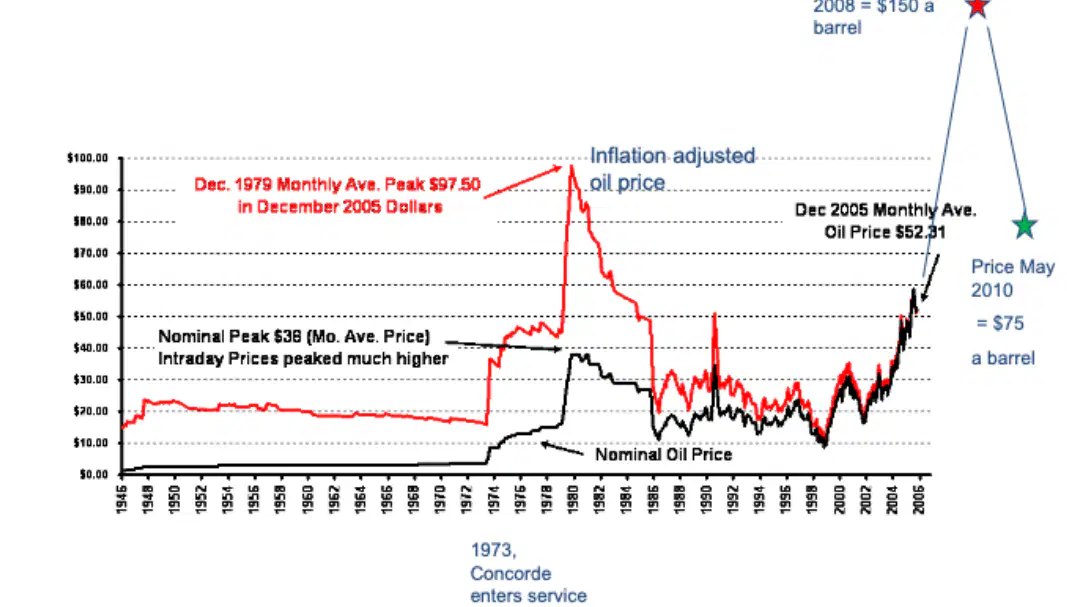
According to the graph titled 'Historical trends in oil price', what was the peak price of oil in 2008?
$52.31 a barrel
$75 a barrel
$97.50 a barrel
$150 a barrel
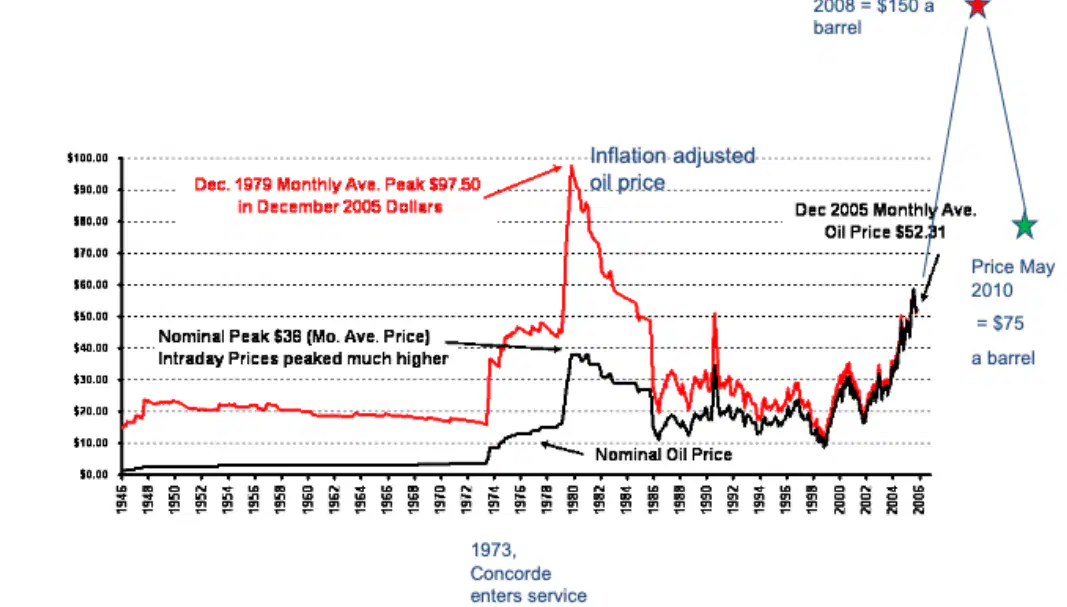
Fill in the blank: The Dec. 1979 Monthly Average Peak in oil price was ______ in December 2005 Dollars.
$97.50
$65.20
$120.00
$83.40
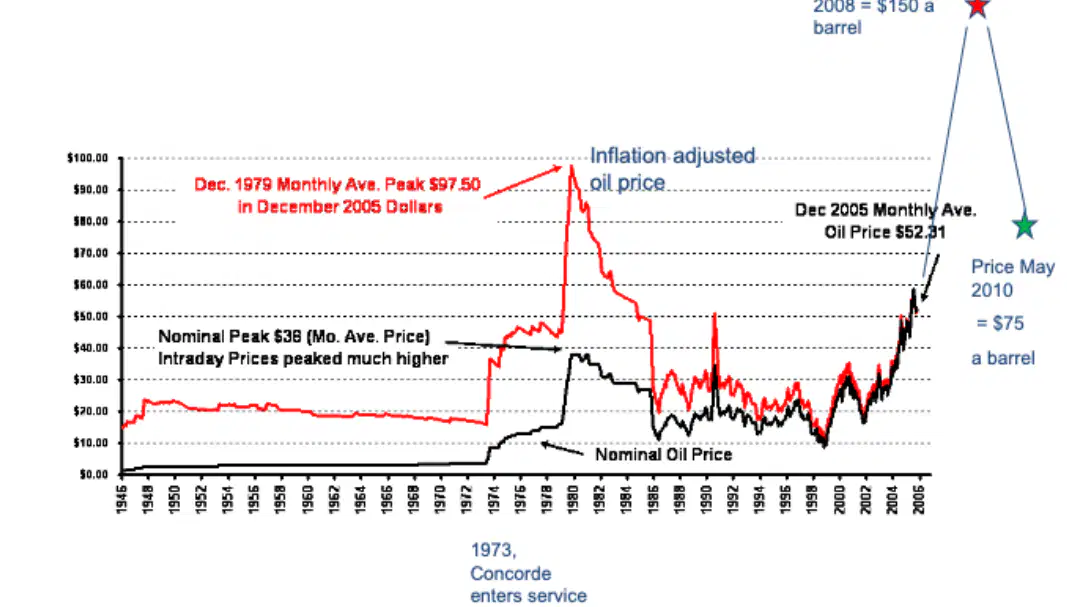
According to the graph, what was the price of oil in May 2010?
$52.31 a barrel
$75 a barrel
$97.50 a barrel
$150 a barrel
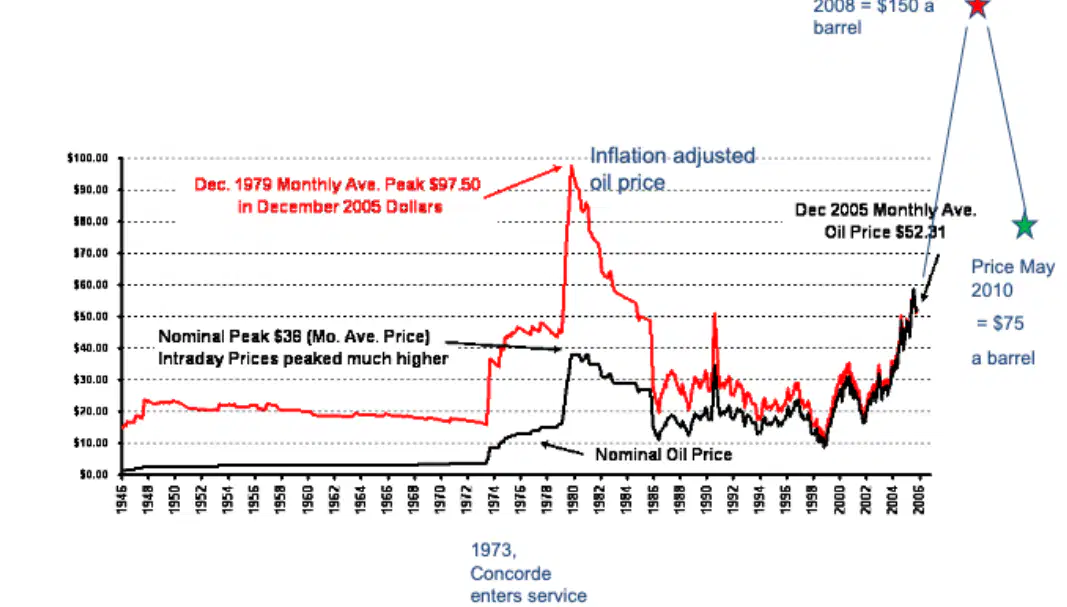
Fill in the blank: The Dec 2005 Monthly Average Oil Price was ______ per barrel.
$52.31
$40.12
$65.78
$58.45
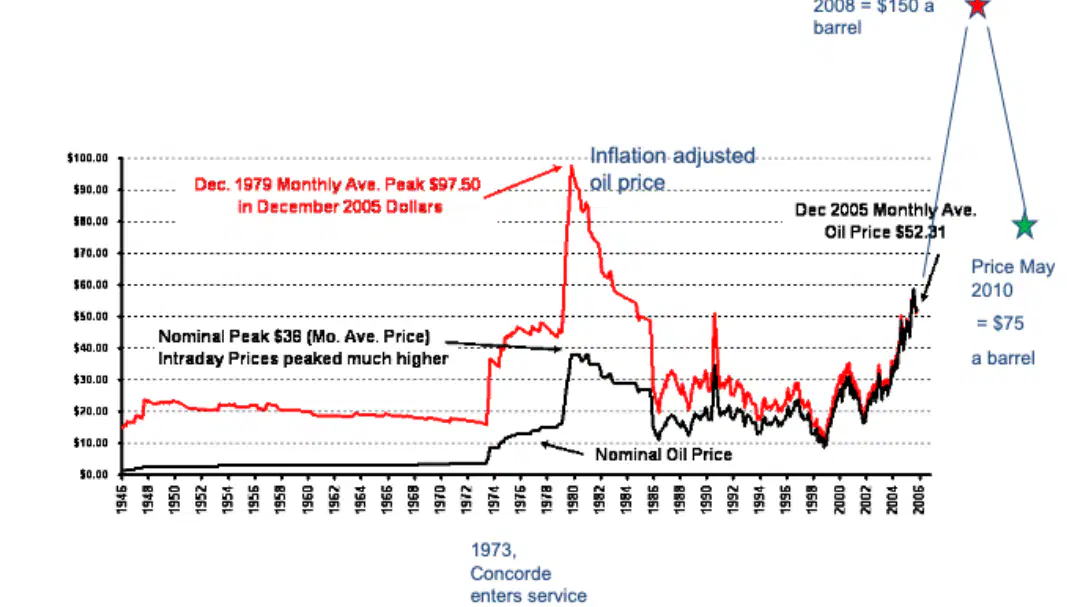
According to the graph, in which year did the Concorde enter service?
1973
1979
2005
2008
What is the number of seats in the aircraft example for DOC estimation?
300
150
450
600
What is the range at maximum payload for the aircraft example for DOC estimation?
7200 nm
5400 nm
8500 nm
6300 nm
What is the cruise speed for the aircraft example for DOC estimation?
M0.825
M0.750
M0.900
M0.700
What is the aircraft maximum take-off mass for the aircraft example for DOC estimation?
243,200 kg
180,000 kg
320,000 kg
150,500 kg
What is the engine take-off thrust (for each engine) in the aircraft example for DOC estimation?
370 kN
250 kN
420 kN
310 kN
What is the cruise SFC for the aircraft example for DOC estimation?
0.55
0.65
0.45
0.75
What is the fuel consumption per engine in the aircraft example for DOC estimation?
5500 kg/hr
3200 kg/hr
7000 kg/hr
4800 kg/hr
What is the aircraft utilization per year in the aircraft example for DOC estimation?
4200 hr/year
2500 hr/year
6000 hr/year
3500 hr/year
What is the engine maintenance cost per engine in the aircraft example for DOC estimation?
$190/hr/engine
$250/hr/engine
$120/hr/engine
$300/hr/engine
What is the airframe maintenance cost in the aircraft example for DOC estimation?
$660/hr (labour) and $218/hr (materials)
$500/hr (labour) and $150/hr (materials)
$700/hr (labour) and $300/hr (materials)
$600/hr (labour) and $200/hr (materials)
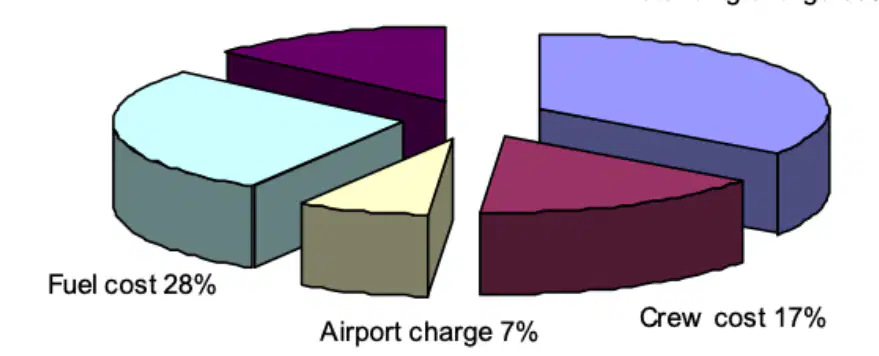
According to the pie chart titled 'DOC breakdown for example aircraft', what percentage of the total cost is due to maintenance cost?
7%
14%
17%
28%
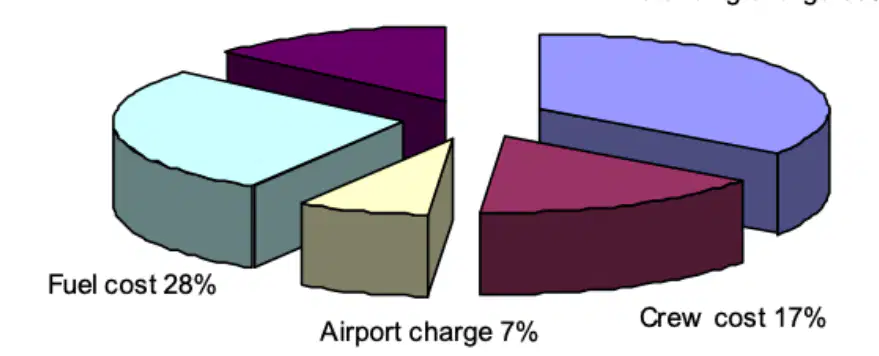
According to the pie chart titled 'DOC breakdown for example aircraft', which cost category has the highest percentage?
Fuel cost
Standing charge
Crew cost
Maintenance cost
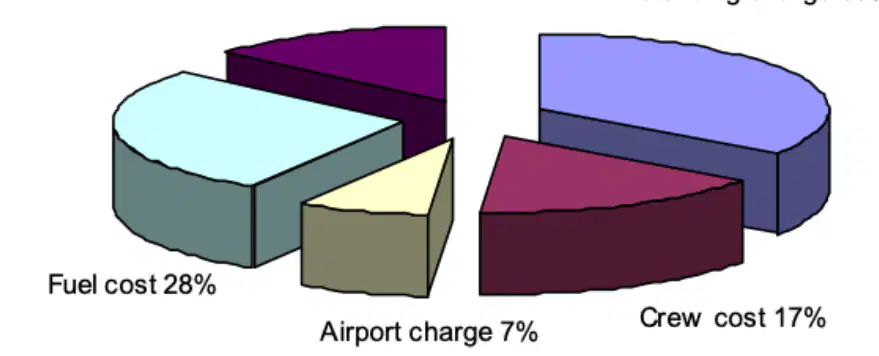
Fill in the blank: According to the pie chart titled 'DOC breakdown for example aircraft', the airport charge is ____% of the total cost.
7%
10%
15%
20%
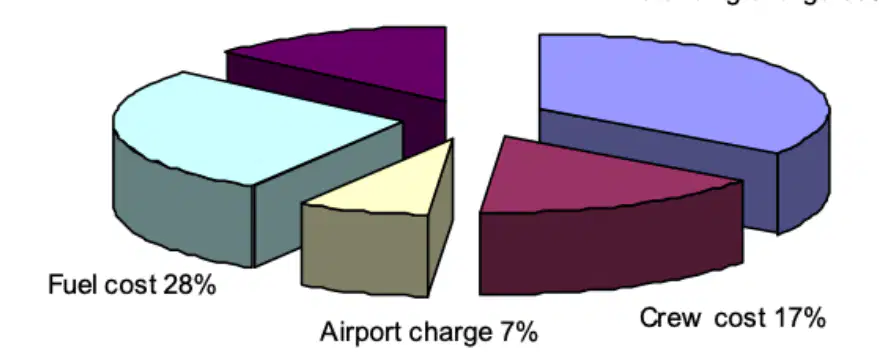
According to the pie chart titled 'DOC breakdown for example aircraft', what is the percentage of fuel cost?
14%
17%
28%
35%
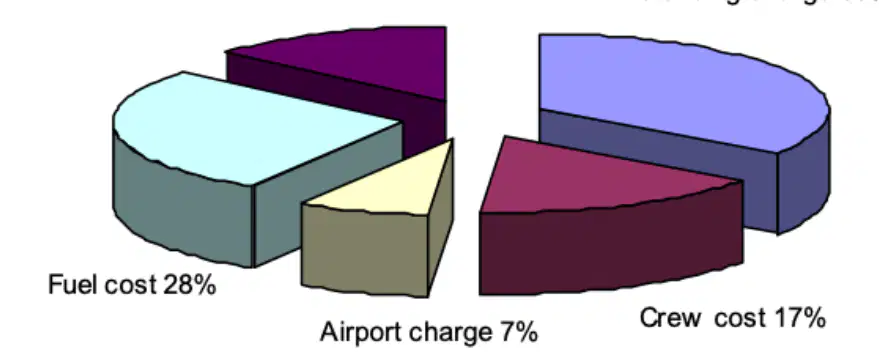
According to the pie chart titled 'DOC breakdown for example aircraft', which of the following is the correct percentage for crew cost?
7%
14%
17%
35%
What is the primary reason commercial aircraft exist?
To carry passengers for leisure
To make a profit
To explore new destinations
To reduce fuel consumption
Which of the following is NOT listed as a type of commercial aircraft operator?
A) Airlines
B) Lessors
C) OEMs
D) Manufacturers
Revenue depends on which of the following factors?
Market demand
Available payload
Both A and B
None of the above
Fill in the blank: Commercial aircraft do this by carrying ______ over a distance.
stuff
water
electricity
messages
According to the procedure, what is the first step in determining the revenue potential for an aircraft?
Determine allowable TOW for the origin
Determine maximum landing weight for a flight based on expected conditions at the destination
Determine the fuel required to fly the payload
Iterate until all conditions are satisfied
If the allowable TOW is less than the desired TOW, you need to reduce it by reducing your landing weight or taking an enroute fuel-stop.
True
False
What should you do if the allowable landing weight is less than the demand?
Increase the payload
Reduce the payload, starting by offloading cargo
Add more fuel
Change the destination
What is the total distance of the route DEN-LHR in kilometers for the Boeing 787-8 scenario?
7517 km
6840 km
8200 km
9000 km
On a hot July day, what is the assumed temperature for the Boeing 787-8 revenue estimate scenario?
40°C
25°C
15°C
32°C
How many passengers (including bags) are booked in the Boeing 787-8 scenario?
230
180
250
300
What is the yield per Revenue Passenger Kilometer (RPK) for passengers in the scenario?
$0.085/RPK
$0.120/RPK
$0.045/RPK
$0.200/RPK
What is the yield per Revenue Tonne Kilometer (RTK) for cargo in the scenario?
$0.15/RTK
$0.25/RTK
$0.10/RTK
$0.05/RTK
What is the assumed reserve fuel for the Boeing 787-8 in this example?
3 tonnes
2 tonnes
4 tonnes
5 tonnes
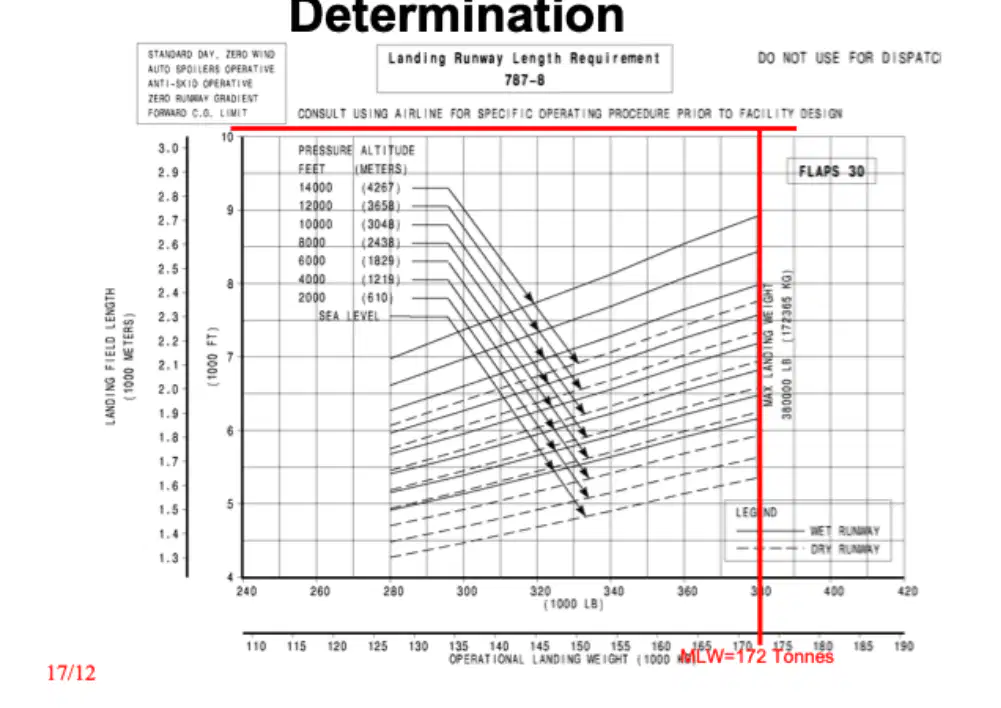
Assume a Dry Day, LHR is at sea level and has 12,000+ ft runways. If the MLW (Maximum Landing Weight) is 172 tonnes, what is the allowable zero fuel weight?
169 tonnes
165 tonnes
160 tonnes
175 tonnes
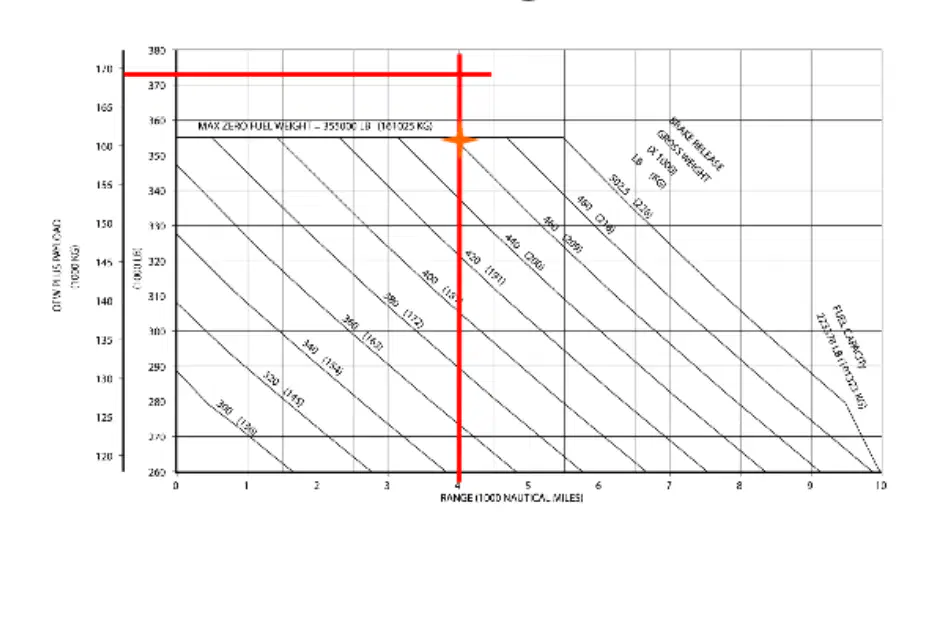
The maximum allowable takeoff weight for Denver on a hot July day is:
50,000 lbs
60,000 lbs
70,000 lbs
80,000 lbs
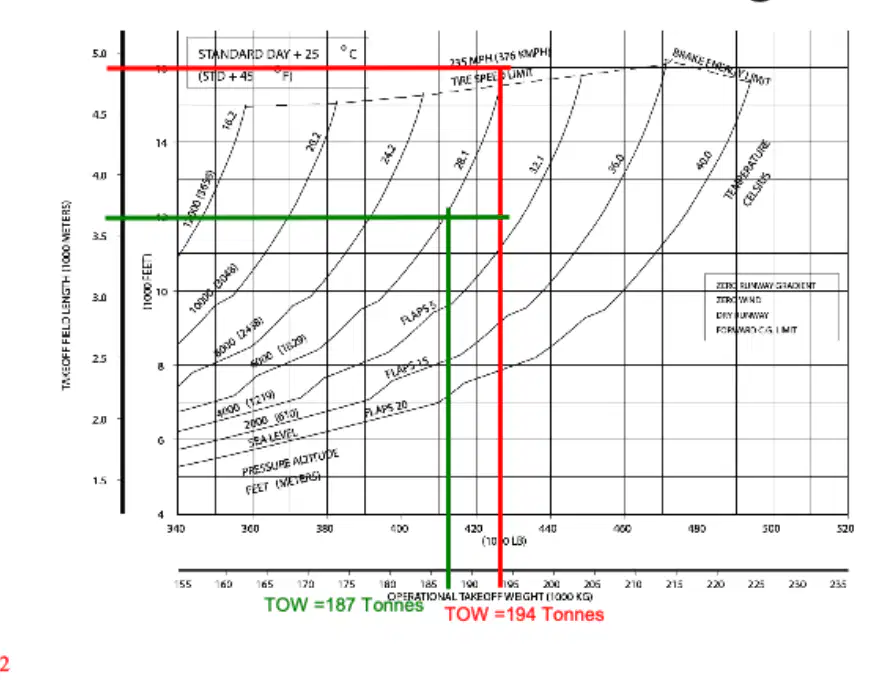
Based on the chart and the scenario described, what is the maximum take-off weight (TOW) for a 16,000 ft runway at Denver in July when the temperature is nearly 40°C and the pressure altitude is 6,000 ft?
187 tonnes
194 tonnes
200 tonnes
210 tonnes
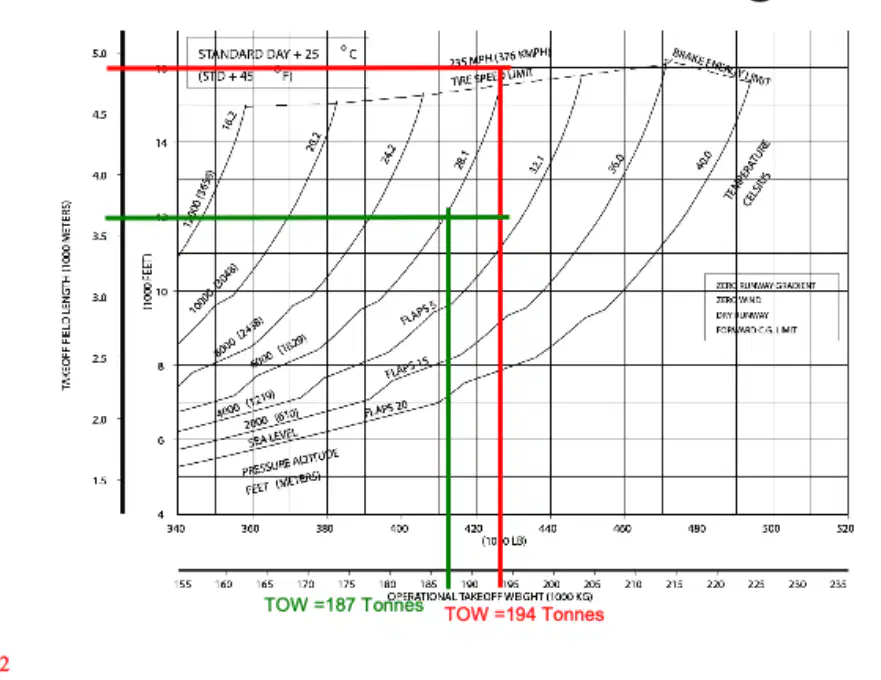
According to the passage, what is the maximum take-off weight (TOW) for a 12,000 ft runway at Denver under the same conditions?
187 tonnes
165 tonnes
200 tonnes
175 tonnes
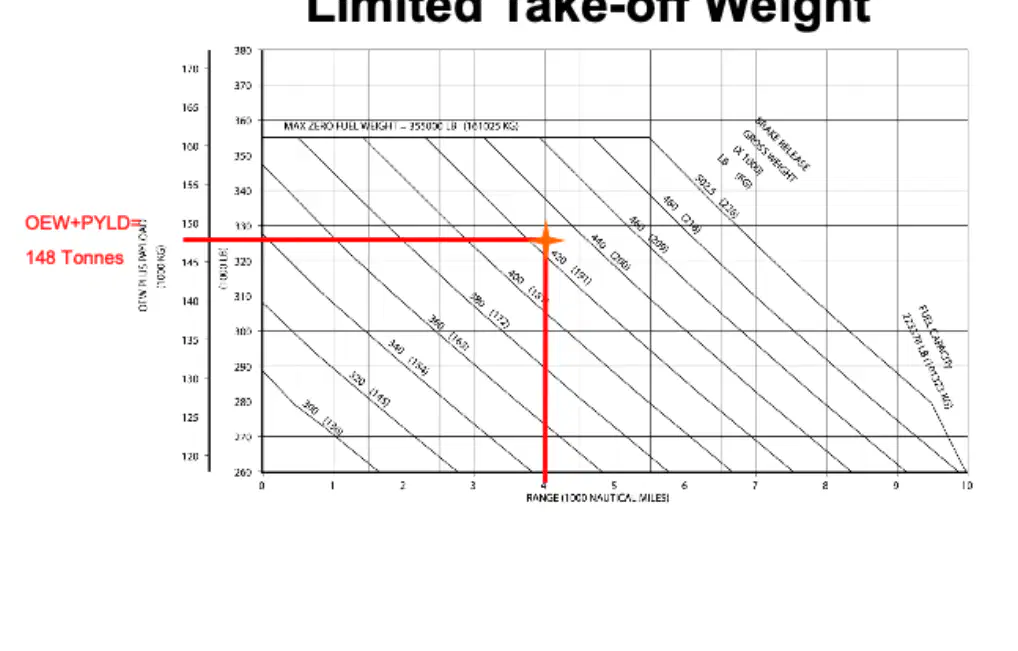
According to the passage and the graph, what is the Zero Fuel Weight (ZFW) limit in tonnes for the scenario described?
148 tonnes
135 tonnes
160 tonnes
142 tonnes
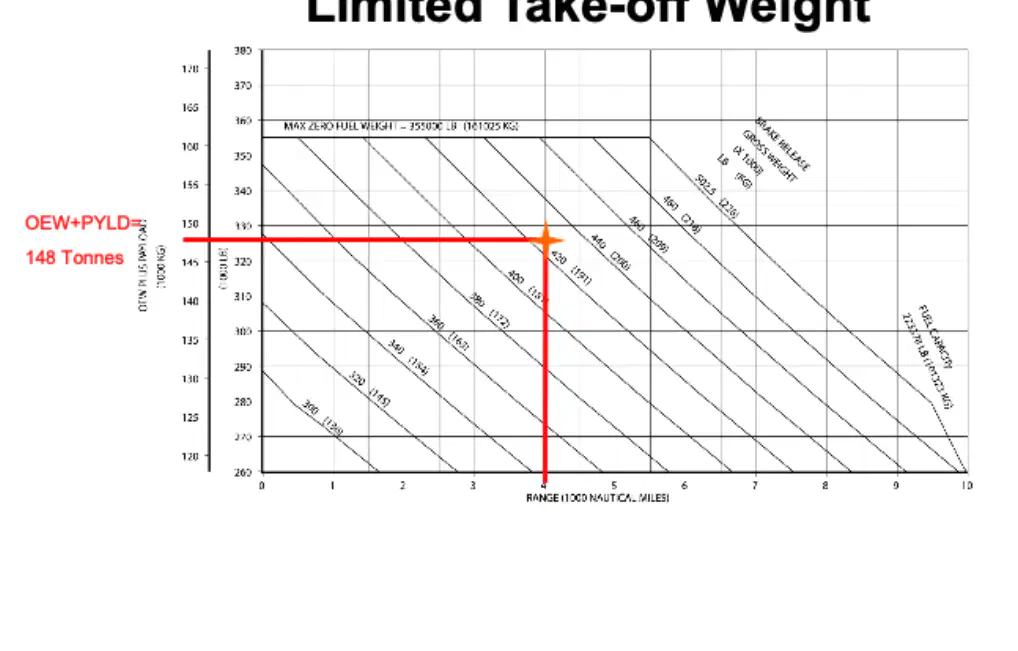
Based on the scenario, what is the payload (in tonnes) that can be carried with a ZFW of 148 tonnes and a TOW limit of 194 tonnes?
27 tonnes
36 tonnes
18 tonnes
46 tonnes
How many kilograms of fuel need to be loaded to carry the payload over 4,000 nautical miles according to the passage?
43,000 kg
35,000 kg
50,000 kg
28,000 kg
In the scenario described, losing 117 passengers means only 113 passengers and their bags can be carried on the flight.
True
False

