
 Worksheets
Traps (Plumbing)
Total questions: 46
Worksheet time: 23mins
What is the purpose of a trap under an appliance?
To increase water pressure
To stop the noxious (unpleasant) smell from the soil stack entering the property
To filter water
To prevent leaks
The majority of traps are made from _________
polypropylene
aluminum
copper
steel
Jointing methods for traps are primarily push-fit and, more commonly, ________ using a rubber seal.
compression
adhesive
soldered
threaded
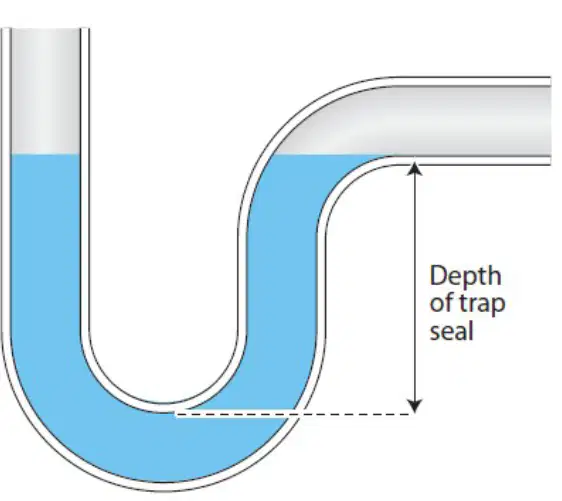
What is the trap seal depth? Fill in the blank: The trap seal depth is the retained depth of ______ stopping the noxious smell entering the property.
water
air
oil
sand
What is the trap diameter for a wash basin?
32mm
25mm
40mm
50mm
What is the trap diameter for a bidet?
32mm
25mm
40mm
50mm
What is the trap diameter for a bath?
40mm
32mm
50mm
25mm
What is the waste fitting size for a shower?
1.5”
1”
2”
0.75”
What is the trap diameter for a shower?
40mm
32mm
50mm
75mm
What is the seal depth for soil stack for a shower?
50mm
25mm
75mm
100mm
What is the trap diameter for a bowl urinal?
40mm
32mm
50mm
75mm
What is the trap diameter for a washing machine?
40mm
32mm
50mm
25mm
What is the waste fitting size for a WC pan?
NA
32 mm
50 mm
75 mm
What is the trap diameter for a WC pan?
75mm or 100mm
50mm
150mm
200mm
According to the passage, appliances can run into a gully trap or a hopper head, both of which then run into the drainage system. What must not be discharged into these traps?
Foul water
Rainwater
Clean water
Greywater
True or False: The flat bottom of the bath and shower tray helps maintain the trap seal by allowing the last little bit of water to run away.
True
False
Why are 'P' and 'S' traps so called?
Because of their shapes.
Because of their sizes.
Because of their materials.
Because of their installation methods.
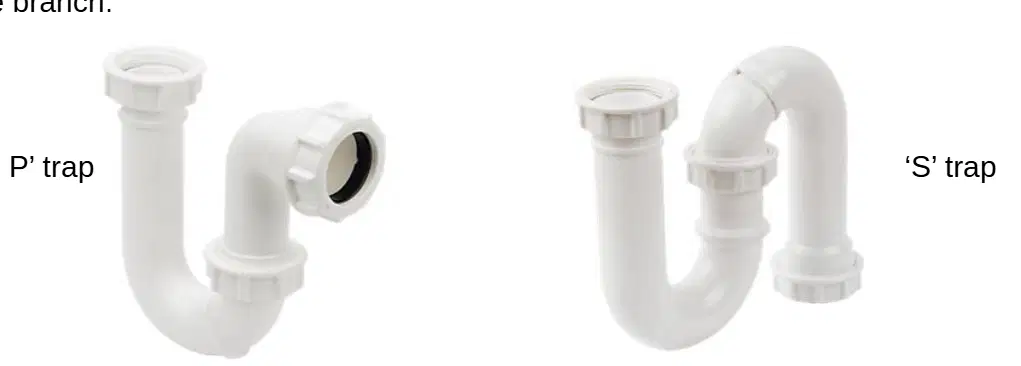
Look at the diagram. Which trap is shown on the left side of the image?
P' trap
S' trap
What is a running trap used for in plumbing?
A running trap is used when the trap needs to be some distance away from the appliance, for example when the space under the appliance is limited. It is installed in the discharge branch itself.
A running trap is used to increase water pressure in the plumbing system.
A running trap is used to filter debris from water before it enters the appliance.
A running trap is used to connect two different types of pipes together.
What is a slimline, pedestal or straight through trap specifically designed for?
A slimline, pedestal or straight through trap is specifically designed for use under a wash-hand basin. The slimline nature of the trap allows the waste to be hidden behind the pedestal.
A slimline, pedestal or straight through trap is specifically designed for use under a kitchen sink to maximize water flow.
A slimline, pedestal or straight through trap is specifically designed for use in outdoor drainage systems to prevent blockages.
A slimline, pedestal or straight through trap is specifically designed for use in industrial waste disposal units.
What are anti-vac or resealing valves used for in plumbing?
They are used if there is a possibility of trap seal loss due to siphonage.
They are used to increase water pressure in pipes.
They are used to filter impurities from water.
They are used to prevent pipe corrosion.
Anti-vac traps can alleviate the problem of trap seal loss if a system is upgraded or additional appliances are added.
True
False
Why are anti-vac traps not recommended on new installations?
Because they may not hold during an air test.
Because they are more expensive than standard traps.
Because they are required by building codes.
Because they increase water pressure.
What feature do anti-vac traps have to avoid siphonage?
They have a small air admittance valve to allow a small amount of air into the waste pipe under negative pressure.
They have a built-in water heater to prevent backflow.
They use a chemical sealant to block odors.
They are made of stainless steel to resist corrosion.

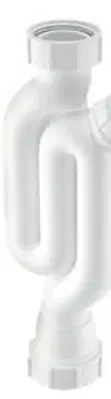
Look at the images of the traps at the bottom of the page. Which of these is an example of an anti-vac trap?
Leftmost trap
Middle trap
Rightmost trap
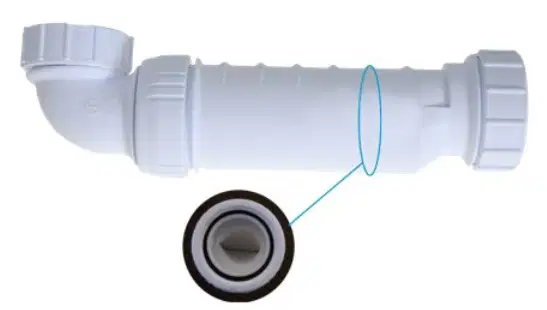
What is a self-sealing waterless valve officially not considered as, and why?
A self-sealing waterless valve is officially not considered a trap because it does not use a seal of water.
A self-sealing waterless valve is officially not considered a vent because it does not allow air to pass through.
A self-sealing waterless valve is officially not considered a filter because it does not remove impurities.
A self-sealing waterless valve is officially not considered a pipe because it does not transport water.
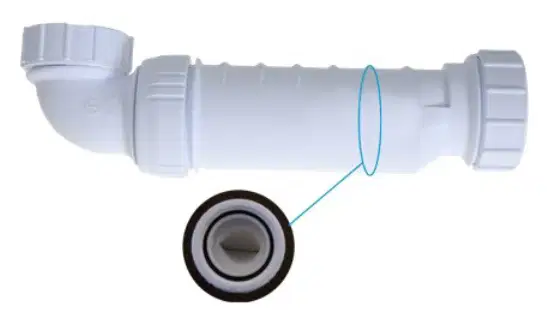
What material is used in a self-sealing waterless valve to create an air tight seal?
Plastic tube
Neoprene rubber tube
Metal spring
Silicone gasket
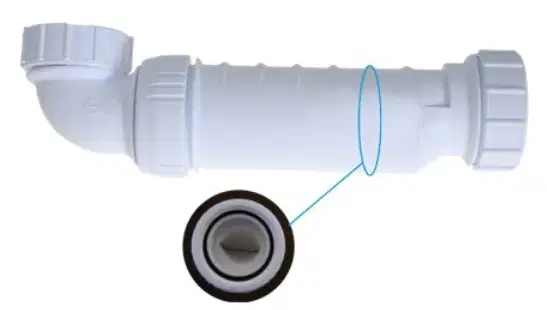
The membrane in a self-sealing waterless valve opens under the flow of water and closes after the discharge has finished.
True
False
Appliances such as kitchen sinks, cleaners’ sinks, and wash-hand basins may discharge directly into the back-inlet gully of a below-ground drainage system.
True
False
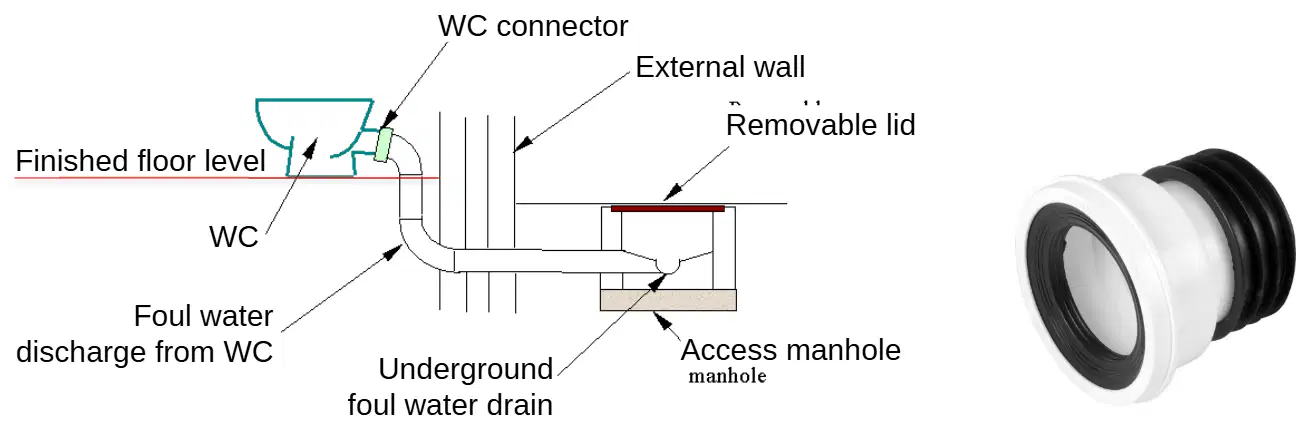
According to the passage, what is used to connect a WC to a ground floor drain?
WC pan connector
Water pump
Air vent
Floor trap
What is the range of outlet sizes for WC pan connectors mentioned in the passage?
50mm to 75mm
75mm to 110mm
100mm to 150mm
60mm to 90mm
Which of the following is a reason for trap seal loss?
Leaks
Freezing
Rust
Blockage
Which of the following is a reason for trap seal loss?
Evaporation
Corrosion
Expansion
Freezing
Which of the following is a reason for trap seal loss?
Wavering out
Sedimentation
Scaling
Erosion
Which of the following is a reason for trap seal loss?
Momentum
Condensation
Oxidation
Clogging
Which of the following is a reason for trap seal loss?
Self-siphonage
Filtration
Precipitation
Distillation
Which of the following is a reason for trap seal loss?
Induced siphonage
Absorption
Diffusion
Sublimation
Which of the following is a reason for trap seal loss?
Compression
Expansion
Melting
Freezing
Which of the following is a reason for trap seal loss?
A) Capillary action
B) Reflection
C) Refraction
D) Dispersion
What is a common reason for trap seal loss in plumbing?
Blockage in the pipe
Leakage of the seal water
Excessive water pressure
Rust formation
Evaporation of trap seal water is commonly experienced in warmer climates and holiday properties due to lack of use of the appliance.
True
False
Fill in the blank: All appliances rely on the seal water being ________ by regular use.
topped up
drained
heated
filtered
What causes 'wavering out' in plumbing trap seals?
High water pressure
Wind passing over the top of a soil stack causing turbulence
Blocked pipes
Excessive use of appliances
What is one effect of wavering out on the trap seal?
It increases water depth
It loses a little water from the seal every time the ripples of water are high enough
It blocks the pipe
It causes leaks in the wall
A wind cowl can assist with the problem of wavering out.
True
False
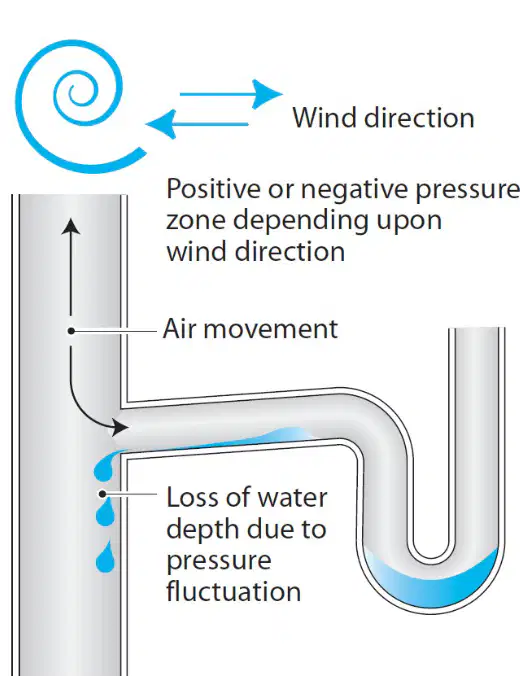
What does the label 'Loss of water depth due to pressure fluctuation' indicate in the context of trap seal loss?
It indicates that water is lost from the trap seal when pressure fluctuations occur due to wind movement.
It indicates that the trap seal is permanently blocked by debris.
It indicates that the water in the trap seal is replaced by air due to evaporation.
It indicates that the trap seal is intentionally removed for maintenance.

