
 Worksheets
Conceptual Physics Sem.2 Final Review
Total questions: 67
Worksheet time: 1hrs 22mins
If a loaf of bread is compressed, its
density decreases.
density increases.
neither of these
When a chocolate bar is cut in half, its density is
halved.
unchanged.
doubled.
If a loaf of bread is compressed, its
density decreases.
density increases.
neither of these
When a chocolate bar is cut in half, its density is
halved.
unchanged.
doubled.

Do all objects have the same density?
yes
no
Find the density of a substance with a mass of 45 grams and a volume of 9 milliliters.
5 kg/L
5 g/ml
45g
36 g/ml

Which liquid has the greatest density?
Corn oil
Shampoo
Antifreeze
Maple syrup
Which liquid has the least density?
Corn oil
Shampoo
Antifreeze
Maple syrup


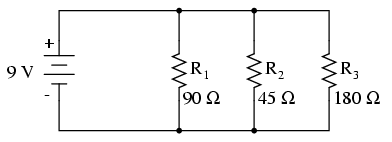
Current is measured in...
volts
amperes
watts
ohms
What is the current drawn by a 5 ohm resistor when it is connected to a 1.5 V battery?
7.5 amperes
3.33 amperes
0.3 amperes
6.5 amperes
What is the resistance of an object that draws 0.24 A when connected to a 120 volt circuit?
0.024 ohms
28.8 ohms
124 ohms
500 ohms
When more light bulbs are added they all remain bright.
Surface tension is the property of water in which...
water molecules at the surface tend to stick together.
water spills easily.
water tends to be see-through.
Describe COHESION.
Water molecules attracted to other substances.
Water molecules climbing upwards against the force of gravity.
Water molecules dissolving many substances because of its polarity.
Water molecules attracted to other water molecules.

Match the following
Solids
Fixed shape, fixed volume
Liquids
Fit the shape of their container
Gases
Expand to fill all space
Force that squeezes a material together.
Compression
Tension
Torsion
Force that stretches a material apart.
Compression
Tension
Torsion
When a load is placed on the middle of a horizontal beam supported at each end, the bottom part of the beam undergoes
tension.
compression.
either of these
When weight is applied to the top of a stone arch, the stone blocks in the arch undergo
tension.
compression.
expansion.
none of the above
Water pressure is greatest against the
top of a submerged object
bottom of a submerged object
sides of a submerged object
none of these
A dam is thicker at the bottom than at the top partly because
water is denser at deeper levels
water pressure is greater with increasing depth
surface tension exists only on the surface of liquids
it looks better
Pumice is a volcanic rock that floats. The density of pumice is
less than the density of water
equal to the density of water
more than the density of water
dependent on the color of the pumice
A completely submerged object always displaces its own
volume of fluid
weight of fluid
density of fluid
all of these
What is the buoyant force acting on a 10-ton ship floating in the ocean?
less than 10 tons
10 tons
more than 10 tons
It depends on the density of sea water.
When an object is partly or wholly immersed in a liquid, it is buoyed up
by a force equal to its own weight
by a force equal to the weight of the liquid displaced
and floats because of Archimedes' principle
but nevertheless sinks
Archimedes' principle addresses
drag force
buoyant force
gravitational force
If an object weighing 50.0 N displaces a volume of water with a weight of 10.0 N, what is the buoyant force on the object?
60.0 N
50.0 N
40.0 N
10.0 N

Two blocks attached to strings are at rest in a liquid, as shown. The only thing known about them is that they have the same dimensions. Which block has a greater mass?
Block A
Block B
Both have the same mass since they are both at rest
The answer can not be determined without knowing the density of the liquid.
Which forces are responsible for capillary action?
Adhesion, cohesion, and surface tension
Gravity and friction
Pressure and temperature
Magnetism and electricity

capillary action
atoms
Water moves opposite of gravity
capillary action
infiltration
porosity
permeability

Amy uses 20N of force to push a lawn mower 10 meters. How much work does she do?
(a)

A 900N mountain climber scales a 100m cliff. How much work is done by the mountain climber?
(a)
if you push a cart with a force of 60 N for 2 m... how much work have you done
120 J
30 J
120 N
30 N


You move a 0.8 kg object five meters in 4 seconds. How much power have you generated?
160 watts
10 watts
6.4 watts
17 watts
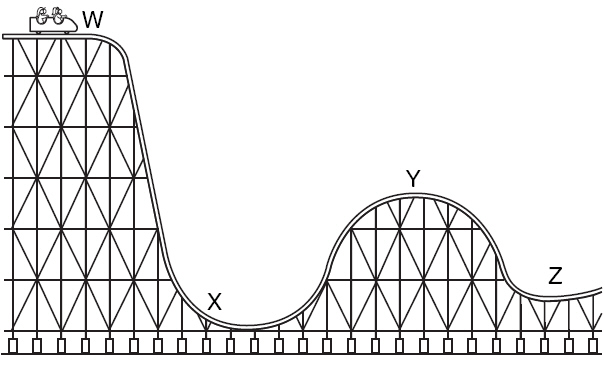
Which object has the most potential energy?
A ball resting on the ground.
A ball being thrown at 100 miles per hour.
A ball on top of a refrigerator.
A ball resting on the edge of a cliff.
The law of Conservation of Energy says________
energy is constantly created
energy can not be created or destroyed instead it changes from one form to another
energy can not change forms

Electrons have a __________ charge.
positive
negative
neutral
Protons have a __________ charge.
positive
negative
neutral

An object becomes electrically charged when the atoms in the object gain or lose
electrons
protons
neutrons
all of the above
Which statement does NOT describe how electric changes affect each other?
positive and negative charges attract
positive and negative charges repel
two positive charges repel
two negative charges repel

