
 Worksheets
Effective Communication Skills Quiz
Total questions: 66
Worksheet time: 55mins
Which of the following is an example of listening actively?
Ignoring the speaker and looking out the window
Looking at the speaker and nodding your head
Talking to your friend while someone is speaking
Drawing pictures during the discussion
What should you do if you do not understand something someone says?
Stay quiet and hope you figure it out later
Ask a relevant question to clarify
Ignore the information
Change the subject
Which of the following is a basic step in following oral instructions?
Guessing what to do next
Listening carefully to each step
Doing only the first step
Ignoring the instructions
If your teacher says, "First, take out your math book. Next, open to page 10," what should you do first?
Open to page 10
Take out your math book
Close your book
Start reading aloud
Which of these is important for speaking clearly?
Speaking very quietly
Using correct enunciation
Mumbling your words
Speaking with your mouth closed
What does it mean to make eye contact when speaking?
Looking at the floor
Looking at the person you are talking to
Looking at the ceiling
Closing your eyes
Which of the following is a rule you might follow when working in a group?
Talk over everyone else
Listen when others are speaking
Ignore group decisions
Do all the work yourself
What does it mean to work collaboratively?
Work alone
Work together with others
Ignore your teammates
Do not share ideas
Which of the following is an example of polite conversation?
Interrupting someone while they are talking
Saying "please" and "thank you"
Yelling at your friend
Ignoring someone who greets you
What should you do if someone says "hello" to you?
Ignore them
Say "hello" back politely
Walk away
Yell at them
If you hear a story and want to know more, what is a good question to ask?
"Can you tell me more about what happened next?"
"Why are you talking?"
"Can I go home now?"
"Is it time for lunch?"
After listening to a classmate's presentation, what is a relevant comment you could make?
"I liked how you explained the main idea."
"I don't like your shirt."
"Can I go to the bathroom?"
"I wasn't listening."
Your teacher gives these instructions: "First, draw a circle. Next, color it blue. Then, write your name inside." What should you do after drawing the circle?
Write your name inside
Color it blue
Erase the circle
Close your notebook
If you are asked to restate instructions to a friend, what should you do?
Repeat the instructions in your own words
Make up new instructions
Ignore your friend
Tell your friend to guess
You are giving a short talk about your favorite animal. Which of these will help you communicate your ideas effectively?
Speaking too fast to be understood
Using a clear voice and making eye contact
Whispering so no one can hear
Looking at the floor
When discussing a topic in class, how can you make sure others understand you?
Speak clearly and use correct language
Use slang and mumble
Talk very quietly
Only use gestures
Your group is working on a project. What is a good way to follow group rules?
Take turns speaking and listen to each other
Only one person does all the work
Ignore the group plan
Talk over everyone else
If your group has a disagreement, what should you do to work collaboratively?
Listen to everyone's ideas and find a solution together
Argue until you get your way
Leave the group
Ignore the problem
You are meeting someone new. What is a polite way to start a conversation?
Say "Hi, my name is..." and smile
Ignore them
Walk away
Yell at them
If someone shares good news with you, what is a polite response?
"That's great! Congratulations!"
"I don't care."
Ignore them
Change the subject
You listened to a story about a lost puppy. What question could you ask to learn more about the puppy's adventure?
"Where did the puppy go after it got lost?"
"What is your favorite color?"
"Can I have a snack?"
"Is it raining outside?"
After hearing a classmate's report, how could you use evidence from their presentation to make a comment?
"You said the cheetah is the fastest animal. I liked learning that fact."
"I don't like animals."
"Can we go outside?"
"I wasn't paying attention."
Your teacher gives these instructions: "First, cut out the shapes. Next, glue them on the paper. Then, draw a border." How would you plan to complete this task in order?
Cut, glue, then draw
Draw, glue, then cut
Glue, cut, then draw
Draw, cut, then glue
You are asked to give instructions to a friend on how to make a sandwich. How would you organize your instructions?
List the steps in the correct order, one at a time
Say all the steps at once in a random order
Only give the last step
Tell your friend to guess
You are presenting a project to your class. How can you plan to use your voice and body language to communicate your ideas?
Speak at a steady pace, use eye contact, and stand up straight
Speak very fast and look at the floor
Whisper and turn away from the class
Sit down and mumble
During a discussion, how can you use conventions of language to make your ideas clear?
Use complete sentences and correct grammar
Use only one-word answers
Use made-up words
Speak in a different language
Your group is having trouble agreeing on a topic. What is a good strategy to help everyone work together?
Suggest everyone shares their ideas and then vote
Only let one person decide
Ignore everyone's ideas
Argue until someone gives up
If a group member is not following the agreed-upon rules, what should you do?
Remind them of the rules politely and ask them to join in
Yell at them
Ignore them
Leave the group
You are in a new situation and want to start a polite conversation. What is a good way to begin?
Greet the person and ask how they are doing
Ignore everyone
Talk about yourself only
Walk away
If someone is upset, how can you use social communication to help them feel better?
Listen to them and say kind words
Tell them to stop being upset
Ignore them
Laugh at them

When you’re actively listening, you should look ________.
at the ground
at the speaker
out the window
Hearing, thinking about and responding to another person’s message is
“I” Message
Active Listening
Body Language
Mixed Messages
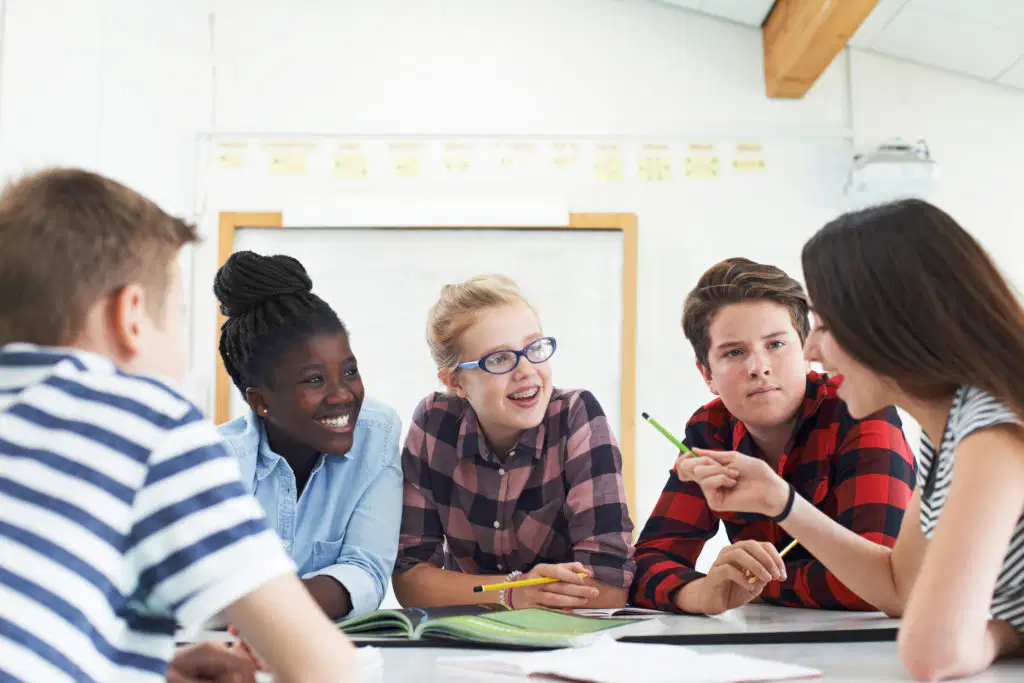
Sandra is actively listening to Courtney. She is most likely ________.
nodding and trying to put himself in her shoes
telling Courtney she is wrong before she finishes speaking
facing away from Courtney

Which of the following is a sign of active listening?
paraphrasing, or summarizing what someone said
interrupting, or talking over someone
changing the subject


Why is active listening a "two-way street"?
because if you listen to others, you can force them to listen to you
because both the listener and the speaker give and receive something
because it means you are walking and being active while you listen

Which of the following is a verbal cue you can use to show you’re actively listening?
interrupting
humming a familiar song
asking a follow-up question

Which posture best shows that a person is actively listening?
slouching
lying down
sitting up straight
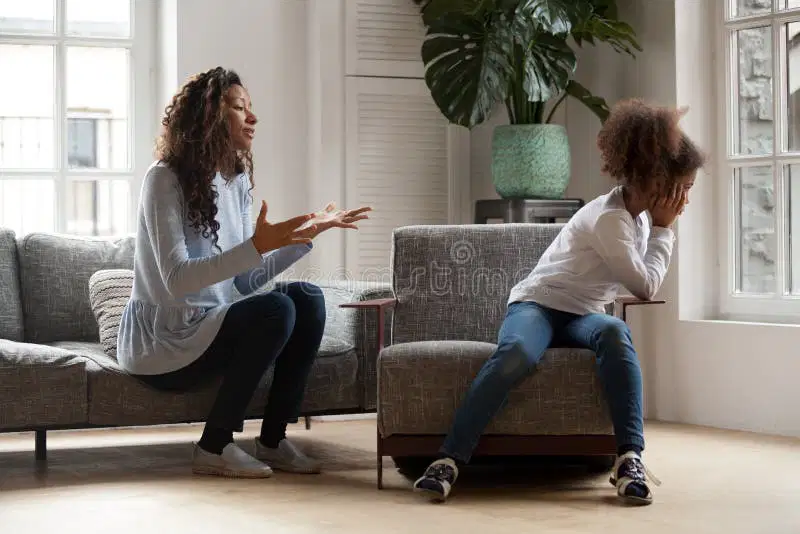
The grown-up is talking to Mary, but Mary is not actively listening. The grown-up probably feels ________.
relaxed
frustrated
happy
What is verbal communication?
Talking to someone
Whens someone is talking and someone else is listening
When more than one person is talking
Use verbal noises to show you are listening

The use of sounds and words to express yourself
Non-Verbal Communication
Customer Service
Interpretive Dance
Verbal Communication
Trying to impress, Repeating what others have said, and Making too many gestures are the ideal ways of particiapting in a GD?
True
False
GDs can be used
In recruitment for a job
To get admission into a study program
To find realistic answers to a problem
All of the above
A group discussion is the communication between ………. of a specific group.
agents
directors
members
interviewers
Effective interpersonal communication involves:
Only speaking about topics you are interested in
Making assumptions about what the other person knows
Sharing personal stories to build rapport
Ignoring nonverbal cues to focus on the spoken words
Which of the following is communicating ideas and emotions non verbally by changing one's face?
The tone of voice in communication can:
Be ignored if the words are polite
Change the meaning of the words spoken
Be irrelevant in written communication
Only be important in formal settings
Which example is a form of nonverbal communication?
Talking
Crossing arms
Singing
Which one of the following is not an example of nonverbal communication?
no slang
eye contact
handshake
speaking loudly
What is nonverbal communication?
Using facial expressions, gestures, etc.
Using your words
Talking face-to-face
Being silent
A situation in which your words say one thing but your body language says another is
An “I” Message
A mixed message
Body Language
Active listening
Our facial expressions, tone of voice, movement, appearance, eye contact, gestures, and posture are called _____________________.
verbal communication
nonverbal communication

A situation in which your words say one thing but your body language says another is
An “I” Message
A mixed message
Body Language
Active listening
Which one is a polite way to enter into a discussion?
May I say something?
Sorry, but
What is the polite way to ask for something to be passed at the dinner table?
"Give me that!"
"Hey, pass me the salt."
"Could you please pass the salt?"
Grab it yourself without asking
Thank you
A person who typically doesnt help out in group projects and doesn't offer comes up to you and says "hey i need help on this video, can you help?"
yes
no
What is a key characteristic of effective communication in a team setting?
Ignoring team members' opinions
Active listening and empathy
Dictating orders without explanation
Being overly critical of others
What is synergy?
Fighting with others
Working together in order to get something done
Working alone to accomplish something
Rejecting the ideas of other people
synergy is the idea that...
by working together they can achieve more than each individual can on their own
by working together they can achieve more than they wanted to because they had more people
by working separate they can achieve more than all the individuals combined
Video Question: What is something you will NOT be expected to do?
get along with your co-workers
know how to do every single job at your workplace
get along with your boss
ask for help when needed

