Worksheets
Grade 10 Geography Final 2025
Total questions: 147
Worksheet time: 2hrs 32mins


Areas near the sea are cooler in summer and warmer in winter.
True
False


What is monsoon?
It is a seasonal wind which lasts for several months.
It is a simple wind which lasts for several months.
What causes wind?
differences in air pressure
differences in gravity
difference in oxygen
differences in the thermosphere
What causes differences in air pressure?
even heating of the Earth
Even cooling of the earth
uneven heating of the earth
global warming
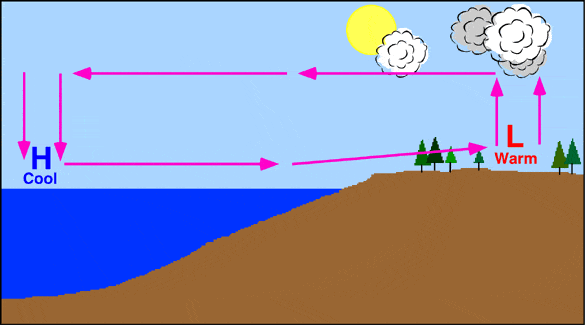


Air moves from _______ pressure to ________ pressure.
high to low
low to high
high to high
low to low
where does convectional rainfall occur ( choose 1 or more answers )
in the northern hemisphere
in places where the land gets heated by the Sun
in places where it is very cold
in deserts
in tropics
Condensation occurs at
saturation point temperature
dew point temperature
cooling point temperature
vapour point temperature
The amount of water vapor in the air is known as ___.
dew point
humidty
relative humidity
rain
Which one of the following is an accurate relative humidity reading?
32 degrees
24 mL
45%
15 NW
When the air is full of water and has a relative humidity of 100% it is said to be ___.
full
humid
saturated
warm
The condition of the atmosphere at a certain time and place is referred to as ___.
weather
climate
relative humidity
dew point
Which will hold more water, warm air or cold air?
Warm Air
Cold AIr
Dew is what?
Water that is pushed out by plants
Water that was a gas in the atmosphere, but when it cooled turned into liquid water touching a solid object
Water from the ground

colder air = higher humidty
warmer air = higher humidity

How are the winds in the northern hemisphere different from winds in the southern hemisphere?
Winds in the northern hemisphere are deflected right; winds in the southern hemisphere are deflected left
winds in the northern hemisphere are deflected south; winds in the southern hemisphere are deflected north
winds in the northern hemisphere are deflected eart; winds in the southern hemisphere are deflected west
winds in the northern hemisphere are deflected left; winds in the southern hemisphere are deflected right


According to the map, which shows isobars, which location has the fastest wind speeds?
A
B
C
D

According to the map, what is a possible value for location A?
1028
1024
1030
1034

Base your answer on the data table below, which shows the air pressures and air temperatures collected by nine observers at different elevations on the same side of a high mountain. The data were collected at 12:00 noon on a clear, calm day.
From an elevation of 400 meters to 1000 meters, the air pressure decreased at a rate of
0.1 mb/m
10 mb/m
60 mb/m
600 mb/m

What is a monsoon?
an adorable little animal that hunts snakes and could eat your face off
a seasonal wind that brings intense rainfall during part of the year
A large scale tornado
an earthquake in Asia
Land heats and cools faster than water causing wind and weather.
Monsoons develop as a result of
large changes between the temperatures of a continent and neighboring oceans
a continent and neighboring oceans having nearly the same temperatures
air rising over Earth's equatorial region
air sinking over Earth's polar regions
Standard atmospheric pressure is approximately _____ pounds per square inch
1013
29.92
760
14.7
Winds always go from ________.
low to high
high to low
Winds around high pressure areas move _____.
in
out
Winds around a low pressure center usually move _____.
in
out
When warm air rises it will _____ due to the difference in pressure at higher altitudes.
shrink
expand
do what it wants
The pressure tendency is more important than the actual atmospheric pressure when trying to understand current and upcoming weather events.
true
false
What kind of weather can you expect if the pressure is falling?
"good" weather; clearing conditions
"Bad" weather; increasing cloudiness, rain, etc.
no change in current weather
What kind of weather can you expect if the pressure rising?
"good" weather; clearing conditions
"bad" weather; increasing clouds and rain
nothing different; all the same
What would be noticed on a weather map if there were strong/fast winds in the area?
close isobars
far apart isobars
evenly spaced isobars
Around which type of pressure center would you be most likely to find clear conditions with little to no wind?
high
low
none of the above
Which of the following is NOT true about Hurricane?
It is a tropical storm
With winds of at least 85 miles per hour or greater
Usually accompanied by rain, thunder, and lightning.
Forms over water with at least 80 degrees Fahrenheit.
Which of the following is formed over the South Pacific and Indian Ocean?
Hurricane
Typhoon
Cyclone
Thunderstorms
Which of the following best describes a typhoon?
They are formed over the Northwest Pacific Ocean.
Form over the North Atlantic Ocean and Northeast Pacific.
Formed over the South Pacific and Indian Ocean.
Formed over bridge over troubled water
Which of the following are the parts of a hurricane?
eye, eyelid, spiral rainbands
eye, eyelash, spiral rainbands
eye, eye wall, spiral rainbands
eye, eye drop, spiral rainbands
Which part of the hurricane is considered as the calmest part?
eye
eyewall
eyelid
spiral rainbands
Which of the following best describes hurricane's eye wall?
It has the clearest skies and lightest winds
It has the heaviest precipitation and strongest winds
These are cluster of clouds that surrounds the hurricane
All of these
True or False.
Hurricanes form in tropic regions where ocean water is at least 80 degrees Celsius.
True
False
True or False.
Warm and moist air acts as fuel for the developing hurricane.
True
False
True or False.
Many hurricanes in the US form from disturbances that develop over Europe and blow westward across Atlantic ocean.
True
False
True or False.
When warm moist air rises into the atmosphere, it will cool down and condense to form droplets and big stormy clouds.
True
False
True or False.
Once the spinning winds reaches 74 mph, the storms has officially become a hurricane.
True
False
How many categories were there to classify hurricane's intensity?
three
five
eight
ten
Which of the following is properly paired?
Category 1 - Strong
Category 2- Moderate
Category 3-Very Strong
Category 4- Weak
Which of the following Hurricane Category described as strong with 111-129 mph wind speed?
Category 1
Category 2
Category 3
Category 4
Category 5
Which of the following statements best describes Category 5 Hurricane?
at least 74mph wind speed
111-129 mph
130-156 mph
157 or higher mph
Under what circumstances a hurricane die?
when it lands warm and moist air
when it lands cold surfaces and land.
when the clouds are cirrus and altostratus
when the wind blows it to different direction
What hurricane category Katrina is classified?
Category 1
category 2
Category 3
Category4
Hurricane Katrina happened on _______________.
August 29, 2002
August 29, 2003
August 29, 2004
August 29, 2005
What part of a hurricane is considered as the strongest because this is where the heaviest precipitation and strongest winds are found?
eye
eyelid
eyewall
spiral rainbands
What do you call a scientist that study weather?
(a)
How warm must the water be in order to form a tropical cyclone?
26 degrees Celsius
20 degrees Celsius
35 degrees Celsius
18 degrees Celsius
What creates the low pressure system at the surface?
Cool, dry air sinking
Warm, moist air sinking
Warm, moist air rising
Cool, dry air rising
What do you call the center of a tropical cyclone?
Eyewall
Eye
Heart
Core

The eye forms at the center of the tropical cyclone.
At the eye of the tropical cyclone, cool and dry air is _____.
sinking
rising
What type of weather is associated with the eye of the tropical cyclone?
Calm, dry and clear weather
Stormy and windy weather
What happens when a tropical cyclone makes landfall?
*Landfall refers to the point where the center of a tropical cyclone meets the coastline.
Weakens
Picks up speed
Stronger wind speeds
Smaller storm surge

Which hemisphere is this tropical cyclone found in?
Northern Hemisphere
Southern Hemisphere
What are the dangers of a tropical cyclone?
Check all the possible answers.
strong winds
storm surges
high relative humidity
earthquakes

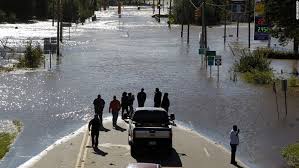
Which of the following does NOT occur in tropical storms?
Strong winds
Heavy rainfall
Coastal flooding from the sea
Heavy snowfall
Cyclones have _________________ pressure at the centre.
Low
High
Gradient
Steep
What causes a hurricane to rotate and spin the way it does?
Ocean Currents
Optical Illusion Effect
Coriolis Effect
Mary-go-round Effect
What is used to measure the strength of a hurricane?
Fujita Scale
Weather Men
Weather Women
Saffir/Simpson Scale

This is...
storm surge
thunderstorm
high pressure system
relative humidity
The steeper the pressure gradient, the __________ the winds.
Stronger
Weaker
Tropical cyclones rotate _________ in the North Hemisphere and ___________ in the South Hemisphere.
Anticlockwise, Anticlockwise
Anticlockwise, clockwise
Clockwise, Anticlockwise
Clockwise, Clockwise
Which of these would threaten coastal areas the most when a tropical storm occurs...?
Heavy rainfall
Strong winds
Storm surge
What happens to the intensity of solar energy as latitude increases?
It stays the same
It increases
It decreases
It doubles
The rain shadow effect is associated with ___.
oceans
rivers
latitude
mountains
What is the relationship between elevation and climate?
The higher the elevation is, the colder the climate.
The lower the elevation is, the colder the climate.
The higher the elevation is, the warmer the climate.
There is no relationship.
The temperature of a body of water influences ___.
the temperature of the air above it
global warming
the formation of deserts
vegetation patterns
Global winds move WARM air toward the ___.
equator
oceans
atmosphere
poles
What do plants release into the air during transpiration?
pollen
water vapor
carbon dioxide
complex sugars
Which of the following is NOT true of the relationship between vegetation and climate?
Vegetation influences ocean currents
Vegetation influences cloud formation
Vegetation influences rates of solar absorption
Vegetation influences regional precipitation patterns
What two factors are used to classify climate in the Koppen Climate Classification system?
temperature and air pressure
temperature and precipitation
elevation and latitude
precipitation and location
Which of the following is not a principal group in the Koppen system?
polar climate
dry climate
west coast climate
humid tropical climate
Which type of climate has no winters?
humid tropical
dry
polar
highland
In dry climates, rates of evaporation exceed ___.
rates of condensation
rates of precipitation
number of sunny days
average temperatures
Which type of climate is characteristic of Antarctica?
humid mid-latitude
dry
humid tropical
polar
In general, how do highland climates compare to nearby areas at lower elevations?
They are warmer and drier
They are cooler and wetter
They are warmer and wetter
They are cooler and drier
Which side of the mountain is usually wetter?
windward
leeward

According to the figure, which statement best describes precipitation patterns for St. Louis, Missouri?
Most precipitation falls during the winter
Summer months are wettest
Monthly rates of precipitation never exceed 10cm
There is a distinct dry period

According to the figure, which statement best describes temperature patterns for St. Louis, Missouri?
There is little seasonal variation in temperature
The coldest month is February
The temperature range is approximately 45 degrees Celsius
High temperatures average around 28 degrees Celsius
Which of the following is not a characteristic of hot deserts
High humidity
Very hot during daytime
Very cold during night time
Warm, dry winds
A lack of cloud in deserts leads to extreme ................... temperature ranges
Diurnal
Annual
Mean
Perennial
Most deserts are found between what degrees north and south of the equator?
10 to 30 degrees
20 to 40 degrees
20 to 35 degrees
0 to 20 degrees
Deserts are located in areas of...
High pressure
Low pressure
Name the main characteristics of a hot desert
High daytime temperatures, low night time temperatures, low rainfall
High daytime temperatures, high night time temperatures, low rainfall
Low daytime temperatures, high night time temperatures, high rainfall.
Low daytime temperatures, low night time temperatures, high rainfall
The biggest store of nutrients in the rainforest is in the..
Soil
Litter
Biomass

Why do trees have lots of surface roots?
Shallow soil.
High rainfall.
Lack of light on the forest floor.
Insect protection
What percentage of all biodiversity (plants and animals) is found in rainforests?
5-10%
20-30%
40-50%
70-80%