
 Worksheets
AP Comparative Politics Final Exam
Total questions: 68
Worksheet time: 54mins
A set of public policies designed to provide for citizens' needs through direct or indirect provision of pensions, healthcare... assistance to the poor... etc.
NeoLiberalism
Capitalism
Hegemonic Power
Welfare State
Who is the head of the government in the UK?
the Prime Minister
the President
the Queen
Who is the head of the state in the UK?
the Prime Minister
the King
the president
MPs are members of …
The House of Lords
The House of Commons
A form of democracy based on the supreme authority of Parliament and the accountability of its elected representatives.
Democracy
Presidential Model
Parliamentary Model
Westminster Model
The doctrine that grants the legislature the power to make or overturn any law and permits no veto or judicial review
Checks and Balances
Federalism
Parliamentary Sovereignty
Separation of Powers
During this period, there was a general benefit to living standard of the British citizen; enlarging the middle class… Thus, there was a need to increase the size of the electorate, 3 times in the 19th century (1832, 1867 & 1884)
Industrial Revolution
French Revolution
Glorious Revolution
American Revolution
Women initially gained their right to vote in 1918… But only for those women 30+ years of age… In what year were women made equal, in voting, as men?
1918
1919
1928
1945
With the Prime Minister serving as a member of Parliament, the government sees the executive and legislative branches merged / rather than separate as we have it in the States... This is an example of…
Constitutional Monarchy
Unitary State
Cabinet Government
Fusion of Powers
The House of Lords can do all of the following with legislation, EXCEPT...
Debate the Bill
Amend the Bill
Veto the Bill
Delay Passage
The 'Shadow Government' is known as the…
Backbenchers
Opposition Party
Governing Body
Majority Party
When Parliament (in the late 1990's) decided to allow Scotland, Wales and No. Ireland their own assemblies, they ______________ power…
Added
Federalized
Devolved
Expanded
Race, Religion, Ethnicity, Socio-Economic-Status, and more can be seen as examples of wedge issues that can lead to __________
Societal Change
Social Cleavage
Hung Parliament
Quangos
Created by Parliament to put govt and private interests together on policy making board
Bureaucracy
Whitehall
Agencies
Quangos
NOT part of Great Britain
Ireland
Northern Ireland
Scotland
Wales
Known as the Iron Lady, she served as PM from 1979-1991
Meryl Streep
Susan Partridge
Judy Dench
Margaret Thatcher
Which region of Mexico is most prosperous?
West
South
East
North
The single term allowed to an individual serving as president in Mexico is called...
Sexenio
Parastatals
Camarilla
Caudillo
A company owned wholly or partially by the government is called...
Parastatals
Caudillo
Camarillo
Sexenio
Which of the following is a free trade agreement in which Mexico participates?
NATO
Treaty of Juarez
Treaty of Cahuenga
NAFTA
Current President of Mexico
Vicente Fox
Claudia Sheinbaum
Felipe Calderon
Andrés Manuel López Obrador
Factories that produce goods for export, often located along the US-Mexican border.
Caudillos
Parastatals
Maquilladora
Ejido
The 2 largest ethnic groups in Mexico are
Mestizo & Indigenous
Indigenous & European
Indigenous & African
Mestizo & African
For most of its history, the PRI in Mexico has been
a) a right-wing party
b) an ethnic party
c) a dominant party
d) a left-wing party
From the 1930's through the 1990's, the structure of Mexico's organized labor interactions would best be described as
corporatist
regional
pluralist
conservative
Which institution has responsibility for organizing federal elections in Mexico?
The Mexican Ministry of the Interior
The organization of American States (OAS)
The Institute of Federal Elections (IFE)
The Electoral Tribunal of the Federal Judicial Branch (TEPJF)
Which of the following groups would most likely support Mexico's Democratic Revolutionary Party (PRD)?
Business owners
Urban workers
large landowners
individuals who support greater privatization of state-owned enterprises
Which of the following is the most accurate description of the general pattern of internal migration within Mexico?
From south to north
from north to south
from east to north
from east to west
Which event is most directly associated with the establishment of the Islamic Republic of Iran?
The 1979 Revolution
The Iran-Iraq War
The Constitutional Revolution
The 1953 coup
Which international conflict heavily influenced Iranian national identity and mistrust of the West?
Soviet-Afghan War
Yom Kippur War
Persian Gulf War
Iran-Iraq War
What is the highest authority in the Islamic Republic of Iran?
The President
The Guardian Council
The Supreme Leader
The Assembly of Experts
Which body in Iran is responsible for selecting the Supreme Leader?
Expediency Council
Majles
Guardian Council
Assembly of Experts
What is the main function of the Guardian Council?
Vetting candidates and approving laws
Drafting economic policy
Appointing the President
Overseeing the military
The Majles in Iran is best described as:
The executive body
A religious court
The unicameral legislature
A consultative council
Who appoints half of the Guardian Council members?
The Supreme Leader
The Assembly of Experts
The President
The Majles
Which individual is elected by popular vote in Iran?
Supreme Leader
President
Guardian Council member
Chief Justice
Iran’s legal system is based primarily on:
British common law
Sharia (Islamic law)
Secular French civil law
Marxist legal principles
What role does the Supreme Leader play in the military?
Member of the Majles
Head of the judiciary
No role
Commander-in-Chief
Velayat-e Faqih refers to:
Rule by Islamic jurists
Authority of elected officials
The division of powers
Secular government principles
Women in Iran are required to wear:
No specific clothing
Western clothing
The hijab
Full burqas
Which of the following statements is true about political parties in Iran?
Any party can compete freely
All parties must be secular
Parties must align with Islamic ideology
There are no political parties allowed
Iran has a dual structure of government combining:
Federalism and socialism
Democracy and communism
Theocracy and monarchy
Theocracy and democracy
The President of Iran is limited to how many terms?
One 6-year term
Two consecutive 4-year terms
Unlimited terms
One 5-year term
Which of the following has been a major point of contention between Iran and the West?
Religious tolerance
Nuclear program
Free trade zones
Oil embargo
Iran’s economy is heavily reliant on:
Tourism
Manufacturing
Oil exports
Agriculture
What organization is responsible for enforcing Islamic morality in Iran?
Basij
Ministry of Culture
Revolutionary Guard
Majles
Iran’s political culture is influenced by its long history as a:
Buddhist kingdom
Persian empire
Tribal society
Colonial state
Which of the following is a feature of Iran’s dual executive system?
A parliament and senate
A president and prime minister
A king and president
A Supreme Leader and president
Which of the following was an ideology that was most influential in shaping the political system during the earliest days of the Soviet Union?
democratic centralism
Stalinism
state corporatism
liberalism
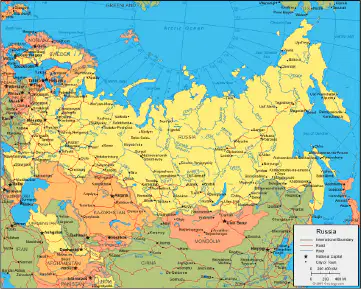
Most Russian cities are located in the
North
West
South
East
This policy was set up by Gorbachev to encourage citizens of the Soviet Union to be open about their opinions.
Open Court
Russification
Open Door
Glasnost
Which religion is part of Russian culture?
Eastern Orthodoxy
Judaism
Pentacostal
Muslim
This Soviet leader allowed more social and political freedoms.
Mikhail Gorbachev
Josef Stalin
Catherine the Great
Nikita Khrushchev
What Cold War policy allowed a little bit of capitalism in to the USSR?
Cheka
Detente
Glasnost
Perestroika
_____ of the territories/Oblasts/Regions, within the Russian Federation, are allowed their own Constitution, leadership, government... Many are culturally distinct from Russia proper and they may speak their own language.
21
10
89
27
A political party that claims to operate in the 'true' interest of the group or class that it purports to represent.
Vanguard Party
Third Party
West Coast Party
Political Party
Collectivization is best described in which answer?
Public farms are taken over by the government and organized into large state farms
Free Market Competition, allowing for corporate innovation
A system of government where the leader treats you as property
Welfare is distributed on a needs based system
The appropriate order of leadership, from earliest to most recent is...
Lenin, Stalin, Brezhnev, Yeltsin, Putin
Putin, Yeltsin, Brezhnev, Lenin, Stalin
Lenin, Stalin, Brezhnev, Putin, Yeltsin
Yeltsin, Brezhnev, Stalin, Lenin, Yeltsin
Oligarchs are
Presidential Advisors
The Ultra Rich of Russia
Religious Leaders
Members of the Duma
Which body(s) does Russia's legislative branch include?
Federation Council
Duma
Constitutional Court
House of Lords
Kai is studying Mexican politics and comes across the term "sexenio." He wonders: What is a sexenio and how does it influence presidential succession? Explain to Kai what is sexenio.
Imagine Benjamin is studying the history of Mexico for his political science class. He is curious about how the PRI's dominance shaped Mexico’s political system throughout the 20th century. What key effects did this long-term political control have on the country’s government and society?
Explain the role of the Guardian Council in Iran’s elections. What effect does this have on political competition?
Describe the role of Quangos in British governance and give one reason they are sometimes criticized.
Explain the concept of the power vertical under Vladimir Putin and how it impacts local governance in the Russian Federation.

Using the graphs provided, compare the United States and China in terms of both total GDP and GDP per capita for 2016. What do these differences tell you about each country's economic output and population size?

Based on the projections for 2025 shown in the image, compare the share of population and share of GDP for Africa and the U.S. & Canada. What do these differences suggest about economic inequality between regions?
Essay Questions: Choose one of the following
(2–3 paragraphs, with thesis and examples)
UK Political Culture and Institutions
Analyze the impact of the Westminster model on democratic accountability in the UK. Consider the roles of parliamentary sovereignty, fusion of powers, and the House of Lords in your response.
Economic Policy and Development – Mexico and UK
Compare how economic policy and public welfare systems in Mexico and the UK reflect their political ideologies. In your response, address Keynesianism and neoliberalism in the UK, and import substitution and technocrat policy-making in Mexico.Civil Society and Democratization
Discuss the role of civil society in the democratization process of either Iran or Mexico. How do political institutions and historical legacies affect the development of civil society and political participation in your selected country?

