
NEW
Font size
S
M
L
XL
 Worksheets
Credit: Cards, Car & Home Buying Unit REVIEW
Total questions: 42
Worksheet time: 21mins
Name
Class
Date
1.
1. Which of the following statements comparing credit and debit cards is TRUE?
a)
Far more businesses accept credit cards than debit cards
b)
Credit cards pull money directly from your bank account, while debit cards get their money from Visa or Mastercard
c)
Credit card companies provide you with a monthly statement, while debit cards do not
d)
With debit cards, you're spending your own money at point of sale, while with credit cards, you're promising to pay back the money eventually
2.
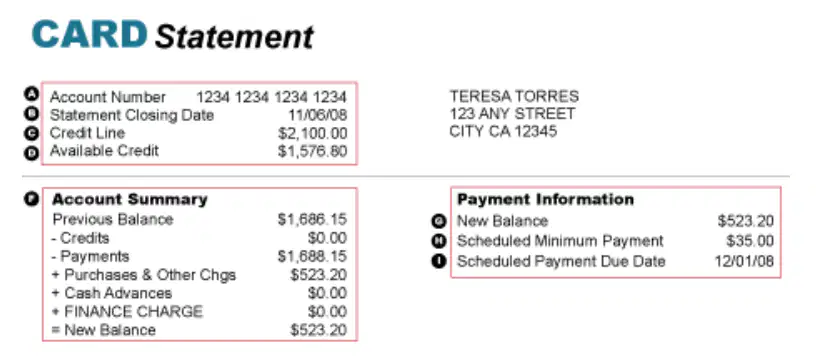
2. Which of the following statements below is TRUE?
a)
The cardholder is carrying a balance over from the last period.
b)
The cardholder was charged interest on her balances for the last period because she made her payment on time.
c)
If the cardholder makes her minimum payment of $35.00 by the due date, she will NOT be charged interest on her balances.
d)
If the cardholder pays $523.20 by the due date on the bill, she will pay NO interest to the credit card company.
3.
3. When items are bought on credit and paid for over a long period of time, the cost to the buyer
a)
Is the same as if the items were bought with cash
b)
Is less than if the items were bought with cash
c)
Is more than if the items were bought with cash
d)
None of the above
4.
4. A loan obtained when you purchase a home and use the home as collateral is a(n)
a)
Unsecured debt
b)
Foreclosure
c)
Mortgage
d)
Assessment
5.
5. Most people would consider a fixed-rate mortgage to be riskier than an adjustable-rate mortgage.
a)
True
b)
False
6.
6. A record of all your credit purchases and payments is called a(n)
a)
Credit bureau
b)
Capital amount
c)
Credit history
d)
Available credit amount
7.
7. Why do potential lenders frequently request to see your credit report before allowing you to borrow money?
a)
It allows them to see exactly what you purchase on a regular basis, so they can assess your character
b)
It's the only way they can legally see how much you have in your bank account
c)
It allows them to assess your creditworthiness by reviewing where you went to college, where you work, and how much you've paid, so far in taxes
d)
It allows them to assess how much current debt you have and how responsible you've been in making payments on existing debt
8.
8. The shorter your term length, the _______ your monthly payments, and the _______ the total interest you will pay.
a)
higher, lower
b)
higher, higher
c)
lower, lower
d)
lower, higher
9.
9. Someone who signs for you in order to get credit is a
a)
Character reference
b)
Credit bureau
c)
Lender
d)
Cosigner
10.
10. Which of the following statements best explains the purpose of a Schumer box?
a)
Gives the lender a clear report of your credit history and creditworthiness for a new card
b)
Calculates the total interest you will be charged on your previous month's purchases
c)
Gives the borrower a clear description of the APR, fees, and other major conditions of their credit card
d)
Provides a list of all purchases made on a credit card and the price of each item, for the benefit of the lender and the borrower
11.
11. Which of these does NOT represent a type of credit?
a)
A certificate of deposit (CD)
b)
A federal student loan
c)
A credit card
d)
A mortgage
12.
12. Which will most likely cause your credit score to drop the most?
a)
Paying a bill on time
b)
Missing a payment
c)
Requesting a copy of your credit report
d)
Increasing your credit limit on your credit card
13.
13. The amount you must pay on your credit card each month is called a(n)
a)
Minimum payment
b)
Available credit amount
c)
Interest rate
d)
Cash advance
14.
14. Credit experts recommend that you check the status of your credit report at least
a)
Every time you apply for a loan or credit card
b)
When you apply for your first loan or credit card
c)
Once a year
d)
Once every five years
15.
15. Who may review your credit report?
a)
Your parents after you are 18 years old
b)
Your current employer
c)
The car salesperson you talked to when you applied for a loan to buy a car
d)
Your doctor
16.
16. Select the statement below that accurately describes a characteristic of a credit card.
a)
You owe the same payment every month
b)
You must have money deposited into a checking account to use the credit card for purchases
c)
Making full payments on time every month is the only way to avoid interest charges
d)
They do not charge interest
17.
17. The document that proves you legally own the car
a)
Deed
b)
Collateral
c)
Registration card
d)
Title
18.
18. Value assigned to the property by the city or county that is used to compute property taxes
a)
Appraised value
b)
Assessed value
c)
Market value
d)
Resale value
19.
19. One who pays rent to occupy property.
a)
Landlord
b)
Property manager
c)
Tenant
d)
Borrower
20.

20. Which of the following statements is true about this Schumer Box?
a)
Depending on your creditworthiness, the APR for a borrower will always either be 8.99%, 10.99% or 12.99%
b)
There is an introductory APR that is valid only for 1 year, but then the permanent APR is lower than that at 8.99%.
c)
You will never be charged an APR higher than 14.99%
d)
You may be charged an APR as high as 28.99% for a late payment
21.
21. A yearly rate of interest charged to you for utilizing credit
a)
Adjustable rate mortgage
b)
Annual fee
c)
Annual percentage rate
d)
Installment credit
22.
22. You're about to open a new credit card. Which best describes the relationship between your credit score and the interest rate you'll likely be offered by the credit card company?
a)
If you credit score is high, your interest rate will be high
b)
If your credit score is high, your interest rate will be low
c)
Your credit score will approximately match your interest rate
d)
There is no relationship between credit score and interest rate
23.
23. The interest-free time a lender allows between the transaction date and the billing date
a)
No penalty period
b)
Secured period
c)
Grace period
d)
Credit period
24.
24. Something of value that lenders can repossess if they are unable to repay a loan as promised.
a)
Mortgage
b)
Credit card
c)
Lease
d)
Collateral
25.
25. The maximum amount you can charge on a credit card.
a)
Credit limit
b)
Credit score
c)
Credit report
d)
Eviction
26.
26. If you pay your credit card balance in full before the due date, you will not owe any interest.
a)
True
b)
False
27.
27. Market value is
a)
The amount of money property will bring in a competitive open market
b)
The amount of money for which property is listed in the public tax records for tax purposes
c)
The value of a property in the opinion of a qualified appraiser or valuer
d)
The maximum amount you can charge on a credit account
28.
28. Installment credit (closed-end credit)
a)
A yearly rate of interest that includes fees and costs paid to acquire the loan
b)
A type of mortgage that allows the interest rate to change
c)
A loan that is repaid in equal payments over a set period of time
d)
A financial instrument held by a third party on behalf of the other two parties in a transaction
29.
29. Using a credit card for purchases is a low-interest way to buy now and pay later.
a)
True
b)
False
30.
30. The retail price that the manufacturer sets for the car; usually 10-15% above the dealer's price.
a)
Manufacturer's set real prices
b)
Invoice price
c)
Appraised value
d)
List price/sticker price
31.
31. Cars taken back because of missed loan payments
a)
Reconditioned
b)
De-valued
c)
Security deposit
d)
Repossessed
32.
32. Which of the following does NOT represent an advantage of leasing a car?
a)
After the lease ends, you sell your car back to the dealer and get most of your payments back in equity
b)
Leases only last a short number of years, so leasing allows you to regularly upgrade your car to newer, safer, more modern vehicles
c)
Because your car is covered under warranty for the duration of your lease, you're less likely to be liable for costly repairs or maintenance
d)
If you really love the car, you're often able to buy it from the dealer at the end of the lease
33.
33. Eviction
a)
Legal process of removing a tenant from a rental property
b)
Legal process for businesses to take back items purchased
c)
Legal process when individual defaults on loan
d)
Legal process for lending institutions to recover losses of missed payments
34.
34. Owner of a rental property
a)
Lease
b)
Tenant
c)
Landlord
d)
Eviction
35.
35. If you're renting an apartment, most loss or damage to your possessions will be covered by the landlord's homeowners insurance.
a)
True
b)
False
36.
36. A number, between 300 and 850, that reflects the credit history detailed by a person's credit report.
a)
Credit value
b)
Credit rate
c)
Credit score
d)
Credit limit
37.
37. Which of the following would NOT appear on a credit report?
a)
Salary of your current job
b)
Payment history of your car loan
c)
Credit card payment history
d)
Student loan activity
38.
38. What type of debt typically represents the largest balance owed for most American households?
a)
Student loan
b)
Credit cards
c)
Mortgage
d)
Auto loan
39.
39. Isaac and his family want to take a trip to Disney World. They start charging all their monthly expenses on a credit card that gives them airline miles, in hopes of earning one or two free flights by next summer. In the month of February alone, they charge $2,500 on the card. When the bill comes, Isaac pays the full balance. Which figure best estimates the interest he paid, given that his card has a 12% APR?
a)
$0
b)
$25
c)
$300
d)
$2,525
40.
40. Matt is preparing to buy a car. The total cost for the sale, including taxes and registration is $12,000. He agreed to make a $1,500 down payment. He signed a 3-year loan for the balance at 8% interest. Using the loan calculator, how much will Matt pay per month to repay the loan over the next 3 years? REMEMBER TO USE THE LOAN CALCULATOR.
a)
$423.04 a month
b)
$376.04 a month
c)
$355.35 a month
d)
$329.03 a month
41.
41. Your friend confides in you that he has a low credit score. What is the single best way for him to improve the score?
a)
Cancel his credit cards
b)
Make on-time payments
c)
Get a car loan
d)
Check his credit score
42.
42. I forgot to pay my credit card bill one month. For how long will that payment information show up on my credit report?
a)
Once I make the payment, it will disappear
b)
One year
c)
Seven years
d)
Ten years
Reset

