
 Worksheets
Science 7 Sem. 2 Review
Total questions: 35
Worksheet time: 34mins

At the science fair, Aria, Arjun, and Maya are checking out a cool diagram of Earth's layers: the crust, mantle, and core. They want to add a fun caption that explains how energy travels inside our planet. Which statement would make their display both accurate and awesome?
Energy moves from the cooler crust down to the hotter core.
Energy moves from the warmer core up to the cooler crust.
Energy moves from the cooler mantle to the warmer core.
Energy moves from the cooler crust to the cooler mantle.
Grace and Arjun are exploring how Earth's surface changes. Grace is fascinated by a volcanic eruption in a forest, while Arjun is amazed by how a river slowly carves out a canyon over time. How do the effects on Earth's surface from these two events compare? hint time vs. space scale
Both the volcanic eruption and the river carving are rapid, large-scale changes.
Both the volcanic eruption and the river carving are slow, large-scale changes.
The volcanic eruption is a rapid, large-scale change, while the river carving is a slow, large-scale change.
The volcanic eruption is a slow, large-scale change, while the river carving is a rapid, small-scale change.

Benjamin, Abigail, and Henry are looking at this world map and notice something interesting: there are way more earthquakes and volcanoes along the western edge of South America than the eastern edge! Can you help them figure out why?
The western edge is closer to the equator, which increases volcanic and earthquake activity.
The western edge is part of the Ring of Fire, where tectonic plates meet and interact, causing more earthquakes and volcanoes.
The eastern edge is on a major fault line, leading to more earthquakes and volcanoes there.
The eastern edge is farther from the ocean, which causes more volcanic eruptions.

Harper and Aiden are planning a trip and want to know why earthquakes seem to shake things up in California way more than in Texas. What is the most likely reason for this?
California is located near the boundary of two tectonic plates, making earthquakes more frequent there than in Texas.
Texas is too big to shake.
The crust beneath Texas is much thicker and less likely to break than the crust beneath California.
California has more earthquake monitoring equipment, so more earthquakes are recorded there than in Texas.
William and Nora are watching a video about earthquakes. They see two tectonic plates sliding past each other horizontally. Which type of plate boundary are they learning about?
Transform
Divergent
Convergent
Static

James, Anika, and Olivia are exploring a map of Earth's tectonic plates for their science adventure! They want to figure out the type of plate boundary at a certain spot. What is the best way for them to identify the type of plate boundary at that location?
By analyzing how the plates move relative to each other at the boundary
By checking the elevation of the land near the boundary
By counting the number of earthquakes in the region
By noting the size of the plates involved

Jackson, David, and Arjun are looking at the map above and imagining what the world looked like millions of years ago! Which observation would help them best support Wegener’s idea of continental drift?
The coastlines of continents appear to match up closely.
There are similar animal fossils on different continents.
Some continents have matching climate patterns.
Continents have similar types of soil.

Maya, Benjamin, and Michael are on a submarine adventure, exploring the ocean floor! As they travel away from the Mid-ocean Ridge, they start to wonder about the age of the oceanic crust beneath them. What can they infer about the age of the oceanic crust as they move farther from the Mid-ocean Ridge?
The oceanic crust becomes younger as you move farther from the Mid-ocean Ridge.
The oceanic crust is the same age at all distances from the Mid-ocean Ridge.
The oceanic crust becomes older as you move farther from the Mid-ocean Ridge.
The age of the oceanic crust changes randomly with distance from the Mid-ocean Ridge.
Mia, Jackson, and Anika are on a science adventure, exploring how volcanoes erupt! Can you help them arrange the sequence of events during a volcanic eruption, starting with the first event at the TOP and ending with the last at the bottom of the list?
Magma rises beneath the surface → Pressure builds in the magma chamber → Volcano erupts → Lava flows out
Volcano erupts → Magma rises beneath the surface → Pressure builds in the magma chamber → Lava flows out
Pressure builds in the magma chamber → Magma rises beneath the surface → Lava flows out → Volcano erupts
Lava flows out → Volcano erupts → Magma rises beneath the surface → Pressure builds in the magma chamber

Evelyn, Mia, and Abigail are studying the graph of moose and wolf populations over time. They notice some interesting patterns! Based on the trends shown in the graph, what type of ecological interaction do you think is happening between the moose and wolf populations?
competition
mutualism
commensalism
predator-prey

David and Benjamin decided to have a friendly pumpkin-growing competition! This year David’s pumpkin vines have a vibrant green color and produced firm round pumpkins, while Benjamin’s vines appeared to have yellowing leaves with smaller odd shaped pumpkins produced. What’s the most likely reason for this difference in their pumpkin crops?
David's vines received more resources such as sunlight, water and nutrients than Benjamin's.
Benjamin's vines received more resources such as sunlight, water and nutrients than Benjamin's.
Both plants received the same amount of resources, resulting in similar growth.
Neither group of plants received enough resources, resulting in poor growth for both.
Arjun and Luna are biologists on an adventure, exploring two mysterious forests! To help them decide which forest is bursting with more biodiversity, what kind of data should they collect?
The total biomass of all organisms in each forest.
The variety of species present and how balanced their populations are.
The average height of the trees in each forest.
The temperature range in each forest.

Imagine Aria, Ava, and Aiden are exploring tidepools and spot a starfish! Which statement BEST describes the important role of the starfish as a keystone species in its intertidal habitat?
Biodiversity increases when the starfish is present.
Biodiversity decreases when the starfish is present.
Biodiversity remains unchanged when the starfish is present.
The impact on the ecosystem cannot be determined from the information given.
After Aria, Ava, and Aiden exploried the tide pool they wondered, what if the starfish were removed from its ecosystem.
What would be the likely outcome for the tide pool ecosystem if starfish were permanently removed?
The biodiversity would decrease because starfish help regulate prey populations, allowing more species to thrive.
The biodiversity would increase because starfish limit the number of prey species, allowing others to dominate.
The biodiversity would remain unchanged because starfish have no effect on prey populations.
The biodiversity would increase because starfish directly increase the number of prey species.
Why is the Ring of Fire prone to earthquakes and volcanoes?
It has frequent storms that weaken the crust
Many tectonic plate boundaries meet in this region
It is located in a hot climate
The ocean currents are strong
What piece of evidence for Continental Drift states that similar types and ages of rocks are found on different continents?
Continental Fit
Fossil Evidence
Landform/Rock Evidence
Glacial Evidence
What piece of evidence for Continental Drift states that the same plant and animal fossils are found on continents separated by oceans.
Continental Fit
Fossil Evidence
Landform/Rock Evidence
Glacial Evidence
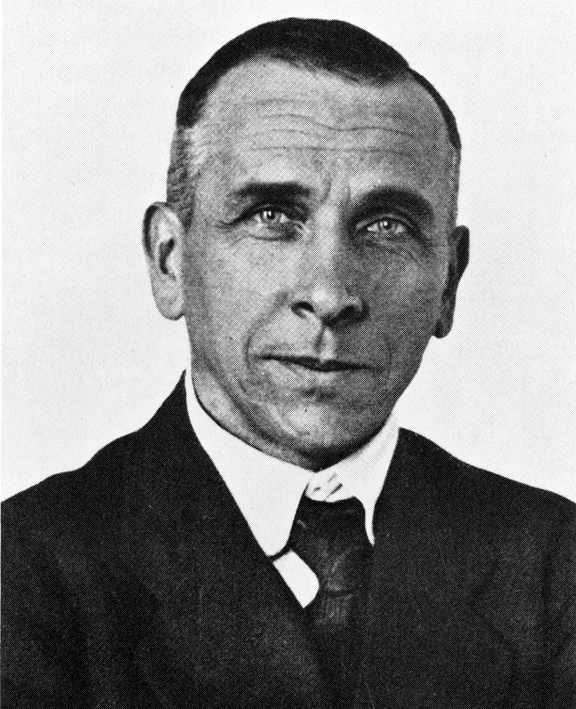
Who is the person credited with developing the theory of continental drift?
Harry Hess
Galileo
Alfred Wegener
Newton
Which type of information was NOT collected by Wegener to support his continental drift hypothesis?
plate tectonics
fossils
climate
land features
Which of the following processes is not considered a rapid change to Earth’s surface?
Volcanic eruption
Earthquake
Landslide
Weathering
Earthquakes occur along
fence rows
faults
tectonic plate boundaries
faults and tectonic plate boundaries
Isla is studying a field where many rabbits live. Which factor is most likely to cause the number of rabbits in Isla's study area to increase?
less water
fewer predators
lack of shelter
limited food
After a severe storm hits a forest, Emma observes that the area with a wide variety of plant and animal species recovers more quickly and continues to function well, compared to an area with fewer species. High biodiversity makes it more likely that the ecosystem will be able to keep functioning after a disturbance, such as disease or natural disaster.
True
False

Arjun learns about a fish species that was introduced to a new ocean where it did not originally live. This species quickly spreads, disrupts the local marine life, and causes harm to the ecosystem. What type of species is this?
flagnship
umbrella
invasive
predator

What is a keystone species?
A species that helps to hold an ecosystem together
A species that lives in or around rocks
Keys and stones have nothing to do with ecology
A keystone isn't a living thing, it's just a stone

Anika observes a garden where rabbits, foxes, carrots, and other animals live. If the rabbits are removed from the garden, what is most likely to happen?
foxes would increase
carrots would increase
mice would decrease
birds would increase

(a) is a type of rock that is formed when magma or lava cools down.
Igneous Rock
Sedimentary Rock
Metamorphic Rock

(a) is formed by heat and pressure.
Metamorphic Rock
Igneous Rock
Sedimentary Rock
What process is used to form sedimentary rocks?
Lava cools and hardens to form a rock.
Bits of sand and gravel form layers that turn into rock from pressure.
Extreme heat and pressure from inside the Earth turn rocks into new rocks.
Magma trapped under the Earth's surface cools and solidifies.
In which type of symbiotic relationship do both species benefit (+,+) ?
Commensalism
Parasitism
Mutualism
Predation
In which type of symbiotic relationship does one species benefit while the other species is not affected (+, 0)?
Commensalism
Parasitism
Mutualism
Predation
In which type of symbiotic relationship does one species benefit while the other species is harmed (+,-)?
Commensalism
Parasitism
Mutualism
Predation

Barnacles create home sites by attaching themselves to whales. This relationship neither harms nor benefits the whales.
parasitism
commensalism
mutualism

Mistletoe extracts water and nutrients from a spruce tree. The spruce tree is harmed.
parasitism
commensalism
mutualism

Honey guide birds alert and direct badgers to bee hives. The badgers then expose the hives and feed on the honey first. Next the honey guide birds eat. Both species benefit.
parasitism
commensalism
mutualism

