Worksheets
review p5
Total questions: 140
Worksheet time: 2hrs 39mins
What is the dome-shaped muscle below the lungs called?
diaphragm
sternum
esophagus
trachea


What is the first step in the journey of oxygen through the respiratory system?
Entering the trachea
Passing through the larynx
Entering through the nose/mouth
Reaching the alveoli
What is the diaphragm described as in the text?
A round muscle
A flat muscle
A long muscle
A thick muscle
What is a necessary substance for our cells to get energy?
Carbon dioxide
Oxygen
Nitrogen
Hydrogen
What does the respiratory system allow us to do?
Digest food
Exchange gases in the air
Circulate blood
Absorb nutrients
Which is part of blood responsible to carry wastes, nutrients, and minerals?
red blood cells
white blood cells
platelets
plasma
Which side of the heart pumps blood rich in oxygen to the whole body?
Right side
Left side
Both sides

What type of blood vessel is the smallest and has the thinnest walls?
capillaries
arteries
platelets
veins

Which type of blood vessel has thinner walls?
artery
vein
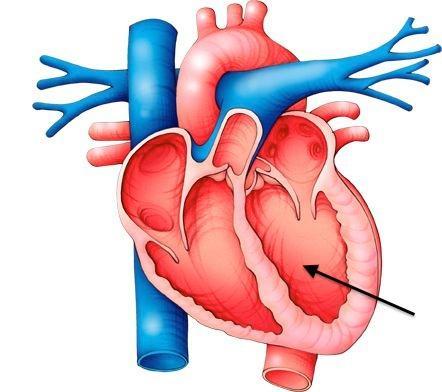
Identify the structure pointed by the arrow
Left atrium
Right atrium
Left ventricle
Right ventricle
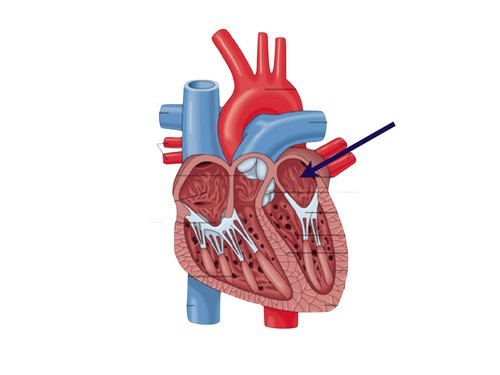
Identify the structure pointed by the arrow
Left atrium
Right atrium
Left ventricle
Right ventricle
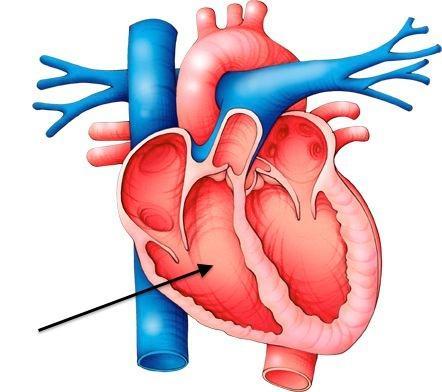
Identify the structure pointed by the arrow
Left atrium
Right atrium
Left ventricle
Right ventricle
The circulatory system consists of what three parts?
Heart
Brain
Blood
Blood vessels
Liver

The job of the heart is to . . .
pump blood around the body.
send food to the small intestines.
break down food.
give energy to the body.
Arteries carry oxygen rich blood away from the heart.
True
False
Veins carry oxygen poor blood back to the heart.
False
True
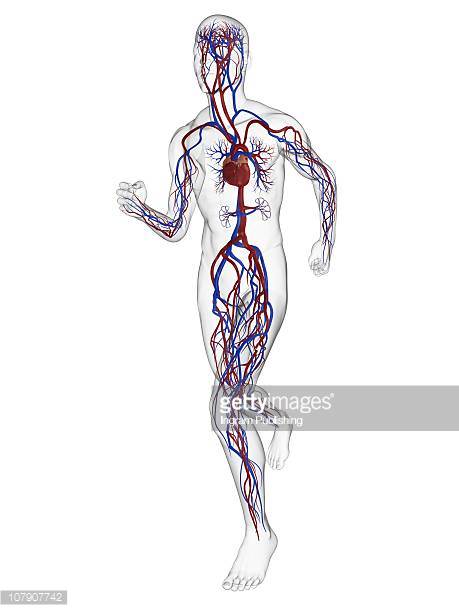
What is the main organ of the circulatory system?
small intestine
bone
lungs
heart

1
2
3
4

1
2
3
4

1
2
3
4

1
2
3
4

1
2
3
4

1
2
3
4

1
2
3
4

1
2
3
4

1
2
3
4

1
2
3
4

1
2
3
4
The water cycle on Earth can take place repeatedly because water _______.
A: melts at 0oC and boils at 100oC
B: has volume and is not compressible
C: can change from one state to another
D: is important for the survival of living things
D only
C only
A, B and C only
A, B, C and D
Mingfen hung a wet towel in the bathroom.
Which of the following ways would help to dry the towel faster?
A: fold the towel in half
B: open the door of the bathroom
C: use a hairdryer to blow the towel
A and B only
A and C only
B and C only
A, B and C

The table shows the state of three substances, P, Q and R, at different temperatures.
Which statement can be concluded?
P has the highest boiling point.
Q has a lower melting point than P.
Q has a higher boiling point than R.
R has the highest freezing point.

Set-ups P and Q were placed on a table. They contained equal amounts of water at 25 °C and equal amounts of ice cubes. The beaker in set-up P was wider.
After a while, more water droplets formed in set-up P. Which statement explains this observation?
More water evaporated because the water was warmer.
More water vapour condensed because the ice cubes were colder.
More water evaporated because the exposed surface area of water was larger.
More water vapour condensed because there was less air movement in the beaker.

The table shows the melting and boiling points of substances P and Q.
At which temperature are substances P and Q in different states of matter?
150°C
200°C
350°C
450°C
When water changes from gas to liquid at 100 °C, which of the following is correct?
The water is boiling.
The water gains heat from the surroundings.
The water loses heat to the surroundings.
There is no heat gain or loss by the water.
Heat is released, when ( choose any 2 answers)
Freezing
Melting
Sublimation (Solid to Gas)
Sublimation (Gas to Solid)
Condensation
Heat is absorbed, when (choose any 3 answers)
Melting
Freezing
Sublimation (Solid to Gas)
Condensation
Evaporation/boiling
When evaporation/boiling occur,
heat is absorbed
heat is released
When sublimation occur from solid to gas
heat is released
hear is absorbed
When freezing occur,
heat is absorbed
heat is released
When evaporation/boiling occur,
heat is absorbed
heat is released
When melting occur,
heat is absorbed
heat is released
When condensation occur,
heat is absorbed
heat is released
At what temperature does water freeze?
0 oC
100 oC
1oC
30oC
At what temperature does ice melt?
0 oC
100 oC
1oC
30oC
What are the 3 states of matter?
solid, freezing, melting
solid, liquid, gas
water, water vapour, ice
It takes up space and has mass.
What is the process called when water changes to water vapour?
evaporation
condensation
freezing
boiling
What is the process called when liquid water changes to solid?
freezing
melting
condensation
evaporation

Water forms on the outside of iced tea on a hot day. What process causes the water to form?
Condensation
Evaporation
Melting
Freezing
Which of the following statements describe the similarities between melting of ice and the freezing of water?
A Heat is gained in both processes.
B Both processes take place at 0oC.
C Both processes involve a change of state.
A and B only
A and C only
B and C only
A, B and C
Ameera wants to conduct an experiment to find out if ice melts faster when more heat is applied to it. Which of the following variable(s) should she keep the same?
A Amount of ice used
B Amount of heat applied
C Shape of container used
D Location at which the experiment is conducted
B only
A and C only
A, C and D only
A, B, C and D

Jed filled a beaker with water and left it in a room at 27oC. After a few minutes, Jed observed water droplets on the outer surface of the beaker.
Which of the following is most likely the temperature of the water in the beaker?
10oC
37oC
50oC
100oC

A beaker of ice was heated over a period of time. The changes in temperature are shown in the graph.
Which of the following correctly matches the processes to the parts of the graph?
Melting: AB Boiling: BC
Melting: AB Boiling: CD
Melting: BC Boiling: AB
Melting: BC Boiling: CD
During which of the following processes does water gain heat?
A Freezing
B Condensation
C Boiling
D Evaporation
A and B only
A and D only
B and C only
C and D only
Which part of the male reproductive system produce and store sperm?
The Scrotum
The prostate
The testicles
The penis

When the umbilical cord is cut and tied after birth, forms our...
thumb
Finger
Navel
Bottom

Where does the foetus develop during pregnancy?
In the Uterus
In the vagina
In the tummy
In the falopian tubes

The foetus recieves nutrients and oxygen during pregnancy via the...
Stomach
Blood
Placenta
Amniotic fluid

What protects the foetus during pregnancy?
The umbilical cord
The amniotic fluid
The placenta
The plasma

When an ovum is fertilised the cells start to divide and multiply, this is called...
Baby
Foetus
child
Zygote

Which of these organs are part of the female reproductive organs
Falopian tubes
Ovaries
Prostate
Uterus
Plants with fleshy and edible fruits with tiny seeds are eaten by .......
animals
water
wind
explosive action
The condition required for a seed to germinate is ….
Presence of bee
Presence of pollen grains
Presence of warmth
Presence of flower

Based on picture, the following section which contains pollen sacs which release pollen grains when ripe are indicated by the number ....
2
4
6
8
The … is outer covering of the seed.
embryo
seed coat
seed leaves
stamen
How do plants reproduce?
lay eggs and give birth
spores and lay egg
plant parts and give birth
seeds and spores
The stages from a cycle that keep repeating called ....
reproduction
life cycle
living things
plants

Label A and B in this picture are ....
egg cell
sperm cell
egg cell, sperm cell
sperm cell, egg cell
Although all flowers later opened normally, only those on plant 1 produced seeds. This results shows that:
Which of the following is describes Self-Pollination?
Pollen grains are transferred from anther to stigma of another flower.
Pollen grains are transferred from filament to stigma of the same flower.
Pollen grains are transferred from anther to stigma of the same flower.
Pollen grains are transferred from stigma to anther of the same flower.
Which of the following consists of only parts of the female parts of the flower?
style, ovary, anther, pollen grain
anther. style, ovary, stigma, egg cell
egg cell, male reproductive cell, ovule
ovule, ovary, style, stigma, egg cell
Which is NOT a characteristic of seeds dispersed by animals?
Fruits or seeds have hooks
Fruits are fleshy and juicy
Fruits have trapped air in their husks
Seeds are passed out through animal's droppings
When we prevent overcrowding of plants, we reduce the competition for ________________________________________.
Water, Minerals and Light
Water, Nutrients and Minerals
Water, Nutrients, Light and Minerals
Water, Light and Space
Which of the following is NOT a characteristic of seeds dispersed by water?
has fibrous husks
has hooks
has waterproof covering
can stay afloat on water
Which is NOT a characteristic of flowers that are pollinated by wind?
feathery stigma
light
sweet nectar
small petals
What is NOT a characteristic of seeds dispersed by wind?
wing-like structures
feathery
light
Has pods
Which of the following is the right order?
Pollination -- Dispersal -- Germination -- Fertilisation
Pollination -- Fertilisation -- Germination -- Dispersal
Pollination -- Dispersal -- Fertilisation -- Germination
Pollination -- Fertilisation -- Dispersal -- Germination
What are NOT being passed down from parent plant to their young olant?
feathery stigma
type of fruit
brightly coloured flowers
fertile soil
Why do living things reproduce?
Living things do not have a choice.
To ensure continuity of their kind.
To ensure consistency in their kind.

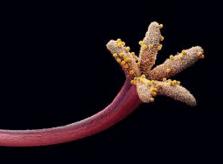
The filament and the anther make up the ... .
stamen
ovary
carpel
seed

The parts of the flower labelled X and Y in the diagram are ... .
X = petal, Y = anther
X = sepal, Y = anther
X = sepal, Y = carpel
X = petal, Y = filamen
For sexual reproduction in a plant, which one of the following conditions must be met?
The pollent must be transferred by insect
The male and female gametes must meet
The stamen must be inside the petals
There must be nectar or scent present in the flower
One of the function of a petal in a flowering plant is to ... .
make pollens grains
connect the stigma to the ovary
protects the internal part of the flower
support the anther
The transfer of pollen from a stamen to carpel is known as ... .
fertilisation
reproduction
germination
pollination
The spreading of a seed as far away as possible from the parent plant is known as ... .
germination
fertilisation
dispersal
reproduction
A plant's organ of sexual reproduction is in its ... .
stem
flower
fruit
root
The production of pollen grains is a function of the ... .
anther
ovule
filament
style
The developing body gets its nutrients from the mother's blood through the ....
womb
umbilical cord
sperm cell
egg cell
... occurs when the sperm cell and egg cell fuse.
Fertilization
Reproduction
Adaptation
Growing
Reproduction that requires two organisms, a male and a female is called ....
sexual reproduction
asexual reproduction
Reproduction that requires only one parent. The young produce is a clone of the parent is called as ....
sexual reproduction
asexual reproduction
The process of producing offspring that are biologically or genetically similar to the parent organism is called ....
reproduction
adaptation
growing
fertilizations
A material that does NOT let electricity pass through it is called ...
electrical conductor
Battery
electrical insulator
light bulb
Does energy flow through an open or closed switch?
open switch
closed switch
both open and closed
neither

Which wire would you need to cut in order for the circuit to be incomplete (not work)?
wire 1
Wire 3
wire 5
What is Mrs. Rodriguez's favorite season?
winter
fall
spring
summer
Mrs. Rodriguez has a battery, wooden spoon, copper wire, metal paperclip, and a light bulb. Which materials does Mrs. Rodriguez need in order to create a complete circuit?
battery, wooden spoon, copper wire, and light bulb
battery, metal paperclip, copper wire, and light bulb
metal paperclip, copper wire, and light bulb
battery, wooden spoon, and light bulb

The light bulb does not turn on, which statement explains why it is not working?
The battery is dead
The light bulb is broken
The bell is taking all of the energy
The light bulb is not part of a complete circuit

In order to produce ONLY LIGHT energy, which switch(es) would you need to close?
switch 1 and switch 2
switch 1, 2, and 3
switch 2 and switch 3
switch 1 and 3

What forms of energy are you using if you close switch 1?
light and electrical
light, sound, and electrical
light
sound

Which lights would turn on if your closed switches 1 and 2?
red, blue, and white
red and white
red and blue
blue, white, yellow

The circuit does not work, what could you do to allow the circuit to work?
Add another light
Add another battery
Open the switch
Remove the wood block and connect the wires

Why does the following circuit not work?
The light bulb is broken
The switch is closed
The wood block is an insulator
The battery is dead




The diagram shows an electric circuit with four bells that a student plans to build. When the student connects the wire as shown, which of the bells will ring?
Bell 1 only
Bells 1 and 4 only
Bells 3 and 4 only
Bells 1, 2, 3, and 4

Students constructed a circuit using different-colored lightbulbs. What will happen if Switch 3 is closed and the other switches are left open?
Only the white bulb will operate
None of the bulbs will operate
Only the white and yellow bulbs will operate
Only the red and blue bulbs will operate

A group of students built the circuit shown above. The lightbulb does not glow. Which statement explains this observation?
The battery is not charged
The lightbulb is not part of a complete circuit
The circuit does not have a switch
The bell uses most of the energy from the battery

The diagram shows a series circuit with three lit bulbs. How many of the bulbs will remain lit if the wire is cut a the point shown by the arrow?
0
1
2
3

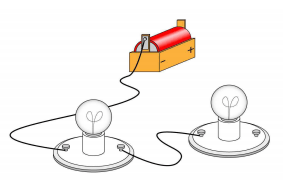
A student builds a circuit made up of a battery, two light bulbs, and a switch. What will the student most likely observe in this circuit?
Light bulb 1 and light bulb 2 will both be on
Light bulb 1 will be off, but light bulb 2 will be on
Light bulb 1 and light bulb 2 will both be off
Light bulb 1 will be on, but light bulb 2 will be off