
 Worksheets
Unit 7 WC
Total questions: 139
Worksheet time: 2hrs 9mins

What is the water cycle?
The amount of water on earth.
the water on earth getting hot.
How water moves around the earth.

Which type of precipitation is shown in by the diagram?
hail
sleet
snow
rain

What type of precipitation does diagram above show?
sleet
hail
snow
rain
What causes the formation of hail?
it comes into contact with a pocket of air above 0 degrees Celsius/ 32 degrees Fahrenheit but refreezes when it comes into air that is again below 0 degrees Celsius/ 32 degrees Fahrenheit.
It is thrown back into the clouds during thunderstorms and keeps adding more layers of frozen ice.
It is formed when the air is above 0 degrees Celsius/ 32 degrees Fahrenheit
It is formed when the air is below 0 degrees Celsius/ 32 degrees Fahrenheit all the way from the clouds to the ground
Is the process for when gas turns into a liquid
precipitation
condensation
evaporation
runoff
Is the process for when liquid turns into a gas
precipitation
condensation
evaporation
runoff
Is the process for when rain, snow, sleet, or hail fall from a cloud
precipitation
condensation
evaporation
runoff
is the process for when a surplus of rainfall moves from the land to a larger source of water.
precipitation
condensation
evaporation
runoff
What causes the formation of hail?
is the type of precipitations that falls as rain and then freezes due to colder air temperature
type of precipitation that freezes in layers then falls from a cloud
is formed when there is only warm air between the clouds and the ground
It is formed when the air is below 0 degrees Celsius/ 32 degrees Fahrenheit all the way from the clouds to the ground

Which type of precipitation is shown in by the diagram?
hail
sleet
snow
rain

What does the water droplets in the diagram represent in the water cycle?
The sun
Condensation
evaporation
run off
what does the lamp represent in this diagram of the water cycle?
The sun
Condensation
evaporation
run off

The water cycle moves water from place to place on Earth. The illustration below shows some of the steps in the water cycle. Which box on the illustration represents condensation?
Box J
Box K
Box L
Box M
The water cycle moves water from place to place on Earth. The illustration below shows some of the steps in the water cycle. Which box on the illustration represents precipitation?
Box J
Box K
Box L
Box M
The water cycle moves water from place to place on Earth. The illustration below shows some of the steps in the water cycle. Which box on the illustration represents evaporation?
Box J
Box K
Box L
Box M
Which type of precipitation is shown in by the diagram?
hail
sleet
snow
rain
What type of precipitation does diagram above show?
sleet
hail
snow
rain
What causes the formation of hail?
it comes into contact with a pocket of air above 0 degrees Celsius/ 32 degrees Fahrenheit but refreezes when it comes into air that is again below 0 degrees Celsius/ 32 degrees Fahrenheit.
It is thrown back into the clouds during thunderstorms and keeps adding more layers of frozen ice.
It is formed when the air is above 0 degrees Celsius/ 32 degrees Fahrenheit
It is formed when the air is below 0 degrees Celsius/ 32 degrees Fahrenheit all the way from the clouds to the ground
Is the process for when gas turns into a liquid
precipitation
condensation
evaporation
runoff
Is the process for when liquid turns into a gas
precipitation
condensation
evaporation
runoff
Is the process for when rain, snow, sleet, or hail fall from a cloud
precipitation
condensation
evaporation
runoff
is the process for when a surplus of rainfall moves from the land to a larger source of water.
precipitation
condensation
evaporation
runoff
What causes the formation of hail?
is the type of precipitations that falls as rain and then freezes due to colder air temperature
type of precipitation that freezes in layers then falls from a cloud
is formed when there is only warm air between the clouds and the ground
It is formed when the air is below 0 degrees Celsius/ 32 degrees Fahrenheit all the way from the clouds to the ground
Which type of precipitation is shown in by the diagram?
hail
sleet
snow
rain
What does the water droplets in the diagram represent in the water cycle?
The sun
Condensation
evaporation
run off
what does the lamp represent in this diagram of the water cycle?
The sun
Condensation
evaporation
run off
The water cycle moves water from place to place on Earth. The illustration below shows some of the steps in the water cycle. Which box on the illustration represents condensation?
Box J
Box K
Box L
Box M
The water cycle moves water from place to place on Earth. The illustration below shows some of the steps in the water cycle. Which box on the illustration represents precipitation?
Box J
Box K
Box L
Box M
The water cycle moves water from place to place on Earth. The illustration below shows some of the steps in the water cycle. Which box on the illustration represents evaporation?
Box J
Box K
Box L
Box M
The water cycle moves water from place to place on Earth. The illustration below shows some of the steps in the water cycle. Which box on the illustration represents runoff?
Box J
Box K
Box L
Box M
Mr. Hall's car was damaged during a thunderstorm. The hood, trunk, and top of the car looked like someone had hit it repeatedly with a small rubber mallet. What most likely caused the damage?
Snow
Hail
Sleet
Rain
The water cycle is the process that moves water from place to place on Earth. Water moves between underground rivers, lakes and oceans on Earth's surface, and the clouds in Earth's atmosphere. What is the energy source that drives the water cycle?
Fossil Fuels
Hydoelectricity
Ocean Waves
The Sun

Which graph shows how sleet is formed?
Chart 1, because snow melts when it falls
Chart 1, because it shows that snow melts and refreezes, causing sleet
Chart 2, because snow melts when it falls
Chart, 2 because when snow melts and refreezes it makes sleet
Water on Earth's surface is constantly evaporating. When the water evaporates, it becomes water vapor. It leaves the surface to become part of Earth's atmosphere. The water vapor eventually returns to Earth's surface in the form of precipitation. What best describes what must happen to the water vapor before it can turn into precipitation?
It must solidify into hail
It must solidify into frost
It must condense into fog
it must condense into clouds
When the layer of atmosphere spanning from the clouds all the way to the ground is below freezing, what kind of precipitation falls?
freezing rain
rain
snow
hail
When it rained, Chloe watched water go from her driveway into the gutter on the street. Which part of the water cycle did she observe?
condensation
evaportation
precipitation
runoff
Four students decided they would each model a different part of the water cycle. Hai modeled condensation, Eva modeled evaporation, Peter modeled precipitation, and Joanna modeled runoff. Whose model showed a liquid turning into a gas?
Hai's
Eva's
Peter's
Joanna's

Seth used this model to show how water vapor becomes liquid water in the water cycle. Which part of the water cycle is he modeling?
evaporation
condensation
runoff
precipitation

Your mom wanted to help you understand the water cycle better so she made this model in your kitchen. What does the steam from the pot represent?
condensation
runoff
evaporation
precipitation
Your mom wanted to help you understand the water cycle better so she made this model in your kitchen. What does the drops of water falling into the cup represent?
condensation
runoff
evaporation
precipitation
Your mom wanted to help you understand the water cycle better so she made this model in your kitchen. What does the drops of water sticking to the lid represent?
condensation
runoff
evaporation
precipitation
Water flows from the river near Eduardo’s Florida home into the Gulf of Mexico. He knows that runoff is one way that water returns to the ocean. What is the main way water leaves the ocean?
condensation
runoff
evaporation
precipitation
Amelia has observed water runoff into the ocean in many places and for many years. The level of the water in the ocean does not seem to have changed. Why?
water evaporates from the ocean's surface
some ocean water freezes and becomes glaciers
salt makes ocean water heavier so it takes up less space
water seeps into the ocean bed and becomes ground water
You were at the pool and got out to have lunch. You used your towel to dry off before eating lunch. Before returning to playing in the pool you leave your towel hanging in the sun. When you get out your towel is dry again. What part of the water cycle has taken place on your towel?
condensation
evaportation
runoff
precipitation
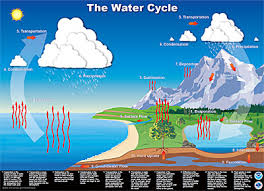
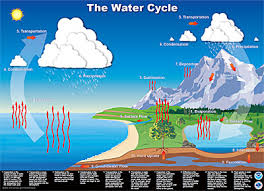
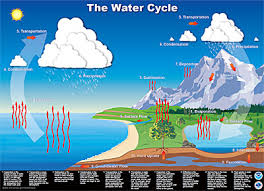


When changing from a liquid to a gas, the water molecules are ____________________________.
freezing and moving away from each other.
evaporating and moving away from each other
condensing and moving closer to each other
evaporating and moving closer to each other
When changing from a liquid to a solid, the water molecules are ____________________________.
freezing and moving away from each other.
evaporating and moving away from each other
condensing and moving closer to each other
freezing and moving closer to each other
When changing from a gas to a liquid, the water molecules are ____________________________.
condensing and moving away from each other.
evaporating and moving away from each other
condensing and moving closer to each other
freezing and moving closer to each other
This provides the power to keep the water cycle running.
The Sun
The Earth
The wind
living things
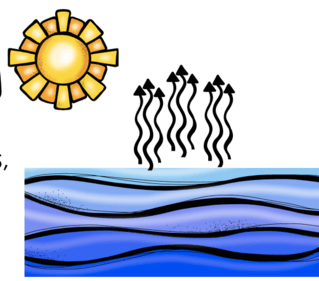

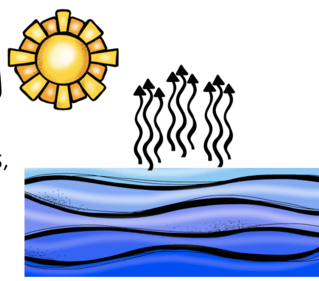
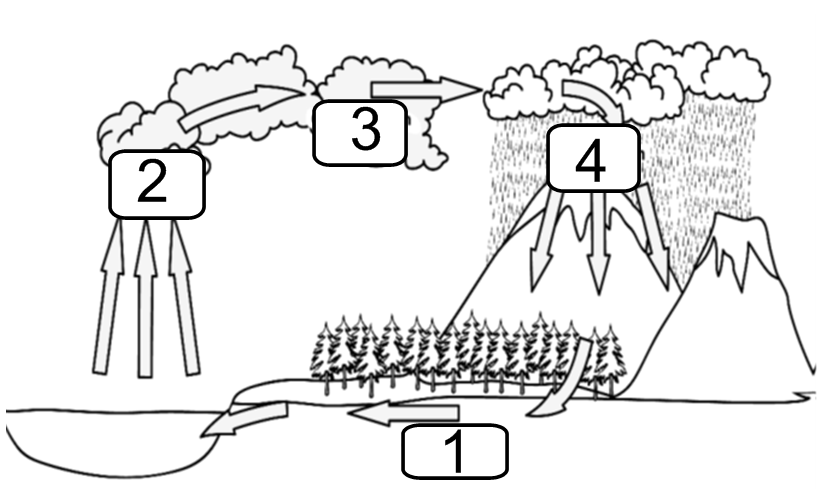
Which stage does the arrow below #2 show in the diagram?
condensation
evaporation
precipitation
run off


The act of turning from a gas into a liquid. ________________________
Condensation
Evaporation
Transpiration
Precipitation
The major source of energy and the driving energy source of the water cycle. __________________
moon
ocaen
Sun
atmosphere
The draining away of water from the surface of an area of land.
weathering
transpiration
run-off
precipitation


What is the correct order of the water cycle?
Evaporation, Condensation, Precipitation, Runoff
Runoff, Precipitation, Condensation, Evaporation
Evaporation, Precipitation, Runoff, Condensation
Condensation, Evaporation, Runoff, Precipitation
True or False: Clouds form during condensation.
True
False

What step of the water cycle does this picture show?
Condensation
Runoff
Precipitation
Evaporation

What is it called when water droplets form on the outside of a cool glass?
Condensation
Transpiration
Precipitation
Evaporation

What step of the water cycle is shown in this picture?
Condensation
Runoff
Precipitation
Evaporation

What step of the water cycle is shown in this picture?
Condensation
Runoff
Precipitation
Evaporation
Water in its gas form is called ____________________,
water vapor
precipitation
ice
air
Which of the following are types of freshwater that can be used by people?
Select all that are true.
groundwater
ice caps and glaciers
oceans
rivers
lakes
What happens once groundwater reaches a layer of rock in the ground that it cannot pass through?
it is soaked up by that layer of rock and dirt
it creates an aquifer
it creates a reservoir
it evaporates
People get fresh water from
reservoirs
lakes and rivers
pumping groundwater up from aquifers using wells
all of the above
Why does groundwater usually require less treatment than surface water?
The layers of Earth protect groundwater from pollutants.
As groundwater sinks into the ground, the layers of rock act like a natural filter and remove pollutants from the water.
Surface water has more exposure to pollutants in runoff and the atmosphere.
all of the above
What is the energy source for the water cycle?
sun
wind
rain
oceans
What type of precipitation will fall if the temperature is 0 degrees celsius, but the precipitation freezes along the way to Earth's surface?
rain
snow
sleet
hail
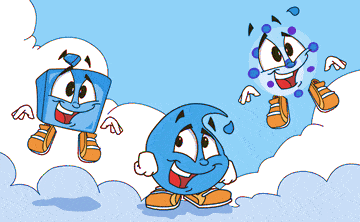

When water GAINS energy it turns from
a gas to a liquid
a liquid to a solid
a gas to a solid
a liquid to a gas



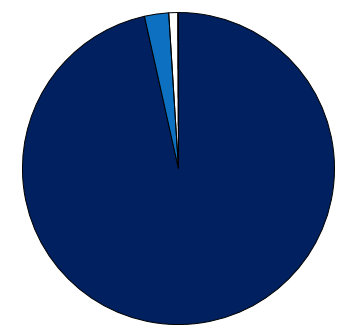
What percent of Earth's water is ACCESIBLE fresh water?

What is the process that brings water to the farm areas where farmers do not have access to water?
An extra long soaker hose
hydroelectric power
irrigation
desalination
What is the process that electricity is produced from energy of running water?
desalination
hydroelectric power
irrigation
windmills
A process that removes salt from the ocean water.
desalination
hydroelectricity
irrigation
fossil water

What is it called when creeks and smaller rivers join together to make a larger river?
River Systems
Topography
Watershed
Groundwater


Water on Earth is found naturally as a solid, a liquid, and a gas. Where is MOST of the solid water of Earth?
deep in Earth’s mantle
in Earth’s polar regions
in the outer atmosphere
at the bottom of the ocean



