
 Worksheets
Common Small Ruminant Diseases Part1
Total questions: 86
Worksheet time: 1hrs 5mins
Name a gastrointestinal disease of small ruminants that involves intestinal parasites.
Intestinal Parasitism
Foot Rot
Mastitis
Blue Tongue
What is the gastrointestinal disease of small ruminants also known as 'yo-knees'?
Johne’s Disease
Foot and Mouth Disease
Blue Tongue
Enterotoxemia
Name the gastrointestinal disease of small ruminants caused by protozoa and often affects young animals.
Coccidiosis
Foot rot
Mastitis
Enterotoxemia
Which gastrointestinal disease in small ruminants is also called 'watery mouth disease'?
E.coli
Salmonellosis
Coccidiosis
Johne's disease
Name the gastrointestinal disease in small ruminants caused by a common foodborne bacterium.
Salmonella
Foot and Mouth Disease
Scrapie
Blue Tongue
What gastrointestinal disease in small ruminants is associated with overeating and requires identification of the pathogen?
Overeating Disease
Johne's Disease
Bluetongue
Foot and Mouth Disease
Which gastrointestinal disease in small ruminants is caused by a virus and often leads to diarrhea?
Rotavirus
Coccidiosis
Salmonellosis
Clostridial enterotoxemia
Name the gastrointestinal disease in small ruminants caused by a protozoan parasite that can lead to diarrhea.
Cryptosporidium
Coccidiosis
Salmonellosis
Johne's disease
What is the term for the gastrointestinal condition in small ruminants where the rectum protrudes outside the body?
Rectal Prolapse
Intussusception
Bloat
Gastric Ulcer
Name the gastrointestinal disease in small ruminants characterized by excessive gas accumulation in the stomach.
Bloat
Enterotoxemia
Johne's disease
Foot rot
What is the common name of Haemonchus contortus? What does it cause in sheep?
Barber's pole worm; it causes anemia in sheep.
Liver fluke; it causes liver damage in sheep.
Lungworm; it causes respiratory issues in sheep.
Tapeworm; it causes digestive problems in sheep.
The simple test done to assess anemia and is performed by examining the color of the animal’s lower eyelid (conjunctiva) is called:
Capillary refill time
Packed cell volume test
FAMACHA test
Blood smear examination
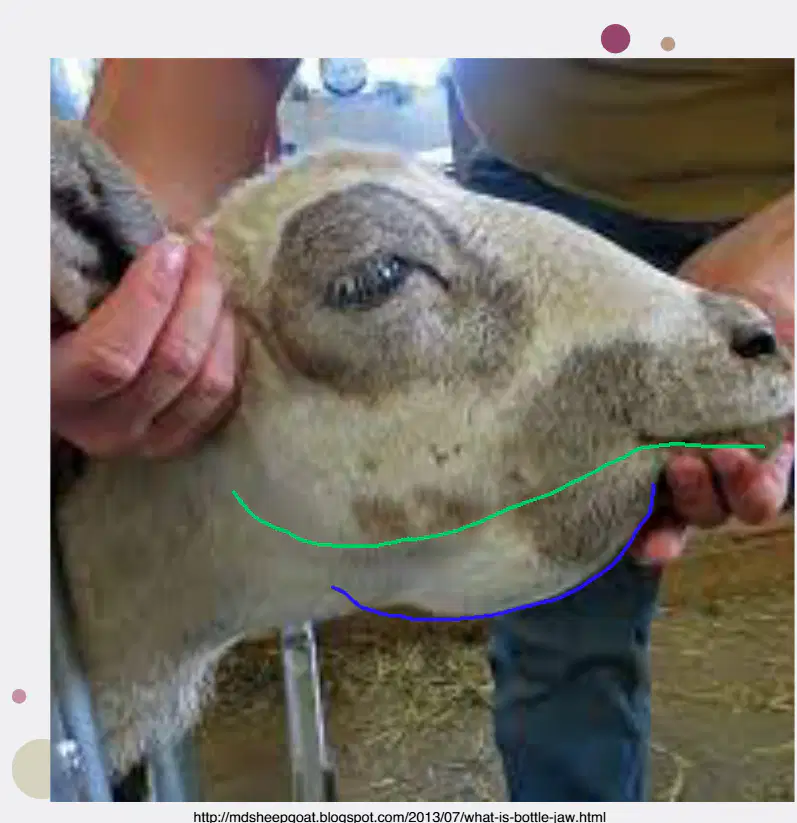
What is submandibular subcutaneous edema also known as?
Bottle Jaw
Blue Tongue
Foot Rot
Pink Eye
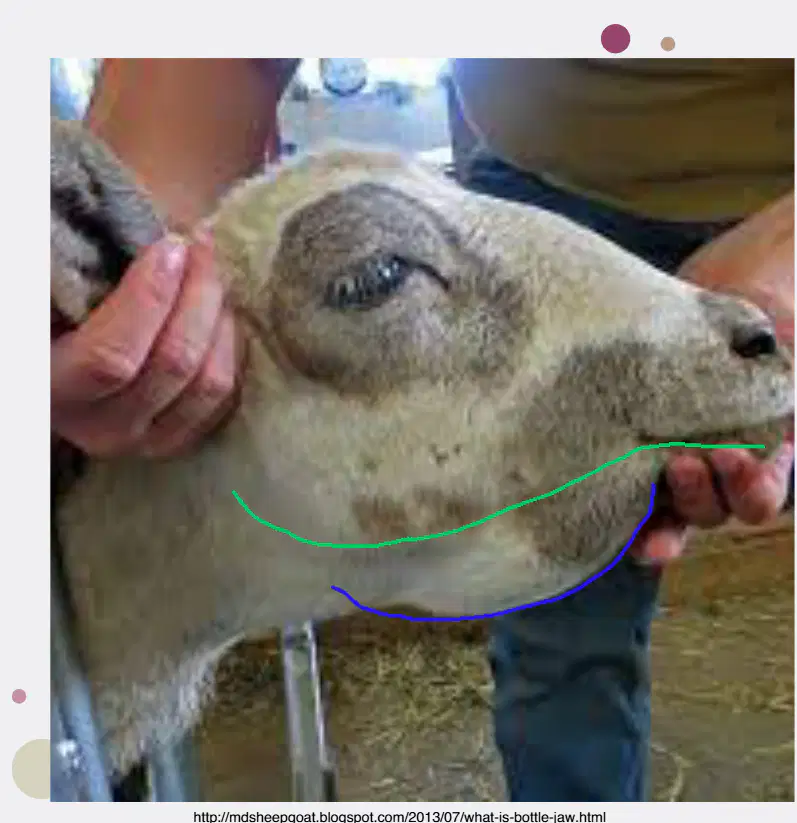
What is usually the result of protein loss due to anemia in sheep, goats, or calves?
Bottle Jaw
Scours
Foot Rot
Pink Eye
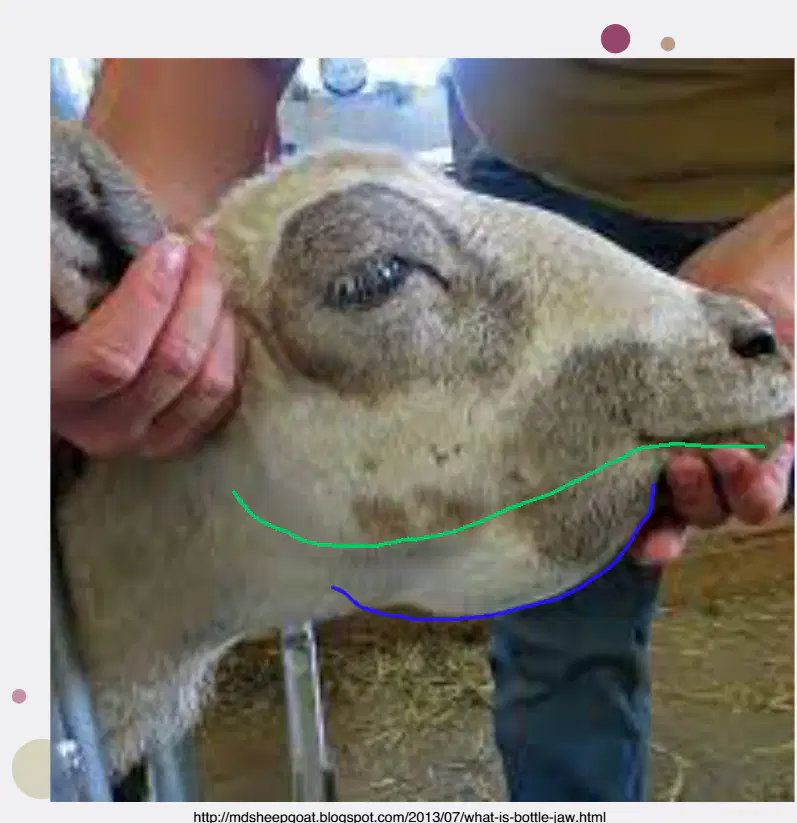
What condition occurs primarily due to the infestation of barber pole worms or other blood feeding parasites in sheep, goats, or calves?
Bottle Jaw
Foot Rot
Mastitis
Bloat
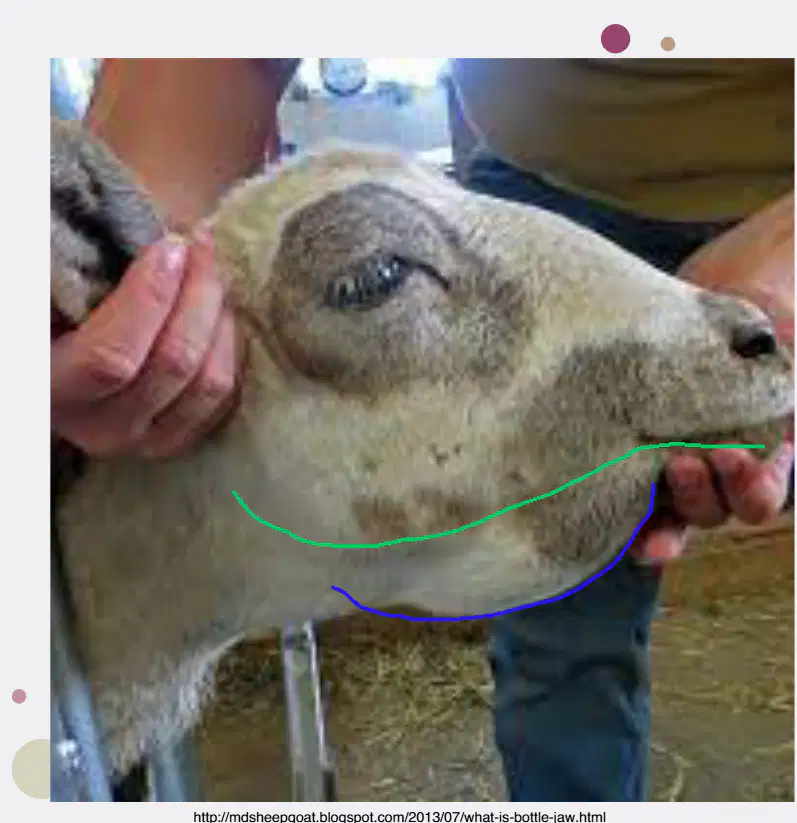
How can we correct or treat bottle jaw in sheep, goats, or calves?
By providing vitamin supplements
By deworming and improving nutrition
By increasing water intake only
By isolating the affected animal
Bloat in small ruminants is defined as failure of what process?
Eructation
Mastication
Rumination
Defecation
Which of the following are types of bloat in small ruminants?
Frothy bloat
Free-gas bloat
Both A and B
None of the above
Bloat in small ruminants is life-threatening if not treated.
True
False
Bloat in small ruminants causes death by ________.
asphyxiation
dehydration
starvation
infection
Classical sign of bloat in small ruminants is abdominal distension on which side?
left side
right side
both sides
dorsal side
Bloat in small ruminants is an emergency and pressure must be relieved immediately.
True
False
What disease is also known as 'Overeating Disease' in small ruminants?
Enterotoxemia
Foot and Mouth Disease
Mastitis
Blue Tongue
What is the causative agent of 'Overeating Disease' in small ruminants?
C. perfringens type C and D
E. coli
Salmonella typhimurium
Pasteurella multocida
'Overeating Disease' in small ruminants is also known as:
Pulpy Kidney
Blackleg
Foot rot
Mastitis
What does 'Overeating Disease' cause damage to in small ruminants?
Intestinal wall
Liver
Lungs
Kidneys
What symptom can be seen as a result of diarrhea in 'Overeating Disease'?
Edema
Fever
Cough
Rash
Sheep are more prone to sudden death from 'Overeating Disease.'
True
False
Is there a common vaccine for 'Overeating Disease' in small ruminants?
True
False
Bacterial pneumonia in small ruminants is caused by which of the following organisms?
Mycoplasma mycoides
Pasteurella multocida or Mannheimia haemolytica
Escherichia coli
Staphylococcus aureus
Pasteurella multocida and Mannheimia haemolytica are often found in the upper respiratory tract of healthy sheep and goats.
True
False
What is the leading cause of respiratory infections and death in small ruminants?
Bacterial pneumonia caused by Pasteurella multocida or Mannheimia haemolytica
Viral enteritis caused by Rotavirus
Parasitic infestation by Haemonchus contortus
Nutritional deficiency of selenium
Mycoplasma pneumonia is unique in which animal?
Sheep
Goats
Cattle
Horses
Which subspecies of Mycoplasma can cause meningitis, arthritis, and septicemia in goats?
Mycoplasma bovis
Mycoplasma mycoides subsp mycoides
Mycoplasma pneumoniae
Mycoplasma capricolum
Higher infection rate of Mycoplasma pneumonia in goats correlates with the presence of which parasite?
Ear mites (Psoroptes spp.)
Liver flukes (Fasciola hepatica)
Roundworms (Haemonchus contortus)
Coccidia (Eimeria spp.)
Reproductive Disease: Which animals have the same reproductive disease impacts as small ruminants?
Only cattle
Only swine
Cattle, swine, and equines
Only equines
List the common pathogens that cause reproductive impacts in small ruminants.
Chlamydiosis, listeriosis, toxoplasmosis, neosporosis, Q-Fever
Pasteurella, E. coli, Salmonella, Streptococcus, Clostridium
Brucellosis, tuberculosis, anthrax, leptospirosis, tetanus
Foot-and-mouth disease, bluetongue, rabies, scrapie, orf
What is important to know about all of the listed pathogens (Chlamydiosis, listeriosis, toxoplasmosis, neosporosis, Q-Fever)?
Zoonotic!
They are all viruses.
They only affect plants.
They are not harmful to humans.
Pregnancy Toxemia (Ketosis) is very common in which type of animals?
Small ruminants
Large ruminants
Poultry
Equines
What is ketosis in the context of pregnancy toxemia in small ruminants?
Conversion of fat for energy when not enough carbohydrates are present
High blood glucose
Excessive protein intake
Increased carbohydrate storage
Fill in the blank: Hypoglycemia is defined as ________ blood glucose.
low
high
normal
elevated
What is another term for pregnancy toxemia in small ruminants?
Lambing Paralysis
Milk Fever
Grass Tetany
Bloat
Ewes expecting multiple lambs are at higher risk for pregnancy toxemia.
True
False
Which of the following is NOT a clinical sign of pregnancy toxemia in small ruminants?
Head drooping
Lethargy
Teeth grinding
Increased appetite
Fill in the blank: Severe or untreated pregnancy toxemia in small ruminants can lead to ______ and then death.
coma
seizures
paralysis
fever
Which of the following is a method used to diagnose pregnancy toxemia in small ruminants?
Urine ketone strips
X-ray
Fecal flotation
Skin scraping
List any two clinical signs of pregnancy toxemia in small ruminants.
Depression and recumbency
Coughing and sneezing
Lameness and swelling of joints
Diarrhea and vomiting
Ataxia is a clinical sign of pregnancy toxemia in small ruminants.
True
False
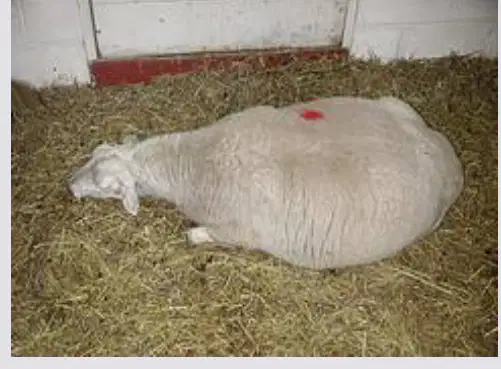
Based on the image of the sheep shown, this animal might be displaying which clinical sign of pregnancy toxemia?
Recumbency
Aggression
Increased appetite
Excessive vocalization
Diagnosis of pregnancy toxemia in small ruminants can be based off clinical signs and ______.
timing
breed
weight
age

What are some substances used to correct hypoglycemia in small ruminants with pregnancy toxemia?
Karo
Molasses
Propylene glycol
Water
Fill in the blank: One of the treatments for pregnancy toxemia in small ruminants is providing ________ to correct dehydration and imbalances.
Electrolytes
Antibiotics
Vitamins
Sedatives
Fill in the blank: ________ correction is important in the treatment and prevention of pregnancy toxemia in small ruminants.
Nutritional
Surgical
Physical
Genetic
Fill in the blank: To help prevent pregnancy toxemia in small ruminants, it is important to minimize ________.
stress
exercise
sunlight
water intake
Fill in the blank: Maintaining proper ________ score is a key prevention strategy for pregnancy toxemia in small ruminants.
body condition
respiratory
heart rate
urine protein
What is the causative agent of Caseous Lymphadenitis (CL)?
Staphylococcus aureus
Corynebacterium pseudotuberculosis
Escherichia coli
Mycobacterium bovis
Caseous Lymphadenitis (CL) is primarily seen in which animals?
Cattle and horses
Sheep and goats
Dogs and cats
Pigs and chickens
What is a key symptom of Caseous Lymphadenitis (CL)?
Diarrhea
Lymph node enlargement and abscessation
Hair loss
Lameness
Caseous Lymphadenitis (CL) is a ______ infection.
chronic
acute
viral
fungal
Is Caseous Lymphadenitis (CL) is caused by a Gram-positive or Gram-negative, intracellular bacterium?
Gram-Nagative
Gram-Positive
Which cells are primarily involved in the infection of Caseous Lymphadenitis (CL)?
Neutrophils
Monocytes and macrophages
Erythrocytes
Platelets
The agent of Caseous Lymphadenitis (CL) can survive on contaminated objects, bedding, and feces for several months.
True
False
What are the palpable, external lymph nodes in sheep and goats?
The palpable, external lymph nodes in sheep and goats include the submandibular, parotid, prescapular, prefemoral, and popliteal lymph nodes.
The palpable, external lymph nodes in sheep and goats include only the mesenteric and mediastinal lymph nodes.
The palpable, external lymph nodes in sheep and goats include the inguinal, axillary, and cervical lymph nodes only.
The palpable, external lymph nodes in sheep and goats include only the retropharyngeal and iliac lymph nodes.
Caseous Lymphadenitis has two distinct manifestations: 2. Internal = “Thin Ewe Syndrome” - Which of the following is NOT a symptom of Thin Ewe Syndrome?
A) Weight loss
B) Increased productivity
C) Decreased fertility
D) Chronic cough
Caseous Lymphadenitis has two distinct manifestations: 2. Internal = “Thin Ewe Syndrome” - The symptoms of Thin Ewe Syndrome depend on the location of what?
The symptoms depend on the location of internal abscessation.
The symptoms depend on the breed of the sheep.
The symptoms depend on the age of the animal.
The symptoms depend on the type of feed provided.
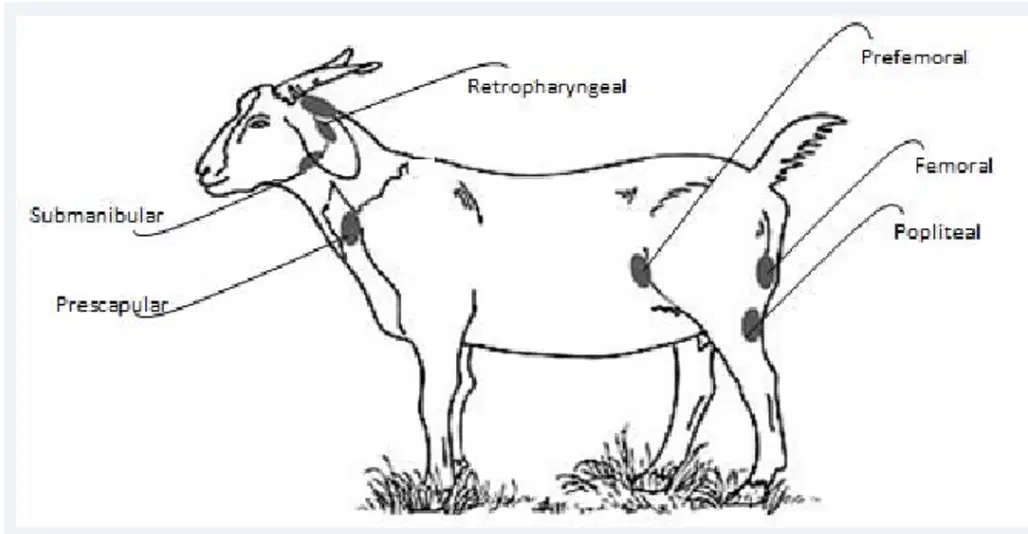
Look at the diagram of the goat. Which lymph node is located under the jaw?
Submandibular
Prescapular
Retropharyngeal
Popliteal
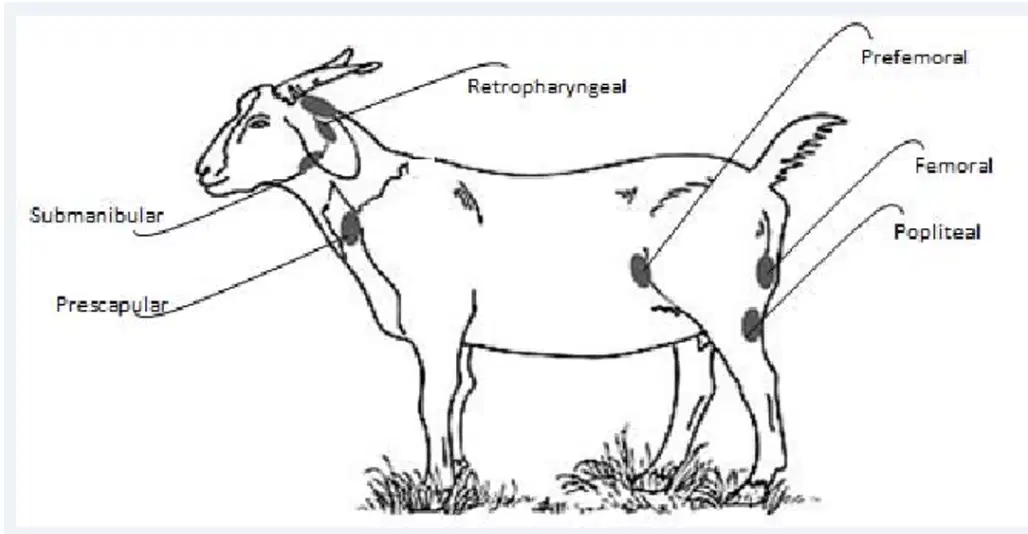
Look at the diagram of the goat. Which lymph node is located in front of the shoulder?
Submandibular
Prescapular
Femoral
Prefemoral
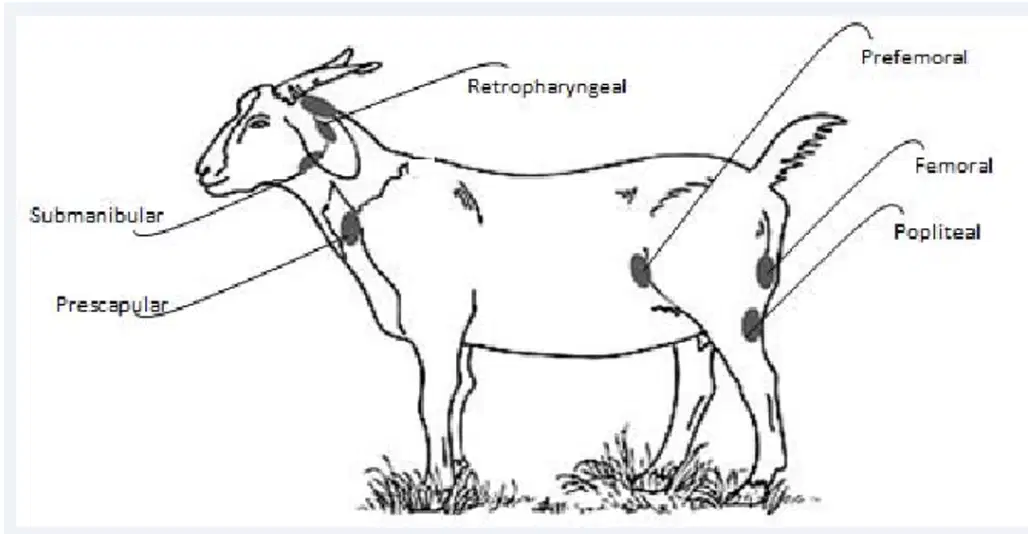
Look at the diagram of the goat. Which lymph node is located behind the throat?
Retropharyngeal
Submandibular
Popliteal
Femoral
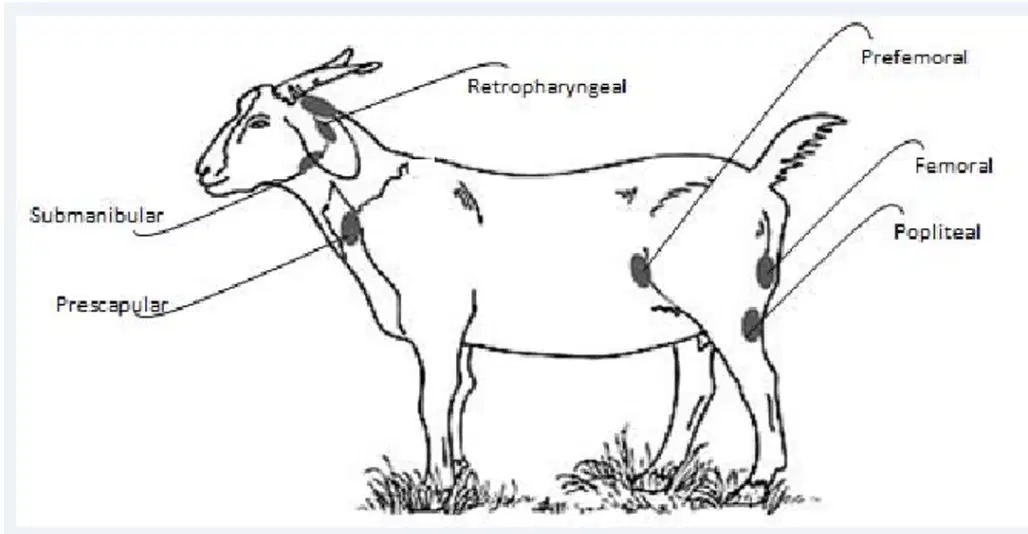
Look at the diagram of the goat. Which lymph node is located in front of the hind leg?
Prefemoral
Femoral
Prescapular
Submandibular
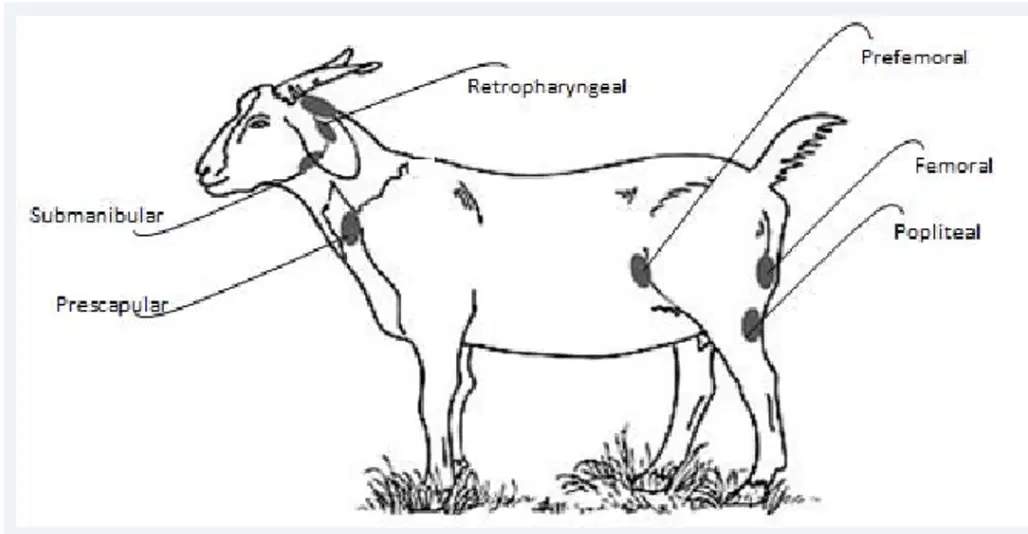
Look at the diagram of the goat. Which lymph node is located on the inner thigh?
Femoral
Popliteal
Retropharyngeal
Prescapular
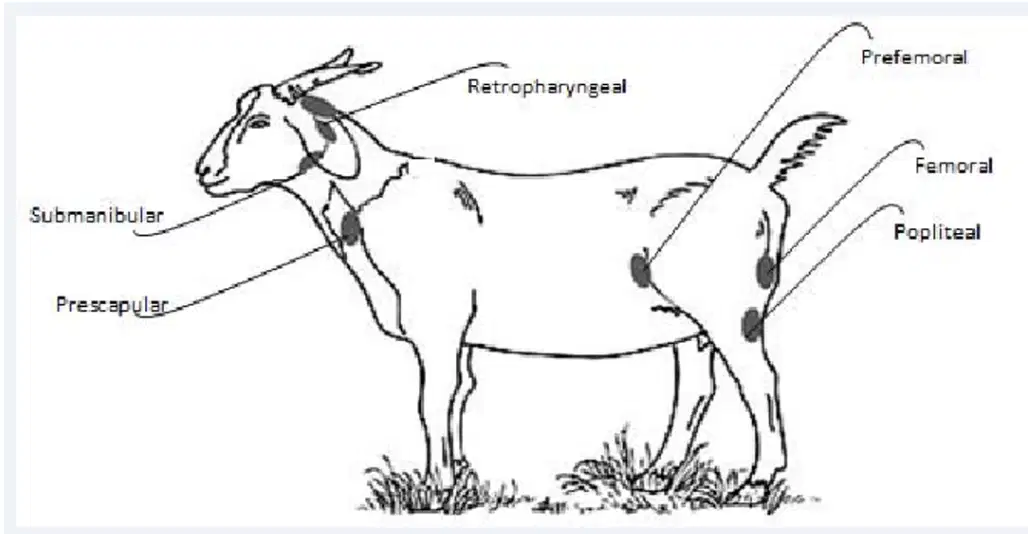
Look at the diagram of the goat. Which lymph node is located behind the knee?
Popliteal
Femoral
Submandibular
Prefemoral
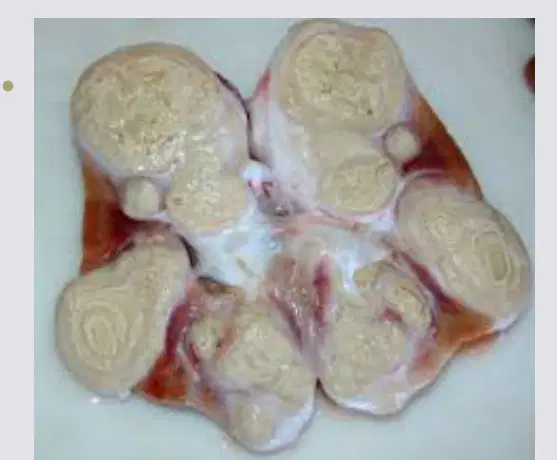
Observe the image showing a cross-section of tissue with multiple round, pale nodules. What pathological condition is likely being depicted in this image?
Metastatic carcinoma
Tuberculosis
Sarcoidosis
Fatty liver
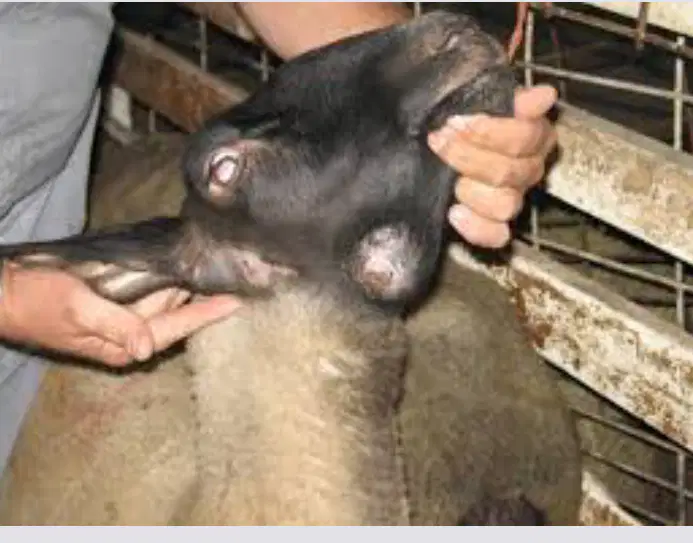
Look at the image of a sheep's head with visible swelling or growths under the jaw. What is the likely cause of this swelling?
Bottle jaw (due to internal parasites)
Sheep pox
Foot rot
Bluetongue
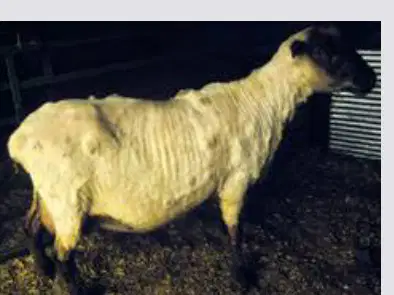
A sheep with a thin or emaciated appearance could be suffering from which of the following conditions?
Overfeeding
Parasitic infection
Excessive exercise
High milk production
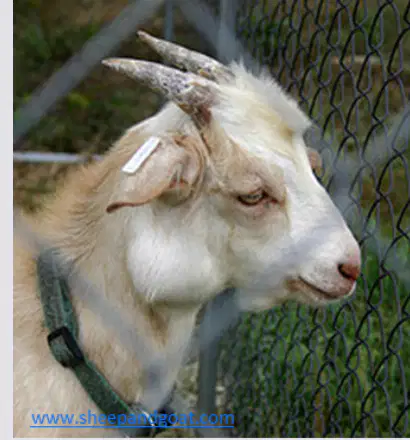
How is Caseous Lymphadenitis commonly transmitted?
Through contaminated water
Through abraded skin during shearing
Through the air
Through direct contact with feces
Which of the following is NOT a method used for the diagnosis of Caseous Lymphadenitis?
A) Clinical signs
B) Aspirate and culture
C) Blood pressure measurement
D) None of the above
Fill in the blank: One way to diagnose Caseous Lymphadenitis is by observing _________
clinical signs
blood pressure
urine color
heart rate
Which of the following is a treatment or prevention method for Caseous Lymphadenitis?
Isolate from the others
Provide more water
Increase exercise
Reduce sunlight exposure
Systemic antibiotics have limited effectiveness and must be given long term for Caseous Lymphadenitis.
True
False
Fill in the blank: Vaccination can reduce the severity of infection and should be given _______ shearing.
before
after
during
instead of
Which of the following is NOT listed as a treatment or prevention method for Caseous Lymphadenitis?
Lance abscess and flush
Surgical removal of encapsulated abscess
Increase protein intake
Good hygiene practices
What is another name for Contagious Ecthyma (Orf)?
Sore Mouth
Foot Rot
Blue Tongue
Ringworm
Is Contagious Ecthyma (Orf) zoonotic?
True
False
What type of virus causes Contagious Ecthyma (Orf)?
Parapoxvirus
Herpesvirus
Retrovirus
Adenovirus
Contagious Ecthyma (Orf) is highly contagious.
True
False
Where do the painful skin lesions of Contagious Ecthyma (Orf) typically occur?
On the mouth and muzzle
On the hooves
On the tail
On the ears

