
Font size
 Worksheets
How Geologists Study Earth's Structure
Total questions: 48
Worksheet time: 28mins
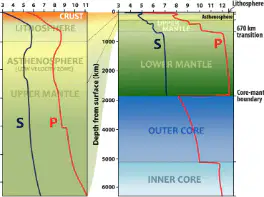
Scientists use several methods to study Earth's interior. Fill in the blank: One method is ________ seismic waves from earthquakes.
studying
ignoring
painting
measuring
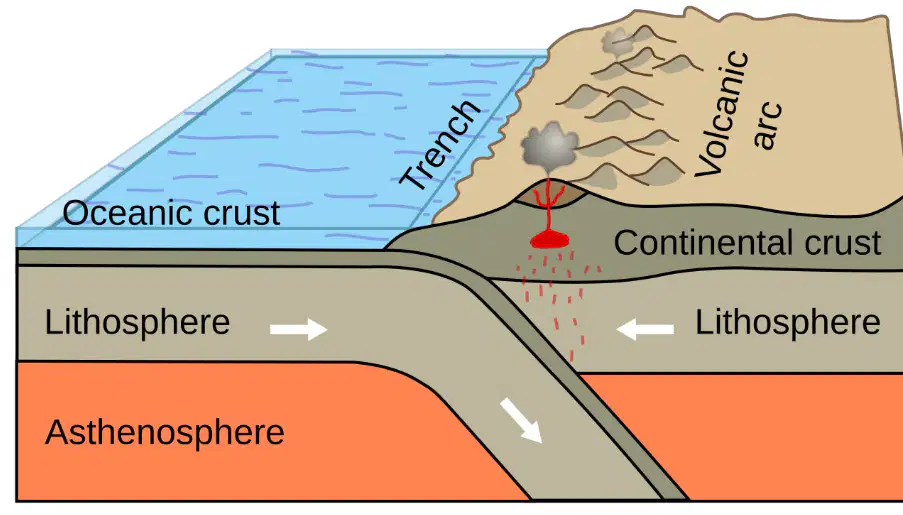
What is the thinnest layer of the Earth, ranging from 5-40 km thick?
Crust
Mantle
Outer Core
Inner Core
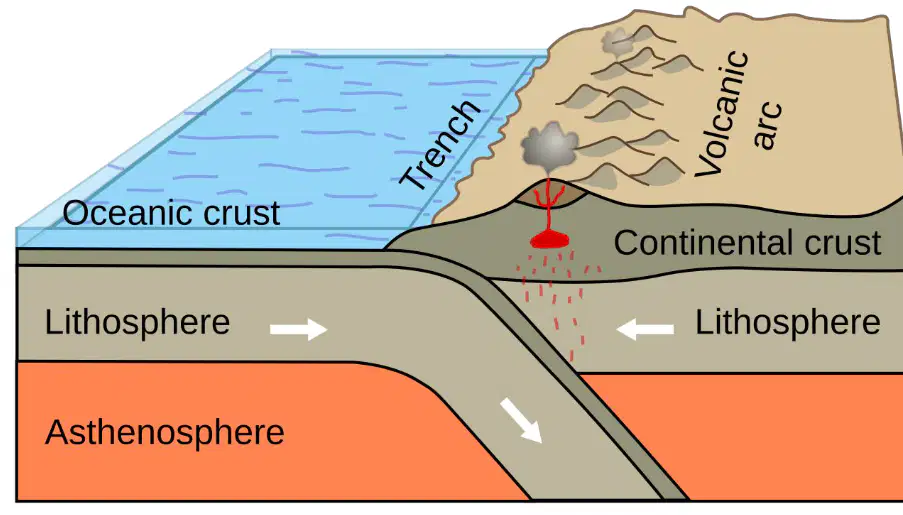
Which type of crust is thicker and made mostly of granite?
Oceanic crust
Continental crust
Lithosphere
Asthenosphere
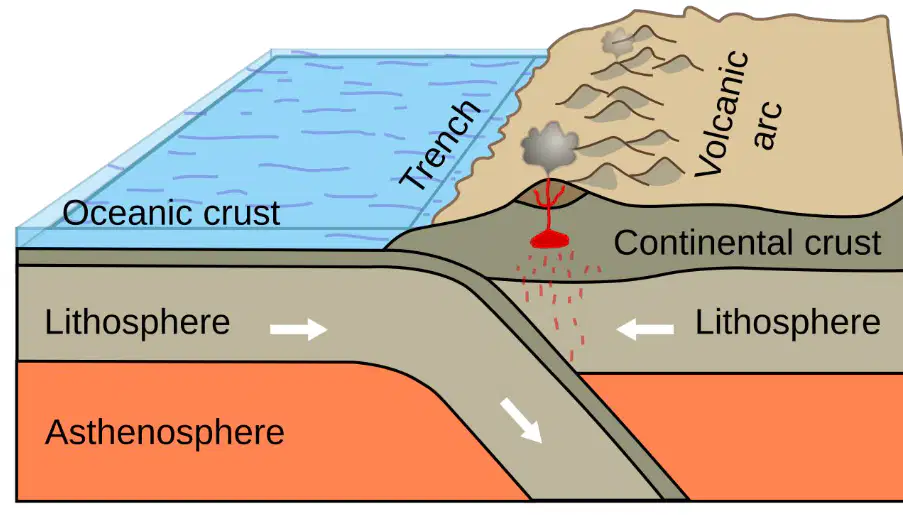
The land under the ocean, which is thinner and made of basalt, is called the ________.
oceanic crust
continental crust
mantle
core
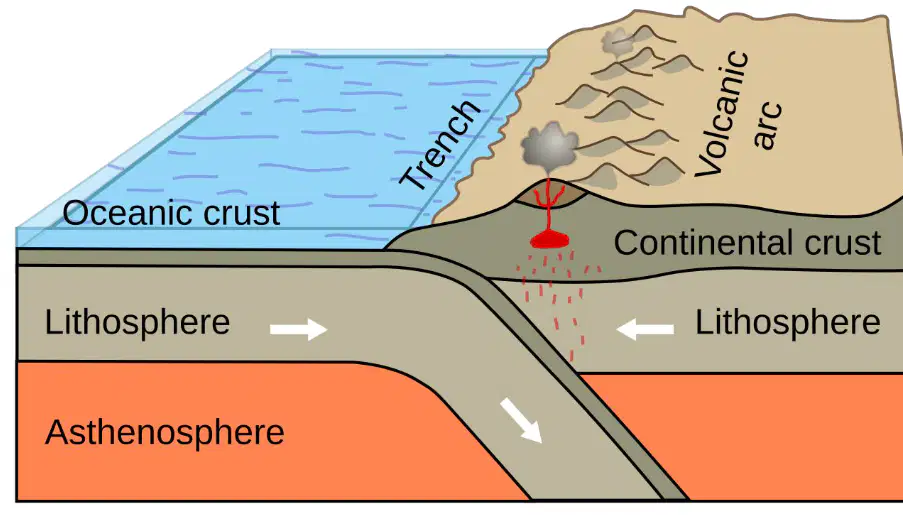
True or False: The Earth's crust is made of solid rock and is where we live.
True
False
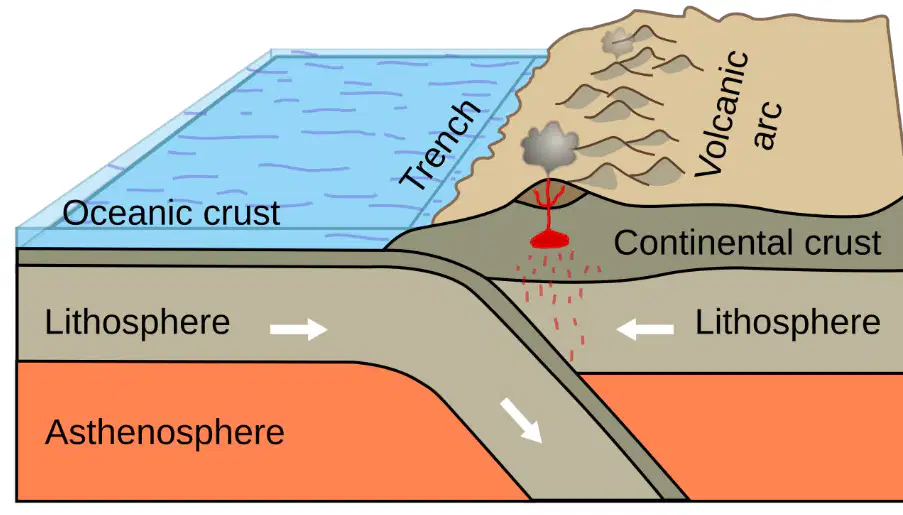
In the diagram, which layer is located directly below the lithosphere?
Oceanic crust
Continental crust
Asthenosphere
Volcanic arc
What is the thickest layer of the Earth?
Crust
Mantle
Outer Core
Inner Core
The mantle is made up of the Lithosphere (solid rock) and the ________ (soft solid/thick liquid).
Asthenosphere
Mesosphere
Core
Crust
What type of rock is found in the mantle?
Hot, dense rock
Cold, brittle rock
Liquid metal
Ice
Heat rising and falling inside the mantle creates ________ currents generated by radioactive decay in the Earth's core.
convection
magnetic
tidal
electrical
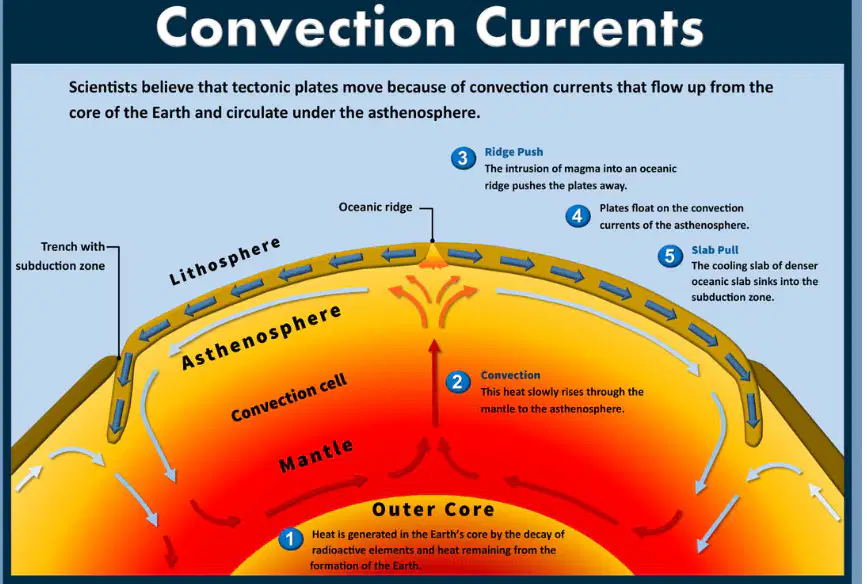
What causes the movement of tectonic plates according to the diagram titled 'Convection Currents'?
Convection currents in the mantle
Earth's rotation
Gravitational pull of the moon
Solar radiation
The convection currents in the mantle are generated by radioactive decay in the Earth's core.
True
False
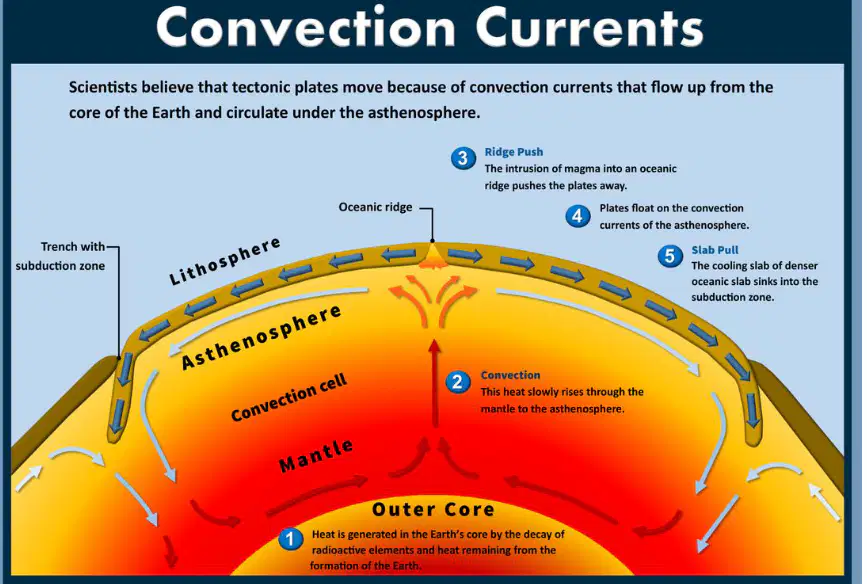
Which layer do tectonic plates float on according to the diagram?
Lithosphere
Asthenosphere
Mantle
Outer Core
What is the state of the metal in the Earth's outer core?
Molten metal
Solid metal
Gaseous metal
Plasma
What elements are mostly found in the liquid metal of the Earth's outer core?
Iron and nickel
Silicon and oxygen
Magnesium and aluminum
Carbon and sulfur
What does the Earth's outer core create?
Earth's magnetic field
Earth's ozone layer
Earth's crust
Earth's atmosphere
The heat, pressure, and density in the Earth's outer core is (high/low).
high
low
moderate
very low
How thick is the Earth's outer core?
About 2300 km thick
About 700 km thick
About 5100 km thick
About 100 km thick
What does the Earth's outer core surround?
The inner core
The crust
The mantle
The lithosphere
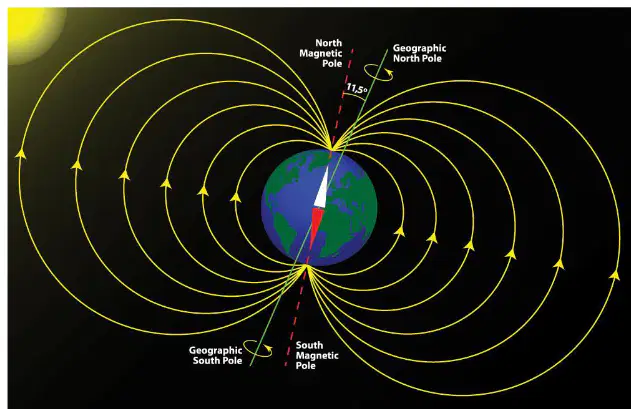
Which part of the Earth is responsible for creating this magnetic field?
The outer core
The crust
The mantle
The inner core
Where does the energy in the Earth's inner core come from?
The sun
Leftover radioactive energy and heat
Ocean currents
Wind energy
The Earth's inner core is a _________.
solid metal center
liquid rock layer
gaseous shell
molten outer ring
What is the Earth's inner core described as?
A) A liquid layer
B) The dense ball of metal
C) A rocky crust
D) A gaseous sphere
The pressure in the inner core squeezes the atoms of iron and nickel so much they cannot ________ and become liquid.
spread out
vibrate rapidly
bond together
change color
How hot is the Earth's inner core?
About 1,000°F
About 5,000°F
About 9,800°F
About 15,000°F
The Earth's inner core is about ________ km thick.
1200
700
2500
3500
Pressure: Increases with depth. Fill in the blank: As we go deeper, pressure ________.
increases
decreases
remains the same
disappears
Fill in the blank: The increase in pressure with depth is like stacking more and more ________.
books
pillows
balloons
cups
Fill in the blank: The pressure is ________ at the center.
highest
lowest
constant
zero
Temperature: Gets hotter as we go deeper. As we go deeper, the temperature ________.
gets hotter
gets colder
stays the same
disappears
Where does the heat inside the Earth come from?
Sunlight
Radioactive decay and leftover heat from Earth's formation
Ocean currents
Wind
As we go deeper, materials become more ________.
compact
fragile
lighter
softer
Density: Heaviest materials sink toward. Fill in the blank: The heaviest materials sink toward the ________.
center
surface
edge
crust
Fill in the blank: The lightest materials float near the ________.
surface
bottom
center
core
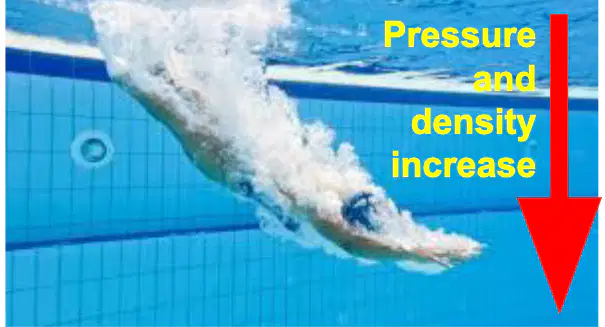
What happens to pressure and density as you go deeper underwater?
They decrease
They stay the same
They increase
Only pressure increases
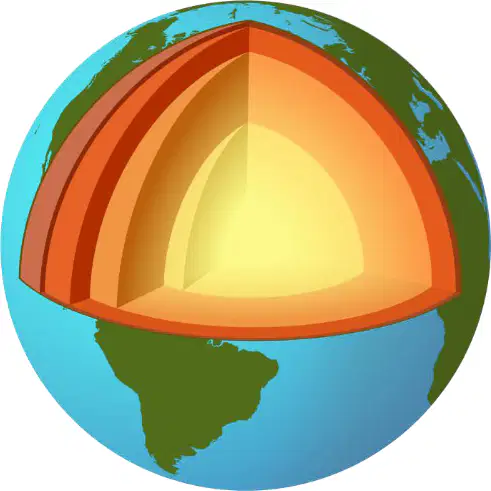
Fill in the blank: The crust is like the skin of an apple - very _____ compared to the whole Earth.
thin
thick
hard
soft
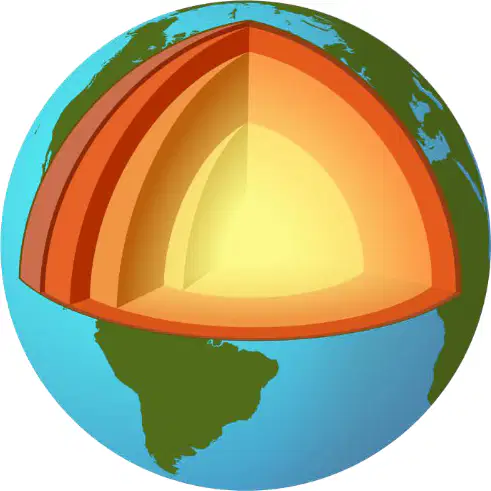
If Earth were the size of a basketball, the crust would be as thin as a piece of _____.
paper
wood
metal
plastic
The mantle moves only a few inches per year.
True
False
Fill in the blank: The inner core spins slightly _____ than the rest of Earth.
faster
slower
higher
lower
Fill in the blank: Temperature at the center is about as hot as the surface of the _____.
Sun
Earth
Moon
Jupiter
Why are convection currents crucial for the Earth?
They drive plate tectonics, which affects the Earth's surface in numerous ways, such as creating minerals and rocks.
They cause the Earth's magnetic field to reverse every year.
They are responsible for the formation of the atmosphere.
They prevent the Earth from rotating too quickly.
What do convection currents drive that affects the Earth's surface?
Weather patterns
Plate tectonics
Ocean currents
Erosion
What is formed when magma cools deep inside the Earth's crust?
Minerals (which in turn make rocks)
Fossil fuels
Soil
Water vapor
What layer of the Earth is moved by convection currents driven by heat transfer from the core?
Crust
Mantle
Outer core
Lithosphere

What is the thickest layer of the Earth?
Crust
Mantle
Outer Core
Inner Core

Which layer of the Earth is liquid Iron and Nickle?
Crust
Mantle
Outer Core
Inner Core


What do convection currents produce AND why?
(1 point if you answer it correctly)
(2 points if you answer AND explain correctly)

