
 Worksheets
LV01 servicing
Total questions: 60
Worksheet time: 30mins
What is the first step in checking the transmission fluid level?
Remove the transmission dipstick
Top-up if necessary
Engine and transmission at normal operating temperature
Engine at idle and transmission in neutral
When should you remove the transmission dipstick to check the oil level?
After topping up the fluid
When the engine is off
When the engine is at idle and transmission in neutral
Before starting the engine
What should you do if the transmission fluid level is below "Min"?
Overfill the fluid
Top-up if necessary, but do not overfill
Ignore and continue driving
Drain all the fluid

Which of the following is an issue that can be identified in transmission systems?
Bent shaft
Overheating engine
Flat tire
Low battery
What problem might occur if there is excessive play or lift in the joints of a transmission system?
Smooth operation
Increased fuel efficiency
Unstable driving
Enhanced braking
What is a potential consequence of leaking or torn gaiters in a transmission system?
Improved acceleration
Loss of lubrication
Enhanced steering
Increased horsepower
What symptom might indicate a problem when a vehicle is driven on full lock?
Silent operation
Knocking noise
Increased speed
Smooth turning

What is the first step in changing engine oil and filter?
Remove filler cap and drain plug
Warm engine
Drain oil into suitable receptacle
Fill with correct amount of new oil

Which step involves replacing the drain plug with a new washer?
Step 3
Step 5
Step 7
Step 9

At which step should you fill the engine with the correct amount of new oil?
Step 4
Step 6
Step 7
Step 8

What should be done after running the engine and stopping it?
Remove filter
Recheck levels
Replace drain plug
Lubricate new seal
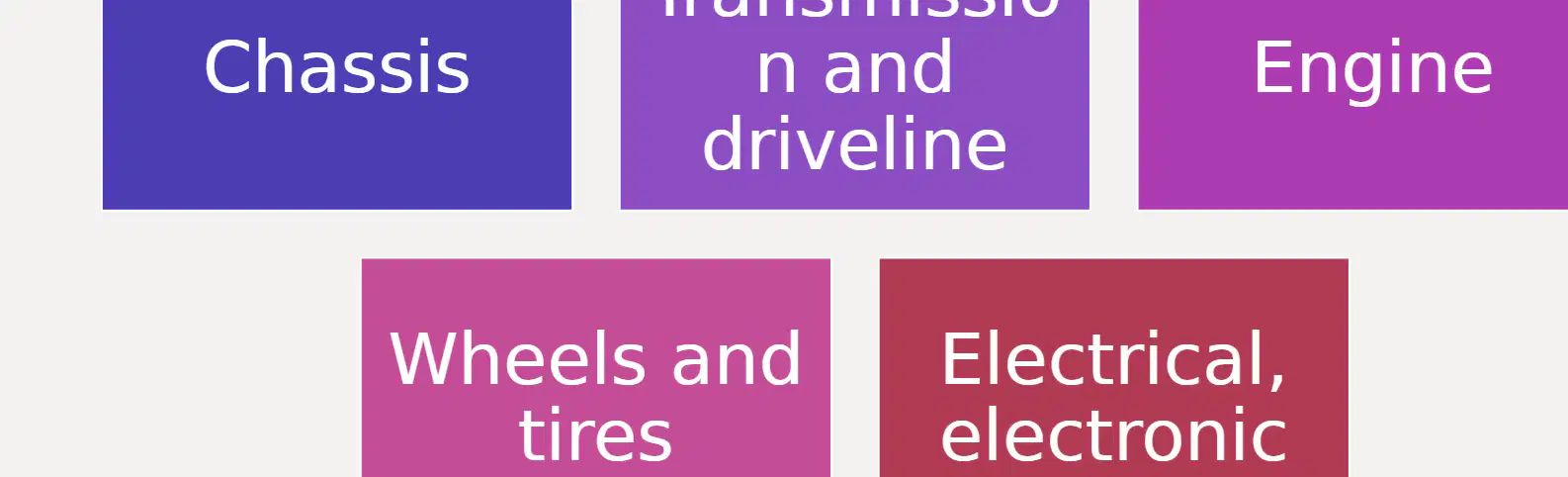
Which of the following is an area identified for inspection as part of routine servicing?
Upholstery
Chassis
Paint
Windows
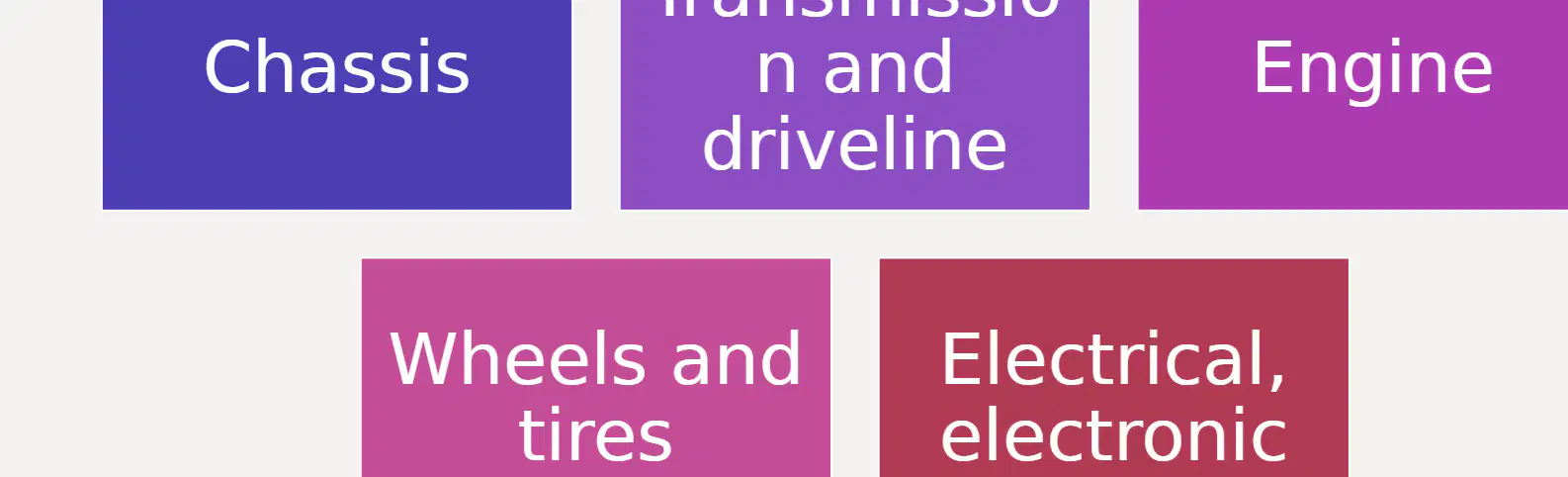
What component is included in the routine inspection for transmission?
Upholstery
Transmission and driveline
Paint
Windows
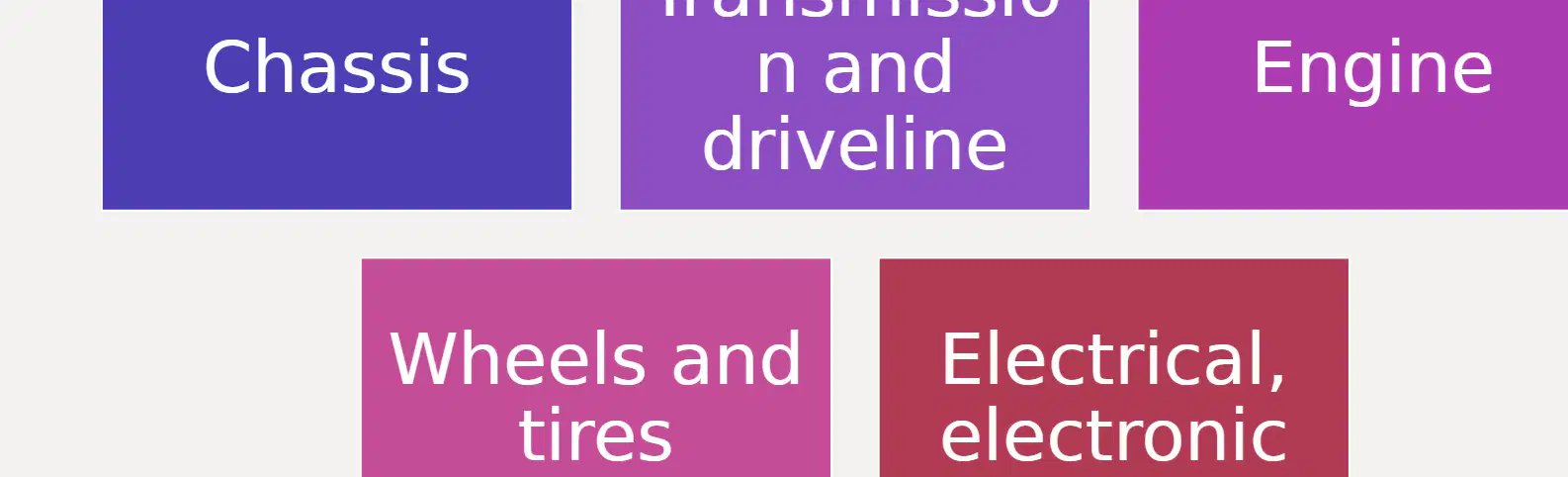
Which area is checked during routine servicing for potential electrical issues?
Upholstery
Electrical, electronic
Paint
Windows
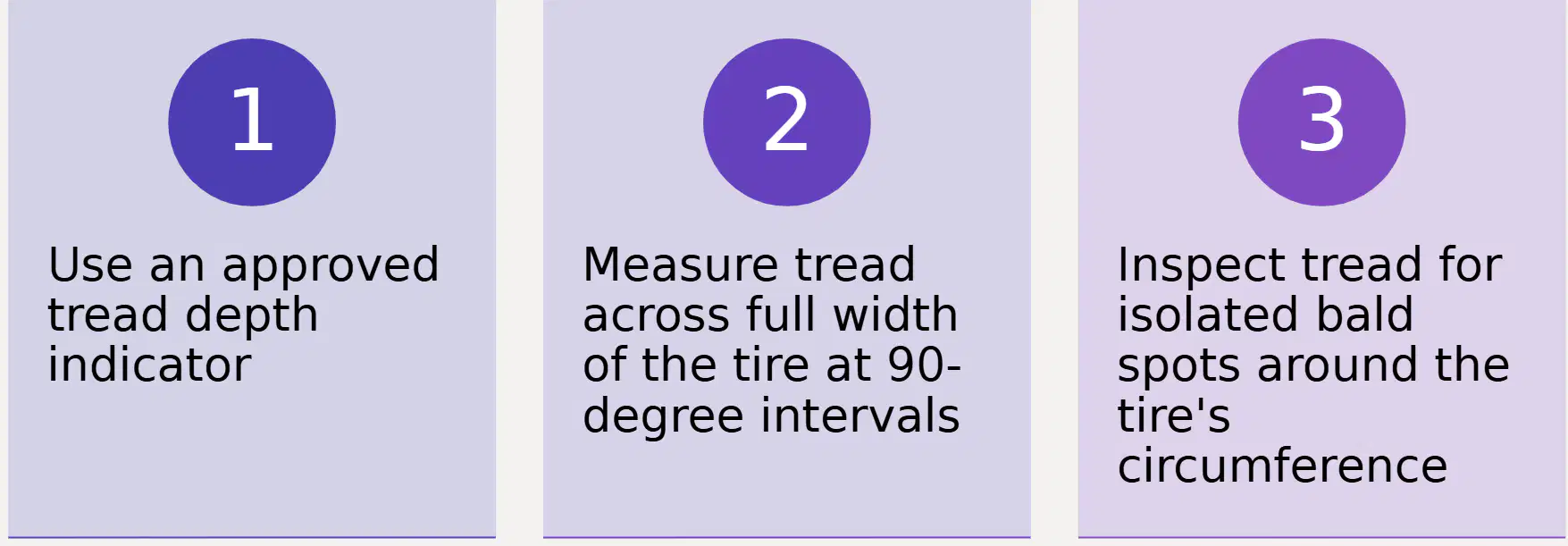
What is the first step in measuring tire tread?
Measure tread across full width of the tire at 90-degree intervals
Inspect tread for isolated bald spots around the tire's circumference
Use an approved tread depth indicator
Rotate the tires
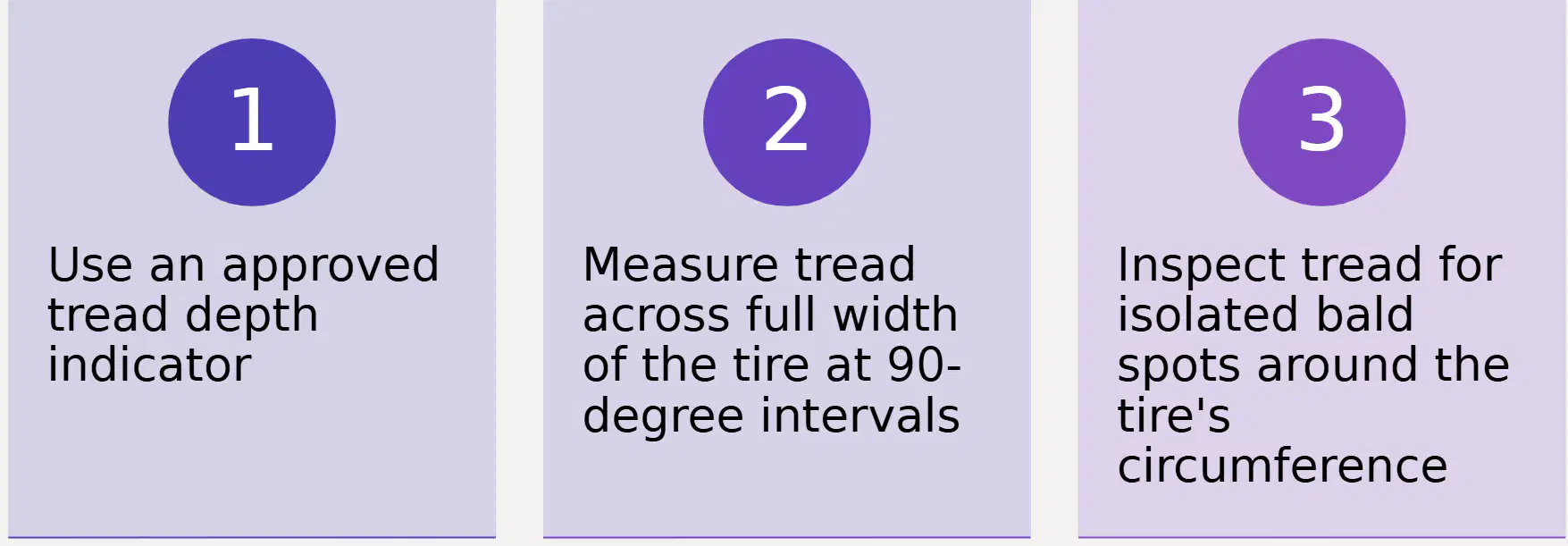
How should the tread be measured across the tire?
At 45-degree intervals
At 90-degree intervals
At 180-degree intervals
At 360-degree intervals
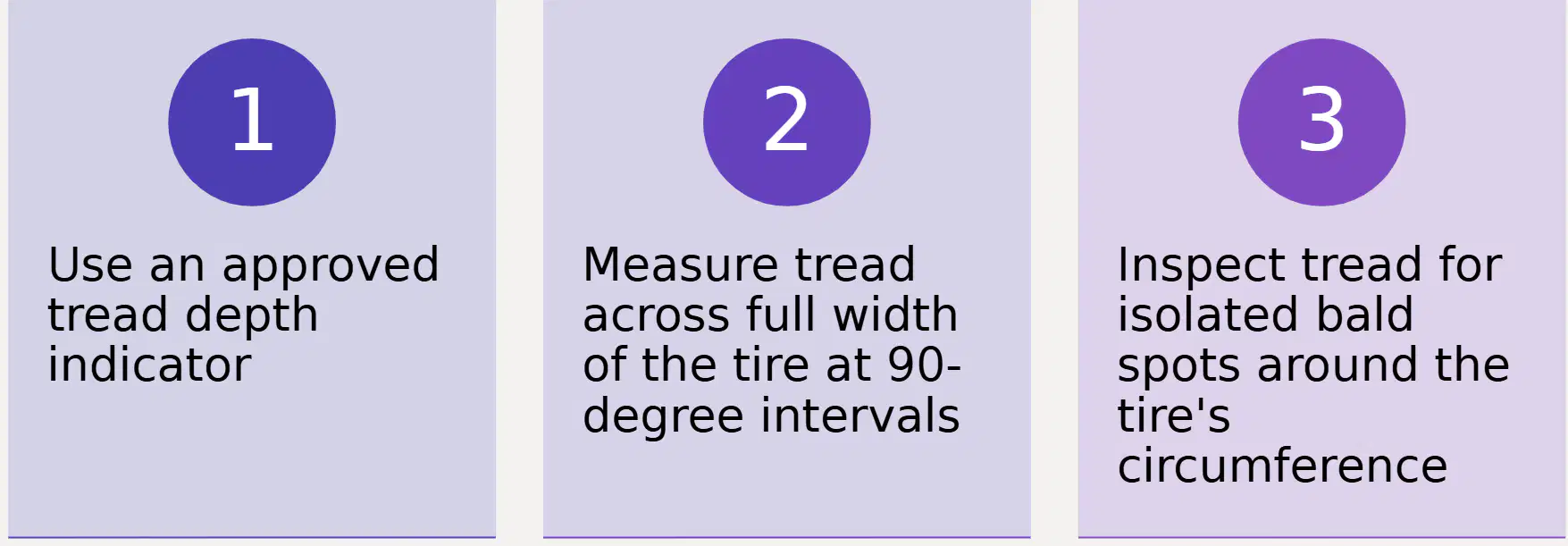
What should be inspected for around the tire's circumference?
Even wear
Isolated bald spots
Tire pressure
Sidewall damage
What is the minimum tread depth required for tires across the central ¾ of the tread width?
1.0mm
1.6mm
2.0mm
2.5mm
How should the minimum tread depth be distributed around the tire?
In a single spot
In a continuous band around the whole circumference
Only on the sides
Only in the center
What should you check for when examining the ball joint in a steering system?
Security of rack mountings
Lift in the ball joint and rubber seal for splits
Oil leaks from the box
Excessive play in joints
When checking the steering rack, what is one of the key components to inspect?
Oil leaks from the box
Lift in the drop arm
Security of rack mountings
Rubber seal for splits
What should be checked for splits when examining the steering rack?
Rubber seal
Gaiters
Drop arm
Oil leaks
What is a critical check when inspecting the steering box?
Excessive play in joints
Security of rack mountings
Oil leaks from the box
Rubber seal for splits
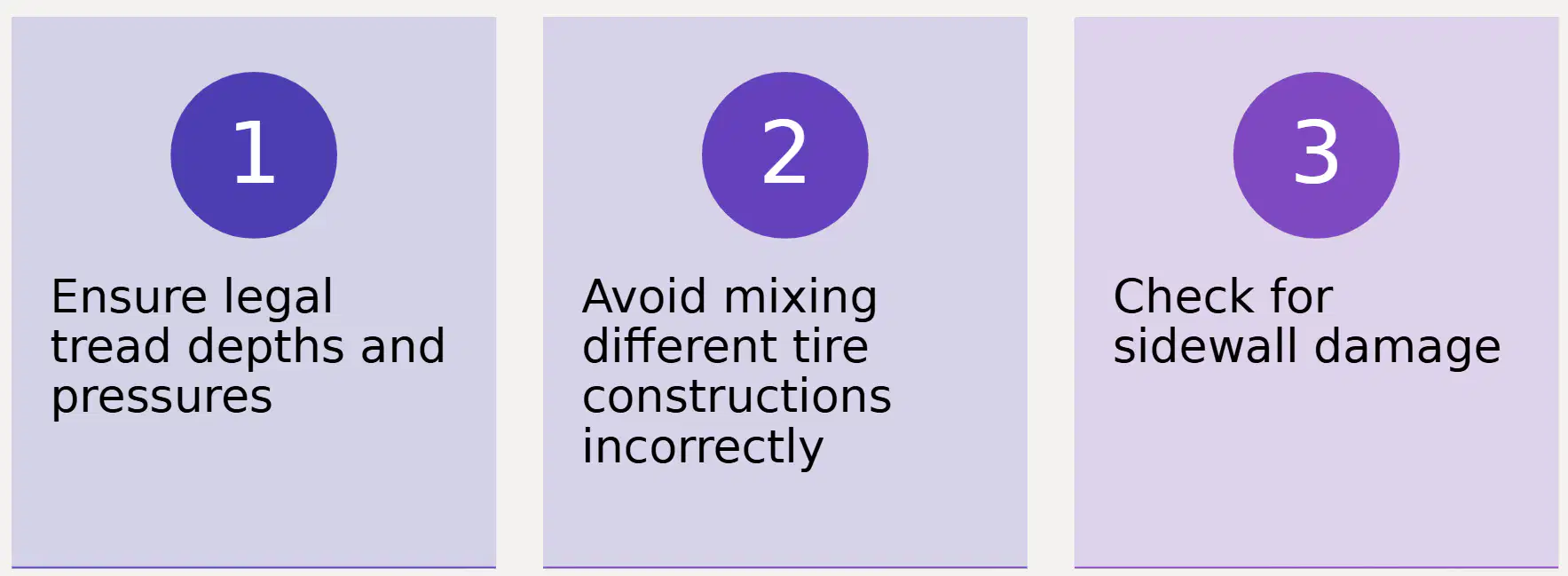
What is one important aspect of tyre maintenance?
Regularly wash the tyres
Ensure legal tread depths and pressures
Use the same brand of tyres
Inflate tyres to maximum pressure
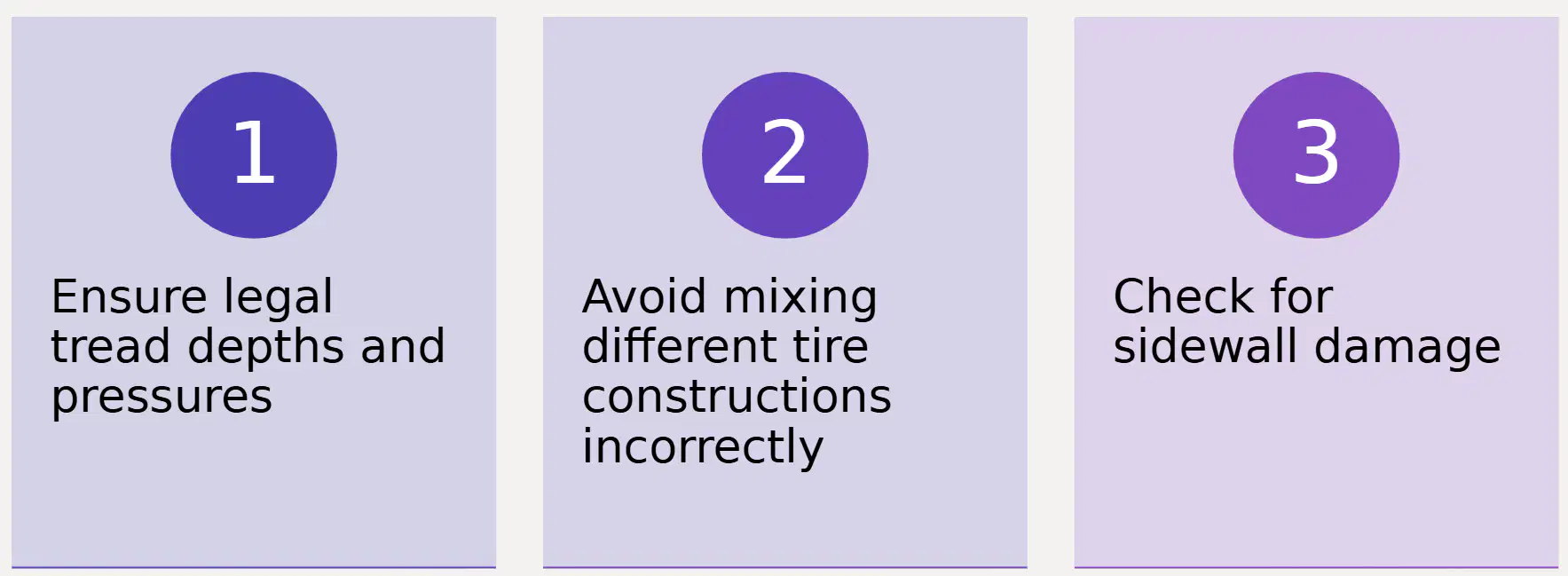
What should be checked to prevent tyre damage?
Tread pattern
Sidewall damage
Tyre color
Valve caps

Which of the following is a key aspect to inspect in an exhaust system?
Color of the exhaust
Security of system
Type of fuel used
Engine size

What should be checked to ensure the exhaust system is not causing damage to the vehicle?
Exhaust fouling bodywork or other components
Color of the vehicle
Tire pressure
Oil level

Why is it important to inspect the exhaust mountings?
To ensure the exhaust is securely attached
To check the color of the exhaust
To measure the engine temperature
To verify the fuel type
What is the recommended engine operating temperature condition for testing exhaust gases?
Cold engine
Engine at normal operating temperature
Overheated engine
Engine at idle
In what type of area should you hold engine revs at 1,200-1,500 for testing exhaust gases?
Enclosed area
Well-ventilated area
Underwater
Confined space
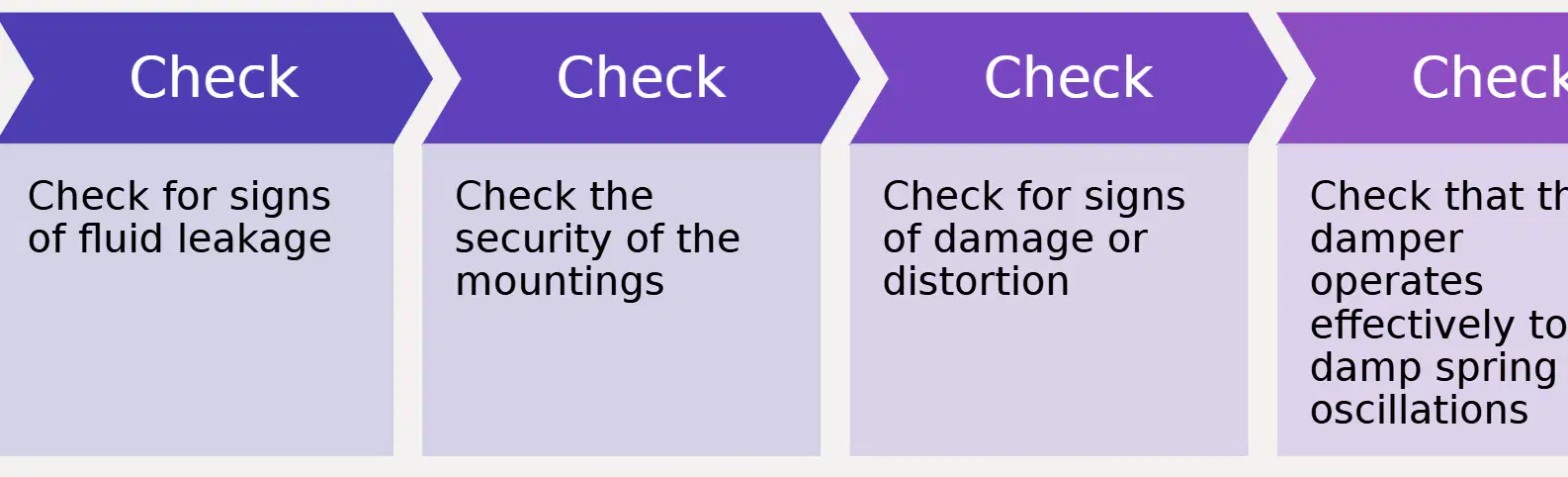
What is one of the checks to identify suspension system issues?
Check for signs of fluid leakage
Check the tire pressure
Check the battery voltage
Check the oil level
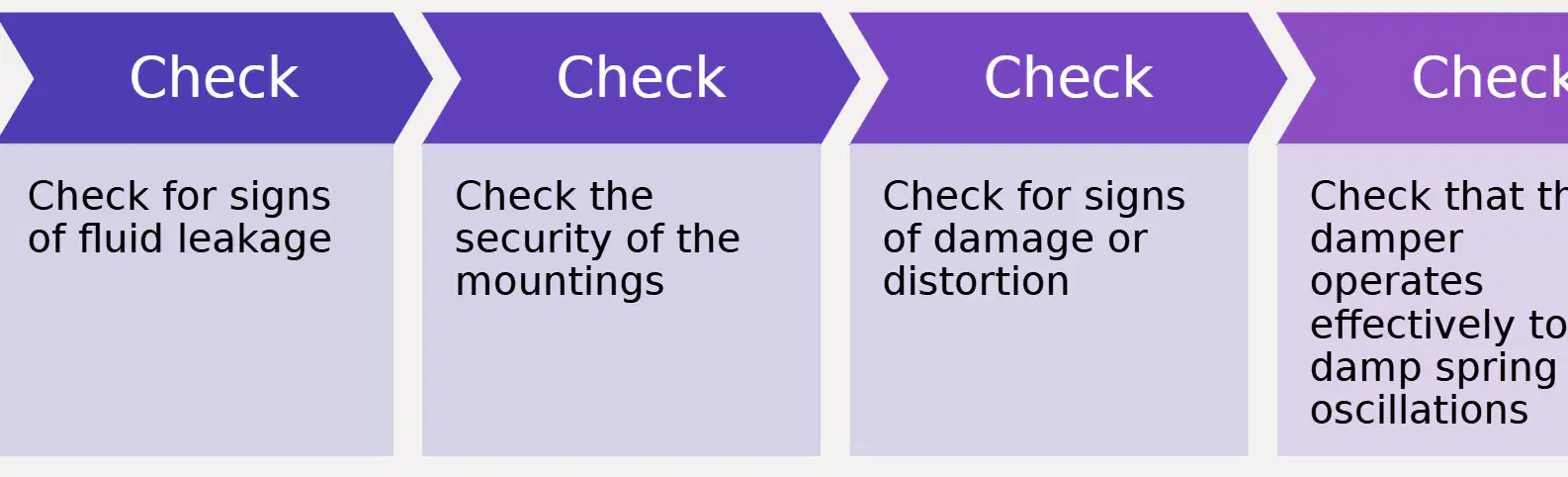
Which of the following is a step in checking the suspension system?
Check the security of the mountings
Check the air conditioning system
Check the fuel filter
Check the windshield wipers
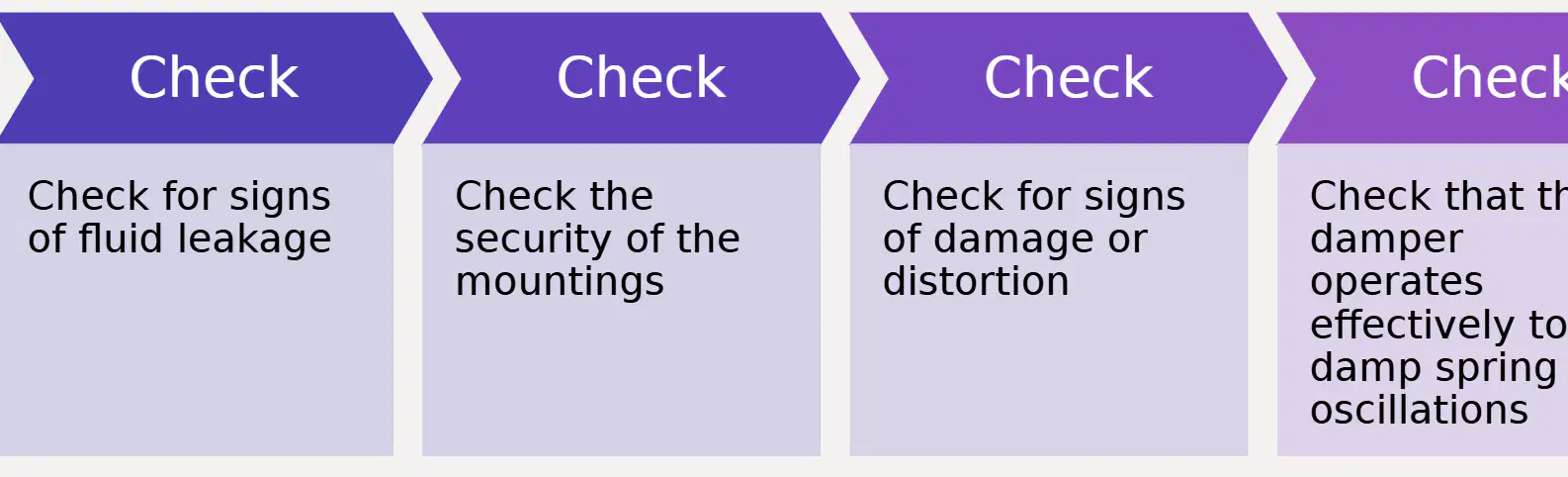
What should be checked to ensure the damper is functioning properly in a suspension system?
That it operates effectively to damp spring oscillations
That it is painted correctly
That it is made of aluminum
That it is connected to the exhaust system
What is the first step to take when identifying a fault outside the scope of work?
Make a note of the fault on the job card
Contact the customer to discuss the issue
Inform the supervisor about the identified fault
Ignore the fault

Which action involves direct communication with the customer regarding an issue?
Make a note of the fault on the job card
Contact the customer to discuss the issue
Inform the supervisor about the identified fault
Ignore the fault

What should be done to document a fault identified outside the scope of work?
Make a note of the fault on the job card
Contact the customer to discuss the issue
Inform the supervisor about the identified fault
Ignore the fault

What should you visually check around the battery casing for?
Signs of leaks or damage
Color changes
Temperature variations
Sound emissions
What should you check for the security of the battery?
Battery in the carrier
Battery color
Battery temperature
Battery sound
What should you visually check for the condition and security of?
Battery terminals
Battery color
Battery temperature
Battery sound
What should you check if the battery is sealed?
Battery charge indicator
Battery color
Battery temperature
Battery sound
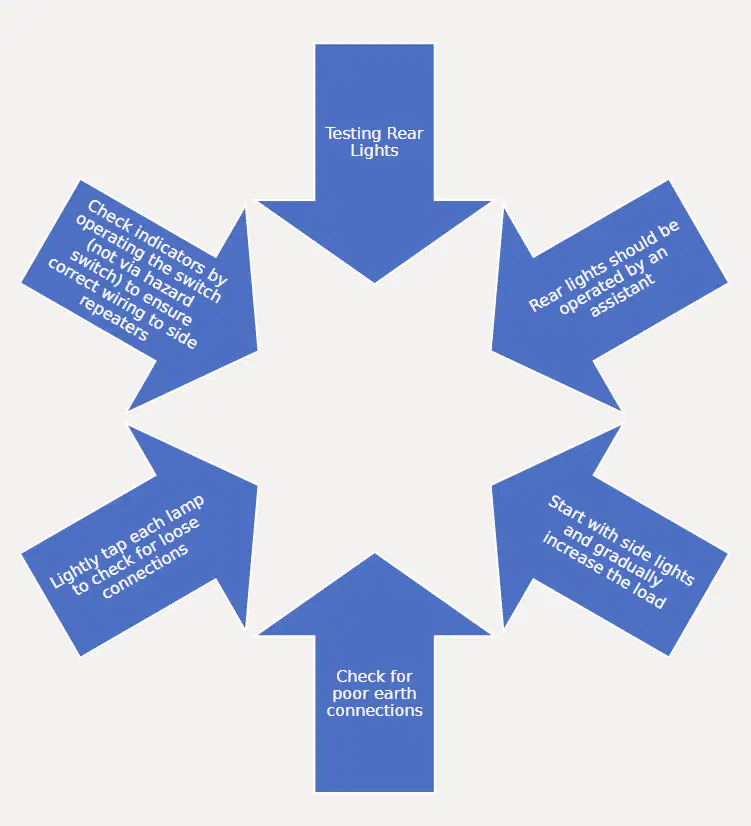
What is the first step in testing rear lights according to the diagram?
Start with side lights and gradually increase the load
Check indicators by operating the switch
Lightly tap each lamp to check for loose connections
Check for poor earth connections
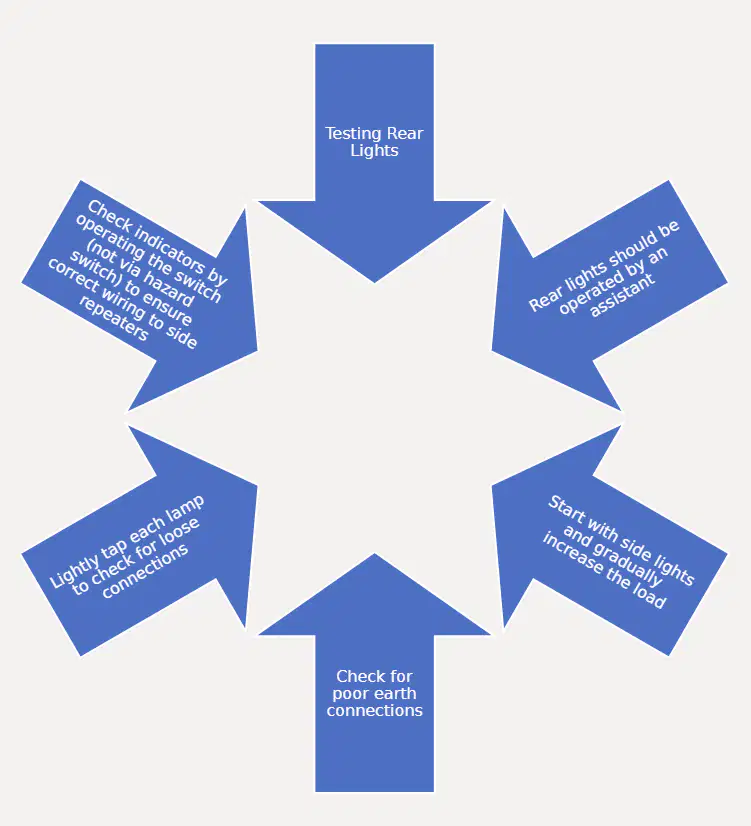
Who should operate the rear lights during the testing process?
The vehicle owner
An assistant
The mechanic
The driver
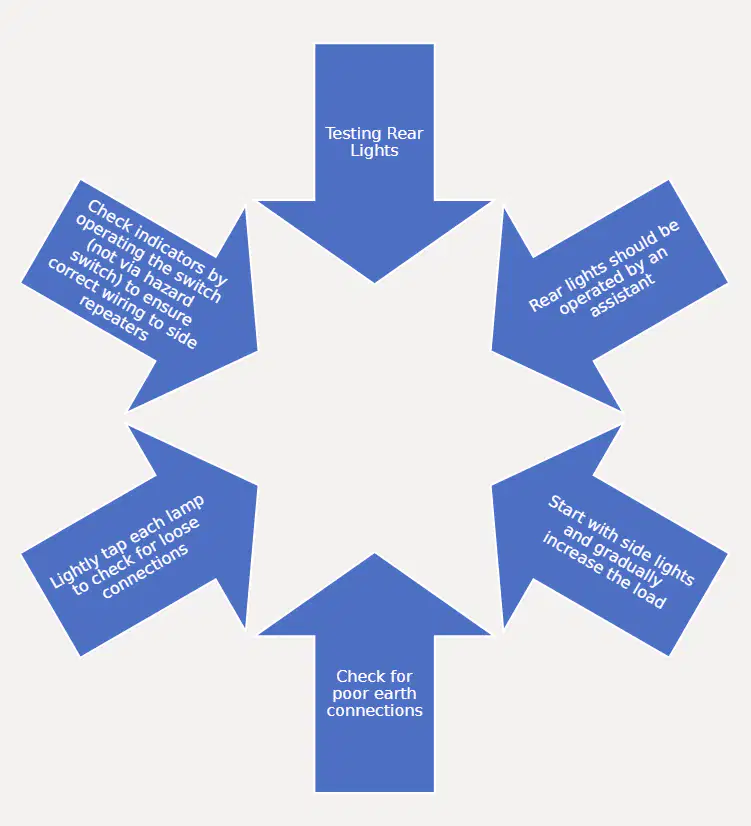
What should be done to ensure correct wiring to side repeaters?
Lightly tap each lamp
Check indicators by operating the switch
Check for poor earth connections
Start with side lights
What is the first step in the headlamp alignment process?
Align a headlamp beam tester to each headlamp
Check headlamps for condition, operation, and security
Vehicle should be parked on level ground
Compare the produced image with the image supplied in the tester instructions or MOT testers manual
Which step involves using a headlamp beam tester?
Vehicle should be parked on level ground
Check headlamps for condition, operation, and security
Align a headlamp beam tester to each headlamp
Compare the produced image with the image supplied in the tester instructions or MOT testers manual
What should be done after checking the headlamps for condition, operation, and security?
Vehicle should be parked on level ground
Align a headlamp beam tester to each headlamp
Compare the produced image with the image supplied in the tester instructions or MOT testers manual
None of the above
What is the final step in the headlamp alignment process?
Vehicle should be parked on level ground
Check headlamps for condition, operation, and security
Align a headlamp beam tester to each headlamp
Compare the produced image with the image supplied in the tester instructions or MOT testers manual
What is viscosity a measure of?
An oil's resistance to flow
An oil's color
An oil's temperature
An oil's density
How do low viscosity oils compare to high viscosity oils in terms of flow?
Low viscosity oils flow easier
Low viscosity oils flow slower
Low viscosity oils do not flow
Low viscosity oils are thicker
What does the SAE rating denote in terms of viscosity?
The oil's color
The oil's resistance to heat
The oil's viscosity
The oil's density
What is a characteristic of multi-grade oil?
It behaves like low viscosity oil when cold and higher viscosity when hot
It behaves like high viscosity oil at all temperatures
It does not change viscosity with temperature
It is only used in winter
What does the "W" in oil ratings designate?
Water
Winter
Weight
Width
Why is it important to use an authorized service center for vehicle maintenance?
To preserve the manufacturer's warranty
To increase the resale value of the vehicle
To reduce fuel consumption
To enhance the vehicle's speed
What role do recommended parts play in vehicle maintenance?
They enhance the vehicle's color
They preserve warranty terms
They increase the vehicle's size
They improve the vehicle's sound system
How does new product training benefit technicians?
It helps them design new vehicles
It allows them to maintain the vehicle to the manufacturer's specification
It enables them to sell more vehicles
It helps them reduce the vehicle's weight
What are the two main types of regulations in vehicle maintenance that apply to vehicles on the road?
Safety and Emission Regulations
Construction and Use Regulations
MOT Regulations
Traffic and Parking Regulations
What is one of the final checks for customer satisfaction regarding bodywork?
Ensure bodywork has no oil or grease marks
Ensure seats are reclined
Ensure windows are open
Ensure tires are inflated
What should be done with the seats to ensure customer satisfaction?
Ensure seats are removed
Ensure seats are returned to normal position where possible
Ensure seats are covered with plastic
Ensure seats are heated
Which of the following is a cleanliness check for the steering wheel?
Ensure it is polished
Ensure no grease and oil on seats, door handles, and steering wheel
Ensure it is covered with a cloth
Ensure it is locked
What should be done with all fittings as part of the final checks?
Remove all fittings
Re-instate all fittings
Paint all fittings
Replace all fittings

