
 Worksheets
Physics MidTerm
Total questions: 205
Worksheet time: 4hrs 18mins
A resultant force of 4.0N acts on an object of mass 0.50 kg for 3.0 seconds.
What is the change in velocity caused by this force?
4.0 m / s
6.0 m / s
12 m / s
24 m / s
Which property of an object cannot be changed by a force?
mass
motion
shape
size
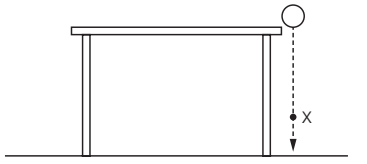
A ball is dropped from a table-top. Air resistance may be ignored.
Which row describes the velocity and the acceleration of the ball at point X
acceleration = constant; velocity = constant
acceleration = constant; velocity = increasing
acceleration = increasing; velocity = constant
acceleration = increasing; velocity = increasing

When the velocity of the car is constant, the force of friction on it is
zero
greater than the driving force
smaller than the driving force
the same size as the driving force
Which are the units for acceleration
m/s
m/s2
s/m
m/s3
The cyclist accelerates at 1.4 m/s2.
The mass of the cyclist and bicycle is 60 kg.
Calculate the resultant force.
(a)


The unit of force is...
m/s
m
N
kg
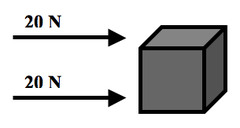
What is the resultant force?
40 N, Left
0 N, Balanced
400 N, Right
40 N, Right

What is the resultant force?
400 N, Up
400 N, Down
800 N, Up
800 N, Down

What is the resultant force?
17 N, Left
6N, Right
11N , Left
12N, Left

What is the resultant force?
40N, Left
40N, Right
0N, Balanced
75N, Right

The diagram shows a rectangular metal sheet close to two rulers. What is the area of the metal sheet?
700 cm^2
675 cm^2
900 cm^2
1125 cm^2

The diagram shows a reading on an ammeter. What is the reading?
0.45 A
0.50 A
4.5 A
5.0 A

The diagram shows the image of a clock in a plane mirror. Which is the actual time?
04:15
04:45
07:15
07:45

A student uses a ruler to find the volume of water in a tank. She measures the lengths EF and FG.
What other length does she need to measure?
FJ
FK
HI
IJ
A pendulum is set in motion and timed. The time measured for 20 complete swings is 30 s. What is the time for one complete swing of the pendulum?
0.67 s
0.75 s
1.5 s
3.0 s

The diagrams show the scales of three ammeters. Which ammeters show the same current reading?
all three ammeters
ammeter 1 and ammeter 2 only
ammeter 1 and ammeter 3 only
ammeter 2 and ammeter 3 only
Each of the following blocks is a different type of metal. Each block has a mass of 12 g.
Which metal has the largest density?


A student measures the volume of a small irregularly-shaped stone.
Which apparatus must be used?
a measuring cylinder containing water and a ruler only
a measuring cylinder containing water only
an empty measuring cylinder and a ruler only
a ruler only
A measuring cylinder contains 10 cm^3 of water. A piece of steel is lowered into the measuring cylinder until it is fully submerged. The volume reading increases to 12 cm^3.
A second piece of steel is lowered into the measuring cylinder so that it is also fully submerged. The volume reading increases to 15 cm^3.
Which row shows the volumes of the two pieces of steel?
Volume of first piece: 2 cm^3;
Volume of second piece: 3 cm^3
Volume of first piece: 2 cm^3;
Volume of second piece: 5 cm^3
Volume of first piece: 12 cm^3;
Volume of second piece: 3 cm^3
Volume of first piece: 12 cm^3;
Volume of second piece: 15 cm^3

The graph shows how the speed of an object changes with time.
How far does the object travel in 10 seconds?
8 m
10 m
40 m
80 m
A car travels at an average speed of 60 km/h for 15 minutes.
How far does the car travel in 15 minutes?
4.0 km
15 km
240 km
900 km

The graph shows the motion of a car for a five-second period.
Which answer is correct?
The car is at rest at: 0.0 s;
The car is moving at a constant speed at: 2.0 s
The car is at rest at: 0.0 s;
The car is moving at a constant speed at: 4.0 s
The car is at rest at: 4.0 s;
The car is moving at a constant speed at: 0.0 s
The car is at rest at: 4.0 s;
The car is moving at a constant speed at: 2.0 s
An object begins to fall close to the Earth's surface. Air resistance can be ignored. Which statement about the object's acceleration is correct?
The acceleration is constant.
The acceleration decreases as the body falls.
The acceleration increases as the body falls.
The acceleration is zero.
The diagrams below are distance-time graphs for four bodies.
Which body is moving with an increasing speed?


A runner runs 300 m at an average speed of 3.0 m/s. She then runs another 300 m at an average speed of 6.0 m/s.
What is her average speed for the total distance of 600 m?
2.0 m/s
4.0 m/s
4.5 m/s
8.0 m/s

The graph shows how the speed of an object varies with time. At which point on the graph is the greatest distance travelled per second?
A
B
C
D
An athlete runs at a speed of 8 m/s for 10 s, and then at a speed of 6 m/s for 12 s.
Which calculation gives the average speed of the athlete in m/s?
28 + 6
22(8⋅10)+(6⋅12)
22(8 ÷ 10)+(6 ÷ 12)
22(10 ÷ 8)+(12÷6)

A girl goes for a ride on her bicycle.
The diagram shows how her speed changes with time for part of her journey.
In which labelled section is she moving with constant speed?
A
B
C
D
A boy runs 400 m at an average speed of 4.0 m/s.
He runs the first 200 m in 40 s.
How long does he take to run the second 200 m?
60 s
66.7 s
80 s
140 s

The acceleration is not constant.
The acceleration is negative.
The speed is decreasing.
The velocity is constant.
Which statement about acceleration is correct?
It is related to the changing speed of an object.
It is the distance an object travels in one second.
It is the force acting on an object divided by the distance it travels in one second.
It is the force acting on an object when it is near to the Earth.

Athlete P won the race and was 0.70 s ahead of the athlete in second place.
Athlete P won the race and was 1.90 s ahead of the athlete in second place.
Athlete S won the race and was 1.30 s ahead of the athlete in second place.
Athlete S won the race and was 2.10 s ahead of the athlete in second place.
Which statement correctly describes the effects of placing a heavy load in a car?
It is easier to accelerate the car and easier to bring the car to rest.
It is easier to accelerate the car but more difficult to bring the car to rest.
It is more difficult to accelerate the car and more difficult to bring the car to rest.
It is more difficult to accelerate the car but easier to bring the car to rest.
A mass of 6.0 kg rests on the surface of a planet. On this planet, g = 20 N/kg.
What is the weight of the object?
0.30 N
0.60 N
60 N
120 N
A space probe is taken from the Earth to Mars. The force of gravity on the surface of Mars is less than the force of gravity on the surface of the Earth.
How do the weight and the mass of a space probe on the surface of Mars compare to their values when the probe is on the surface of the Earth?
Mars Weight: decreased; Mars mass: decreased
Mars Weight: decreased; Mars mass: unchanged
Mars Weight: unchanged; Mars mass: decreased
Mars Weight: unchanged; Mars mass: unchanged
A satellite orbits the Earth at constant speed in circular orbit. Which statement is correct?
The resultant force on the satellite is zero.
The resultant force on the satellite is towards the Earth.
The resultant force on the satellite is away from the Earth.
The resultant force on the satellite is in the direction of motion.
Two forces P and Q act on an object. Which diagram shows the resultant of these two forces?


The acceleration of the ball decreases.
The acceleration of the ball increases.
The speed of the ball decreases.
The gravitational force on the ball decreases.

The horizontal speed is greater on the Moon and the ball hits the floor 4.0 m in front of the spring.
The horizontal speed is greater on the Moon and the ball hits the floor more than 4.0 m in front of the spring.
The horizontal speed is the same on the Moon and the ball hits the floor 4.0 m in front of the spring.
The horizontal speed is the same on the Moon and the ball hits the floor more than 4.0 m in front of the spring.
Which choice describes speed and velocity?
Speed: scalar | Velocity: scalar
Speed: scalar | Velocity: vector
Speed: vector | Velocity: scalar
Speed: vector | Velocity: vector
Four balls with different masses are dropped from the heights shown. Air resistance may be ignored. Which ball has the smallest average speed?


An object of mass 2.0 kg is taken from the Earth, where the gravitational field strength is 10 N/kg, to the Moon, where the gravitational field strength is 1.6 N/kg.
Which row is correct?
Earth weight: 0.20 N | Moon weight: 0.80 N
Earth weight: 0.20 N | Moon weight: 3.2 N
Earth weight: 20 N | Moon weight: 0.80 N
Earth weight: 20 N | Moon weight: 3.2 N
What is the best description of the meaning of the 'mass' of an object?
the space occupied by the object
the force that gravity exerts on the object
the resistance of the object to changes in motion
the closeness of packing of the molecules in the object
A ball is thrown vertically upwards through the air. Air resistance acts on the ball. Which graph shows how its speed varies with time?


An object is on the surface of the Earth. Which statement describes the weight of the object?
the quantity of material that the object contains
the quantity of space that the object takes up
the gravitational force acting on the object
the object's resistance to a change in its motion
The gravitational field strength on the Earth is greater than the gravitational field strength on the Moon. The Earth has an atmosphere, but the Moon does not.
Which speed-time graph represents the motion of a light ball dropped from a great height near the surface of the Earth and near the surface of the Moon?


Force: decreases | Acceleration: decreases
Force: decreases | Acceleration: increases
Force: increases | Acceleration: decreases
Force: increases | Acceleration: increases

6 cm
10 cm
26 cm
30 cm

P + Q = R
P + R = Q
P = Q = R
P = Q + R

0.53 m
1.1 m
1.9 m
2.5 m

P equals Q
P is less than Q
(P x a) is equal to (Q x b)
(P x a) is greater than (Q x (a + b))
Which statement gives a complete description of any object that is in equilibrium?
There are no forces acting.
There is no resultant force.
There is no resultant force and no resultant turning effect.
There is no resultant turning effect.
What is the unit of the moment of a force?
N
N/kg
N/m
Nm

80 N
100 N
180 N
225 N

0.67 N
4.0 N
6.0 N
9.0 N

W/2
W
3W/2
2W
What is the correct equation for acceleration
a = (v - u) / t
a = d / t
a = f x m
What is the correct equation linking force mass and acceleration
F = ma
m = Fa
a = Fm
What is the correct equation linking density mass and volume
d = m / v
d = m x v
d = v / m
What is the correct equation for gravitational potential energy
m x g x h
m x g / h
m x h / g
What is the correct equation for kinetic energy
1/2 x m x v2
m x v2
1 / 2 x v x m2
What is the correct equation for basic pressure
p = F / A
p = F x A
p = A / F
The units of frequency are...
metres
seconds
Hertz
degrees
Light is an example of a transverse wave
True
False
Sound is an example of a transverse wave
True
False
Which of the following statements describes the period of a wave?
Number of waves per second
Distance from crest to crest
Distance from resting position to top of the wave
Time taken to produce one wave
A microwave has a frequency of 300MHz. What is the wavelength of these waves?
1000 m
100 m
10 m
1 m
The period of a wave is 0.1 s. What is the frequency of this wave?
0.1 Hz
1 Hz
10 Hz
100 Hz
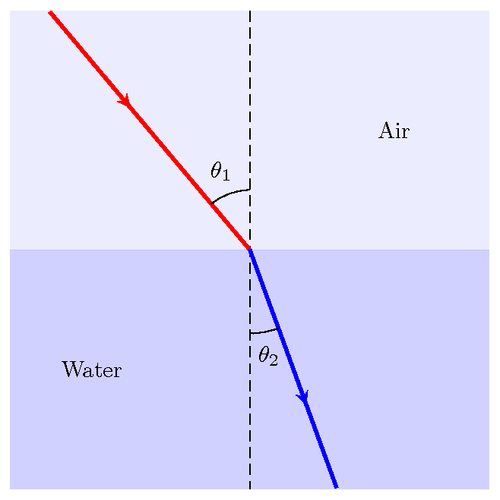
The following image demonstrates...
Reflection
Refraction
Interference
Diffraction
20 waves pass a point in 5 s. How is the frequency of these waves?
100 Hz
20 Hz
5 Hz
4 Hz
All waves can be reflected and refracted.
True
False
select two correct answers that show:
Average speed?
s = d/t
v = s/t
speed = distance/time
velocity = speed/time
Acceleration?
a = (v-u)/t
d = s/t
v = s/t
F= m/a
v = Δϰ/Δt?
average speed
force needed
average velocity
acceleration
Which formulae shows the rate in change of mometum?
F= mxa
F= mxv - mxu / t
F= mxg
F= Fxχ
Formula for Power?
ΔE = Fxd
KE = 1/2mxv2
W = ΔE/t
GPE = mxgxh
ΔE = Fxd?
work = force x distance
Power = Work/ time
Pressure = height x density x gravity
Kinetic energy = 1/2 mass x velocity²
Which is the correct formula for energy efficiency?
Efficiency = total input energy / useful energy output x 100
Efficiency = total input energy / useful energy output / 100
Efficiency = total input energy / useful energy output / 100
Efficiency = useful energy output / total input energy. x100
Select the two that show the relationship between wave speed, frequency and wavelength
c = f x λ
Wave speed = frequency x wavelength
Wave speed = frequency / wavelength
c = f / λ
What does the relationship between mass, gravity and height show?
Resistance in a circuit
Current in a circuit
Gravitational Potential Energy
Extension of a spring
What is the unit of Work?
Newtons
Joules
Metres
Kg
What is the relationship between moment, force and distance? SELECT TWO CORRECT ANSWERS
M = F x d
M = F / d
d = M x F
F = M/d

A
B
C
D

A
B
C
D

A
B
C
D

A
B
C
D

A
B
C
D

A
B
C
D

A
B
C
D

A
B
C
D

A
B
C
D

A
B
C
D

A
B
C
D

A
B
C
D
What is the definition for the word amplitude?
The number of complete waves that pass per second
The distance from the peak of one wave to the peak of an adjacent wave.
The distance from the equilibrium position of a peak plus the same distance from a trough.
The maximum distance from the equilibrium position of any point on a wave

what is the name given to the effect that allows wavefronts to reach point X, shown in the diagram?
(a)

Which 2 points on the wave are exactly one wavelength apart?
P and S
Q and R
Q and S
P and R
Water waves travel from deeper water to more shallow water. This causes them to refract.
Which property always remains the same when refraction occurs?
Wavelength
Frequency
Amplitude
Speed

A
B
C
D
What is the unit for wavelength?
(a)
What is the unit for frequency?
(a)
What is the unit for velocity?
(a)
Sound waves travel at a speed of 1500m/s through a substance. Their wavelength is 5.0 cm. What is their frequency?
(a)

It doubles
It halves
It remains the same
It becomes four times as large

The speed of wave increases.
The speed of wave decreases.
The frequency increases.
The frequency decreases.

Decrease the speed of waves (but keep the wavelength the same).
Increase the speed of the waves (but keep the wavelength the same).
Make the gap smaller
Make the gap bigger
What is a frequency?
the number of wave crests passing a point in one second.
the numbers of waves in total.
the height of the waves times each second.
the speed of waves over time.
Velocity = (a) x lambda
What is the wavelength?
The distance from one wave peak to another
number of wave crests passing a point in one second
the height of the wave peak
the energy that the waves carry
Sound waves are (a) waves
light waves are (a) waves
the vibrations of longitudinal waves are (a) to the direction in which the waves are travelling.
the vibrations of transverse waves are (a) to the direction in which the waves are travelling.

what is the arrow pointing to?
compression
rarefaction
when plane waves reflect from a straight barrier, the angle of each reflected wave is (a) to the angle of each incident wave to the barrier.
Diffracted waves spread out ______ if the gap is wider.
more
less
the same
The narrower the gap, the ____ the diffracted waves are spread out.
more
less
The word diffraction means...
dispersing of waves
reflecting of waves
refraction of waves
spreading of waves
What is the efficiency of a solar cell if 1000 J of solar energy hits the cell and 200 J are converted into electrical energy?
10%
20%
30%
40%
What is electrical energy converted into when a drill is used?
Kinetic energy
Sound
Heat
All of the above
What is the correct equation for gravitational potential energy
m x g x h
m x g / h
m x h / g
What is the correct equation for kinetic energy
1/2 x m x v2
m x v2
1 / 2 x v x m2
What is energy?
moving energy
stored energy
renewable energy
The ability to do work.
What is potential energy?
moving energy
stored energy
renewable energy
non renewable energy
What is kinetic energy?
moving energy
potential energy
stored energy
renewable energy

A
B
C
D

A
B
C
D

A
B
C
D

A
B
C
D

A
B
C
D
Electricity can be obtained from different energy resources. Which energy resource is used to obtain electricity without producing heat to boil water?
coal
geothermal
hydroelectric
nuclear
What is designed to change electrical energy into kinetic energy?
A. capacitor
B. generator
C. motor
D. transformer
A power station uses nuclear fission to obtain energy. In this process, nuclear energy is first changed into
A. Chemical energy.
B. Electrical energy.
C. Gravitational energy.
D. Internal energy.
Which of the following statements defines work done correctly?
A) Work done is the energy expended by an object.
B) Work done is the force applied to an object.
C) Work done is the displacement of an object.
D) Work done is the transfer of energy from one object to another.
Which of the following factors affects the amount of work done on an object?
A) Time taken to complete the work.
B) Force applied to the object.
C) Initial velocity of the object.
D) Mass of the object.
In physics, work done is measured in:
A) Newton (N).
B) Meter per second squared (m/s^2).
C) Joule (J).
D) Watt (W).
Which of the following situations involves zero work done?
A) Lifting a book off the ground.
B) Pushing a heavy box horizontally across a room.
C) Holding a weight stationary above your head.
D) Running up a flight of stairs.
A force of 20 N is applied to an object that moves a distance of 5 meters in the direction of the force. What is the work done on the object?
A) 20 J
B) 25 J
C) 50 J
D) 100 J
A car exerts a constant force of 500 N to move a distance of 100 meters. What is the work done by the car?
A) 50 J
B) 500 J
C) 5000 J
D) 50 kJ
A person lifts a box weighing 50 kg vertically upward by a distance of 2 meters. What is the work done on the box? (Take g = 10 m/s^2)
A) 100 J
B) 2 kJ
C) 1 kJ
D) 1000 kJ
Which of the following statements defines power correctly?
A) Power is the energy transferred per unit time.
B) Power is the force applied to an object.
C) Power is the rate at which work is done.
D) Power is the product of force and distance.
Which of the following units is used to measure power?
A) Newton (N)
B) Meter per second squared (m/s^2)
C) Joule (J)
D) Watt (W)
If a machine does 500 Joules of work in 10 seconds, what is its power output?
A) 5 W
B) 50 W
C) 100 W
D) 500 W
A motor exerts a force of 200 N to lift an object vertically upward a distance of 5 meters in 2 seconds. What is the power developed by the motor?
A) 50 W
B) 200 W
C) 500 W
D) 2,000 W
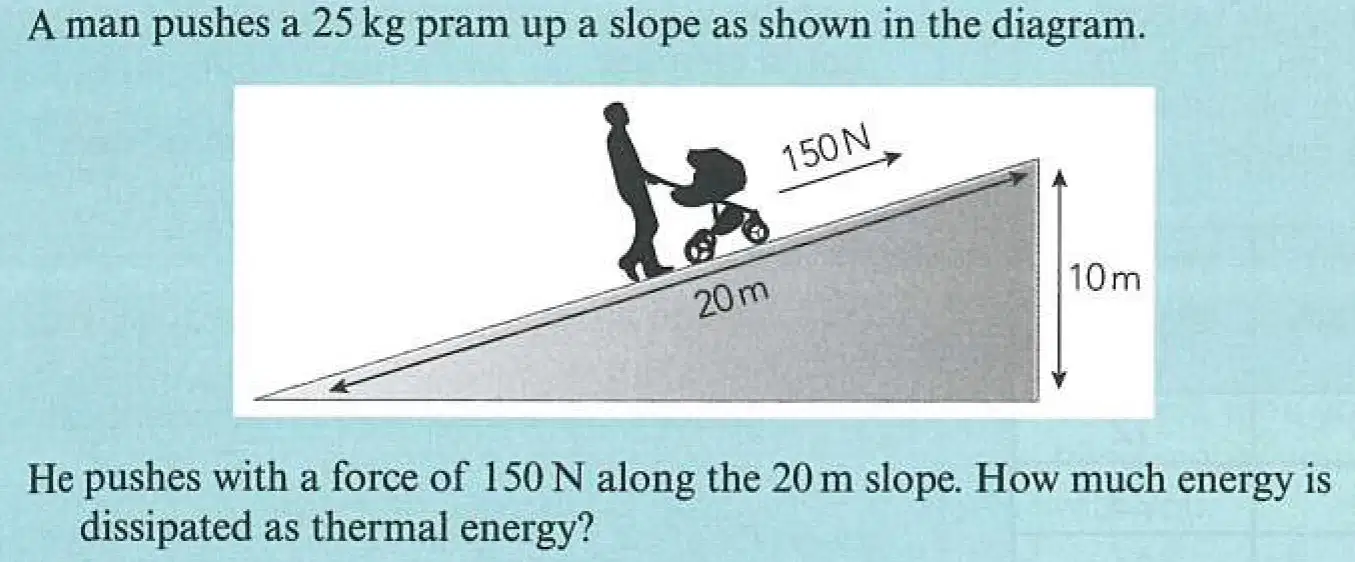
How much energy is dissipated as thermal energy?
A) 250 J
B) 500 J
C) 2000 J
D) 2500 J
Which of the following measuring tools is used to measure capacity?


-
A
B
C
D
What unit of measurement is used in measuring weight?
Kilogram and gram
Liter and mililiter
Meter and centimeter
What unit of measurement is used in measuring length?
Liter and milliliter
Meter and centimeter
Kilogram and gram
What unit of measurement is used in measuring capacity?
Kilogram and gram
Meter and centimeter
Liter and milliliter

the volume of a soda bottle
how many liters is 1000 mL?
1
10
100
1000
Choose ALL of the tools that you could use to measure weight.
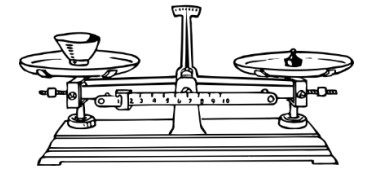
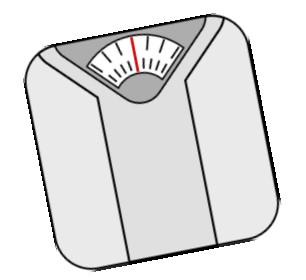

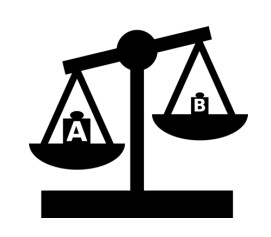
Choose the TWO tools that you could use to measure length.
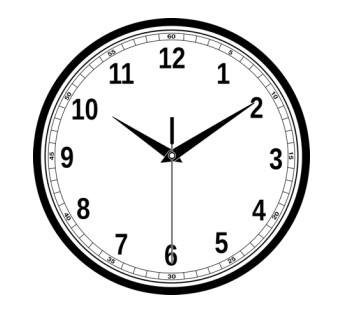
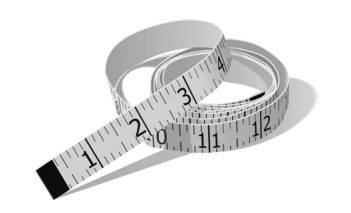
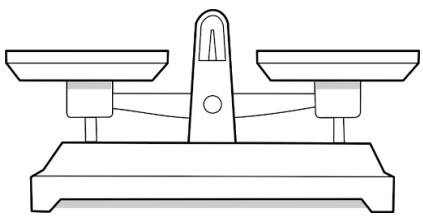
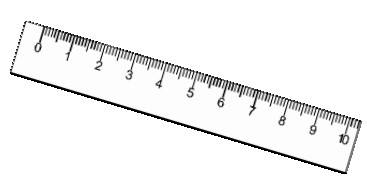

A
B
C
D

A
B
C
D

A
B
C
D

A
B
C
D
A student intends to measure accurately the diameter of a wire (known to be approximately 1 mm) and the internal diameter of a pipe (known to be approximately 2 cm).
What are the most appropriate instruments for the student to use to make these measurements [(i) wire, (ii) pipe]?
(i) calipers, (ii) calipers
(i) calipers, (ii) micrometer
(i) micrometer, (ii) calipers
(i) micrometer, (ii) micrometer

What does this image measure
volume
mass
length
density
Which of the following equation represent error in measurement?
Error = Measured Value - True Value
Error = 1 - True Value
Error = True Value + Measured Value
Error = 1 - Measured Value
Which of the following shows a precise but not accurate data?


Which of the following shows an accurate but not precise data


When you eat fruits and vegetables, the energy is stored as ...
a. thermal energy
b. food energy
c. electrical energy
d. chemical energy
________ is when energy is transferred between areas that have different temperatures.
By radiation
By heating
Mechanically
Nuclear


A stretched rubber band has energy in this energy store
Magnetic
Electrostatic
Elastic
Nuclear
A ____ converts chemical energy into kinetic energy?


A
B
C
D
A tunnel has a length of 50 km. A car takes 20 min to travel between the two ends of the tunnel. What is the average speed of the car?
2.5 km / h
16.6 km / h
150 km / h
1000 km / h

pole 1 and pole 2.
pole 2 and pole 3.
pole 3 and pole 4.
pole 4 and pole 5.

A
B
C
D

Which speed/ time graph applies to an object at rest?
A
B
C
D

A
B
C
D


Which statement is correct
Energy cannot be created or destroyed
Energy can be destroyed but not created
Energy is always created but never destroyed
Energy cannot be created but never destroyed
4 m.

An arrow in a bow had 70J of PE. Assuming no loss of energy to heat, how much KE will it have after it has been shot?
0J
35J
50J
70J
The formula for power is
power = force × time
power = timechange energy
power = distancechange speed
power = 21mv2
Unit for power is
Watts (W)
Joules
Amperes
voltage

