
 Worksheets
Exam Prep 3
Total questions: 25
Worksheet time: 16mins
A type of plastic that softens when heated and hardens when cooled, allowing it to be repeatedly molded and reshaped without changing its chemical properties.
thermoplastic
thermosetting plastic
A push or pull on an object resulting from the object's interaction with another object.
(a)
Which type of plastic, once molded and set, cannot be remelted or reshaped by heating?
thermoplastic
thermosetting plastic
What is the main difference between thermoplastics and thermosetting plastics?
Thermosetting plastics can be remolded by heating, while thermoplastics cannot.
Thermoplastics can be remolded by heating, while thermosetting plastics cannot.
Which of the following is an example of a thermoplastic material?
Bakelite
Polyethylene
Any metal that contains iron.
ferrous
non-ferrous
The natural purpose of something.
Aesthetics
Customer
Form
Function
Environment
Feedback: After each lesson you receive feedback when excellent work is shared with you on Google Classroom and at the start of the next lesson. This is called a
(a)
At the start of each lesson, I share a (a) with you. This explains what we are learning about in the lesson.
At the start of each lesson, I share the reason we are learning something. This is called a...
(a)
What term describes metals that do not contain iron?
Non-ferrous
Ferrous
Which of the following best describes the function of a product?
The way a product looks
The intended use or purpose of a product
The materials used to make a product
The cost of a product
Which of these has NOT been something we have learnt about in engineering?
How to justify ( give reasons for) our answers
How to create emulations
How to conduct research
How to create simulations
We have learnt how to analyse products using ACCESSFM. What does A stand for?
achieve
aerodynamics
aesthetics
articulate
access
We have learnt how to analyse products using ACCESSFM. What does the first C stand for?
calculate
clarify
compute
conduct
cost
We have learnt how to analyse products using ACCESSFM. What does the second C stand for?
communicate
conjecture
consider
convey
customer
We have learnt how to analyse products using ACCESSFM. What does the E stand for?
environment
estimate
experiment
explain
explore
We have learnt how to analyse products using ACCESSFM. What does the first S stand for?
share
simulation
size
sort
We have learnt how to analyse products using ACCESSFM. What does the second S stand for?
safety
secondary
structural
synthesis
We have learnt how to analyse products using ACCESSFM. What does the F stand for?
figure
final
form
function
We have learnt how to analyse products using ACCESSFM. What does the M stand for?
manipulate
map
materials
measure
Why are we learning how to use tinkercad?
So that we can create simulations to test our designs.
So that we can create nice drawings.
So that we know how to use more computer programmes
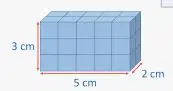
Calculate the volume of this shape. in cubic cm
(a)
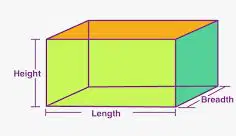
If this cuboid has a length of 10cm, a height of 4cm and a volume of 120 cubic cm, what is its breadth?
(a)
A quality in a substance or material, especially one that means that it can be used in a particular way.
engage
intergral
property

