
 Worksheets
Social 7 Final Exam 2025
Total questions: 76
Worksheet time: 53mins
The aboriginal peoples of Canada made their living in a variety of ways. Living close to the fertile soil, and favorable climate found near the Great Lakes, one tribe became highly skilled farmers. Of all the tribes living in this region, this group was most actively involved in agriculture, often referred to as “the Planters of the Corn”.
Another group living in a rich environment were the tribes based along the West Coast. The mild climate found here allowed them to grow a variety of crops. They also harvested the sea making salmon, cod, halibut and whales a staple of their diet.
A third group lived on the Prairies. These tribes harvested nature. They followed the great herds of buffalo whose meat and hides provided the tribes with their staple food and clothing. Their diets were supplemented with other small animals, wild berries, and other naturally growing plants.
To the far north, tribes lived by taking animals on land and sea. These tribes followed the caribou and took seals and fish from the Arctic Ocean to supplement their diets.
1. Based upon the information above, the way that aboriginal peoples “made a living” was most closely linked to their:
The Mi'kmaq tell stories of Kisulk the Creator who put humans on earth and made them equal to everything else in nature. The Haudenosaunee believe that the first human, a woman, fell from Sky World onto the back of a sea turtle. The Blackfoot teachings speak of Napi, who formed everything from the mud brought to him by a muskrat.
3. Which statement is true regarding the information above?
Nation Role of Women Primary Food Government Structure
HAUDENOSAUNEE ? Corn, Beans, Squash ?
ANISHINABE Harvesting crops ? Clan System
MI’KMAQ Caregivers/homemakers Meat Grand Council
6. The question mark (?) listed in the Haudenosaunee “Government Structure” could best be completed by which of the following?
Nation Role of Women Primary Food Government Structure
HAUDENOSAUNEE ? Corn, Beans, Squash ?
ANISHINABE Harvesting crops ? Clan System
MI’KMAQ Caregivers/homemakers Meat Grand Council
7. The question mark (?) listed in the Haudenosaunee “Role of Women” could best be completed by which of the following?
Nation Role of Women Primary Food Government Structure
HAUDENOSAUNEE ? Corn, Beans, Squash ?
ANISHINABE Harvesting crops ? Clan System
MI’KMAQ Caregivers/homemakers Meat Grand Council
8. The question mark (?) listed in the Anishinabe “Primary Food” could best be completed by which of the following?
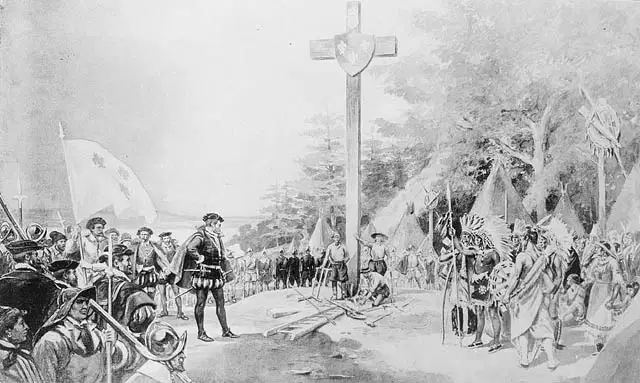
13. What does the raising of the cross at Gaspe symbolize for the French?
Speaker 1
“I grow tired of watching and waiting for New France to prosper and succeed as a colony. I must take matters into my own hands and take control of this colony myself. The merchants are only interested in the fur trade, not building colonies! Only a Royal Government will ensure the success of New France.”
Speaker 2
“My role is to see to the day-to-day affairs of the colony. If New France is ever going to grow, it needs people, roads, and buildings. It is in the best interests of New France to provide what the colonists need to improve their lives.”
Speaker 3
“My role is both political and religious. The Catholic Church must play a variety of roles in the daily lives of the citizens of New France, not just religious services. It is also our duty and mission to bring the salvation of God into the lives of the natives of this country.”
Speaker 4
“My duty and role is to represent the King’s wishes and orders for New France. My most important task is to ensure the successful growth of this colony. This can only be done if the citizens of New France feel safe and protected enough to live here. Growing alliances between our enemies have brought forth a need to bring in 1500 soldiers from France to be placed under my command.”
14. Speaker 1 mentions that “only a Royal Government will ensure the success of New France.” This government was known as______________ and was introduced by ________________.
Speaker 1
“I grow tired of watching and waiting for New France to prosper and succeed as a colony. I must take matters into my own hands and take control of this colony myself. The merchants are only interested in the fur trade, not building colonies! Only a Royal Government will ensure the success of New France.”
Speaker 2
“My role is to see to the day-to-day affairs of the colony. If New France is ever going to grow, it needs people, roads, and buildings. It is in the best interests of New France to provide what the colonists need to improve their lives.”
Speaker 3
“My role is both political and religious. The Catholic Church must play a variety of roles in the daily lives of the citizens of New France, not just religious services. It is also our duty and mission to bring the salvation of God into the lives of the natives of this country.”
Speaker 4
“My duty and role is to represent the King’s wishes and orders for New France. My most important task is to ensure the successful growth of this colony. This can only be done if the citizens of New France feel safe and protected enough to live here. Growing alliances between our enemies have brought forth a need to bring in 1500 soldiers from France to be placed under my command.”
15. Which of the following shows the order of power and control over New France, from greatest to least?
Speaker 1
“I grow tired of watching and waiting for New France to prosper and succeed as a colony. I must take matters into my own hands and take control of this colony myself. The merchants are only interested in the fur trade, not building colonies! Only a Royal Government will ensure the success of New France.”
Speaker 2
“My role is to see to the day-to-day affairs of the colony. If New France is ever going to grow, it needs people, roads, and buildings. It is in the best interests of New France to provide what the colonists need to improve their lives.”
Speaker 3
“My role is both political and religious. The Catholic Church must play a variety of roles in the daily lives of the citizens of New France, not just religious services. It is also our duty and mission to bring the salvation of God into the lives of the natives of this country.”
Speaker 4
“My duty and role is to represent the King’s wishes and orders for New France. My most important task is to ensure the successful growth of this colony. This can only be done if the citizens of New France feel safe and protected enough to live here. Growing alliances between our enemies have brought forth a need to bring in 1500 soldiers from France to be placed under my command.”
16. Speaker 4 mentions a “growing alliance” between France’s enemies. It is likely that he is speaking of the alliance between
Colonies supply raw goods to their home country, who in turn, transforms these goods into finished products that are then sold for large profits.
18. What concept is described by the statement above?
Colonies supply raw goods to their home country, who in turn, transforms these goods into finished products that are then sold for large profits.
19. According to the description, who benefits the most in this trade relationship?
Comments on British Mercantilism
Speaker 1
The colonies fuel the economy of Britain. Without them, we would lack the natural resources necessary for our industries and warfare. The colonies remain loyal to the Mother Country- our taxes ensure that they do so.
Speaker 2
Life is difficult in the colonies, but overall, it’s better than living in Britain. Taxes are too high, consumer goods are very expensive…but these are small prices to pay for our freedom and a better quality of life.
Speaker 3
The colonies supply us with material goods like axes, guns, pots…things we cannot make on our own. Still, the English continue to take lands that are our homes and bring diseases…is it all worth it?
Speaker 4
Life is good! The colonies continue to make us richer as we sell them finished products at high prices. Since we buy raw materials from the colonies at a lower cost, our profits continue to rise!
24. Which two speakers agree the most about the economic benefits of mercantilism?
Comments on British Mercantilism
Speaker 1
The colonies fuel the economy of Britain. Without them, we would lack the natural resources necessary for our industries and warfare. The colonies remain loyal to the Mother Country- our taxes ensure that they do so.
Speaker 2
Life is difficult in the colonies, but overall, it’s better than living in Britain. Taxes are too high, consumer goods are very expensive…but these are small prices to pay for our freedom and a better quality of life.
Speaker 3
The colonies supply us with material goods like axes, guns, pots…things we cannot make on our own. Still, the English continue to take lands that are our homes and bring diseases…is it all worth it?
Speaker 4
Life is good! The colonies continue to make us richer as we sell them finished products at high prices. Since we buy raw materials from the colonies at a lower cost, our profits continue to rise!
25. Which two speakers would agree that there are certain disadvantages to mercantilism?
Comments on British Mercantilism
Speaker 1
The colonies fuel the economy of Britain. Without them, we would lack the natural resources necessary for our industries and warfare. The colonies remain loyal to the Mother Country- our taxes ensure that they do so.
Speaker 2
Life is difficult in the colonies, but overall, it’s better than living in Britain. Taxes are too high, consumer goods are very expensive…but these are small prices to pay for our freedom and a better quality of life.
Speaker 3
The colonies supply us with material goods like axes, guns, pots…things we cannot make on our own. Still, the English continue to take lands that are our homes and bring diseases…is it all worth it?
Speaker 4
Life is good! The colonies continue to make us richer as we sell them finished products at high prices. Since we buy raw materials from the colonies at a lower cost, our profits continue to rise!
26. Speaker 1 is most likely
Comments on British Mercantilism
Speaker 1
The colonies fuel the economy of Britain. Without them, we would lack the natural resources necessary for our industries and warfare. The colonies remain loyal to the Mother Country- our taxes ensure that they do so.
Speaker 2
Life is difficult in the colonies, but overall, it’s better than living in Britain. Taxes are too high, consumer goods are very expensive…but these are small prices to pay for our freedom and a better quality of life.
Speaker 3
The colonies supply us with material goods like axes, guns, pots…things we cannot make on our own. Still, the English continue to take lands that are our homes and bring diseases…is it all worth it?
Speaker 4
Life is good! The colonies continue to make us richer as we sell them finished products at high prices. Since we buy raw materials from the colonies at a lower cost, our profits continue to rise!
27. Speaker 3 would most likely receive material goods (axes, guns, pots) by
Comments on British Mercantilism
Speaker 1
The colonies fuel the economy of Britain. Without them, we would lack the natural resources necessary for our industries and warfare. The colonies remain loyal to the Mother Country- our taxes ensure that they do so.
Speaker 2
Life is difficult in the colonies, but overall, it’s better than living in Britain. Taxes are too high, consumer goods are very expensive…but these are small prices to pay for our freedom and a better quality of life.
Speaker 3
The colonies supply us with material goods like axes, guns, pots…things we cannot make on our own. Still, the English continue to take lands that are our homes and bring diseases…is it all worth it?
Speaker 4
Life is good! The colonies continue to make us richer as we sell them finished products at high prices. Since we buy raw materials from the colonies at a lower cost, our profits continue to rise!
28. Mercantilism seems to cause the greatest disadvantages and hardships to Speaker
Three Speakers Comments About the Effects of the Royal Proclamation (1763)
Speaker 1
The Royal Proclamation has guaranteed us the right to large amounts of land. This is a positive thing for our people and our relationship with Britain. We only wish to continue our way of life without interference.
Speaker 2
The British government continues to ignore our needs and we are becoming increasingly upset with them. Our people need more farmland, yet we are prevented from moving west. They tell us instead to come to “Canada”…this is the last thing we want to do- move north to live with the French!
Speaker 3
Our greatest fears have come true…no one knows how far the British will go to try and make us more like them. The terms of the Royal Proclamation do nothing to benefit our people, yet there is nothing we can do. We are at the mercy and control of the British government!
33. Speaker 2 is most likely a(n)
Three Speakers Comments About the Effects of the Royal Proclamation (1763)
Speaker 1
The Royal Proclamation has guaranteed us the right to large amounts of land. This is a positive thing for our people and our relationship with Britain. We only wish to continue our way of life without interference.
Speaker 2
The British government continues to ignore our needs and we are becoming increasingly upset with them. Our people need more farmland, yet we are prevented from moving west. They tell us instead to come to “Canada”…this is the last thing we want to do- move north to live with the French!
Speaker 3
Our greatest fears have come true…no one knows how far the British will go to try and make us more like them. The terms of the Royal Proclamation do nothing to benefit our people, yet there is nothing we can do. We are at the mercy and control of the British government!
34. Which speaker(s) feel that the Royal Proclamation has mainly negative effects on their people?
Three Speakers Comments About the Effects of the Royal Proclamation (1763)
Speaker 1
The Royal Proclamation has guaranteed us the right to large amounts of land. This is a positive thing for our people and our relationship with Britain. We only wish to continue our way of life without interference.
Speaker 2
The British government continues to ignore our needs and we are becoming increasingly upset with them. Our people need more farmland, yet we are prevented from moving west. They tell us instead to come to “Canada”…this is the last thing we want to do- move north to live with the French!
Speaker 3
Our greatest fears have come true…no one knows how far the British will go to try and make us more like them. The terms of the Royal Proclamation do nothing to benefit our people, yet there is nothing we can do. We are at the mercy and control of the British government!
35. The “farmland” that Speaker 2 is disappointed about not receiving from Britain, would be
Three Speakers Comments About the Effects of the Royal Proclamation (1763)
Speaker 1
The Royal Proclamation has guaranteed us the right to large amounts of land. This is a positive thing for our people and our relationship with Britain. We only wish to continue our way of life without interference.
Speaker 2
The British government continues to ignore our needs and we are becoming increasingly upset with them. Our people need more farmland, yet we are prevented from moving west. They tell us instead to come to “Canada”…this is the last thing we want to do- move north to live with the French!
Speaker 3
Our greatest fears have come true…no one knows how far the British will go to try and make us more like them. The terms of the Royal Proclamation do nothing to benefit our people, yet there is nothing we can do. We are at the mercy and control of the British government!
36. When Speaker 3 says the British are going to “try to make us more like them,” what process are they referring to?
Speaker 1
“Let the merchants of Toronto consider that if their city is ever to be made really great – if it is ever to rise above the rank of a fifth-rate American town – it must be by the development of the great British territory lying to the north and west”
Speaker 2
“I am perfectly willing to leave Rupert’s Land a wilderness for the next half century, but I fear that if the Canadians do not go in, the Yankees will, and with that fear I would gladly see a crown colony established there.”
Speaker 3
“This is our land! It isn’t a piece of pemmican to be cut off and given in little pieces to us. It is ours and we will take what we want.”
61. Which speaker is in favor of the expansion of the west?
Speaker 1
“Let the merchants of Toronto consider that if their city is ever to be made really great – if it is ever to rise above the rank of a fifth-rate American town – it must be by the development of the great British territory lying to the north and west”
Speaker 2
“I am perfectly willing to leave Rupert’s Land a wilderness for the next half century, but I fear that if the Canadians do not go in, the Yankees will, and with that fear I would gladly see a crown colony established there.”
Speaker 3
“This is our land! It isn’t a piece of pemmican to be cut off and given in little pieces to us. It is ours and we will take what we want.”
62. Which speaker(s) is/are in opposition of the expansion of the west?

66. Which factor does the artist believe influenced John A. Macdonald’s relationship with Louis Riel?

67. The historical event that would have put John A. Macdonald in this type of situation was

68. After Macdonald solves the dilemma that he faces in the cartoon, he
SPEAKER 1
These new tariffs are making American goods more expensive to buy. I used to always rely on American goods for their lower prices and good quality. I’m not so sure the “National Policy” is benefiting the people of Western Canada.
SPEAKER 2
Canadian tariffs are making my goods more expensive for Canadians to buy. I’m losing a lot of business that I used to get across the border. I much preferred the old system of free trade.
SPEAKER 3
The protective tariffs on American goods are the best thing that could ever happen to me and my family! I have a steady job at the factory with good pay and benefits. Business is thriving in Eastern Canada!
72. The protective tariffs placed on American goods would be of the greatest disadvantage to which Speaker?
SPEAKER 1
These new tariffs are making American goods more expensive to buy. I used to always rely on American goods for their lower prices and good quality. I’m not so sure the “National Policy” is benefiting the people of Western Canada.
SPEAKER 2
Canadian tariffs are making my goods more expensive for Canadians to buy. I’m losing a lot of business that I used to get across the border. I much preferred the old system of free trade.
SPEAKER 3
The protective tariffs on American goods are the best thing that could ever happen to me and my family! I have a steady job at the factory with good pay and benefits. Business is thriving in Eastern Canada!
73. Which speakers seem to share a similar outlook on the National Policy?
EXAMPLE OF BUILDING AND SELLING A TRACTOR IN CANADA OR IN USA WITH TARIFFS IMPOSED
CANADA farmer -----> Factory Builds Tractor -----> Canadian buys the tractor -----> Price = $1000
USA -------------------------->Factory Builds Tractor -----> American buys the tractor -----> Price = $800
Canadian farmer buys an American made tractor -----> Price = $800
Tariff = $400
______________
Total $1200 (US dollars must then be converted into
Canadian dollar + 35% = $1620 )
Canada imposed a tariff of $400 to protect the factory in Canada that makes the same tractor and discourage Canadians from buying from outside of Canada
74. According to the description, what is the purpose of adding a protective tariff to the Tractor coming from the United States? The tariff
EXAMPLE OF BUILDING AND SELLING A TRACTOR IN CANADA OR IN USA WITH TARIFFS IMPOSED
CANADA farmer -----> Factory Builds Tractor -----> Canadian buys the tractor -----> Price = $1000
USA -------------------------->Factory Builds Tractor -----> American buys the tractor -----> Price = $800
Canadian farmer buys an American made tractor -----> Price = $800
Tariff = $400
______________
Total $1200 (US dollars must then be converted into
Canadian dollar + 35% = $1620 )
Canada imposed a tariff of $400 to protect the factory in Canada that makes the same tractor and discourage Canadians from buying from outside of Canada
75. Who benefits the most from placing protective tariffs on American imported goods?

