
 Worksheets
Integumentary System Worksheet (Incomplete)
Total questions: 98
Worksheet time: 49mins
What does the term "integumentary" mean?
Covering
Movement
Digestion
Circulation
Which of the following is NOT a part of the integumentary system?
Skin
Hair
Bones
Nails
Which glands are included in the integumentary system?
Sweat and oil glands
Salivary and tear glands
Endocrine and exocrine glands
Pineal and pituitary glands
Why is the integumentary system important for the body?
It covers and protects the body
It helps in breathing
It produces hormones
It digests food
Which of the following is NOT a function of the integumentary system?
Protects the body from injury
Produces red blood cells
Excretes waste through perspiration
Serves as an important sense organ
How does the integumentary system help protect the body from harmful UV light?
By producing antibodies
By creating a barrier for microorganisms
By allowing some UV light in to make vitamin D while blocking harmful UV rays
By increasing blood flow to the skin
Which process is used by the integumentary system to excrete waste?
Digestion
Perspiration
Respiration
Filtration
A person is exposed to bacteria on a daily basis. Which function of the integumentary system helps prevent these microorganisms from entering the body?
Creating a barrier for microorganisms
Producing insulin
Regulating blood sugar
Breaking down nutrients
How does the integumentary system help maintain the internal temperature of the body?
By producing sweat to cool the body and constricting blood vessels to retain heat
By increasing heart rate
By digesting food faster
By producing more red blood cells
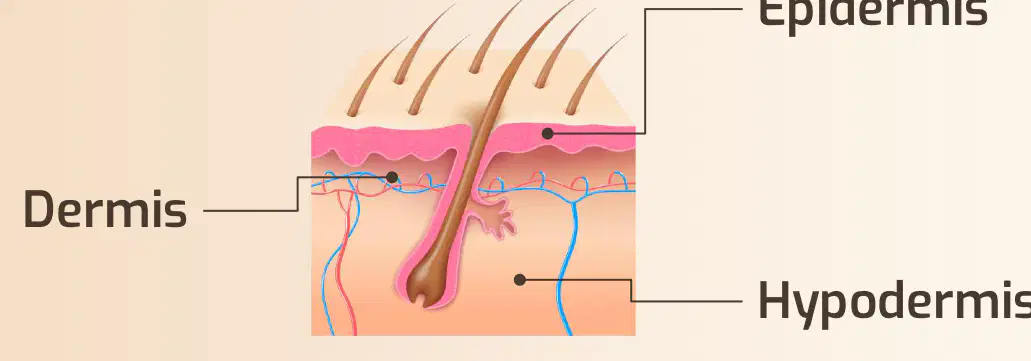
Arrange the following layers of the skin in order from outermost to innermost.
Dermis, Epidermis, Hypodermis
Epidermis, Dermis, Hypodermis
Hypodermis, Dermis, Epidermis
Dermis, Hypodermis, Epidermis
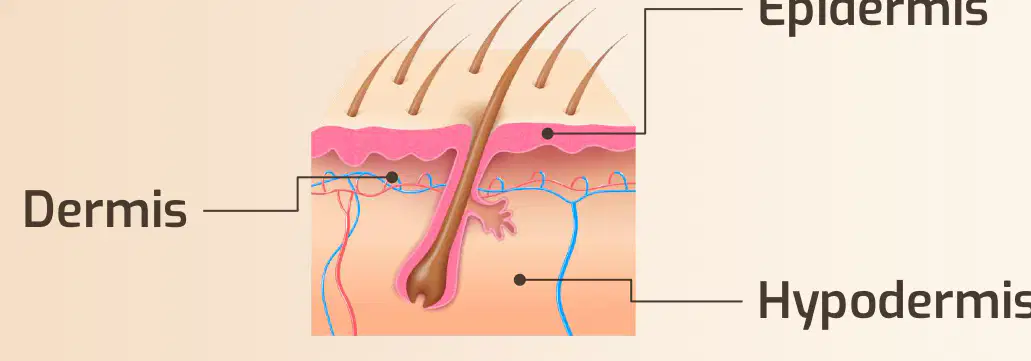
If a person suffers a deep cut that reaches the hypodermis, which layers of the skin have been penetrated?
Only the epidermis
Epidermis and dermis
Epidermis, dermis, and hypodermis
Only the dermis and hypodermis
Which of the following is the correct order of the layers of the epidermis from superficial to deep?
Stratum corneum, Stratum lucidum, Stratum granulosum, Stratum spinosum, Stratum basale
Stratum basale, Stratum spinosum, Stratum granulosum, Stratum lucidum, Stratum corneum
Stratum spinosum, Stratum corneum, Stratum granulosum, Stratum basale, Stratum lucidum
Stratum granulosum, Stratum lucidum, Stratum corneum, Stratum spinosum, Stratum basale
What is the main function of the dermis layer of the skin?
Contains glands and nerve endings
Provides a waterproof barrier
Stores fat and insulates the body
Produces melanin
Which layer of the skin is technically not part of the skin but is often discussed in the system because it contains blood vessels and nerves?
Hypodermis (subcutaneous)
Dermis
Stratum corneum
Stratum granulosum
A student is trying to remember the order of the epidermal layers using the mnemonic "Can't Like Getting Sun Burnt." Which layer does "Getting" refer to?
Stratum Granulosum
Stratum Spinosum
Stratum Lucidum
Stratum Basale
Explain why the hypodermis is often discussed as part of the skin system, even though it is technically not part of the skin. Use evidence from the structure and function of the hypodermis.
Because it contains blood vessels and nerves that support the skin
Because it produces keratin for the epidermis
Because it is the outermost protective layer
Because it contains sweat glands
Which gland of the skin secretes straight out of the skin surface to remove waste and cool the body?
Eccrine
Apocrine
Sebaceous
Ceruminous
What is the main function of sebaceous glands?
Secrete an oil called sebum next to the hair follicle
Remove waste and cool the body
Release sweat during sexual excitement
Produce earwax
Which type of gland is connected to hair follicles in the armpits and groin and does not function until after puberty?
Apocrine
Eccrine
Sebaceous
Ceruminous
What causes odor in apocrine gland secretions?
Bacteria decomposing the secretion
Immediate release of sebum
Direct exposure to air
Mixing with eccrine sweat
Which gland protects against bacteria, fungi, and softens the skin?
Sebaceous
Eccrine
Apocrine
Ceruminous
Earwax is secreted from which type of gland in human skin?
Ceruminous gland
Sebaceous gland
Eccrine gland
Apocrine gland
Compare the odor characteristics of eccrine and apocrine gland secretions.
Eccrine is odorless; apocrine is odorless until bacteria decompose it
Both are always odorless
Eccrine is always odorous; apocrine is always odorless
Both are always odorous
What do nerve endings in the skin detect?
Only temperature
Only pressure
Temperature and touch/pain
Only light
To which layer of the epidermis can nerve endings reach as high as?
Stratum corneum
Stratum granulosum
Stratum basale
Stratum spinosum
Explain why it is important for nerve endings to detect both temperature and touch/pain in the skin.
It helps the skin change color.
It allows the body to sense environmental changes and protect itself from harm.
It helps the skin produce sweat.
It allows the skin to grow faster.
What is the main protein that makes up hair?
Keratin
Collagen
Elastin
Myosin
Which part of the hair is located above the skin?
Shaft
Root
Follicle
Sebaceous gland
What determines whether hair is curly or straight?
The shape of the follicle
The amount of keratin
The length of the shaft
The size of the sebaceous gland
What is the function of melanin in hair?
It determines the pigment of the hair
It produces sebum
It strengthens the hair shaft
It forms the hair follicle
Which of the following best describes the root of the hair?
It is the part of the hair below the skin
It is the part of the hair above the skin
It is the protein that makes up hair
It is the gland that produces oil
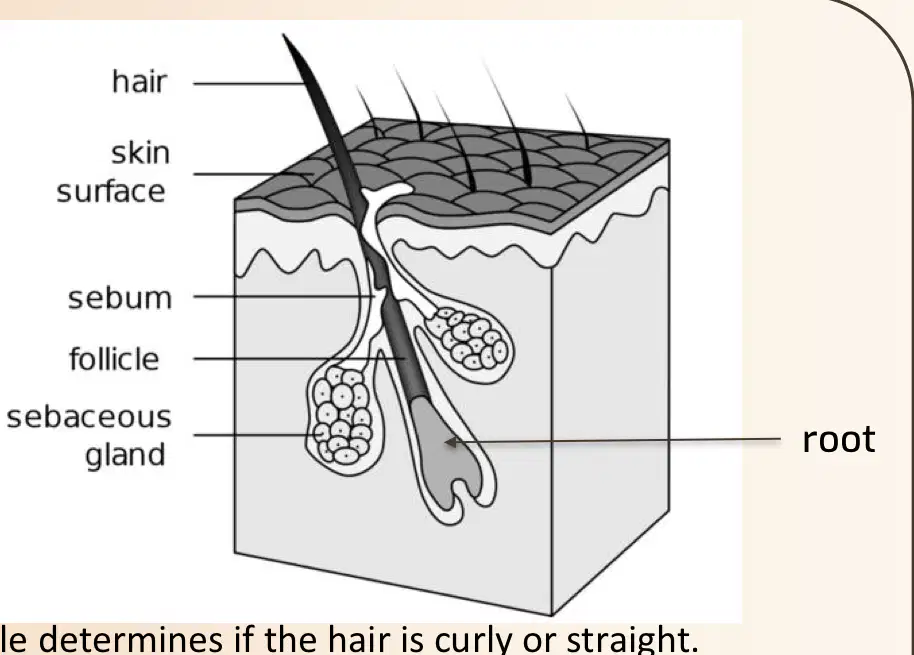
Refer to the diagram. Which structure is responsible for producing oil that lubricates the hair?
Sebaceous gland
Hair shaft
Melanin
Keratin
Explain how the amount of melanin affects hair color. Use evidence from the material to support your answer.
The amount of melanin determines the pigment of the hair, so more melanin results in darker hair, while less melanin results in lighter hair.
The amount of melanin determines the length of the hair.
The amount of melanin determines if the hair is curly or straight.
The amount of melanin determines the thickness of the hair.
What are nails primarily made of?
Collagen
Keratin
Elastin
Melanin
What is the function of nails on the dorsal side of the distal finger and toe bones?
To help with sweating
To act as a protective covering
To produce melanin
To absorb nutrients
What is the whitish half moon at the base of the nail called?
Cuticle
Nail groove
Lunula
Nail plate
What is another name for the cuticle surrounding the nail?
Lunula
Eponychium
Nail plate
Dermis
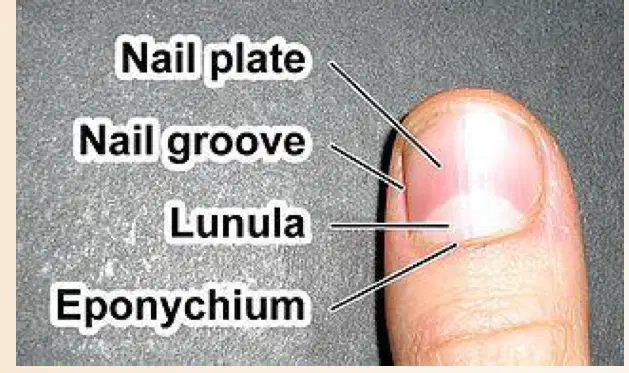
Which part of the nail is labeled as the "lunula" in the diagram?
The outermost edge of the nail
The whitish half moon at the base of the nail
The skin surrounding the nail
The groove beside the nail plate
Why is the cuticle (eponychium) important for the nail?
It provides color to the nail
It is the narrow amount of dermis surrounding the nail, protecting it from infection
It helps the nail grow faster
It makes the nail harder
What are lesions?
Tissues that are altered because of a disease or disorder.
Healthy tissues with no changes.
Tissues that are only affected by injuries.
Tissues that are always cancerous.
Which of the following is NOT an example of a lesion?
Macule
Papule
Muscle
Vesicle
A student is asked to identify different types of lesions in a clinical setting. Which approach would best help them distinguish between a macule and a patch?
Measuring the size of the lesion to see if it is ≤ 1 cm or > 1 cm.
Checking if the lesion is painful.
Observing the color of the lesion only.
Asking the patient about their medical history.
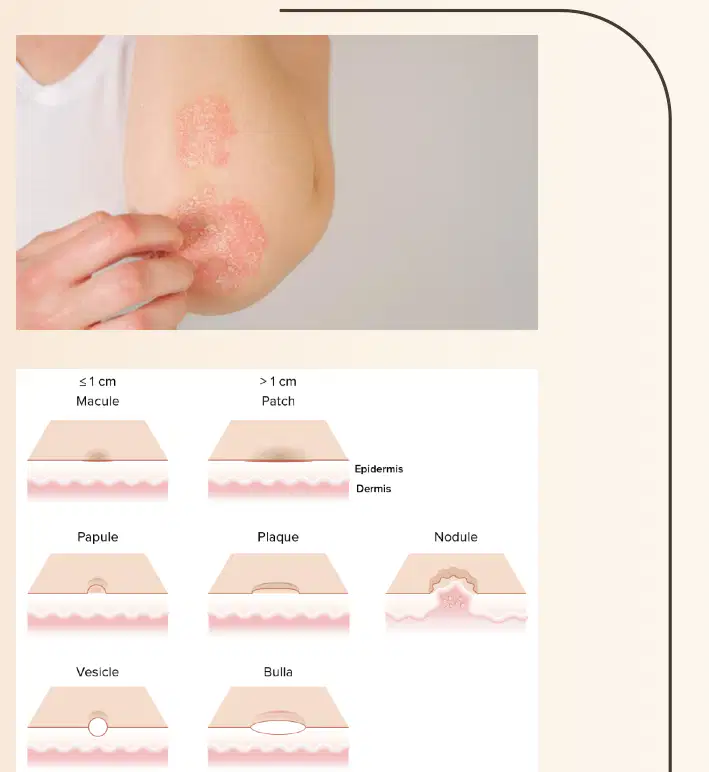
Which diagram would best help a student visually differentiate between a papule and a nodule?
A cross-sectional diagram showing the depth and size of each lesion in the skin layers.
A diagram showing only the color of the lesions.
A chart listing the names of lesions without images.
A diagram of healthy skin only.
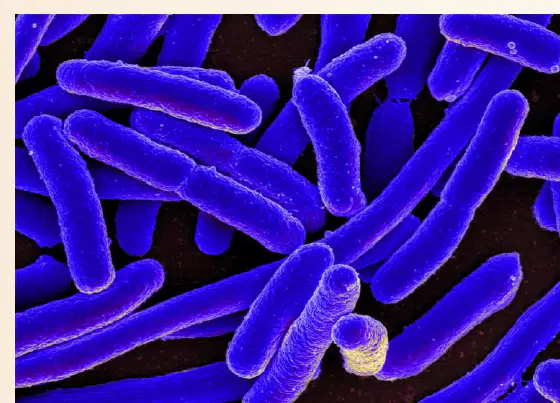
What is an infection according to the provided material?
A disease caused by an external bacteria (microorganisms) or virus
A disease caused by genetic mutations
A disease caused by physical injury
A disease caused by lack of nutrients
Which of the following best describes microorganisms as mentioned in the material?
Organisms that can cause infections when they enter the body
Organisms that are always beneficial to humans
Organisms that are visible to the naked eye
Organisms that only live in water
Based on the information, why are infections considered common?
Because there are many types of external bacteria and viruses that can cause diseases
Because all diseases are caused by microorganisms
Because infections can only be caused by viruses
Because infections are not preventable
What is a severe consequence of rubella infection in pregnant women?
It causes severe birth defects in unborn children.
It leads to mild fever in adults.
It improves the immune system.
It only affects elderly people.
Why is immunization important in the context of rubella?
It helps prevent severe birth defects caused by rubella.
It cures rubella after infection.
It is only necessary for elderly people.
It is not important for children.
Which of the following best describes the main threat posed by rubella?
It causes severe birth defects in unborn children.
It only causes a mild rash in adults.
It is not contagious.
It only affects the respiratory system.
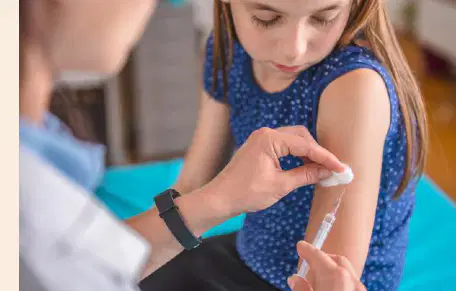
A public health official is planning a campaign to reduce the incidence of rubella. Which strategy should be prioritized based on the information provided?
Promoting immunization against rubella.
Distributing antibiotics to treat rubella.
Advising people to avoid cold weather.
Encouraging increased physical exercise.

Which of the following diseases has a vaccine and can cause birth defects if pregnant mothers are exposed?
Chicken pox
Influenza
Measles
Tuberculosis
Both chicken pox and shingles share which of the following characteristics?
They are caused by bacteria
They both have vaccines
They only affect children
They cannot cause birth defects
Why is it important for pregnant mothers to avoid exposure to chicken pox and shingles?
They can cause fever
They can cause birth defects
They can cause headaches
They can cause muscle pain
What is one of the main reasons for the recent comeback of measles?
Improved hygiene practices
Increased travel
Some people avoid vaccines
Better nutrition
Which of the following is NOT a symptom of measles?
Severe rash across the body
Fever
Loss of bodily fluids
Joint pain
Why is measles considered highly dangerous, especially for children?
It causes mild symptoms only
It can be fatal
It is not contagious
It only affects adults
Based on the information provided, what could be a public health strategy to prevent the comeback of measles?
Encouraging people to avoid vaccines
Promoting vaccination
Reducing water consumption
Increasing sugar intake
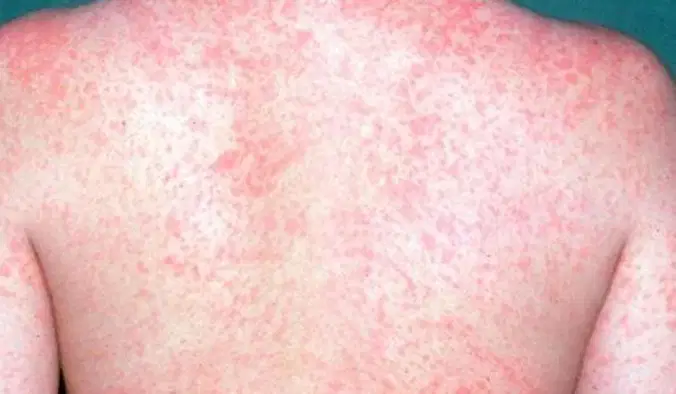
What does the image most likely show?
A healthy back
A sunburn
A severe rash caused by measles
Chickenpox blisters
What is cancer?
When body cells start to grow out of control
When the immune system attacks healthy cells
When bacteria infect the skin
When the body produces too many red blood cells
Which type of skin cancer is responsible for more than 75% of deaths from skin cancer?
Basal cell cancer
Squamous cell cancer
Melanocyte cancer
Lymphocyte cancer
Where does basal cell cancer originate?
Top layer of the epidermis
Pigment cells of the epidermis
Bottom layer of the epidermis
Middle layer of the dermis
Why can cancer be dangerous to healthy cells?
It increases the number of healthy cells
It uses up the body's energy and can displace healthy cells
It strengthens the immune system
It only affects the outer skin
Explain why melanocyte cancers are considered more dangerous than other types of skin cancer. Use evidence from the information provided.
They are less likely to spread to other organs
They are responsible for more than 75% of deaths from skin cancer and often spread to other organs
They only affect the top layer of the epidermis
They do not use up the body's energy
What is the second leading cause of accidental death in North America?
Drowning
Burns
Poisoning
Falls
Which of the following can cause a burn?
Heat, electricity, chemical, friction, or radiation
Only heat and electricity
Only chemicals and friction
Only radiation and water
How many degrees of burns are there, according to the information provided?
2
3
4
5
Most people are aware of how many degrees of burns?
1
2
3
4
Explain why it is important to know that there are actually 4 degrees of burns rather than just 3.
It helps in identifying the severity and appropriate treatment for burn injuries.
It is only important for doctors.
It does not affect treatment.
It is just a fun fact.
Which layer of the skin is affected by a first degree burn?
Dermis
Subcutaneous layer
Epidermis
Muscle tissue
What are common symptoms of a first degree burn?
Blisters and severe bleeding
Redness and pain
Loss of sensation
Deep tissue damage
Which of the following is an example of a first degree burn?
Electrical burn
Chemical burn
Most sunburns
Third degree burn
Sometimes, what happens to the skin after a first degree burn?
It turns blue and swells
It dries out and peels away
It forms deep scars
It becomes numb permanently

Based on the image, which symptom is most likely being shown?
Blistering
Redness of the skin
Deep tissue exposure
Blackened skin
Why are first degree burns considered surface burns?
They affect only the outermost layer of skin
They reach the muscles
They cause permanent damage
They always require surgery
Which layer of the skin is affected by a second degree burn?
Only the epidermis
Only the hypodermis
The dermis as well
The bone
What are common symptoms of a second degree burn?
Redness, pain, swelling, and blisters
No pain, no swelling, dry skin
Only mild redness
Deep tissue damage without blisters
How can a second degree burn often appear?
Dry and flaky
Moist, with blisters that may develop
Completely blackened
Covered in thick scabs
Why can second degree burns cause scars?
Because they only affect the surface of the skin
Because they affect the dermis and can damage deeper tissues
Because they never heal
Because they are always infected
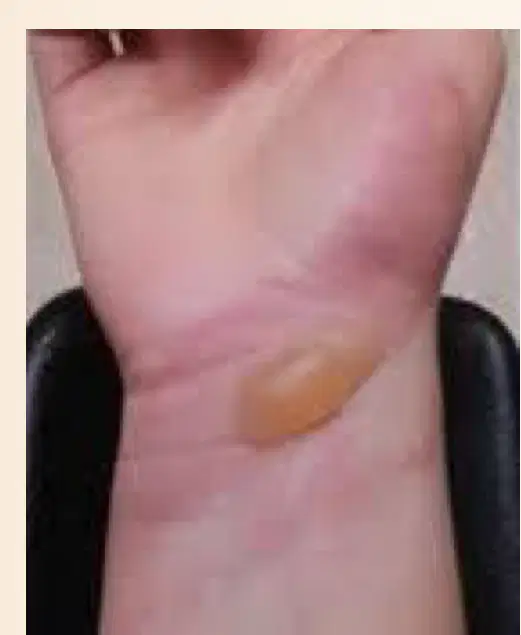
A patient presents with a moist, blistered burn that is red and swollen. Based on these symptoms, what type of burn do they most likely have?
First degree burn
Second degree burn
Third degree burn
Chemical burn
Which layer of the skin do third degree burns reach into?
Epidermis
Dermis
Hypodermis
Stratum corneum
How does the skin typically appear when affected by a third degree burn?
Red and blistered
Stiff, waxy white, leathery, or tan
Swollen and moist
Blue and cold
What is a common consequence of third degree burns regarding nerve function?
Increased sensitivity
No effect on nerves
Nerve damage causing numbness
Temporary tingling
Why do third degree burns often result in scarring?
They only affect the surface of the skin
They cause minimal tissue damage
They damage deeper layers and nerves, leading to tissue loss
They heal without complications
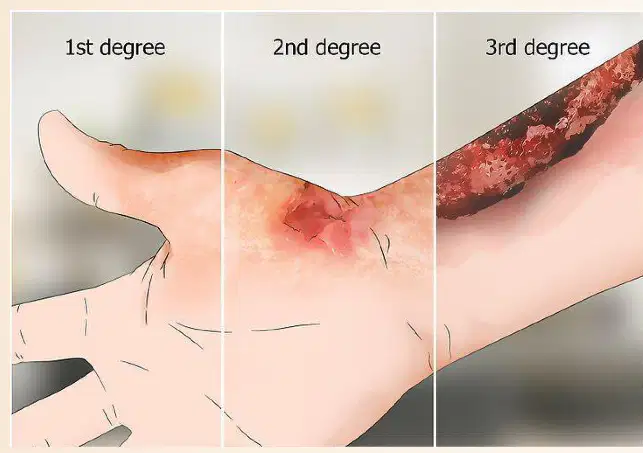
Based on the diagram, how do third degree burns differ visually from first and second degree burns?
Third degree burns are less severe than first degree burns
Third degree burns show more extensive tissue damage and discoloration
Third degree burns look the same as second degree burns
Third degree burns only affect the outermost skin layer
Which of the following best describes a fourth degree burn?
A burn that affects only the outer layer of the skin
A burn that goes deep into the muscle and sometimes to the bone
A burn that causes only redness and swelling
A burn that heals without any scarring
What is a common characteristic of the skin in a fourth degree burn?
Skin is red and swollen
Skin is blistered and moist
Skin is blackened and charred, usually with no pain after as the nerves were destroyed
Skin is dry and peeling
What happens to blood pressure in a victim of a fourth degree burn?
Blood pressure increases above normal
Blood pressure remains unchanged
Blood pressure drops below 120/80 mmHg due to blood loss
Blood pressure fluctuates randomly
Why does heart rate often increase in a person with a fourth degree burn?
To slow down blood flow
To help the body cool down
To pump blood faster around the body to make up for lost blood
To reduce pain
A patient with a fourth degree burn is found to have a heart rate over 100 beats per minute. What is the most likely reason for this?
The patient is exercising
The patient is experiencing blood loss and the heart is compensating
The patient is sleeping
The patient is dehydrated only
How are lesions typically diagnosed?
By observation since they are external to the body.
By blood tests.
By X-ray imaging.
By genetic testing.
What is a common method for diagnosing infections when the exact cause is uncertain?
Taking a bacterial culture.
Performing an MRI scan.
Measuring blood pressure.
Conducting a vision test.
Why can infections often be diagnosed by observation?
Because the skin is external to the body.
Because infections always cause fever.
Because infections are only internal.
Because infections never show symptoms.
A patient presents with a skin abnormality. The doctor is unsure if it is caused by bacteria. What is the most appropriate next step?
Take a bacterial culture to determine the exact infection.
Prescribe antibiotics immediately.
Ignore the abnormality.
Order a bone density scan.
Which of the following is NOT a characteristic checked in the ABCDE approach for identifying signs of skin cancer in moles?
Asymmetry
Border irregularity
Colour should be even
Pain when touched
According to the ABCDE approach, what is considered a bad sign when examining a mole for skin cancer?
Symmetry
Asymmetry
Even colour
Diameter less than 6mm
What is a biopsy in the context of diagnosing skin cancer?
A type of medication
A blood test
Surgically removing a small sample for analysis
Applying a cream to the skin
Why is being observant of your skin important in relation to cancer?
It helps you avoid sunburn
It is a good way to notice cancers early on
It prevents all types of infections
It makes your skin healthier
A mole should have a diameter of less than how many millimeters to be considered less suspicious for skin cancer?
2mm
4mm
6mm
10mm

