
 Worksheets
6/9-Final Review-9th Grade
Total questions: 88
Worksheet time: 1hrs 24mins
Which person was responsible for conquering most of Asia and creating the largest land empire in history?
Genghis Khan
Kublai Khan
Marco Polo
Shaka Zulu
Which person was the grandson of Genghis Khan and ruled the Yuan Dynasty of China?
Genghis Khan
Kublai Khan
Marco Polo
Shaka Zulu

Which person was an Italian trader who went to China and visited the court of Kublai Khan
Genghis Khan
Ibn Battuta
Marco Polo
Shaka Zulu
One way in which Pax Romana and Pax Mongolia are similar is that both were characterized by
political stability and security that allowed for an increase in trade
unifying religious institutions
representative forms of government
social equality for men and women
Which of the following best explains the significance of the Silk Road?
The Silk Road allowed for more people to get silk.
The Silk Road cause pirates to move from the land to the sea.
The Silk Road allowed people like Marco Polo to become famous.
The Silk Road allowed for large-scale cultural exchange between global regions.

Which geographic feature allowed the Mongols to prosper as pastoral nomads?
steppe
desert
mountain range
peninsula
One way in which the travels of Marco Polo and Ibn Battuta are similar is that each
started mass migrations from Europe
stimulated interest in other cultures
led to the establishment of colonies
resulted in archaeological discoveries in Africa
.
What is the primary characteristic of a feudal society?
exchange of land for services
exchange of religous services
exchange for weapons
A _____ is a land grant given to a knight or peasant
a gift
a fief
a right

Feudalism is a political and economic system. In the Middle Ages, it worked because it provided something that people needed. What did people need?
Education
Protection
Freedom
.
What is the primary characteristic of a feudal society?
exchange of land for services
exchange of religous services
exchange for weapons
A _____ is a land grant given to a knight or peasant
a gift
a fief
a right
Feudalism is a political and economic system. In the Middle Ages, it worked because it provided something that people needed. What did people need?
Education
Protection
Freedom
Under the Feudal System, the King:
Owned no land
Owned some of the land
Owned all of the land
The richest person in the land was:
A Baron
A knight
The king
What contributed to the decline of Feudalism?
The Hundred Years' War
The Black Death
All are correct
The Crusades
90% of the population who lived on manors were:
Knights
Peasants
Noblemen
Who worked the land and was often treated unfairly under the feudal system?
knight
king
serf
lord
Who worked the land and was often treated unfairly under the feudal system?
knight
king
serf
lord
Manorialism can be define as?
Economic principle based on a self-sufficient mano.
Economic system based on trade and production.
Economic system based on conquest and slavery.
Political system based on mutual obligation.
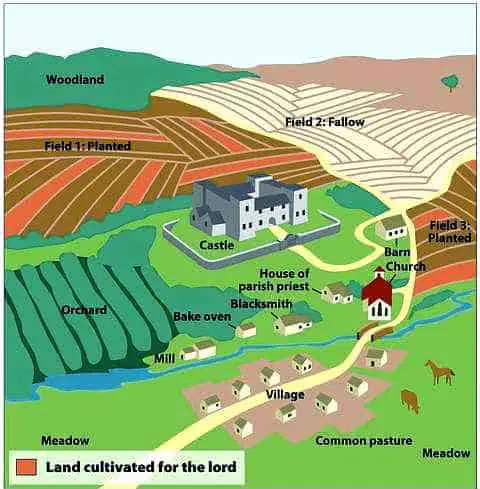
Which of the following was a characteristic of manorialism?
The manor was a nearly self-sufficient farming village.
If the lord sold their land, they took their serfs with them.
Landowner relied on the free, rent-paying peasant to work their manor.
Vassal were farments who gave a large share of the crops to the lord of manor.
In 1095 Pope Urban II called all Christians to join the holy war at the
Council of Clermont
Battle of Hastings
Council of Trent
Christmas Mass
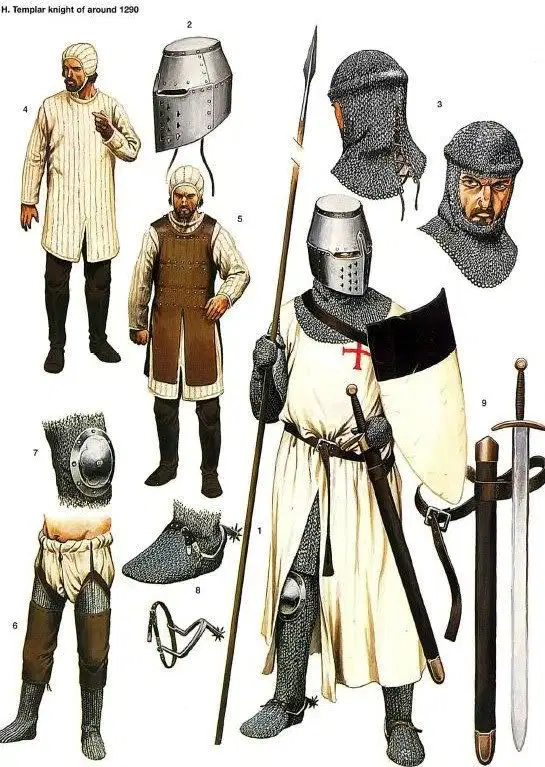
Most of the first crusaders were
peasants
serfs
children
knights
Which of the following was one of the motivators for the first crusaders?
to protect feudalism
opportunity to gain wealth
support of Islam
to expand trade
In the Second Crusade,
Jerusalem was captured by the Muslims
Antioch was captured by the Mongols
Constantinople was sacked
Jerusalem was captured by the Christians
In the Fourth Crusade, the crusaders attacked
Rome
Constantinople
Mecca
Alexandria
Which of the following is NOT one of the impacts of the Crusades?
strengthened the Byzantine Empire
caused the first widespread attacks on Jews
increased trade
helped break down the feudal system

What animal contributed the most to the spread the black plague?
Birds
Fleas and rats
Fish
Lions
What kind of plague was the Black Death?
Bubonic
Septicemic
Pneumonic
Which of the following terms accurately describes the Black Plague?
Pandemic
Epidemic
How did the plague impact Europe?
People started to question the church
1/3 of the population died
It contributed to the decline of feudalism
All are correct

What happened to most people who were infected with the plague?
Nothing because they got a vaccine for the disease
Their hair fell out, but then they got better
All of their skin turned black, but then they got better
They got covered in swollen blisters (buboes) and mostly died
Some scientists think the plague arrived in Europe from?
Ships
Airplanes
Camel caravans
Trains

What is one way that Medieval and Renaissance artists differ?
Renaissance art focuses more on religion
Medieval artists were more realistic
Renaissance artist turned to Roman and Greek works for inspiration
They are the same

Which of these famous structures did Michelangelo paint?
the Louvre
the Coliseum
the Sistine Chapel
the Eiffel Tower
Which of these statements describes a change brought about by the Renaissance?
Society was dominated by the church.
Society began to value individualism.
Society was focused on warfare.
Society was dominated by lords.


Who invented the Printing Press?
Gutenberg
Erasmus
More

Who wrote the essay "The Prince?"
Michelangelo
Machiavelli
Erasmus
Sir Thomas More

The statue of "David" was created by _____________.
Da Vinci
Michelangelo
Erasmus
Gutenberg

What was the role of the Trans-Saharan caravan trade in the changing religious and cultural characteristics of West Africa and in the exchange of salt, gold, and slaves?
Promoting Islamic culture and facilitating the exchange of salt, gold, and slaves
Introducing Christianity and trading primarily in silk and spices
Isolating West Africa from the rest of the African continent
Developing the European colonial interests in West Africa


The Incas were amazing architects
True
False

Machu Picchu is:
An ancient town in a mountain
An ancient mountain
An ancient lake
An ancient temple


The Age of Exploration was driven in large part by the search for wealth.
True
False
An astrolabe was a light, fast sailing ship.
True
False
It is estimated that 90 to 95 percent of the population of the Americas eventually die from European diseases and sicknesses.
True
False
How did the Renaissance contribute to the Age of Exploration?
by emphasizing the importance of converting people to Buddhism
by awakening a spirit of discovery and innovation in Europe
by fostering a belief in the importance of working as a group
by persuading Europeans that the pursuit of wealth was all-important
An economic pattern that imported and exported goods among Africa, the Americas, and New England
Commercial Revolution
Middle Passage
Triangular Trade
Colombian Exchange

The route by which slaves were shipped to the Americas from Africa
Triangular Trade
Colombian Exchange
Mercantilism
Middle Passage
An economic policy where nations increased their wealth and power by obtaining large sums of gold and silver
Exploration
Colonization
Mercantilism
Imperialism
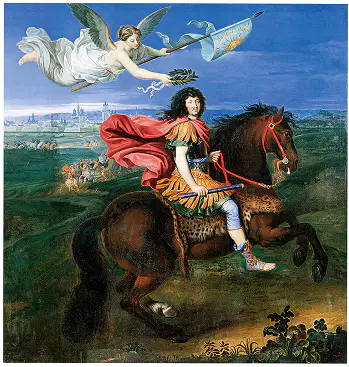
A monarch is subject to no earthly authority, deriving the right to rule directly from the will of God.
Divine Right
Versailles
Absolutism
Czar
Known as the Sun King and the ruler of France
King James II
King Phillip
Louis XIV
Louis XXI
A bloodless overthrow of the England ruler King James II
Glorious Revolution
French Revolution
Constitutional Monarchy
English Bill of Rights
Created to give more rights to the people of England
Glorious Revolution
Petition of Rights
English Bill of Rights
Constitutional Monarchy
The principal royal residence of France from 1682 under Louis XIV until the start of the French Revolution in 1789 under Louis XVI
Absolutism
Versailles
Divine Right
Czar
a political theory that absolute power should be vested in one or more rulers
Divine Right
Absolutism
Versailles
Renaissance
Known as the leader of Russia
Czar
Versailles
Absolutism
Divine Right
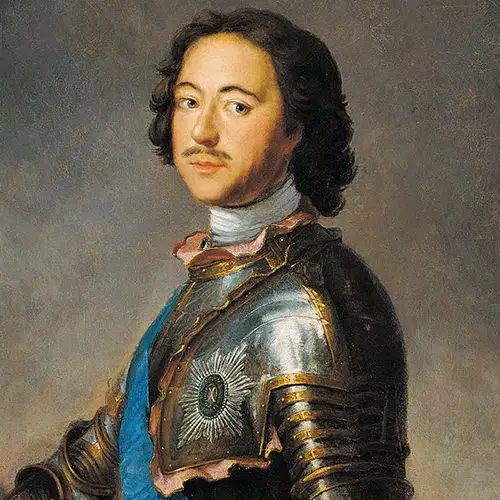
Who was Peter the Great?
This man promoted Westernization campaigns to make his country more European
This man demonstrated absolutism by building the city Versailles as a way of distracting the French nobility
This man didn't believe that the average person was intelligent enough to participate in government, which led him to believe that enlightened monarchy was best
This man thought that humans were naturally greedy and chaotic and would need a large government to control them
Westernization means …
Traveling West in search of natural resources
To adopt or be influenced by the cultural, economic, or political systems of Europe

Elizabeth the I enacted the Act of Supremecy, this made her the supreme leader in matters of both _________ & ___________.
Church/State
Foreign/Domestic
National/International
Church/Religion

