
 Worksheets
Workshop Learning Material Quiz
Total questions: 34
Worksheet time: 17mins
What is the primary purpose of different types of chisels?
To be used for a specific purpose
To look aesthetically pleasing
To be lightweight
To be cost-effective
Which of the following is NOT a type of chisel mentioned in the document?
Mortice
Paring
Gouge
Socket
What determines the size of a chisel?
The length of the handle
The width of the chisel blade
The material of the chisel
The weight of the chisel
What is the range of sizes for chisels mentioned in the text?
1mm to 10mm
3mm to 50mm
10mm to 60mm
5mm to 40mm
What are the most common sizes for chisels?
1mm to 5mm
6mm to 25mm
20mm to 30mm
15mm to 35mm
What is a characteristic of a bevelled edge chisel that makes it suitable for cutting in acute corners?
It is heavy and robust.
It has a beveled blade along both edges.
It has a rounded blade.
It is made of plastic.
Why should caution be used when using a hammer on a bevelled edge chisel?
To avoid dulling the blade.
To prevent breaking the handle.
To ensure a precise cut.
To maintain its lightweight nature.
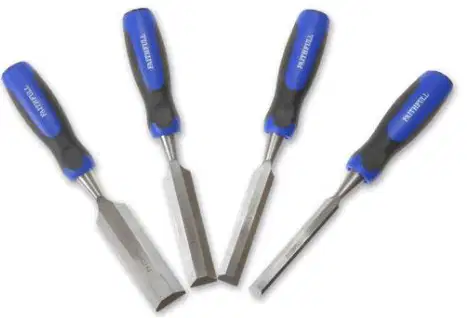
What materials are bevelled edge chisel handles available in?
Metal, rubber, or glass.
Wood, fiberglass, or plastic.
Stone, ceramic, or metal.
Leather, fabric, or rubber.
What is a firmer chisel primarily used for?
General bench and site work
Carving intricate designs
Heavy demolition work
Electrical installations
How does the blade of a firmer chisel compare to a bevel edge chisel?
It is weaker
It is much stronger
It is more flexible
It is thinner
What is the primary use of a mortice chisel?
Cutting mortices or slots
Carving intricate designs
Smoothing surfaces
Sharpening other tools
Why is the blade thickness of a mortice chisel important?
It makes the chisel lighter
It prevents the chisel from twisting
It allows for finer cuts
It reduces the cost of the chisel
What materials can the handle of a mortice chisel be made from?
Metal or glass
Wood or plastic
Rubber or foam
Stone or ceramic

What feature might some mortice chisels have to absorb shock?
A rubber grip
A leather washer
A metal core
A foam padding
What is a gouge primarily used for?
Cutting straight lines
Cutting curved or contoured work
Sanding surfaces
Drilling holes
Which type of gouge is ground on the inside?
Firmer (out cannel)
Scribing (in cannel)
Bevel (out cannel)
Flat (in cannel)
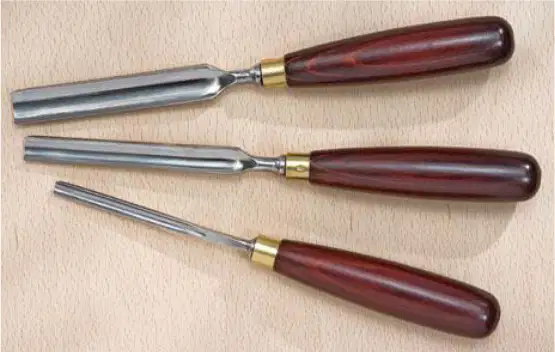
What is the bevel of a gouge referred to as?
Handle
Blade
Cannel
Edge
Which of the following is a basic type of saw used by carpenters and joiners on a day-to-day basis?
Pad saw
Rip saw
Fret saw
Coping saw
Which saw is not listed as one of the four basic types used by carpenters and joiners?
Crosscut saw
Tenon saw
Dovetail saw
Pad saw
How are the teeth of a rip saw shaped?
Like needles
Like chisels
Like hooks
Like screws
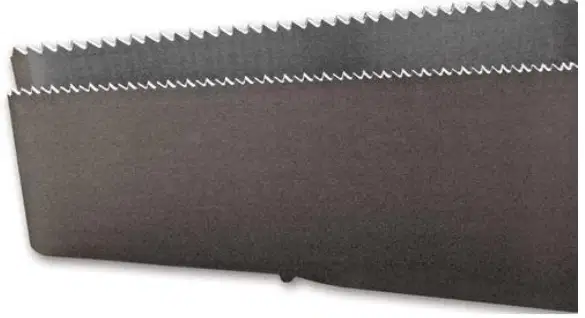
What is the primary purpose of a crosscut saw?
To cut along the grain
To cut across the grain
To drill holes
To sand surfaces
What is the primary use of a tenon saw?
Cutting metal sheets
Sawing tenons and small pieces of wood
Trimming hedges
Carving stone
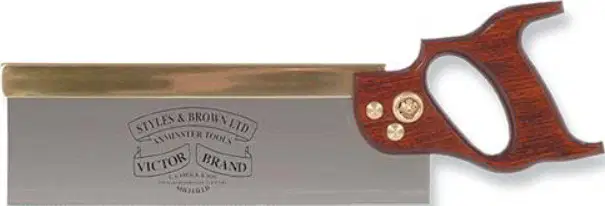
How many teeth points per 25mm do tenon saws typically have?
10 to 12
13 to 15
16 to 18
19 to 21
How many teeth points per 25mm does a dovetail saw typically have?
10
15
20
25
What is the typical length of a dovetail saw?
100mm
150mm
200mm
250mm
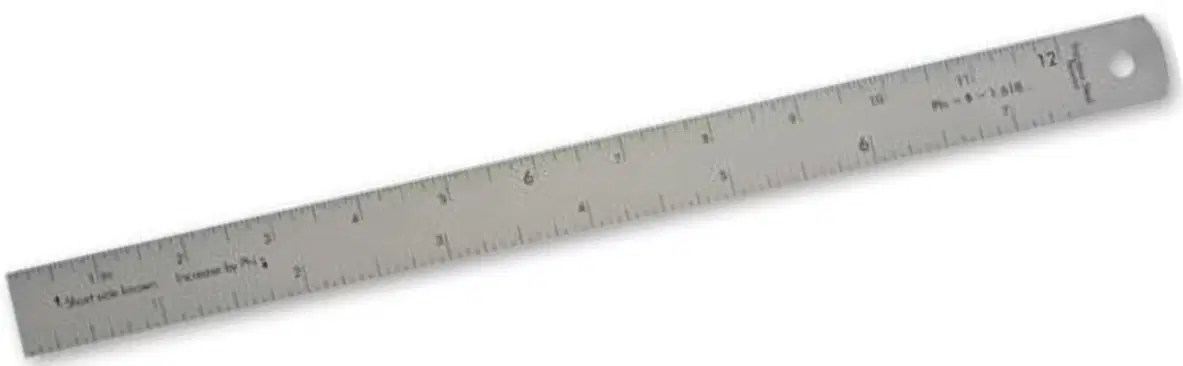
What are measuring tools used for in carpentry and joinery?
To cut materials
To transfer and check measurements
To paint surfaces
To fasten components
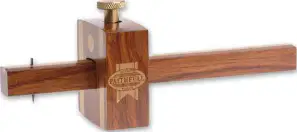
What is the primary use of a marking gauge?
To score a single line parallel to the edge of a piece of timber
To mark two lines parallel to the edge of a piece of timber
To cut timber into pieces
To measure the thickness of timber
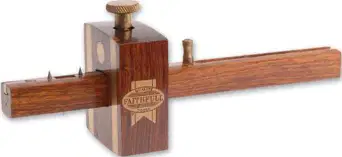
How does a mortice gauge differ from a marking gauge?
It has a longer handle
It has two adjustable marking spurs
It is made of metal
It is used for cutting
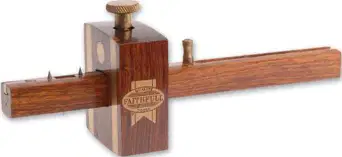
What is the main use of a mortice gauge?
To mark mortice and tenons
To measure the length of timber
To cut timber into pieces
To polish timber surfaces
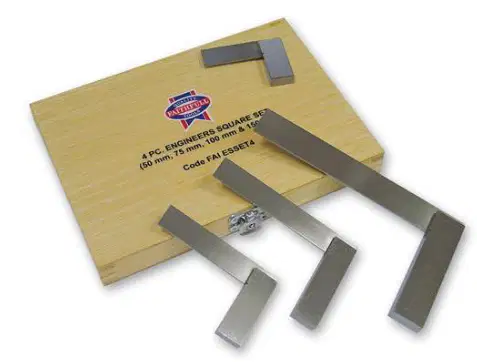
What is the primary use of a tri-square in carpentry?
To measure length
To mark and test angles at 90°
To cut wood
To sand surfaces
Why should tri-squares be regularly checked for accuracy?
To ensure they are clean
To maintain their sharpness
To ensure surfaces are at right angles
To prevent rust
What feature does a combination square have for drawing parallel lines?
Adjustable blade
Fixed handle
Laser guide
Magnetic base
What is a sliding bevel used for?
Marking and testing angles other than 90°
Cutting wood at a 90° angle
Measuring length
Drawing straight lines
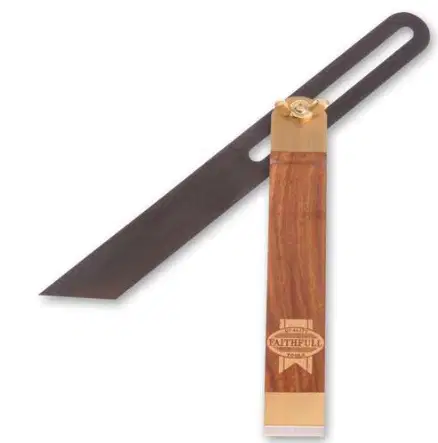
How is the blade of a sliding bevel locked in place?
Using a thumbscrew or a set screw in the stock
With a magnetic strip
By tying a knot
Using adhesive tape

