
 Worksheets
Summer School Science Review
Total questions: 124
Worksheet time: 21hrs 40mins

24 Hours
255 Days
48 Hours
365 days

Rotation of the Earth
Revolution of the Earth
The seasons
The Sun's rotation

1 decade
1 day
1 month
1 year
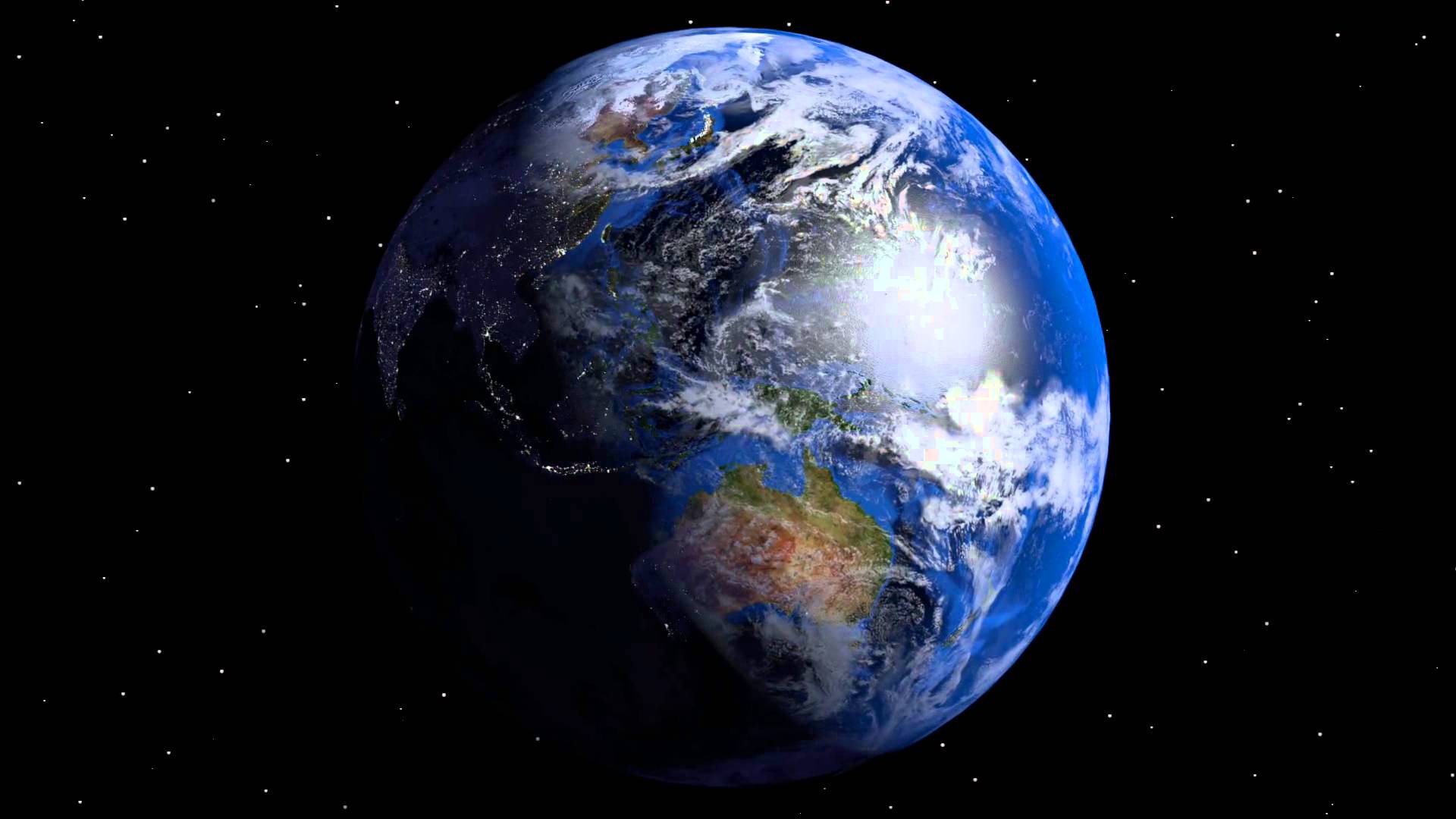
What is the main reason we experience different times of day?
Earth's revolution around the Sun
Earth's rotation on its axis
The Moon's phases
The Sun's distance from Earth
During which part of the day are shadows the longest?
Noon
Morning and evening
Afternoon
Midnight
Which direction does the sunrise and sunset?
East to West
West to East
North to South
South to North
What is the imaginary line called that Earth rotates around?
Equator
Axis
Orbit
Meridian
The Earth spins, this is called?
Orbit
Rotation
Revolution
Tilt
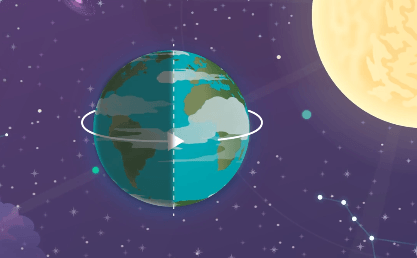
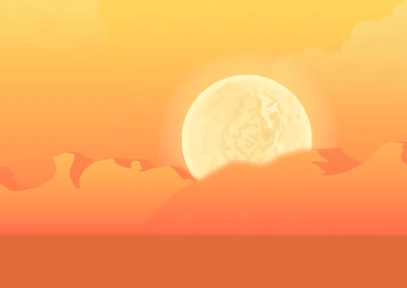
the Earth rotating on its axis
the planets revolving around the Sun
the Earth's revolving around the Sun
The sun moves through our sky in which direction?
South to North
East to West
North to South
West to East
Which direction of the sky will the Sun be in the morning (am)
North
West
South
East
Which direction in the sky will the sun be in the evening (pm)
West
East
North
South

Which position will the Sun be at at Noon (12pm)
1
2
3

Which position will the Sun be in at 8am?
1
2
3
A student draws diagrams of her house and the location of the sun in the sky. Which diagram below does NOT correctly represent the location of the sun at the time indicated?


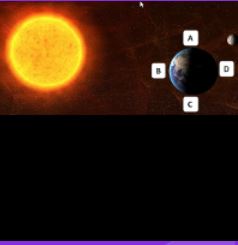
A student draws a model showing the movements on Earth, the moon, and the sun. Which arrow shows the movement that caused day and night on Earth?
Arrow 1, because it shows the rotation of the sun
Arrow 2, because it shows the orbit of Earth around the sun
Arrow 3, because it shows the orbit of the moon around Earth
Arrow 4, because it shows the rotation of the Earth

Shadow casts by objects change throughout the day. The picture below shows the shadow cast by a tree at 3:00 p.m. Which picture shows how the tree's shadow most likely looked at 9:00 a.m. ?


Shadow casts by objects change throughout the day. The picture below shows the shadow cast by a tree at 3:00 p.m. Which picture shows how the tree's shadow most likely looked at 9:00 a.m. ?


The image shows a lake.
Why is the lake considered matter?
It is large
It is living
It has mass and volume
It has physical properties
The image shows a lake.
Why is the lake considered matter?
It is large
It is living
It has mass and volume
It has physical properties

Lisa was at the fair and noticed people walking around with these 8 differently shaped balloons filled with helium gas.
Which is the best conclusion Lisa could make about gases after she observed these balloons?
Gases take the shape and size of their containers
Gases have definite shapes and sizes
Gases have definite shapes and volumes
Gases' sizes and shapes do not change

A scientist uses an instrument to study the small particles in a piece of matter. The diagram shows what the scientist sees.
What state of matter is the scientist most likely observing?
gas
solid
liquid
plasma

A scientist uses an instrument to study the small particles in a piece of matter. The diagram shows what the scientist sees.
What state of matter is the scientist most likely observing?
gas
solid
liquid
vapor


volume

liquid

What are the three states of matter?
Solid
Liquid
Slime
Gas

Felix is helping his father cook dinner.
After Felix adds salt to the boiling water, what will he have in the pot?
a mixture called a solution
a solution called a mixture
a mixture called a combination
a solution called a combination
The following pictures show the particles of a substance in different states. All of the pictures show the same substance. Which is most likely a solid?


Which of the following represents a physical change?


How is the mass of an object measured?
pan balance
scale
hold it
ruler
Chemical changes do NOT affect the matter being changed. In other words a new substance is NOT formed.
True
False
A combination of 2 or more substances that keep their identities.
solution
solute
mixture
combo
A solution is a mixture where parts do not settle out.
True
False
Iced tea is an example of which of the following?
crystals
a solution
a solid
a solute
What is matter?
Everything
Anything that has volume and mass
Anything made of particles
All of these!
A chef is cooking soup that requires her to turn down the heat when the soup begins to bubble quickly. Which event is most likely happening when the soup reaches this point?
The density of the soup is increasing
The mass of the soup is increasing
The soup is reaching its boiling point
The soup is reaching its freezing point

Light travels
around corners
in straight lines
in zig zags
only when its warm

Light bounces off and object when it is
reflected
absorbed
refracted
transmitted

Light bends when passing through a new substance is called:
refraction
reflection
absorption

Which of the following is a synonym for the phrase "soak up"?
absorb
reflect
refract
transmit

Lenses, like camera lenses, microscopes or magnifying glasses do what?
reflect light
refract light
absorb light

What do smooth, shiny surfaces do?
reflect light
refract light
absorb light

This is an example of?
Absorb
Reflection
Refraction
Transmition

When light strikes this wood, what happens to it?
The light transmits
The light reflects
The light absorbs
The light refracts
An object that allows SOME light to pass through, but not all of it. Objects appear fuzzy/blurry on the other side
translucent
transparent
opaque
optical
An object that allows NO light to pass through which creates a shadow behind the object
opaque
transparent
translucent
translated
An object that allows ALL light to pass through clearly and easily
translucent
opaque
transparent
reflect

opaque
translucent
transparent

transparent
opaque
translucent

transparent
translucent
opaque

transparent
opaque
translucent

transparent
translucent
opaque
Light travels in straight lines until reflected by another object. Which illustration best shows the light being reflected?


At what point is the laser being reflected?
A
B
C
D

What happens to light passing through a hand lens that makes the image of the penny appear larger? The light is-

Sunglasses, notebook paper, and lampshades are examples of __________ objects.
translucent
transparent
opaque
wood
When light can easily pass through an object, we say that that object is ___ .
transparent
translucent
opaque
transported
Cardboard, wood, and books are some examples of ________ objects.
opaque
translucent
transparent
reflection

This material allows almost ALL of the light to pass through it. This material is:
Transparent
Translucent
Opaque
Transaction

This lake's water is so calm that it looks like a huge mirror on the ground. What property of light creates this optical illusion?
Refraction
Reflection
Transparency
Opaqueness

This polar bear is happy because someone gave him a pumpkin to play with. But, this polar bear is sad because it looks like his head is no longer attached to his body. :( What property of light creates this optical illusion?
Refraction
Reflection
Transparency
Opaqueness
Where does most sediment come from?
evaporation
weathering of older rocks
cooling of magma (lava)
meteor showers

The image shows sediments at the bottom of a lake. Over time, layers of sediment at the bottom of the lake can form sedimentary rock. What process best explains how the layers of sediment turn into sedimentary rock?
the pressure of the water forces the layers of sediment together
the cold temperature of the water freezes the layers of sediment
the pressure of the water melts the layers of sediment
the cold temperature of the water dissolves the layers of sediment
Limestone usually forms from tiny pieces of sea shells that collect and are buried on the ocean floor. What type of rock is limestone?
sedimentary
igneous
volcanic
metamorphic
Fossil fuel ----
are made in factories
form from the remains of plants and animals that lived long ago
form very quickly in the ground
are made by humans

The picture shows a rock formation in Arizona. Which of the rocks' characteristics best shows that the rocks formed in layers over time?
the striped pattern in the rocks
the rounded shape of the rocks
the size of the rocks
the red color of the rocks

The table lists the steps in the formation of siltstone, a type of sedimentary rock. What is the third step in the formation of siltstone?
mixing of sediment
compaction and cementation of sediment
heating of sediment to very high temperatures
evaporation of sediment

The image shows a forest in a bog, a type of wetland. What process best explains how the trees in the forest might form fossil fuels?
the trees produce carbon dioxide that is released to the atmosphere
a forest fire converts all the trees to ash, which forms fossils
the dead trees fall to the forest floor and are buried by sediment for millions of years
the dead trees fall to the forest floor and are broken down by decomposers
What is the other name for natural gas?
petroleum
oil
propane
lignite

Fossil fuels are a _______________________.
renewable resource
unknown resource
nonrenewable resource
new resource

Heat and _____________ transformed living things into fossil fuels.
pressure
air
gas
water

Which of the following is NOT a fossil fuel.
coal
carbon dioxide
petroleum oil
natural gas

What are the three fossil fuels?
solar, oil
coal and oil
coal, oil, natural gas


This landform is formed by
water erosion
wind erosion
deposition
glaciers

What is this landform?
delta
canyon
valley
sand dune
The movement of sediment down a fast-moving river.
Weathering
Erosion
Deposition
River

Lake
River
Gulf
Inlet

Focus on the landform being surrounded on three sides by water
Gulf
Coast
Peninsula
Bay

Focus on the rock
River
Canyon
Vegetation
Crevice

Focus on the dip between mountains
Peak
River
Mountain
Valley
Focus on the dip between mountains
Peak
River
Mountain
Valley


What type of landform is this?
Plateau
Mountain
Valley
Volcano

Which process best describes the formation of a canyon.
Weathering & Erosion
Erosion & Deposition


What structure of a butterfly helps it move from place to place?
Antenna
Wings
Tail
Legs

Which of the following statements is correct about giraffes?
Giraffes have long legs to reach watering holes easily.
Giraffes have long necks and tongues to reach leaves of tall trees.
Giraffes have long tails to help guide them when they run.
Giraffes have long manes down their necks to help them run faster.

A polar bear lives in cold, snowy environments. What characteristics of the polar bear help keep it warm?
sharp teeth
large paws
thick fur
white color

What structure protects a turtle from its predators?
tail
long neck
hard shell
short legs

How does a rabbit use its white fur to survive in a snowy environment?
allows it to find plants to eat
camouflage to protect it from predators
makes it look pretty in the snow
allows it to help make food
I have lungs to help me breathe in air.
I have fur to keep warm.
I have teeth to eat food.
I have claws to help me dig for food and protect myself.


I had fun and learned something new today!
Yes
No

