wayground logo

Free Printable Worksheets

Font size

S
M
L
XL
Worksheets

24/25 Final Gen 8 Sci Final Espanol

Total questions: 100

Worksheet time: 50mins
Name
Class
Date
1.

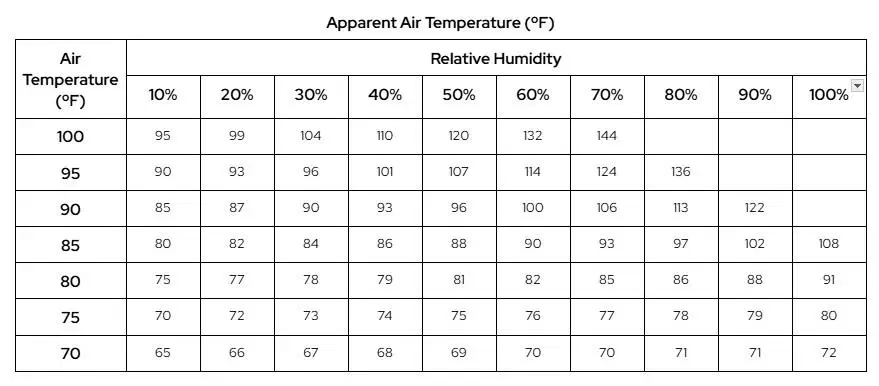
La siguiente tabla de datos muestra la temperatura aparente del aire en grados Fahrenheit (ºF). La temperatura aparente del aire es cómo se siente el calor del aire a diferentes temperaturas y diferentes humedades relativas. Si la temperatura del aire es de 90ºF y la humedad relativa es del 70%, la temperatura aparente del aire es

a)

20ºF

b)

71ºF

c)

106ºF

d)

113ºF

2.

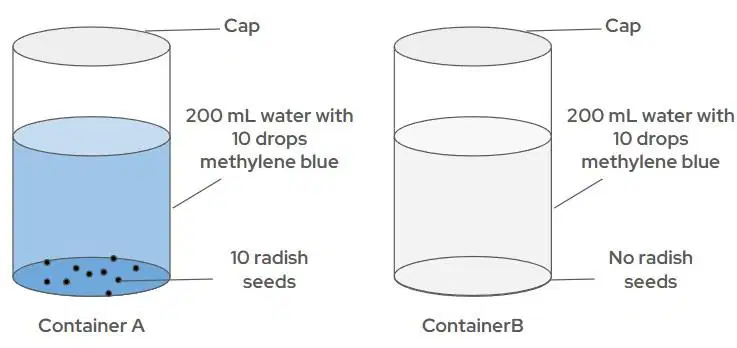
Un estudiante preparó el experimento que se muestra a continuación para determinar si las semillas de rábano absorben oxígeno mientras germinan. El azul de metileno es una sustancia química que es azul cuando hay oxígeno presente, pero es incolora cuando no hay oxígeno. Los recipientes A y B contenían cada uno 200 mL de agua y 10 gotas de azul de metileno. Se añadieron diez semillas de rábano al recipiente A. El recipiente B no tenía semillas de rábano. El propósito del recipiente B en este experimento es...

a)

servir como el recipiente de control

b)

servir como el recipiente experimental

c)

mostrar que las semillas no liberan oxígeno

d)

mostrar que las semillas no liberan dióxido de carbono

3.

¿Cuál de las siguientes afirmaciones es una inferencia?

a)

Un termómetro muestra que la temperatura del aire es de 56ºF

b)

Una muestra mineral de galena produjo una raya gris-negra cuando se probó

c)

Según datos previos, pueden ocurrir diez huracanes en el año 2033

d)

Una veleta indica que el viento viene del oeste

4.

El siguiente gráfico muestra la distancia de un corredor desde la línea de salida durante una carrera de 30 minutos. La distancia se midió en metros (m). El tiempo se midió en minutos (min). ¿Durante qué intervalo de tiempo el corredor se movió a la mayor velocidad media?

a)

0-5 minutos

b)

10-15 minutos

c)

15-20 minutos

d)

25-30 minutos

5.

¿Qué sistema de órganos humanos produce la mayoría de las hormonas que regulan las funciones corporales?

a)

digestivo

b)

nervioso

c)

muscular

d)

endocrino

6.

El pelaje de la liebre raqueta cambia a un color más claro en invierno. Esto le permite mezclarse con su entorno. Este cambio es un ejemplo de ...

a)

extinción

b)

competencia

c)

adaptación biológica

d)

sucesión ecológica

7.

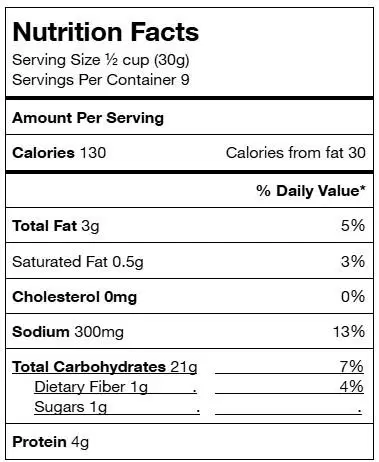
La etiqueta a continuación muestra la información nutricional de un alimento para merendar. ¿Cuántos gramos de grasa se consumirían si una persona comiera toda la caja del alimento para merendar?

a)

3 g

b)

27 g

c)

30 g

d)

65 g

8.

El siguiente diagrama muestra un sistema de órganos humanos. ¿Qué sistema de órganos humanos se muestra?

a)

nervioso

b)

circulatorio

c)

digestivo

d)

respiratorio

9.

En los seres vivos, los rasgos se transmiten de una generación a la siguiente mediante la transferencia de ...

a)

sangre

b)

minerales

c)

calorías

d)

ADN

10.

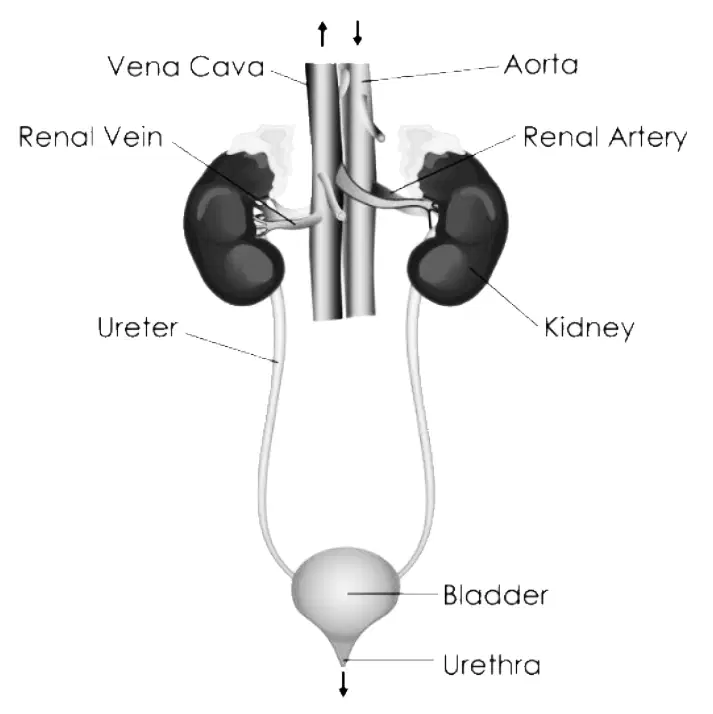
El siguiente diagrama muestra parte del sistema excretor humano. Las estructuras mostradas están principalmente involucradas en...

a)

transportar sangre

b)

producir células sexuales

c)

eliminar desechos

d)

descomponer alimentos

11.

¿Cuál de las siguientes condiciones de salud es una enfermedad infecciosa?

a)

neumonía causada por microorganismos

b)

problema cardíaco causado por una dieta alta en grasas

c)

cáncer de pulmón causado por fumar

d)

daño ocular causado por la luz ultravioleta

12.

Una estructura que transporta una sola unidad de información hereditaria es un(a) ...

a)

gen

b)

tejido

c)

célula sexual

d)

árbol genealógico

13.

¿Qué par de términos describe el lugar habitual de la fecundación y las primeras etapas del desarrollo en la reproducción humana?

a)

fecundación externa y desarrollo externo

b)

fecundación externa y desarrollo interno

c)

fecundación interna y desarrollo externo

d)

fecundación interna y desarrollo interno

14.

La división celular anormal en los humanos puede resultar en ...

a)

Cáncer

b)

Fertilización

c)

Reproducción asexual

d)

Equilibrio dinámico

15.

¿Qué proceso implica elegir ciertos organismos para que se reproduzcan entre sí con el fin de transmitir rasgos específicos y deseables a su descendencia?

a)

cría selectiva

b)

reproducción asexual

c)

adquisición de recursos

d)

selección natural

16.

¿Durante qué proceso las células utilizan oxígeno para liberar energía almacenada?

a)

fotosíntesis

b)

respiración

c)

circulación

d)

digestión

17.

Las funciones vitales básicas de un organismo son realizadas por ...

a)

células

b)

nutrientes

c)

átomos

d)

hormonas

18.

La suma de todas las reacciones químicas que tienen lugar dentro de un organismo se conoce como ...

a)

evolución

b)

metabolismo

c)

circulación

d)

reproducción

19.

¿Qué factor limitaría más probablemente el número de ratones que viven en un área?

a)

recursos abundantes

b)

clima estable

c)

más depredadores

d)

menos competencia

20.

El siguiente diagrama de flujo representa el proceso de la fotosíntesis. Un paso en el proceso está etiquetado como X. ¿Qué actividad ocurre en X?

a)

Área de la planta comida por animales como alimento

b)

El dióxido de carbono y el agua se utilizan para producir azúcar

c)

Las plantas liberan agua en el suelo

d)

Los animales exhalan dióxido de carbono
21.

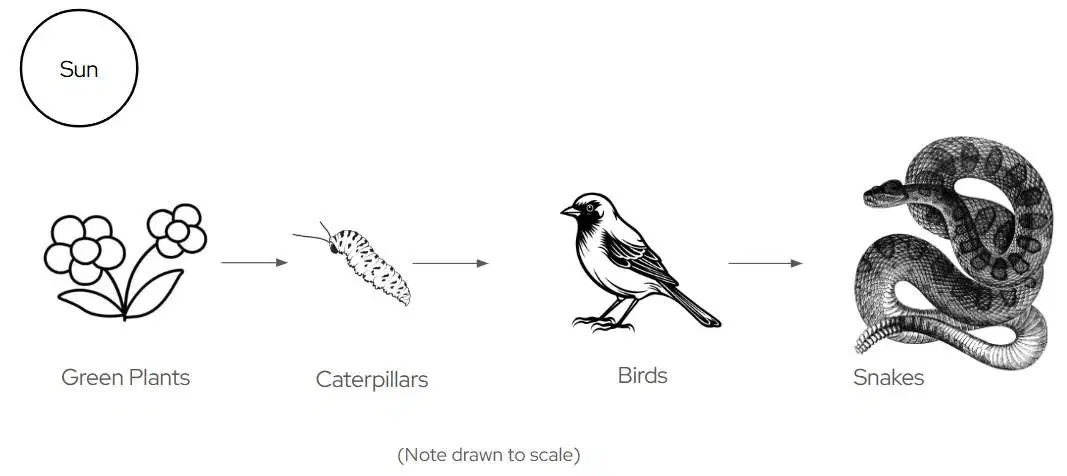
El siguiente diagrama muestra una cadena alimentaria. ¿Qué organismos en esta cadena alimentaria son herbívoros?

a)

plantas verdes

b)

orugas

c)

aves

d)

serpientes

22.

El siguiente diagrama muestra varios organismos diferentes encontrados en un área. Los gusanos en el diagrama representan ...

a)

una comunidad

b)

un ecosistema

c)

un hábitat

d)

una población

23.

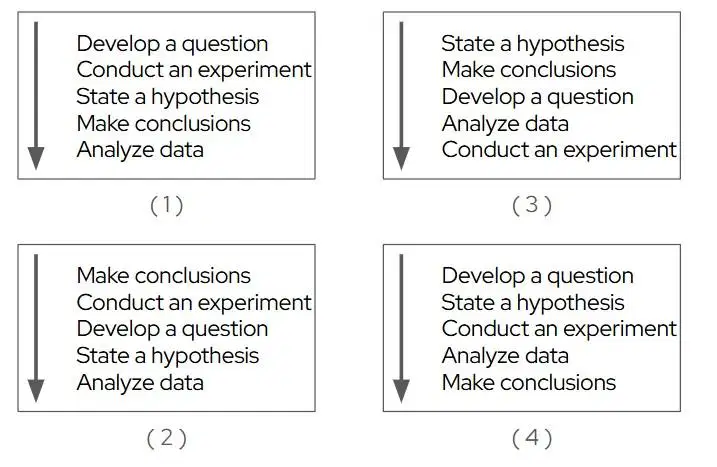
Un estudiante está tratando de determinar si cierto escarabajo ayudará a controlar la población de una especie de planta dañina. ¿Qué secuencia de pasos sería la más adecuada para esta investigación?

a)

1

b)

2

c)

3

d)

4

24.

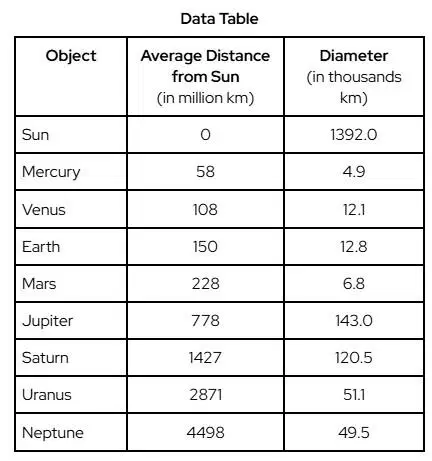
La siguiente tabla de datos muestra información relacionada con el Sol y los planetas de nuestro sistema solar. La distancia entre el Sol y Saturno es aproximadamente seis veces la distancia entre el Sol y ¿cuál de los siguientes planetas?

a)

La Tierra

b)

Júpiter

c)

Marte

d)

Venus

25.

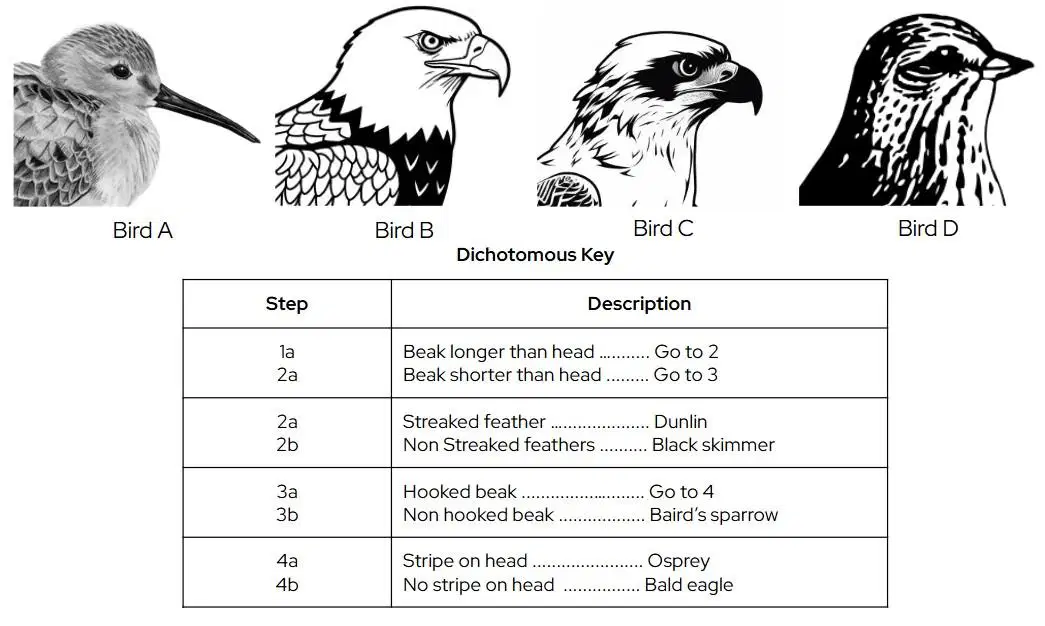
Según la clave dicotómica, ¿cuál de los pájaros es el gorrión de Baird?

a)

A

b)

B

c)

C

d)

D

26.

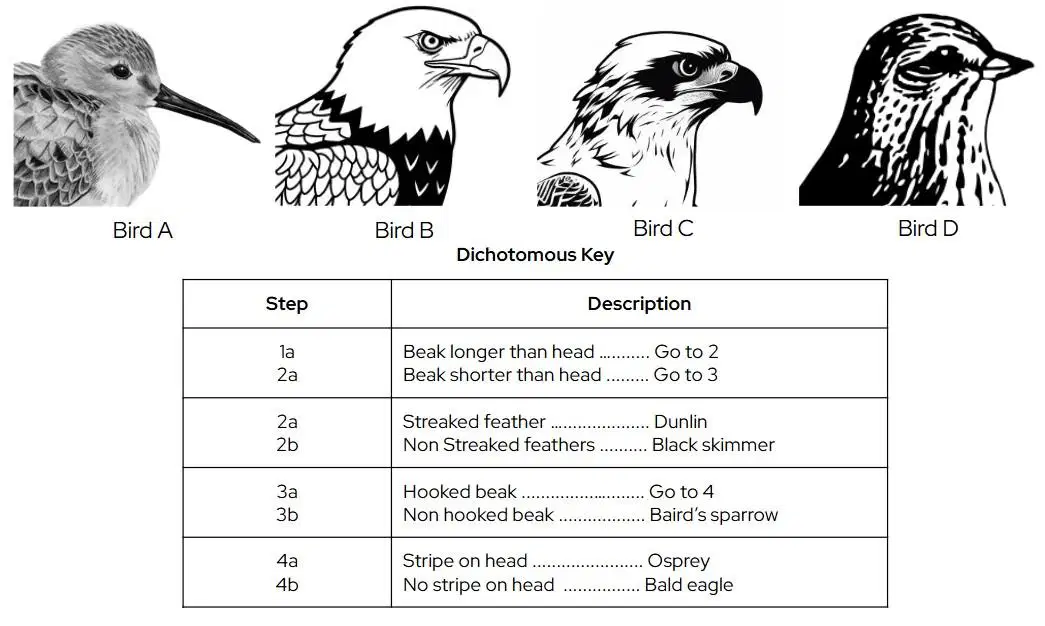
¿Qué característica podría usarse mejor para distinguir entre las aves B y C?

a)

forma del ojo

b)

longitud del pico

c)

franja en la cabeza

d)

forma del pico

27.

¿Qué sucede finalmente con una especie cuando el entorno cambia y los organismos no se adaptan?

a)

clasificación

b)

desarrollo

c)

extinción

d)

regulación

28.

¿Qué secuencia representa los niveles correctos de organización para los organismos multicelulares?

a)

célula → tejido → órgano → sistema de órganos

b)

tejido → órgano → célula → sistema de órganos

c)

sistema de órganos → órgano → célula → tejido

d)

célula → órgano → tejido → sistema de órganos

29.

¿En qué parte de una célula vegetal ocurre la fotosíntesis?

a)

núcleo

b)

cloroplasto

c)

membrana celular

d)

pared celular

30.

Los humanos están protegidos de algunas infecciones por células especializadas que producen sustancias químicas que ...

a)

destruyen microbios

b)

reciclan nutrientes

c)

permiten la locomoción

d)

coordinan el movimiento

31.

¿Qué sistemas del cuerpo humano trabajan directamente juntos para permitir la locomoción?

a)

circulatorio, excretor y respiratorio

b)

circulatorio, endocrino y reproductor

c)

esquelético, muscular y nervioso

d)

esquelético, digestivo y respiratorio

32.

Una máquina de diálisis se puede utilizar para eliminar desechos de la sangre de un paciente. ¿Qué sistema del cuerpo humano funciona de manera similar?

a)

reproductor

b)

digestivo

c)

excretor

d)

endocrino

33.

¿Qué gas es transportado por el sistema circulatorio en los humanos y es utilizado por las células durante la respiración para liberar la energía almacenada en los alimentos?

a)

Dióxido de carbono

b)

Nitrógeno

c)

Hidrógeno

d)

Oxígeno

34.

Los cromosomas de una célula contienen ...

a)

Genes

b)

Clorofila

c)

Espermatozoides

d)

Óvulos

35.

El sistema respiratorio humano es responsable de eliminar ...

a)

grasa de las células

b)

dióxido de carbono de la sangre

c)

hormonas de las glándulas

d)

nutrientes de los alimentos

36.

¿Qué proceso es una causa de variación en una especie?

a)

metamorfosis

b)

respiración celular

c)

reproducción sexual

d)

regulación

37.

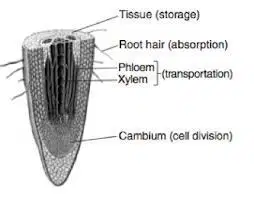
El siguiente diagrama muestra una vista ampliada de una sección transversal de la punta de una raíz de planta. Se muestran cuatro partes de la raíz y el proceso que realiza cada una. ¿Qué proceso es directamente responsable del crecimiento de la raíz en las plantas?

a)

almacenamiento

b)

absorción

c)

transporte

d)

división celular

38.

¿Qué recorrido siguen la mayoría de los nutrientes después de que una persona da un bocado de comida?

a)

sistema digestivo → sistema circulatorio → células del cuerpo

b)

sistema circulatorio → células del cuerpo → sistema digestivo

c)

sistema digestivo → células del cuerpo → sistema circulatorio
d)

sistema circulatorio → sistema digestivo → células del cuerpo

39.

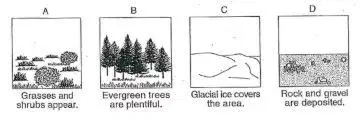
Un glaciar en Alaska se ha retirado una distancia de 100 kilómetros en los últimos 200 años. Cuatro etapas de este proceso se muestran en los diagramas A, B, C y D. ¿En qué orden deben colocarse los diagramas para representar la sucesión ecológica que ha tenido lugar en el área?

a)

C→D→A→B

b)

C→D→B→A

c)

D→C→B→A

d)

D→C→A→B

40.

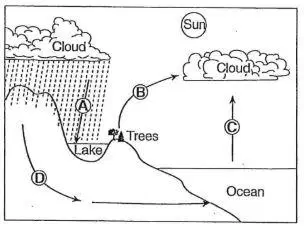
En el diagrama, las letras A, B, C y D representan cuatro procesos diferentes que ocurren durante el ciclo del agua. ¿Durante qué proceso se libera agua de los organismos terrestres a la atmósfera?

a)

A

b)

B

c)

C

d)

D

41.

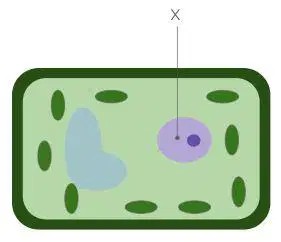
El siguiente diagrama representa una planta. La letra X representa una estructura en la célula. ¿Qué estructura celular está representada por la X?

a)

Núcleo

b)

Citoplasma

c)

Pared celular

d)

Membrana celular

42.

Una función principal de las raíces de las plantas es

a)

producir flores

b)

liberar oxígeno

c)

transportar dióxido de carbono

d)

absorber agua

43.

El aire caliente que asciende en la atmósfera es un ejemplo de transferencia de calor por...

a)

absorción

b)

conducción

c)

convección

d)

radiación

44.

¿Qué proceso libera energía de los alimentos digeridos?

a)

fotosíntesis

b)

respiración celular

c)

producción de vitaminas

d)

fertilización

45.

Los herbívoros obtienen la mayor parte de su energía al

a)

consumir animales

b)

consumir plantas

c)

producir azúcar

d)

absorber la luz solar

46.

¿Qué proceso da como resultado la formación de una nueva célula con un conjunto completo de cromosomas?

a)

respiración

b)

digestión

c)

fertilización

d)

evolución

47.

Si el equilibrio de un ecosistema se ve alterado por una erupción volcánica, ¿qué es lo más probable que ocurra?

a)

El ecosistema no cambiará de su estado original

b)

El ecosistema eventualmente volverá a estar equilibrado

c)

Los consumidores en el ecosistema comenzarán a consumir dióxido de carbono

d)

Los consumidores en el ecosistema comenzarán a producir más oxígeno

48.

Un organismo que contiene cloroplastos es capaz de producir alimento mediante el proceso de ...

a)

fotosíntesis

b)

reproducción

c)

respiración

d)

digestión

49.

La transferencia de una sección de ADN de un organismo al ADN de otro organismo por parte de científicos se llama ...

a)

cría selectiva

b)

ingeniería genética

c)

selección natural

d)

fertilización interna
50.
A green plant absorbs light. A frog eats flies. These are both examples of how organisms ...
a)
obtain energy
b)
escape predators
c)
produce offspring
d)
excrete waste
51.
Abnormal cell division may result in ...
a)
disease prevention
b)
tissue repair
c)
metamorphosis
d)
cancer
52.
A main function of a plant's seed is to ...
a)
store food to be used during early development
b)
attract pollen to be used during development
c)
take in light energy to be used during photosynthesis
d)
produce chlorophyll to be used during photosynthesis
53.
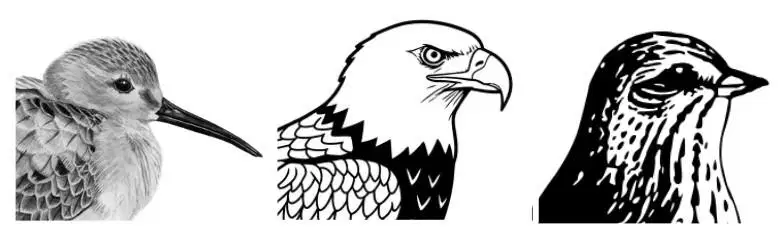
The drawings below represent three different birds. The beak shape makes it easy for each bird to obtain food in a different way. The differences in beak shape are examples of ...
a)
camouflage
b)
competition
c)
dynamic equilibrium
d)
biological adaptation
54.
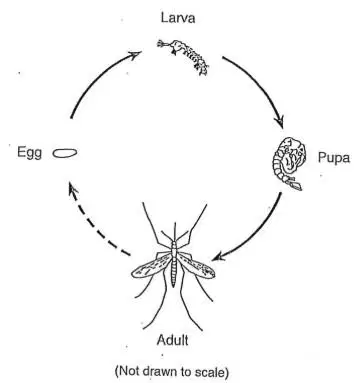
The diagram below represents the stages of development in a mosquito. Which process is represented by the four stages in this diagram?
a)
fertilization
b)
metabolism
c)
metamorphosis
d)
succession
55.
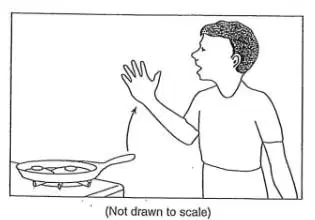
The diagram below represents a person cooking eggs on a stove. The person has touched the hot frying pan and pulled his hand away. Which title is the best one for the diagram?
a)
A Human Requires Oxygen to Survive
b)
Metabolism is Influenced by Diet
c)
All Living Things Require Energy
d)
A Human Responds to a Stimulus
56.
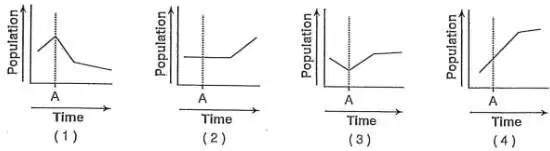
Which graph shows what most likely would happen to the population of a certain animal if a new predator were introduced at time A?
a)
1
b)
2
c)
3
d)
4
57.
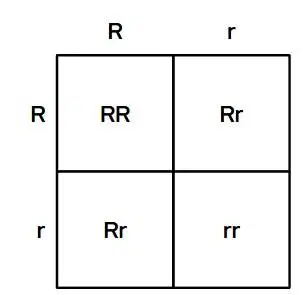
A Punnett square is shown below. The dominant trait is represented by R. The recessive trait is represented by r. What percentage of the offspring will most likely show the dominant trait?
a)
25%
b)
50%
c)
75%
d)
100%
58.
A fox with thick fur would have a survival advantage over other foxes if...
a)
there is more competition for food in the fox population
b)
the air temperature significantly decreases in winter
c)
a drought occurs, limiting the amount of water available
d)
a new disease appears that infects the foxes
59.
A student viewing a cell with a microscope observes a cell wall, a cell membrane, and a nucleus. The presence of these structures indicates that the student is looking at a cell from a ...
a)
rabbit
b)
worm
c)
carrot
d)
fly
60.
Dogs and cats are animals that have many similar body structures but do not mate with each other. These two animals are classified in ..
a)
the same kingdom and the same species
b)
the same kingdom, but different speceis
c)
difference kingdoms, but the same species
d)
different kingdoms and different species
61.
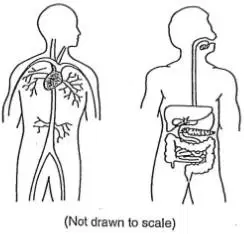
The diagrams below represent two systems of the human body. Which tow systems are represented in the diagrams?
a)
endocrine and skeletal
b)
endocrine and respiratory
c)
circulatory and respiratory
d)
circulatory and digestive
62.
Which process is responsible for the growth and repair of human tissue?
a)
evolution
b)
germination
c)
cell division
d)
natural selection
63.
The primary role of the endocrine system is to ...
a)
produce hormones that regulate body functions
b)
form chemicals that destroy microbes
c)
break down good to release nutrients
d)
supply red blood cells to carry oxygen
64.
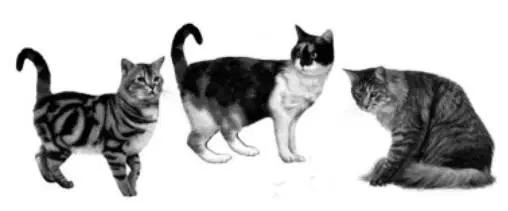
The photograph below shows three cats with differences in their fur length and patterns. These differences are most likely due to ...
a)
Dietary habits
b)
sexual reproduction
c)
habitat destruction
d)
damage from disease
65.
The hereditary material in corn plants can be altered by scientists so the plants produce more corn. Which term identifies this process?
a)
environmental degradation
b)
ecological succession
c)
natural selection
d)
genetic engineering
66.
What is the main factor that prevents the growth of tropical plants in the northern part of the United States?
a)
predators
b)
pollutants
c)
overpopulation
d)
climate
67.
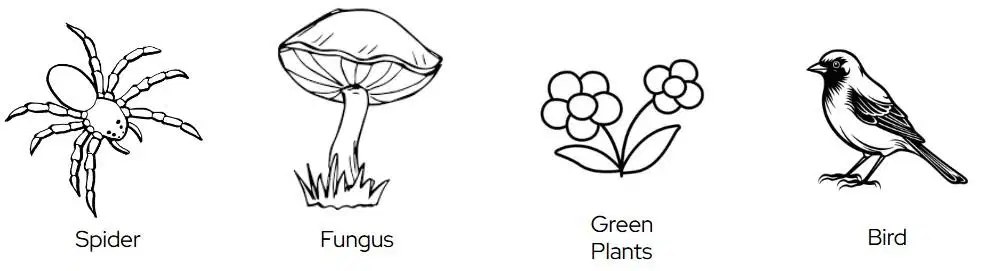
The diagram below represents four organisms. How many of the organisms represented are multicellular?
a)
1
b)
2
c)
3
d)
4
68.
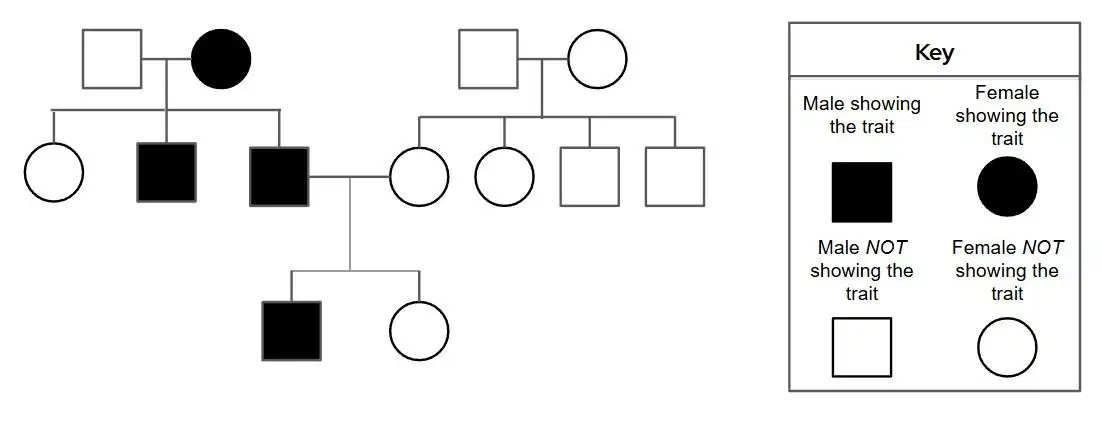
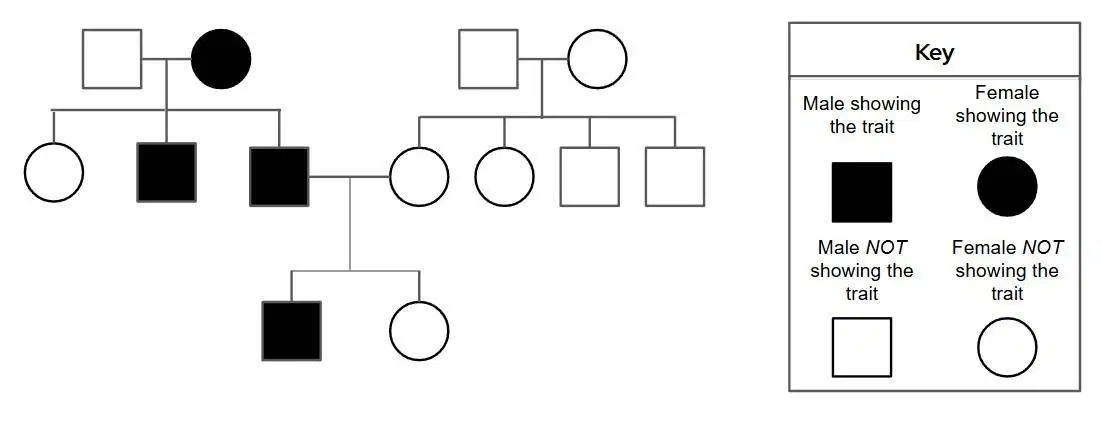
The model represents the transmission of a specific trait passed on from parents to their offspring. How many males in this model show the trait?
a)
1
b)
2
c)
3
d)
4
69.
The model represents the transmission of a specific trait passed on from parents to their offspring. Which type of model is shown in the diagram?
a)
food chain
b)
pedigree chart
c)
feedback system
d)
life cycle
70.
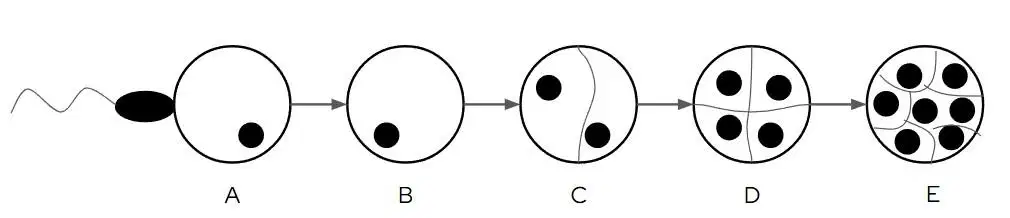
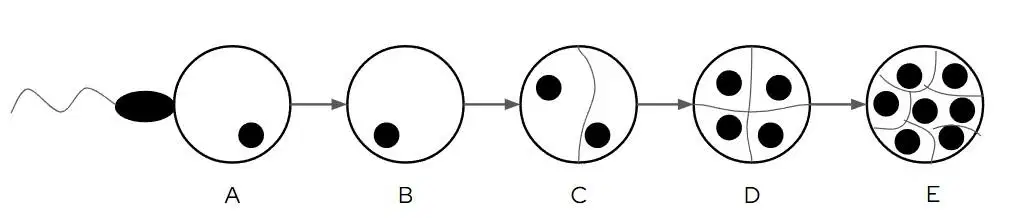
Diagrams A through E represent five stages in a simplified model of sexual reproduction and development. At which stage is fertilization occurring?
a)
A
b)
B
c)
C
d)
E
71.
Diagrams A through E represent five stages in a simplified model of sexual reproduction and development. Between which two stages does cell division first occur?
a)
A and B
b)
B and C
c)
C and D
d)
D and E
72.
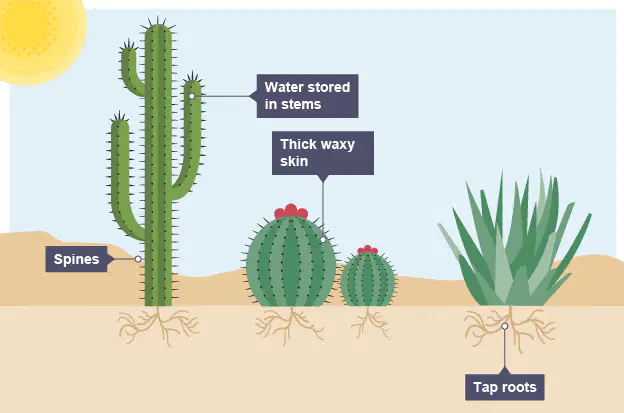
The photograph below shows cactus plants. Which feature helps a cactus plant prevent water loss in a hot, dry desert environment?
a)
green color
b)
flowers
c)
waxy surface
d)
branches
73.
Nutrients enter the bloodstream during the process of ...
a)
locomotion
b)
respiration
c)
elimination
d)
absroption
74.
The diagram below represents a pile of decaying plant and animal materials. This process puts nutrients back in the soil. The bacteria and fungi that break down the plant and animal materials are classified as ...
a)
consumers
b)
predators
c)
decomposers
d)
producers
75.
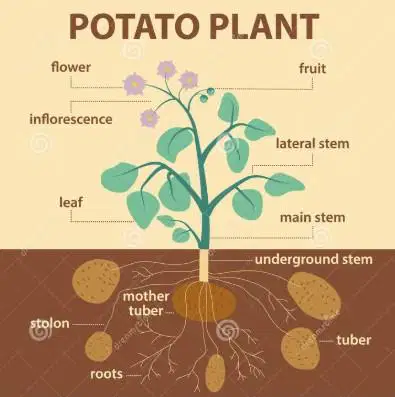
The diagram represents a potato plant. Several plant structures are labeled. What is the primary structure in the potato plant that converts lighter energy into chemical energy?
a)
leaves
b)
flower
c)
roots
d)
tuber
76.
Which type of organism converts wastes and dead materials into nutrients that can be used by plants?
a)
carnivore
b)
herbivore
c)
decomposer
d)
producer
77.
All of the different organisms interacting in a pond make up ...
a)
a community
b)
the water cycle
c)
a population
d)
the habitat
78.
Which factor is most likely to cause the number of rabbits living in an area to increase?
a)
less water
b)
fewer predators
c)
lack of shelter
d)
limited food
79.
One positive effect of recycling aluminum cans to manufacture new beverage containers is ...
a)
conserving Earth's resources
b)
creating acid rain
c)
warming Earth's atmosphere
d)
increasing the ozone
80.
A puggle is a type of dog first produced by mating two other types of dos, a pug and a beagle. This process is an example of ...
a)
asexual reproduction
b)
genetic engineering
c)
selective breeding
d)
natural selection
81.
The information below describes a relationship between a type of fish known as a goby and a species of blind shrimp. The shrimp digs a hole that provides shelter for itself and the goby fish. The goby fish lives at the opening to the hole and watches for predators. When a predator swims by, both organisms quickly move farther into the hole for safety. The relationship between these two organisms is best described as ...
a)
Competetitive
b)
Harmful
c)
Beneficial
d)
Predatory
82.
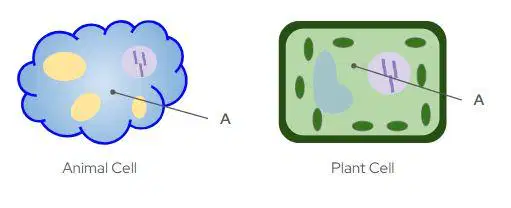
The diagram below represent two cells. Letter A represents a part of each cell. Which parts of the cell is labeled A in both diagrams?
a)
cell wall
b)
chromosome
c)
cytoplasm
d)
nucleus
83.
A group of organs working together to perform a certain function is called ...
a)
a system
b)
a tissue
c)
an organism
d)
a cell
84.
which structure's main function is to produce food (sugar) in a plant?
a)
flower
b)
leaf
c)
root
d)
seed
85.
Competition within a pack of wolves may increase if there is an increase in the ...
a)
amount of food available
b)
amount of oxygen available
c)
size of their population
d)
size of the area they inhabit
86.
Which sequence lists the hereditary material found inside cells from the smallest unit to the largest unit?
a)
chromosome→gene→nucleus
b)
chromosome→nucleus→gene
c)
gene→nucleus→chromosome
d)
gene→chromosome→nucleus
87.
A student added some sugar to a glass of water, but it did not dissolve quickly. What could the student do to increase the rate at which the sugar dissolves in the water?
a)
freeze the water
b)
heat the water
c)
add salt to the water
d)
filter the water
88.
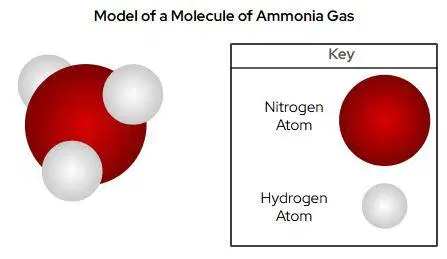
The model below represents a molecule of ammonia gas. Ammonia gas would be classified as ...
a)
a compound
b)
a mixture
c)
an element
d)
an atom
89.
The sum of all chemical reactions in an organism is called ...
a)
metabolism
b)
exercise
c)
adaptation
d)
respiration
90.
Organisms are classified as producers if they are able to ...
a)
remove oxygen from the air
b)
remove microbes from the soil
c)
make their own food
d)
make carbon dioxide
91.
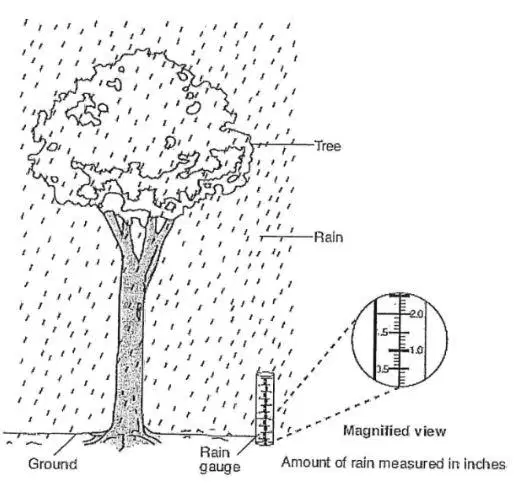
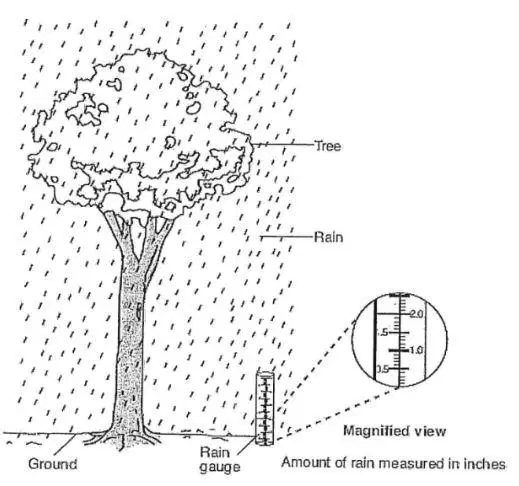
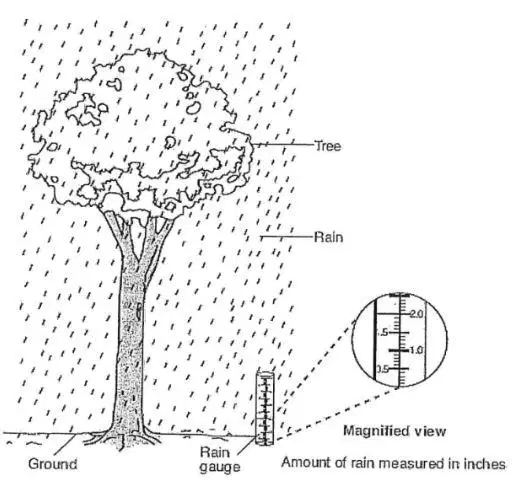
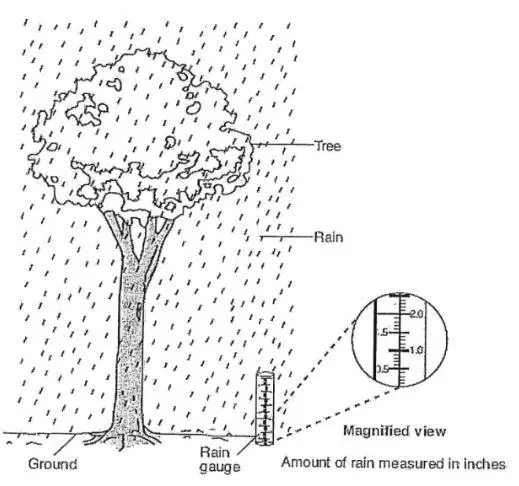
The diagram below represents a tree, rain, and a rain gauge as viewed by a student looking out of a classroom window. a magnified view of the rain gauge is shown. Is the following statement an observation or an inference? In two more hours, a total of 3.0 inches of rain will have fallen.
a)
Observation
b)
Inference
92.
The diagram below represents a tree, rain, and a rain gauge as viewed by a student looking out of a classroom window. a magnified view of the rain gauge is shown. Is the following statement an observation or an inference? The rain is falling on the tree and ground.
a)
Observation
b)
Inference
93.
The diagram below represents a tree, rain, and a rain gauge as viewed by a student looking out of a classroom window. a magnified view of the rain gauge is shown. Is the following statement an observation or an inference? The rain gauge shows 2.0 inches.
a)
Observation
b)
Inference
94.
The diagram below represents a tree, rain, and a rain gauge as viewed by a student looking out of a classroom window. a magnified view of the rain gauge is shown. Is the following statement an observation or an inference? The air temperature is above freezing.
a)
Observation
b)
Inference
95.
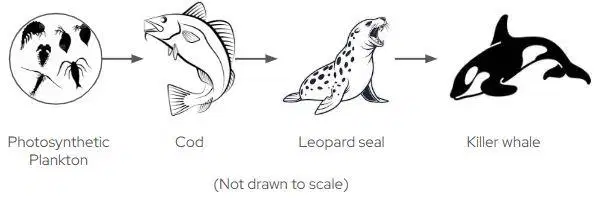
The diagram below shows a food chain. What do the arrows in the diagram represent?
a)
flow of energy
b)
one community replacing another
c)
life cycles stages
d)
renewable resources
96.
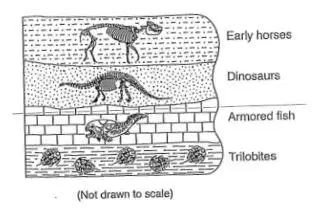
The diagram below represents a cross section of four sedimentary rock layers containing fossil remains. The layers have not been overturned. Which type of fossil is found in the most recently formed sedimentary rock layer?
a)
early horses
b)
dinosaurs
c)
armored fish
d)
trilobites
97.
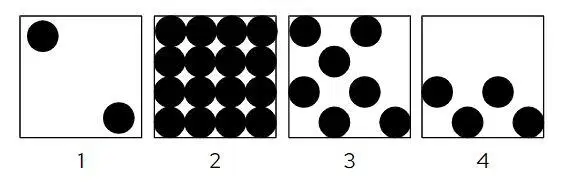
Which diagram best represents molecules of matter in the solid phase?
a)
1
b)
2
c)
3
d)
4
98.
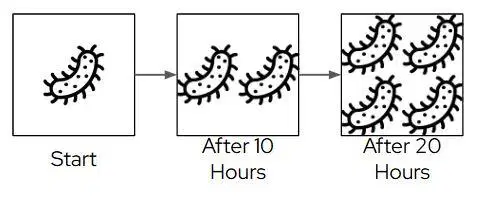
The series of diagrams below shows a single-celled organism and its offspring that resulted from cell division over a period of 20 hours. if the organism continue to reproduce asexually at this same rate, how many organisms will there be after 30 hours?
a)
6
b)
8
c)
7
d)
16
99.
A student examined a rock sample and described it as having particles of various colors that were 1 millimeter to 12 millimeters in size. The student was making ...
a)
an inference
b)
a prediction
c)
a hypothesis
d)
an observation
100.
Which structure is found in a plant cell but not in an animal cell.
a)
cell wall
b)
cytoplasm
c)
cell membrane
d)
nucleus