wayground logo

Free Printable Worksheets

Font size

S
M
L
XL
Worksheets

Organisms and Environment RC #4

Total questions: 101

Worksheet time: 3hrs 56mins

Name
Class
Date
1.
The living organisms in an ecosystem such as plants and animals
a)
adaptation
b)
biotic
c)
decomposer
d)
abiotic
2.
The non-living factors in an ecosystem such as rocks, water and temperature.
a)
natural selection
b)
biotic
c)
biodiversity
d)
abiotic
3.
Organisms that make their own food. Also called autotrophs.
a)
Producer
b)
Parasite
c)
Scavenger
d)
Decomposer
4.
Organisms that eat other organisms (heterotroph).
a)
Producer
b)
Parasite
c)
Consumer
d)
Scavenger
5.
Organisms that digest dead producers and consumers such as mold, fungus, bacteria and worms.
a)
Producer
b)
Parasite
c)
Decomposer
d)
Consumer
6.
Organisms, such as vultures, that feed on dead animals.
a)
Producer
b)
Scavenger
c)
Consumer
d)
Parasite
7.
Organisms that live in or on another organism and benefit at the host's expense.
a)
Parasite
b)
Producer
c)
Scavenger
d)
Decomposer
8.
Struggle between organisms of the same or different species for food, space, light, water, etc.
a)
Interdependence
b)
Natural Selection
c)
Adaptation
d)
Competition
9.
Process by which an animal or plant species becomes fitted to its environment to help them survive.
a)
Interdependence
b)
Natural Selection
c)
Adaptation
d)
Competition
10.
Photosynthetic plant that is the beginning of the food chain for many aquatic animals.
a)
Phytoplankton
b)
Parasite
c)
Producer
d)
Consumer
11.
Mutual dependence between organisms in order to help them survive.
a)
Competition
b)
Interdependence
c)
Adaptation
d)
Natural Selection
12.
Variety of life
a)
Natural Selection
b)
Ecological Succession
c)
Interdependence
d)
Biodiversity
13.
Gradual and orderly process of change in an ecosystem until a stable community is established.
a)
Ecological Succession
b)
Biodiversity
c)
Adaptation
d)
Competition
14.
Process by which organisms that are suited to a particular environment are better able to survive and reproduce than other organisms that are not.
a)
Ecological Succession
b)
Biodiversity
c)
Natural Selection
d)
Producer
15.

What is the word that describe a color or pattern that helps an animal blend in with its habitat For example, polar bears in the Artic

a)
Hibernation
b)
Locomotion
c)
Camouflage
d)
Migration
16.
An example of a behavioral adaptation is
a)
The long neck of a giraffe
b)
Penguins huddling together for warmth
c)
A camel's hump used to store water
d)
A polar bear's white fur used for camouflage
17.

An ______ includes all living and nonliving things together in an area.

a)

population

b)

ecosystem

c)

consumers

d)

producers

18.

A fire destroys all of the trees and plants in the forest. How might this affect the birds in the area?

a)

The birds will plant seeds and grow new trees.

b)

The birds will have more food to eat.

c)

The birds will plant seeds and grow new trees.

d)

The birds will have no place to build their homes.

19.

Changes to an environment may make it more difficult for an organism to find-

a)

food.

b)

shelter.

c)

water.

d)

all of the above

20.

When an environment changes and organisms can no

longer meet their basic needs they will most likely −

a)

thrive.

b)

perish.

c)

not be affected.

d)

none of the above

21.

Very little rainfall, hot weather, and cracked ground

describe which change to an environment?

a)

volcanic erruption

b)

landslide

c)

drought

d)

flood

22.
Insecticides are sprayed over a large area in an effort to reduce the number of grasshoppers that are eating the corn plants. How will this change affect this food chain? 
a)
The number of grasshoppers will increase
b)
The number of lizards will increase
c)
The number of lizards and hawks will decrease
d)
The number of grasshoppers, lizards, and hawks will decrease
23.
Scientists gathered the following data on lizard populations for several years. The results are shown in the table. Which environmental factor most likely contributes to the change in lizard population? 
a)
increase in available water and food
b)
increase in shelter
c)
increase in predators
d)
increase in light
24.

In which example does a nonliving factor affect an ecosystem?

a)

Insects destroy most of the trees in the forest

b)

A tornado uproots many trees in a neighborhood

c)

A beaver uses trees it cuts down to build a dam on a river

d)

People cut down trees to clear land for building homes.

25.

Which of the following would most likely result in a decrease in the population of insect-eating birds that build their nest on trees?

a)

Overhunting of animals that prey on birds

b)

Observation of birds by scientist

c)

Introduction of a new type of insect

d)

Clearing of forests to build a highway

26.

organisms that entered a new ecosystem and multiplied, hurting native species and their habitats

a)

overpopulation

b)

inpact

c)

restore (restoration)

d)

Invasive species

27.
If the population of prey increases, the population of predators will ________because of the availability of food.
a)
decrease
b)
stay the same
c)
increase
28.
What would cause a decrease in the rabbit population?
a)
An increase in grass growing
b)
A decrease in caterpillars
c)
An increase in owls
d)
An increase in fox
29.

When a change occurs in an environment, organisms will

a)

only adapt

b)

adapt, migrate, or die

c)

migrate or die

30.
 Copper interferes with photosynthesis algae and other aquatic plants.
What would be the most likely result of an accidental spill of these compounds in an aquatic environment?
a)
The fish would grow larger than usual.
b)
The zooplankton population would increase
c)
The plants would increase in size but decrease in number
d)
The plant populations would be reduced.
31.
_______________ are the living factors in an environment and may include food sources and other populations.
a)
Community
b)
Competition
c)
Biotic factors
d)
Population
32.
If a disease destroying barley plants in a field swept through an ecosystem, what would happen to the barley eating bird population in the the field ?
a)
The bird population would stay the same
b)
The bird population would infinitely increase
c)
The bird population would decrease
33.
Field mice eat corn. Which would most likely happen if the field mouse population grew?
a)
There would be more corn to feed the field mice.
b)
There would be less corn due to the mice eating it.
c)
The habitat would get overpopulated because the mice woudl eat too much.
34.

What is one way humans are trying to positively impact the ocean?

a)

Fishing

b)

Creating artificial reefs

c)

Harvesting oil and natural gas

d)

Transporting goods in ocean vessels

35.

Which of the following is associated with dead zones in the ocean?

a)

A decrease in nitrogen levels.

b)

An increase in oxygen levels.

c)

An increase in the number of fish.

d)

Runoff from fertilizers.

36.

How are phytoplankton similar to small trees?

a)

Both are at the top of the food chain

b)

Both conduct photosynthesis

c)

Both grow in soil

d)

Both are about the same size

37.

If your local environment begins to turn into a desert, what will most likely happen to the organisms in the environment?

a)

The populations of organisms currently existing in the environment will increase.

b)

The populations of organisms currently existing in the environment will not be affected.

c)

The new desert environment will be unable to support any populations of organisms.

d)

A different variety of organisms will be supported rather than the ones that currently exist.

38.

Which statement best describes the comparison of lake and ocean environments?

a)

The lake and ocean environments support the same organisms because they are both water and are made up of the same elements.

b)

The lake and ocean environments support different organisms because most freshwater organisms cannot live in saltwater.

c)

The lake and ocean environments support the same organisms, but they will look different because of the type of water.

d)

The lake and ocean environments support different organisms because ocean organisms are blocked by land from getting into lakes.

39.

The more diverse an ecosystem is --

a)

the more threatened its populations are

b)

the more similar the species will be

c)

the more sustainable it is

d)

the fewer varieties of species are present

40.

A flower bed is created at a school so flowers can be planted in the autumn.


Over the summer, the flower bed is ignored. Which of the following should the students expect to find when they come back to school?

a)
b)
c)
d)
41.

In2011,firesinBastropCounty,Texaswerethemostdamaging wildfires in Texas history. The fire spread through the pine trees and scorched nearly 5,700 acres of Bastrop State Park. The majority of the Houston toad’s habitat was lost, and the Lost Pines Forest was greatly affected.


As ecological succession began, which of these most likely appeared in

the Bastrop forest area first?

a)

Shrubs and trees

b)

Newly developed topsoil

c)

Weeds and grasses

d)

Lichens on fallen trees

42.

What is the first thing to grow on rocks in Primary Succession?

a)

Moss

b)

Plants

c)

Lichen

d)

Trees

43.

What is the Final Stage of Primary Succession?

a)

Tall Trees begin to grow and Grass Cannot

b)

Smaller Trees are growing

c)

Ferns being to grow

d)

Flowers are growing

44.

The Change in an Ecosystem to create Balance is called

a)

Photosynthesis

b)

Succession

c)

Homeostasis

45.

A species that is the first to colonize areas beginning primary succession after a volcanic eruption or glacier scraping the land is called?

a)

Species Diversity

b)

Biodiversity

c)

Species

d)

Pioneer Species

46.

An Example of Pioneer Species is:

a)

Lichen and Moss

b)

Trees

c)

Flowers

d)

Pinapples

47.

Would it be better to have more or less Producers for Biodiversity?

a)

More

b)

Less

48.

If there are multiple Birds with Different Beaks What is the advantage behind the ecosystem?

a)

It allows for great diversity among the birds, allowing the population to survive even if there is a ecological change.

b)

It allows the birds the ability to help other birds gather food.

c)

It enables the birds to invade the habitats of other organisms to gather food.

d)

It gives birds the ability to change their diet from year to year depending on available food.

49.

Secondary Sucession

a)

Has Rock to Start

b)

Has Soil to Start

50.

Which of these are Microhabitat?

a)

1,3

b)

1,2

c)

1,2,3

d)

All of the Above

51.

Can fish that are Saltwater live in fresh Water?

a)

Yes

b)

No

52.

A plant with broad, flat leaves is BEST adapted for

a)

conserving heat in a tundra

b)

collecting water in a desert

c)

avoiding insects in a prairie

d)

absorbing light in a rainforest

53.

Animals and plants have certain features which make them to survive in a particular habitat. This is called

a)

adaptation

b)

speciation

c)

specialisation

d)

evolution

54.

Which is a biotic component of environment?

a)

Plants

b)

Animals

c)

Microorganisms

d)

All of these

55.

What are the characteristics of a desert plant?

a)

No leaves or very small leaves

b)

Spines

c)

Deep roots

d)

All of these

56.

Soil, water and air are ……………… components of a habitat.

a)

Biotic

b)

Solid

c)

Abiotic

d)

Liquid

57.
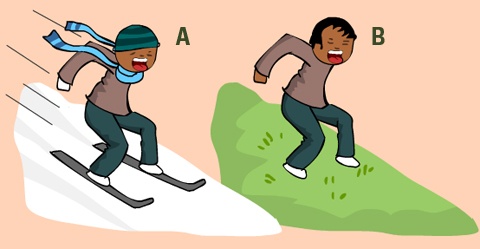
Why is it harder for the boy in Image B to get down the hill?
a)
Motion
b)
Friction
c)
Work
d)
Displacement
58.
Which force produces a change in motion?
a)
unbalanced force
b)
balanced force
c)
gravitational force
d)
frictional force
59.
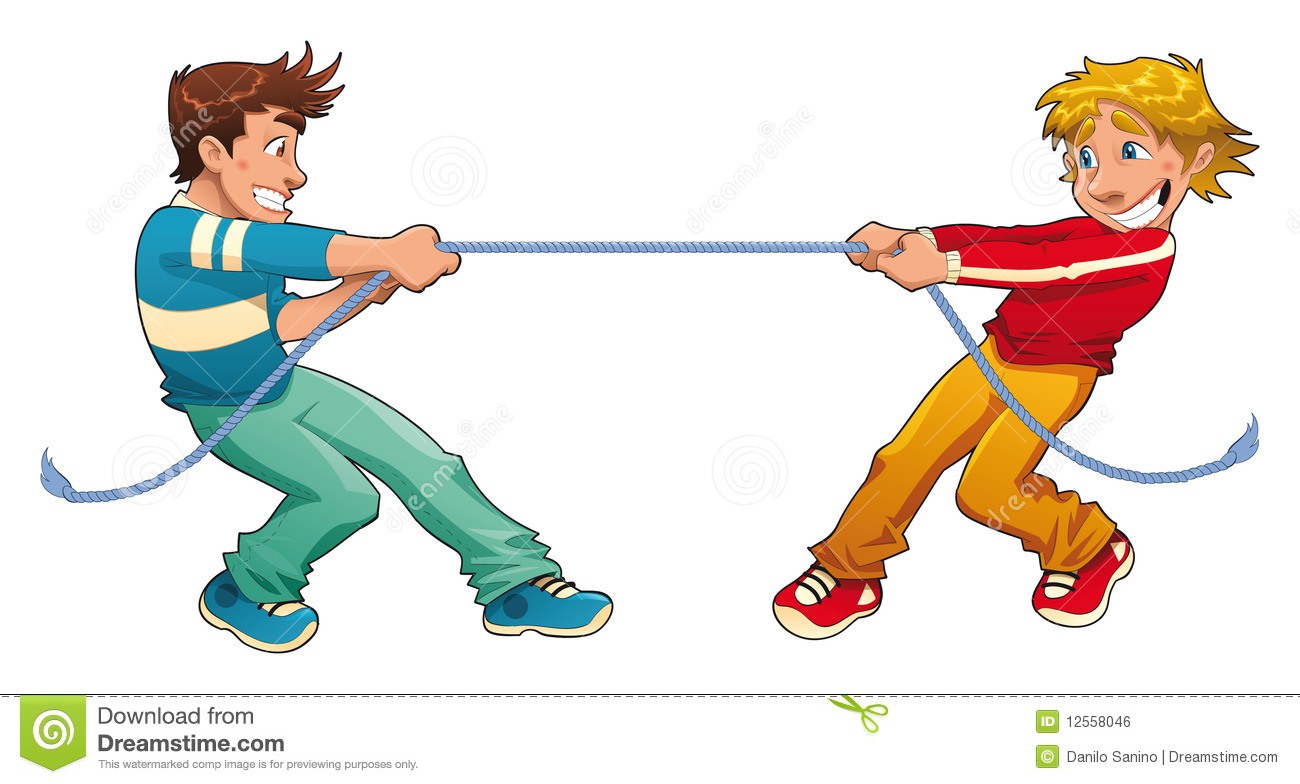
If these boys are pulling with the same amount of force.  What will happen?
a)
The boy in blue will win.
b)
They will not move at all.
c)
The boy in red will win.
d)
Both will fall down.
60.
Which of the following statements is true? 
a)
Balanced forces cause a change in motion. 
b)
Unbalanced forces cause a change in motion. 
c)
Forces do not effect the change in motion. 
61.
How could you change the height of an object to increase GPE (gravitational potential energy)?
a)
Make the object larger
b)
Lower the object towards the ground
c)
Raise the object farther off the ground
d)
Make the object smaller
62.
How could you change the mass of an object DECREASE GPE (gravitational potential energy)?
a)
Decrease the object's mass
b)
Increase the object's height
c)
Increase the object's mass
d)
Decrease the object's height
63.
Gravitational potential energy depends on the ________ and ________ of the object. 
a)
Height and mass
b)
Friction and movement
c)
Mass and Movement
d)
Height and Friction 
64.
What is the net force?
a)
400 N Up
b)
400 N Down
c)
- 400 N Down
d)
800 N Down
65.
Where do hot spots occur? 
a)
Boundaries of earths tectonic plates
b)
At the peak of the volcano
c)
in a geyser 
d)
in the middle of tectonic plates
66.
Which island was formed by a hot spot? 
a)
Bahamas
b)
Fiji 
c)
Hawaii 
d)
The Philippians
67.
What occurs when faults slip past each other? 
a)
 earthquakes   
b)
hot springs
c)
 volcanoes and geysers 
68.
Which of the following is the MAIN cause of a tsunami? 
a)
Earthquakes      
b)
Hurricanes
c)
Ocean Vents
69.
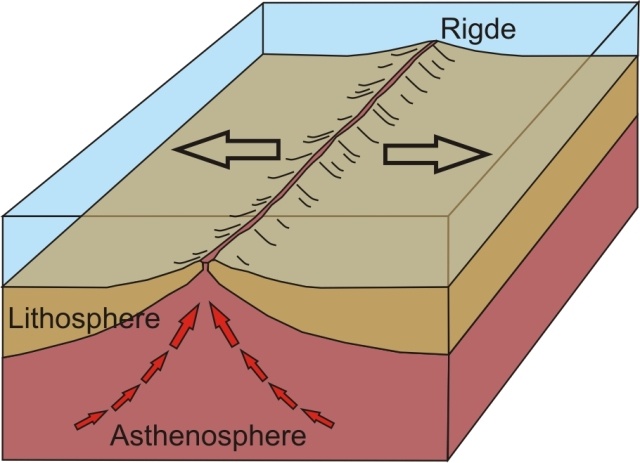
What kind of plate boundary is shown here?
a)
divergent
b)
convergent
c)
transform
d)
subducting
70.
What kind of plate boundary is shown here?
a)
divergent
b)
convergent
c)
transform
d)
submergent
71.
What kind of plate boundary is shown here?
a)
divergent
b)
convergent
c)
transform
d)
strike slip
72.
What type of plate boundary creates deep ocean trenches? 
a)
Convergent: continent to continent
b)
Convergent: ocean to continent 
c)
Divergent: ocean and ocean
d)
Divergent: land and land
73.
A subduction zone is formed...
a)
when one tectonic plate sinks below another
b)
at every type of convergent plate boundary
c)
at every type of divergent plate boundary
d)
at transform boundaries
74.
In which type of boundary do the plates move away from each other?
a)
convergent
b)
normal
c)
divergent
d)
transform
75.
Plates slide past one another at ____________ boundaries.
a)
divergent
b)
convergent
c)
transform
d)
submergent
76.
Plates move towards one another at ______________ boundaries.
a)
divergent
b)
convergent
c)
transform
d)
detergent
77.

When alleles are different (ex: Yy)

a)

heterozygous

b)

dominant

c)

homozygous

78.

When alleles are the same (ex: YY or yy)

a)

heterozygous

b)

recessive

c)

homozygous

79.

the physical look of a trait (what do you see?)

a)

phenotype

b)

genotype

c)

allele

80.

the genetic code for the gene (YY, Yy, yy)

a)

phenotype

b)

genotype

c)

allele

81.

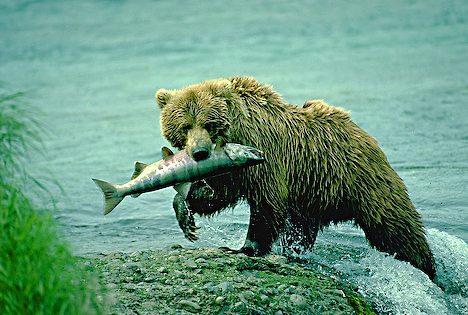
A grizzly bear survives because he is well-adapted to his environment. When he reproduces he passes those desirable traits to his offspring. This process is called...

a)

Natural Selection

b)

Selective Breeding

c)

Random mutations

d)

Variations in a species

82.

If Easter eggs were living species of organisms, their different colors would be considered:

a)

Adaptations

b)

Variations

c)

Different species

d)

Extinct species

83.

The peppered moth's color camouflaged it on the light colored tree bark. It's color was an example of a/n

a)

Variation

b)

Dominant trait

c)

Recessive trait

d)

Adaptation

84.

Why might it be helpful for a species to have a lot of variations?

a)

They can't be seen by predators

b)

If the environment changes, they might be better able to adapt

c)

It is helpful in asexual reproduction

d)

They don't recognize each other

85.

Which beak is probably best suited to crack open nuts?

a)

1

b)

2

c)

3

d)

4

86.
small islands made of sediment called deltas form at the end of rivers
a)
Mechanical Weathering
b)
Chemical Weathering
c)
Erosion
d)
Deposition
87.
A stream widens into a river over time as the sides get worn away
a)
Mechanical Weathering
b)
Chemical Weathering
c)
Erosion
d)
Deposition
88.
Removing Sediment from a location
a)
Mechanical Weathering
b)
Chemical Weathering
c)
Erosion
d)
Deposition
89.
Adding sediment to a location
a)
Mechanical Weathering
b)
Chemical Weathering
c)
Erosion
d)
Deposition
90.
Water gets into cracks of a rock, when the water freezes it breaks up the rock
a)
Mechanical Weathering
b)
Chemical Weathering
c)
Erosion
d)
Deposition
91.
Which layer of the Earth is the most dense?
a)
crust
b)
mantle
c)
inner core
d)
outer core
92.
The soft layer of the mantle on which the tectonic plates move
a)
Asthenosphere
b)
Outer Core
c)
Mantle
d)
Mesosphere
93.
What is the thinnest layer of the earth’s composition?
a)
mantle
b)
inner core
c)
crust
d)
outer core
94.
The solid, outer layer of the Earth that consists of the crust and the rigid upper part of the mantle
a)
Lithosphere
b)
Mesosphere
c)
Mantle
d)
Crust
95.
Temperature _____________________ as you go deeper into the earth.
a)
increases
b)
decreases
c)
goes up and down depending on the layer
d)
stays the same
96.
Pressure ______________________ as you go deeper into the Earth
a)
increases
b)
decreases 
c)
goes up or down depending on the layer
d)
stays the same
97.
What are the two kinds of crust that the Earth has?
a)
Oceanic and Crustatious Crust
b)
Oceanic and Continental Crust
c)
Optic and Continental Crust
98.
Why does sexual reproduction result in more genetic diversity than asexual reproduction? 
a)
Traits from two parents are combined. 
b)
More organisms reproduce this way. 
c)
Offspring grow in different environments. 
d)
Offspring come from identical parents. 
99.
Organisms that reproduce asexually generally have offspring that are 
a)
unicellular. 
b)
multicellular. 
c)
genetically varied. 
d)
genetically identical. 
100.

Heat transfer by convection is caused by differences in what two things:

a)

Thickness and material

b)

Weight and electricity

c)

Temperature and density

101.
Earthquakes release these which let us study what the Earth is made out of
a)
Tectonic Plates
b)
Seismic Waves
c)
Plateaus
d)
P Waves