
 Worksheets
Driver's Ed. Final Review
Total questions: 80
Worksheet time: 40mins
Statistics indicate that alcohol is a significant factor in fatal motor vehicle crashes for individuals between 15 and 24 years of age.
False
True
What percent of all driving fatalities involved alcohol use by the driver?
19%
29%
39%
49%
59%
What does BAC stand for
Breath Alcohol Content
Blood Alcohol Concentration
Blood and Crack
Beer Alcohol Consumed
On the average, a person;s BAC is lowered only ____ per hour.
.15
.1
.02
1.15
.015
A psychological factor that is related to the consumption of alcohol is:
Judgment/Reason
Attention
Memory
Emotions
All of the above
Marijuana is the most often found drug in drivers involved in crashes.
False
True
A bad effect of marijuana is
Loss of tracking ability
Divided attention
Decreased vigilance
Impaired distance judgement
All of the above
A proper way to dlay fatigue while driving is
Get angry
Continue to drive without changing drivers
Properly adjust the heater/air conditioner
Consume caffeine
Emotions that effect driving are
All choices
Anger
Joy
Fear
Hate
When confronted with a driver that shows signs of Road Rage, you should
Use your vehicle to attach the other driver
Drive away from the area if possible
Yell or confront the driver
Stay in the area of the Road Rage
When encountering fog, heavy rain, smoke or blowing snow, you should
A. Turn on low beam headlights
B. Turn on emergency flashers
C. Turn on high beam headlights
D. Both A & C
E. Both A & B
If you encounter a strong wind gust, you should
Reduce speed
Stay always in the right lane
Use the brake often
Increase speed
Enhanced control is provided through technologies such as
Electronic Stability Program
Anti-lock Brakes
Traction Control
Suspension
All Choices
Crumple Zones protect the _____ by allowing structures to collapse at different rates and spreading forces over a wider area.
Engine
Occupants
Electronics
Transmission
When avoiding any type of collision, it is best to
Hit something hard, rather than something soft
Hit stationary object with a direct hit
Drive off the road rather than skid off the road
Hit something stationary
There is less traction between a rolling wheel and the road than there is between a sliding wheel and the road
False
True
When detecting traction loss, jabbing the brake may be necessary in case the ______ lose(s) traction to allow rolling traction to regain control.
Rear wheels on a front wheel drive car
Front wheels on a front wheel drive car
Left rear wheel
Right Rear Wheel
Actions of the driver that may result in loss of traction include
A. Sudden steering action on a slippery surface
B. Abrupt or sudden changes in vehicle speed
C. Panic stops or applying brakes too hard on a hill
D. Both A & C
E. A, B, & C
When you hydroplane, you should
Speed up & steer where you want the car to go
Speed up & steer into the skid
Reduce speed & steer into the skid
Reduce speed & steer where you want the car to go
None of the answers
If you find yourself in a skid, you need to
Look for an open path & release the accelerator/brake to regain balance & control
Release the accelerator pedal
Pump the brakes & increase your speed to steer out of the situation
Steer into the skid, even if it is not where you want to go
Red symbol lights on the dashboard of the vehicle indicate
Have the problem repaired with a reasonable time
Stop as soon as possible & have the problem repaired
No problems, most likely a defective indicator light
Stop immediately & check for problem
If a temperature light or gauge on the dashboard indicates a problem, you should
have the problem repaired within a reasonable time
stop as soon as possible & have the problem repaired
No problems, most likely a defective indicator light
stop immediately & check for problem
If a tire blows out while driving, you should
Brake hard, & have a gentle but firm grip on the steering wheel
Increase speed, keep at least one hand on the wheel & use the brake to slow the vehicle down
Grip the steering wheel firmly, keep your foot off the accelerator & do not use the brake
Stop immediately & check for problem
If you experience brake failure, you should
A. Rapidly pump the brakes
B. Shift to a lower gear
C. Use the parking brake method to slow or stop the vehicle
D. Only A & C
E. Rapidly pump the brakes, shift to a lower gear & use the parking brake method to slow or stop
If the engine starts to overheat, you need to
Turn on the AC to cool down the engine
Turn on the heat to draw heat off the engine
Stop, life up the hood & immediately check the radiator for coolant
Increase your speed to draw cool air into the motor intakes
If you were to have a power steering failure, you will not be able to steer the vehicle
False
True
Blind spots on tractor trailers are called the
No entrance areas
No drive slots
No zones
Trucks don't have blind spots
The major cause of mishaps at railroad crossings is
Inattention
No Warning Signs
Drivers ignore warning signs
All Choices
When following an automobile pulling a 20' trailer you should use which of the following distance rules:
3 seconds
6 seconds
9 seconds
12 seconds
15 seconds
Bicyclists must follow the same traffic laws as vehicles
False
True
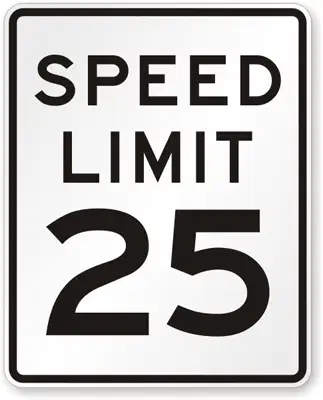
What does this sign mean?
Minimum speed is 25 in all weather conditions
Maximum speed is 25 in all weather conditions
Minimum speed is 25 in ideal conditions
Maximum speed is 25 in ideal conditions
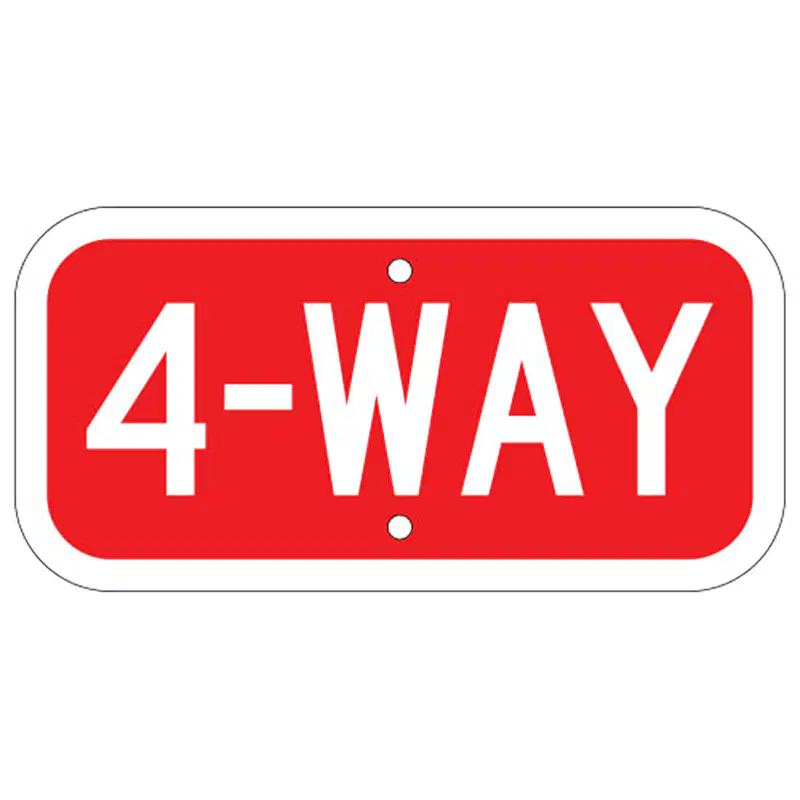
What does the sign mean?
Four-lane highway
Four-way intersection ahead
Four-way stop
Cars, trucks, motorcycles, & bicycles permitted

What does this sign mean?
Dead end ahead
Restricted roadway ahead, traffic prohibited
Pedestrians only, motor vehicles prohibited
Construction ahead, motor vehicles prohibited

What does this sign mean?
No parking allowed
No partying
No pedestrians allowed
No Passing
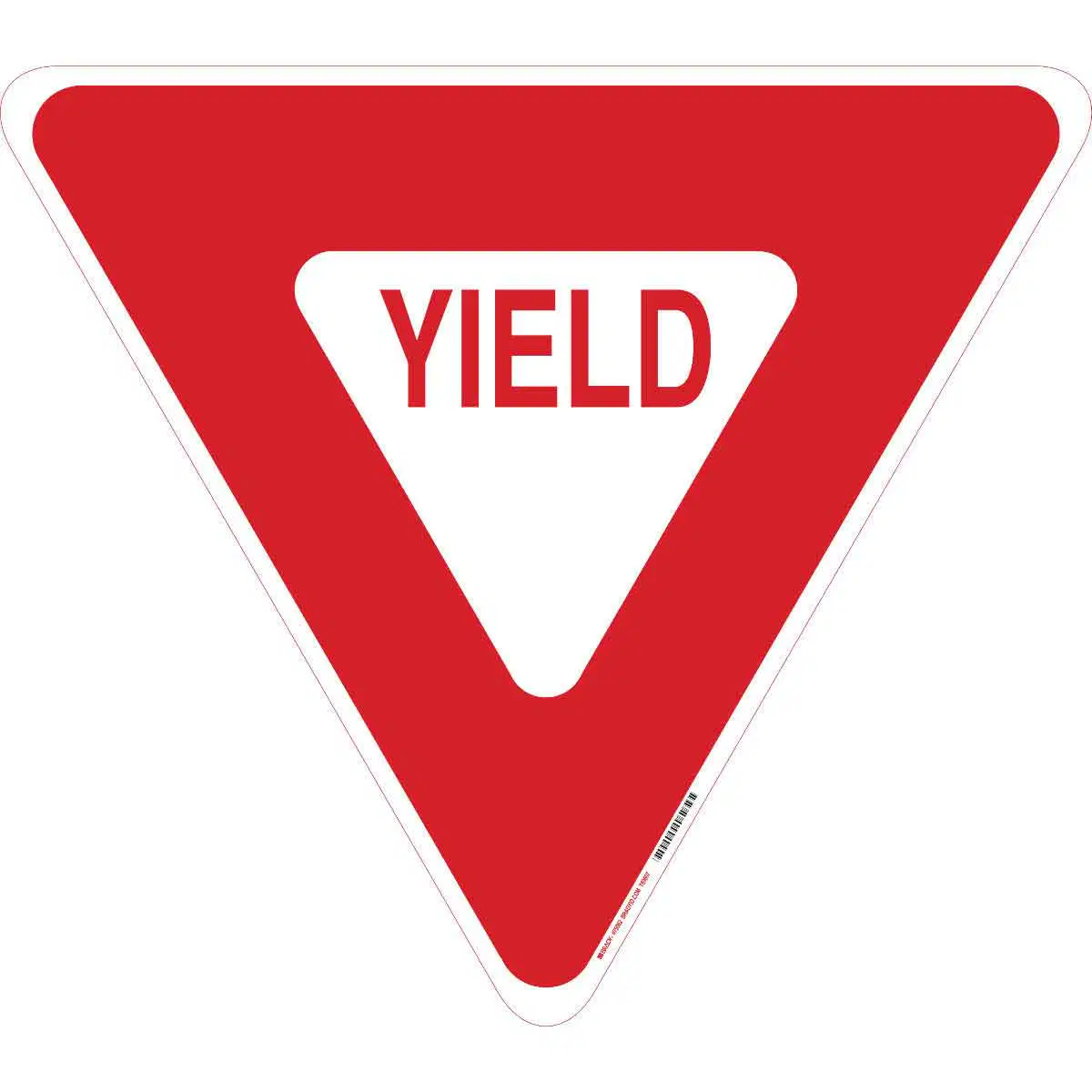
What does this sign mean?
Slow down & prepare to stop if necessary
Come to a complete stop at the intersection
Proceed ahead & maintain a constant speed
Stop for emergency vehicles

What does this sign mean?
Lane reserved for pedestrians
Bicycles ahead, proceed with caution
Land reserved for motorcycles
Lane reserved for bicycles

What does this sign mean?
School crossing ahead
School zone ahead
Pedestrian crossing
Church crossing

What does this sign mean?
Winding road ahead
Right curve ahead
Right turn ahead
Merging traffic from right lane to left
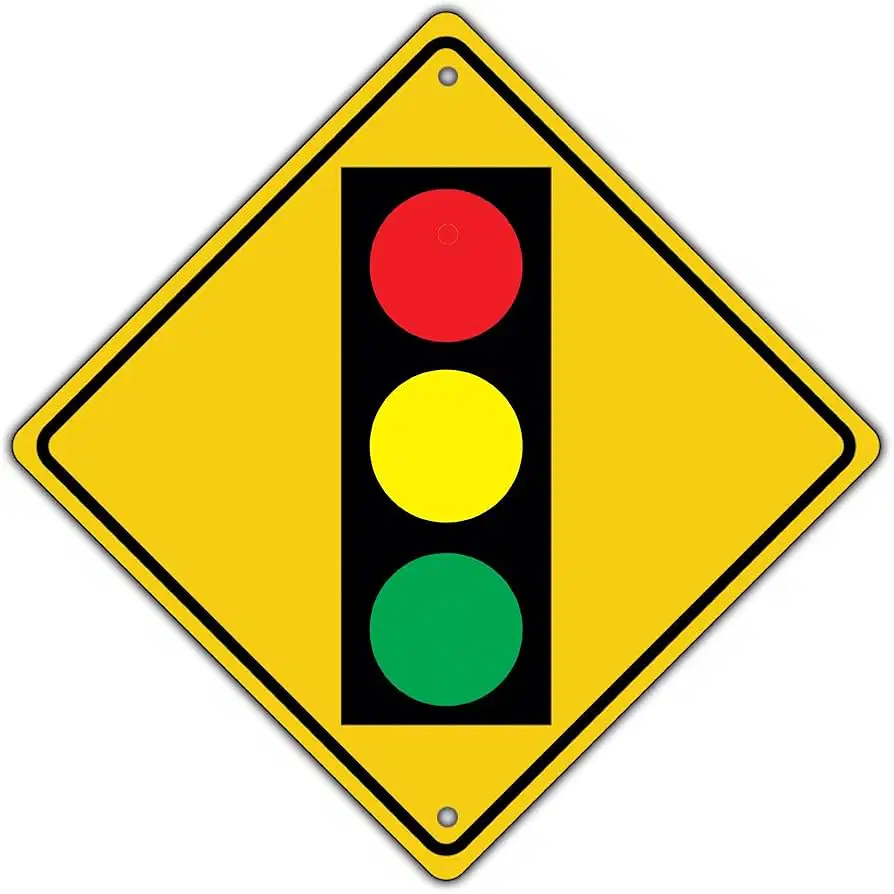
What does this sign mean?
Continue at your current speed
You must stop ahead
Speeding is not allowed
Traffic signal ahead

What does this sign mean?
This way is one of the many way you may travel
There is one road way to take
The first thing you should do when entering you vehicle is
Place the key in the ignition
Close all the doors & lock the vehicle
Secure your seatbelt
Adjust the radio
Statistics show that being thrown from a vehicle increases your chance of death by
25%
50%
75%
83%
If you see a yellowish green colored fluid under the engine area of the car it is most likely
transmission fluid
radiator fluid
brake fluid
engine oil
If you see a black colored fluid under the engine area of the car it is most likely
transmission fluid
radiator fluid
brake fluid
engine oil
The tope of the headrest should be properly adjusted to prevent critical injuries to your neck & spine.
False
True
Which sign type is not a Regulatory Traffic sign?
Stop sign
Yield sign
Pedestrian Crossing sign
Do Not Enter sign
The only legal way to pass a stopped school bus is
roadway without a physical barrier
roadway with a physical barrier down the center
no traffic on the roadway
traffic ahead of you doesn't stop
You should signal for a turn at least _____ or _____ ahead of the turn.
3 to 4 seconds or 100 feet
6 seconds or 100 feet
3 to 4 seconds or 150 feet
6 seconds or 150 feet
Drivers in low traffic volume areas fail to stop for stop signs ______
80% of the time
85% of the time
90% of the time
95% of the time
There should be at least _____ inches between the driver's body and the steering wheel.
8
10
12
14
An _____ searching process will need to start from the Visual Lead Area.
Organized
Interrupted
Unrestricted
Increasing Visual Lead Time will
Allow for more time to gather information
Lengthen your trip time
Increase chances for abrupt driver responses
A Visual Lead Zone is an area _____ seconds from the front of the vehicle.
5 -10
10-20
25-35
20-30
Under normal conditions, a response time for your hands to react is _____ of a second.
0.1
0.25
0.5
0.75
1 second
Under normal conditions, a response time with your foot to react is _____ of a second.
0.1
0.25
0.5
0.75
1
Most crashes result from a change in the driver's ability to control sightline, or travel path & driving into a threatening situation.
False
True
Lane changes could occur in response to
Danger
Traffic Conditions
Roadway conditions
Vehicle balance
All Choices
The distance down the road you need to look for possible changing driving conditions (20-30 seconds) is which Visual Search Category?
Follow Interval
Potential Immediate Crash Zone
Response Zone
Visual Control Zone
Visual Lead Zone
The zone where you must take necessary actions to reduce collision risks (8-12 seconds away) is which Visual Search Category?
Following Interval
Potential Immediate Crash Zone
Response Zone
Visual Control Zone
Visual Lead Zone
The safe following and being followed interval that you should maintain between your vehicle and vehicles to the front and to the rear is the _____ Search Category?
Following Interval
Potential Immediate Crash Zone
Response Zone
Visual Control Zone
Visual Lead Zone
This zone (12-20 seconds away) is where you identify objects/conditions that require a response or continuous attention.
Following interval
Potential Immediate Crash Zone
Response Zone
Visual Control Zone
Visual Lead Zone
When turning at an intersection you should signal your intent to turn ____ to ____ seconds or ____ feet in advance of the turn.
3 to 4, 100
4 to 6, 100
5 to 7, 75
6 to 8, 75
When parking on an upgrade with a curb, you must stop parallel to and within _____ inches of the curb.
24
12
8
15
When parking on a downgrade with/without a curb, you must turn the steering wheel sharply _____ the edge or curb side of the roadway while moving slowly forward.
Away
Toward
If you enter a perpendicular angle parking space you need to position you vehicle _____ to _____ feet from the rear space you want to enter.
3 to 5
5 to 7
8 to 9
10 to 12
Whether first in line or in a line of vehicles, you should develop the habit of checking traffic and counting to _____ before moving.
2
3
4
5
6
Your lane and position options are dependent upon open and or closed sightlines and paths of travel as they apply in any given situation.
False
True
Highway travel lanes are _____ feet wide.
20-24
10-12
12-15
8-12
15-18
Most cars are less than _____ feet wide.
9
8
7
6
5
On streets that have sidewalks but no painted crosswalks, crosswalks are still considered to be there.
False
True
Expressways have a low frequency of collisions, but may have a high severity rate when a collision occurs because of the higher speeds.
False
True
Safety design features of a roadway include
Rumble strips
Median barriers
Breakaway sign support
New guard rails
All choices
Regulatory signs include what colors
yellow, black, and white
green, white, and brown
red, white, and blue
black, red, and white
A red arrow over a lane means
Travel in that lane is about to change or close
the lane is closed or prohibited
the lane is open for travel
In urban, congested areas, on a freeway passing through a city, speed limits are usually
45 MPH
50 MPH
55 MPH
65 MPH
70 MPH
An average number of miles that you should travel between breaks (every two hours) is _____.
100-110
150-160
175-200
155-165
190-200
When traveling by yourself, you should only drive _____ to _____ hours per day.
4-5
5-7
6-8
7-9
10-12
When driving a motor vehicle, the yellow line should always be on your _____ side.
Left
Either
Right
A "weave lane" is used as both an entrance and an exit for an expressway.
False
True
While on an expressway under optimal conditions, you should maintain at least a _____ to _____ second following distance.
3-4
4-8
8-10
10-12

