
Font size
 Worksheets
7th Grade Final Exam
Total questions: 123
Worksheet time: 2hrs 23mins
A source created about an event or time-period by someone who was there
Primary
Secondary

A Native American's journal that describes what it was like to meet white settlers for the first time
Primary
Secondary

A report about the life of Abraham Lincoln written by a 5th grade student
Primary
Secondary

The Declaration of Independence is a
Primary Source - True or False?
True
False
What is a secondary source
information that comes directly from a person or source
information that is a summary of another source

Is a textbook a primary or secondary source?
primary source
secondary source
Which of the following is NOT a natural resource?
Clothing
Cotton
Water
Rocks
What is a natural resource?
A nonliving substance found in the environment
A living thing found on Earth
A living or nonliving thing that exists "naturally" in the world
A material that is not normally found in the environment
Which is an adaptation of Native Americans living in a cold region?
making clothes out of fur from animals
traveling by horse
making furniture out of grass from fields
clearing land to plant corn
True or False....
Native American relied on their environment for their survival.

What type of shelter is this?
longhouse
totem
teepee
sapling home
One reason why groups of Native Americans often developed different cultures was that each group
came to America from other parts of the world
adapted to their environment in a different way
had to follow written traditions
wanted to be different from other groups
Which is an example of how the Iroquois used their environment for their survival
using mud bricks to build pueblos
using ice to build igloos
using trees to build longhouses
using palm leaves to build roofs
The primary reason the Iroquois formed a confederacy was to
improve trade
hunt more efficiently
promote peace
improve travel
Why was the Iroquois Confederacy formed?
to establish treaties with white colonial governments
to create a system of free trade
to establish peace between the five Iroquois tribes
to establish common rules and regulations for all tribes
Who was one of the founders of the Haudenosaunee (Iroquois) Confederacy?
Hiawatha
Jigonsaseh
The Peacemaker
Tadodaho
A patron of explorers; established navigation school to encourage exploration
Hernan Cortes
Prince Henry the Navigator
Christopher Columbus
Prince Vasco de Gama
The New World refers to the continents of
Europe, Africa, and Asia
North and South America
Australia and Antarctica
Antactica
The Old World refers to the continents of
North and South America
Australia
Europe, Africa, and Asia
Antarctica
Northwest Passage: an all (a) _ route through or around North America.
Northwest Passage: an all water route through or around (a) America.
Which colony was first founded by the Dutch?
New York
Delaware
New Jersey
Georgia
The part of the Triangle Trade route during which enslaved people were transported to the Americas.
slave ports
Triangle Trade
Middle Passage
plantation
A term for the trade routes of Europe, Africa and the Americas during Colonial times.
Triangle Trade
Middle Passage
cash crops
manufactured goods
3 sided trade route between the 13 Colonies, the West Indies, and Africa; included the slave trade
mercantilism
charter
triangular trade
cash crop
the representative asembly in colonial Virginia
Mayflower Compact
royal colony
House of Burgesses
Snow White
What was the 1st representative legislature?
Fundamental Orders of Connecticut
House of Blues
Virginia House of Burgesses
Massachusetts House
A religious group who wanted to purify the Church of England. They came to America for religious freedom and settled Massachusetts Bay Colony.
Catholics
Quakers
Pilgrims
Puritans
A Quaker that founded Pennsylvania to establish a place where his people and others could live in peace and be free from persecution
Anne Hutchinson
John Winthrop
William Penn
Roger Williams
Disagreed with the Puritan Church in Massachusetts Bay Colony. Banished from the colony and later helped in the formation of Rhode Island.
Anne Hutchinson
John Winthrop
William Penn
Roger Williams
Jamestown is the first _______________ settlement.
Irish
English
Welsh
Royal

Pick the word from the list below that most affected the way colonies set up thier economies:
geography
religion
culture
tradition
How many regions were the original 13 colonies divided into?
three
five
New England, Middle and _____ were the three regions that made up the thirteen colonies.
Southern
Western
Which of the following colonial regions relied heavily on agriculture?
Southern Colonies
Middle Colonies
New England Colonies
Northern Colonies
Which of the following colonial regions had plantations and cash crops?
New England Colonies
Middle Colonies
Southern Colonies
Which of the following colonial regions had family farms and fishing?
New England Colonies
Middle Colonies
Southern Colonies

What was the main idea behind mercantilism?
Colonies existed to make a profit for their mother country
Colonies were used to house prisoners from the mother country
Colonies were allowed to do whatever they wanted
Colonies were setup to help with overpopulation in the mother country
What was the Proclamation Line of 1763?
A declaration of independence for the American colonies
A military alliance with Native American tribes
A trade agreement between the colonies and Britain
A boundary marked in the Appalachian Mountains

What was the main purpose of the Proclamation of 1763?
To tax the American colonists
To organize the North American territories
To prevent the colonists from settling west of the Appalachian Mountains
To declare independence from Great Britain
The John Peter Zenger case set the precedent (example) for freedom ___.
What was a significant economic impact of the French and Indian War on Britain?
Increased trade with France
Discovery of new gold mines
Decrease in colonial taxes
Massive war debt
The British were in debt after the French and Indian War, and because they believed the war had been fought for the colonist's benefit, they began to tax the colonists in order to pay off the debt.
True
False

What is the meaning of the political cartoon 'Join or Die'?
The cartoon was a call to action for the colonies to separate and form their own countries.
The cartoon was a call to action for the colonies to surrender to the British.
The cartoon was a call to action for the colonies to unite and work together for their common defense.
The cartoon was a call to action for the colonies to remain divided and weak.

The colonists resented the passage of taxation laws because they had no representation in England, and did not give their consent
true
false
The person who said this
is most likely a...
"The colonists can't govern themselves. They need the king to guide them."
Patriot
Loyalist
The person who said this is most likely a...

What happened during the Boston Tea Party?
Unarmed Colonists were fired on and killed by British Soldiers
Angry Colonist threw crates of tea into the harbor
Ships carrying tea were burned and sank
Ships full of tea were robbed and distributed to the people of Boston
What was the purpose of the Tea Act?
A. To lower taxes on tea for the American colonists
B. To save the British East India Company from financial ruin
C. To increase revenue for the British government
D. To gain control over the tea trade in the American colonies
How did the American colonists respond to the Tea Act?
A. They boycotted all tea imports
B. They continued to buy smuggled tea
C. They protested and dumped tea into the harbor
D. They supported the British East India Company
2. Who wrote 'Common Sense'?
Ben Franklin
Thomas Jefferson
Thomas Paine
·Common Sense was a pamphlet Thomas Paine published to distribute in the colonies to...
explain to Britain why they should end the quartering act
influence more people to join the independence movement.
to join the Loyalist party
abide by the Intolerable acts

What event does this drawing show?
Boston Massacre
Boston Tea Party
Which set of events is in the correct chronological order?
Boston Tea Party --> Declaration of Independence --> French and Indian War
French and Indian War --> Boston Tea Party --> Declaration of Independence
Declaration of Independence --> French and Indian War --> Boston Tea Party
French and Indian War --> Declaration of Independence --> Boston Tea Party
What was one way women contributed to the American Revolution?
By serving as generals
By voting in elections
By providing food and medical care to soldiers
By writing the Declaration of Independence
A camp followers were women and sometimes their children who followed their husbands into the camps and helped out.
True
False
Who had one of the best navies in the world?
British Army
Colonial Army
Who was fighting in the American Revolution for their freedom from King George III and Great Britain.
British Army
Colonial Army
Who won the American Revolution?
British Army
Colonial Army
Far away from supplies and fresh troops
Continental Advantage
British Advantage
Continental Disadvantage
British Disadvantage
Small, weak army and navy
Continental Advantage
British Advantage
Continental Disadvantage
British Disadvantage
Large, well trained army
Continental Advantage
British Advantage
Continental Disadvantage
British Disadvantage
Hired German “Hessians” To increase army size
Continental Advantage
British Advantage
Continental Disadvantage
British Disadvantage
Fighting to defend home, family and beliefs
Continental Advantage
British Advantage
Continental Disadvantage
British Disadvantage
Which battle is considered the turning point of the American Revolutionary War?
Battle of Bunker Hill
Battle of Yorktown
Battle of Saratoga
Battle of Trenton
The introduction to the Constitution is called the ___.
Articles of Confederation
Declaration of Independence
Bill of Rights
Preamble


An agreement that Congress should be composed of a Senate, with States represented equally, and a House, with representation based on a State’s population...
Commerce and Slave Trade Compromise
Great Compromise
New Jersey Plan
Virginia Plan
The third amendment....
Prohibits clowns from living on/ in your home or private property.
ALLOWS soldiers to take over your home.
Answer not available.
Prohibits soldiers from temporarily residing (quartering) in private homes without owner's permission.

Actions that Washington did which set examples for future presidents were known as...
Presidents
Antecedents
Participles
Precedents
The first president set many precendents. What is a precedent?
an example to follow
another way to spell president
a gift you receive on your birthday
a change in the constitution
George Washington believed Political Parties were beneficial to the nation
True
False
What was George Washington's advice on Foreign Policy?
The Nation should remain neutral and avoid permanent alliances
The Nation should end slavery
The Nation should expand from East to West
The Nation should colonize Latin America
The Purpose of the Farewell Address was to....
leave advice for the country and next president
help Congress create a new constitution
decide how representation would be decided
decide how many votes each state would get
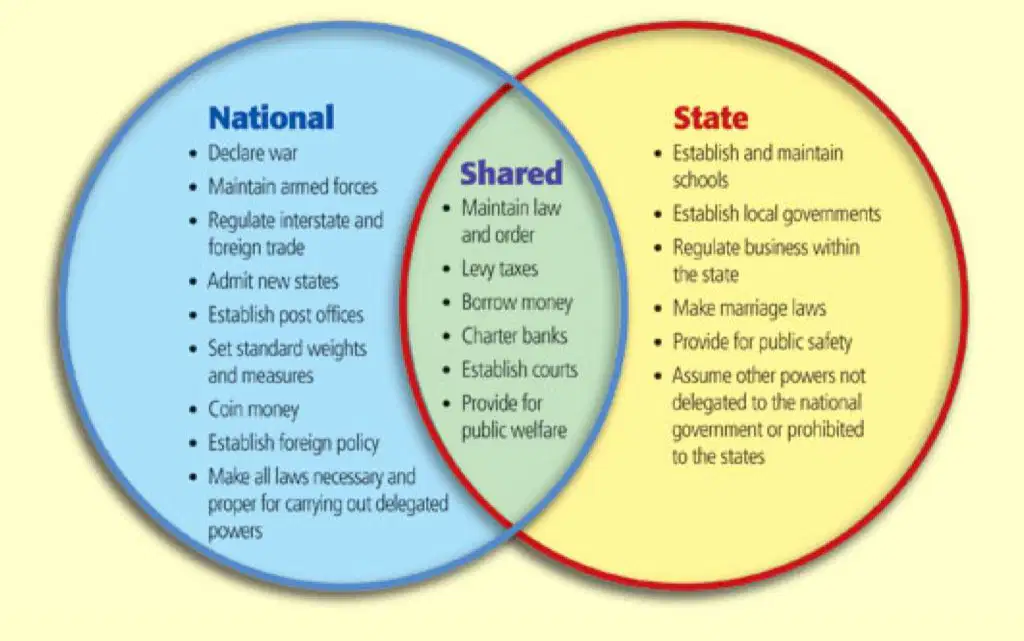
Which principle of the United States Constitution divides power between the state governments and national government?
Federalism
Racism
Mercantilism
Nationalism
Why was the Bill of Rights added to the original U.S. Constitution?
Give powers to the Judicial Branch
Protect the rights of individuals
Add power to the central government
Take power away from the U.S. Supreme Court
Which man is known as the Father of the U.S. Constitution because he suggested many of
the ideas that created our strong central government and the ideas for the Bill of Rights?
Abraham Lincoln
Marquis de Lafayette
James Madison
Daniel Shays
Which power is given to the Supreme Court as a result of Marbury v. Madison?
Define election laws
Negotiate treaties
Establish a post office
Judicial review
By how much did the size of the United States increase because of the
Louisiana Purchase?
It increased by one-quarter in size
It increased by one-half in size
It doubled in size
It tripled in size
What action did the United States take as a result of the statements below?
Impressment of U.S. sailors by Britain
Arming of Native Americans
Interference with U.S. foreign trade
Entered the War of 1812
Adopted the Missouri Compromise
Resulted in the Mexican-American War
Seized control of Louisiana
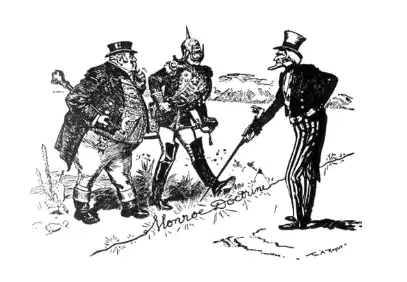
What was the purpose of the Monroe Doctrine of 1823?
Forced movement of the Cherokee west of the Mississippi River
Law that prevented further conflict between Native Americans and English Colonists
Formal response to the Alien and Sedition Acts
Inform European rulers to stay out of the Western Hemisphere
Which event happened as a result of President Jackson's Indian Removal Act?
Battle of the Alamo
U.S. Civil War
Shays’ Rebellion
Trail of Tears
“Caution!! Colored people of Boston, one & all, You are hereby respectfully CAUTIONED and advised, to avoid conversing with the Watchmen and Police Officers of Boston, For since the recent ORDER OF THE MAYOR & ALDERMAN, they are empowered to act as KIDNAPPERS and SLAVE CATCHERS.”
What law made it necessary to issue this warning in Boston?
The Intolerable Acts
The Indian Removal Act
The Fugitive Slave Act
The Kansas-Nebraska Act
Harriet Tubman
Harriet Beecher Stowe
William Lloyd Garrison
Frederick Douglass
Grimke sisters
What was the main goal of the abolitionists above?
Ending slavery throughout the country
Ending the use of alcohol in society
Granting women the right to vote
Public education for all children
What conclusion can be drawn from the three headlines below?
“Eli Whitney Invents the Cotton Gin” (1793)
“Samuel Slater Opens Textile Factory” (1793)
“Eli Whitney Introduced Interchangeable Parts” (1798)
Improved methods for producing steel are adopted in the late 1700’s
Native Americans are forced to move west of the Mississippi River
New modes of transportation are created in rural United States
What term describes the belief that the United States should expand from the Atlantic to the Pacific Ocean?
Manifest Destiny
Democracy
Separation of Powers
Universal Suffrage
Which event was the immediate cause of the secession of several Southern states from the Union?
Dred Scott Decision
Missouri Compromise
Harriet Beecher Stowe writes Uncle Tom’s Cabin
Election of President Abraham Lincoln in 1860
What was the turning point of the Civil War that brought the Confederate forces to their farthest northern advance into Union territory?
Battle of Shiloh
Battle of Yorktown
Battle of Vicksburg
Battle of Gettysburg
The 13th Amendment abolished slavery. This meant that slavery
began in the United States.
ended in the United States.
remained the same in the United States.
spread into other countries.spread into other countries.
What was the primary purpose of the Erie Canal when it was built? Why would they go through all this trouble and cost?
To provide recreational boating
To connect the Atlantic Ocean with the Great Lakes
To generate electricity
To provide fresh water to New York City
What economic impact did the Erie Canal have on New York state?
It increased the cost of goods
It reduced the cost of transporting goods
It discouraged settlement in New York
It had no economic impact
What did the Fugitive Slave Act require from citizens?
To vote on slavery
To assist in the return of escaped slaves
To provide food and shelter to escaped slaves
To ignore runaway slaves
What is an abolitionist?
A person who advocated for women's rights reform.
A person who advocated for healthcare reform.
A person who advocated for reform to end slavery.
A person who advocated for secession.
Most abolitionists demanded what?
immediate freeing of enslaved African Americans.
all people be treated equally and fairly under the law.
women should be allowed to vote in elections.
nothing
The strategy of burning down railroads, factories, farmland, and anything else useful for an opponent in warfare is known as?
Savage Warfare
Complete Warfare
Destructive Warfare
Total Warfare
The following statement is an accurate description of Sherman's March to the Sea;
The March to the Sea was led by General William Sherman. It was the journey of the Union Army from Atlanta to Savannah, Georgia. During that trip the Union Army destroyed all factories, railroads, and farms along their path. This was known as total warfare.
True
False
Total War means
to fight really hard in a battle
to take prisoners
destruction of some of the enemy's resources
destruction of the enemy’s resources such as animals, supplies, railroads, and factories
As a conductor on the Underground Railroad, Harriet Tubman:
Guided passengers from station to station
Wrote essays against slavery
Gave speecges about her experience as a slave
Defended passengers in court
What was the Underground Railroad?
A network of escape routes for African Americans to reach southern states.
A system of secret shelters for enslaved people.
A series of underground tunnels used for transportation.
A network of escape routes for enslaved African Americans to reach freedom.

