
Font size
 Worksheets
Year10-Theory-Revision
Total questions: 70
Worksheet time: 46mins
(a) is a small amount of memory which is a part of the CPU. It holds instructions that the CPU is likely to reuse.
Which type of memory is closest to the CPU?
RAM
Secondary storage
Cache
ROM
Which part of the CPU reads the cache?
CPU Clock
Arithmatic Logic Unit
CPU Bus
Control Unit
Which of the following CPU's are quicker?
1.5GHz Quad-core Processor
4.5GHz Dual-core processor
2.2GHz Octa-core processor
2Ghz Hex-core processor
A CPU is measured in Hertz, this speed is the maximum number of instructions which can be processed in a second. This speed is known as the [???]
(a)
Which of the following components are part of the CPU?
Cache Memory
RAM
Control Unit
Arithmetic Logic Unit
ROM
Inside the CPU, you will find:
ALU, CU, registers, cache memory
ADU, PC, storage, RAM memory
ARM, PC, controller, cache memory
APM, CU, time signal, RAM memory
The MAR stores the (a) of data which is either being sent to or fetched from the RAM.
The MDR holds the (a) which is being sent to/fetched from the address in the MAR.


What is the effect of shifting a binary number by two bits?
Halving the number
Doubling the number
Dividing the number by 4
Quadrupling the number
What happens when you perform a binary left shift?
The number is squared
The number remains unchanged
The number is multiplied by 2
The number is divided by 2
What is 0010 in Hexadecimal?
2
3
4
5
What is 1010 in Hexadecimal?
9
A
C
D
What is 1111 in Hexadecimal?
4
A
E
F
Convert the binary number 10111010 to hexadecimal.
(a)
Convert the binary number 10001110 to hexadecimal.
(a)
What is the purpose of ASCII and Unicode?
character encoding to process and store characters in binary
to convert analogue signal to digital signal
scanning of image into computer
Which can represent more characters? ASCII or UNICODE.
ASCII
UNICODE
BOTH
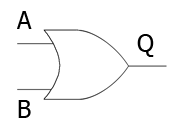

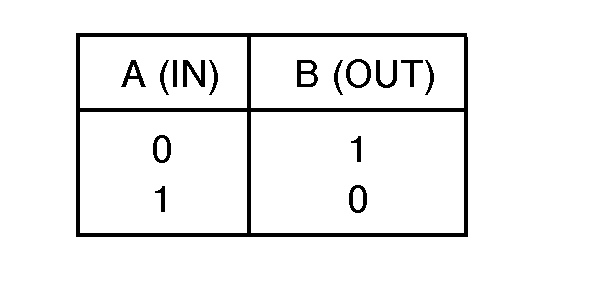
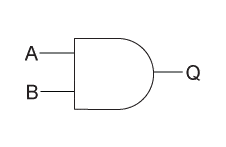
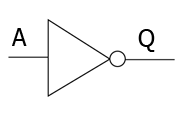
Which logic gate is this?
AND
OR
XOR
NOT
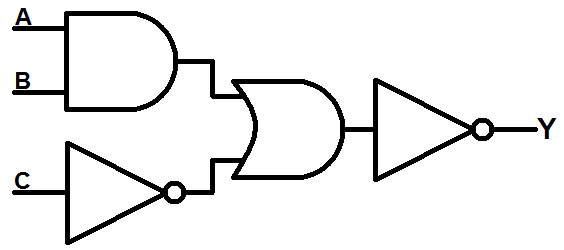
What is the output Y of this logic cricuit if A = 1, B = 1, and C = 1
0
1
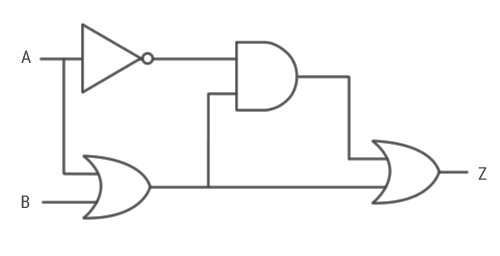
What is the output Z of this logic cricuit if A = 1 and B = 1
0
1

What is OUTPUT?
1
0

What is OUTPUT?
1
0
Which of these is not a function of an OS:
Provide a user interface
Communicate with hardware
Allow the computer to multi-task
Improves CPU performance
Which of the following is NOT considered utility software?
Encryption software
Spreadsheet software
Defragmentation software
Data compression software
What is the main purpose of defragmentation software?
To encrypt files for security
To rearrange fragmented files so they run contiguously
To compress files to save space
To delete temporary files
Why is data compression beneficial for file storage and transmission?
It increases the file size for better quality
It makes files easier to transmit across a network by reducing their size
It encrypts files for added security
It defragments files for faster access
What is a backup in the context of data management?
A temporary file used for quick access
A copy of data made to prevent loss
A compressed version of a file
An encrypted version of a file
Why does encryption software use a complex algorithm?
To compress files for storage efficiency
To scramble content so it appears as gibberish to unauthorised users
To delete files securely
To defragment files for faster access
What happens to files on a hard disk over time if defragmentation is not performed?
They become encrypted
They become fragmented, slowing down access
They become compressed
They become deleted
What isn't an example of Utility Software
Firewall
Drivers
Auto Updates
Defragmentation
What is Encryption software used to do?
Permanently change data
Revert data to something it wasn't before
Change data so it is unreadable by an interceptor
Change data so it is readable by an interceptor
Encryption needs a (a) to ensure that data can be converted back to its original state to be read
(a) does NOT lose data when it is used to compress a file
Which register is being described?
Stores the results of the calculations done by the ALU
Which register is being described?
Holds the memory address about to be used by the CPU
Which register is being described?
Holds the data / instructions that have been fetched from memory
The ALU is:
The arithmetic and logic unit
The arithmetic and logistics unit
The actual logic unit
Tick all that describe RAM
Non-volatile memory
Volatile memory
Stores data and instructions that are currently in use
Read Only Memory
What do the initials PC stand for in terms of registers?
Personal computer
Program Counter
Program Control
Permanent Couner
For string symbol + means........................
addition
swapp
concatenation
multiplication
str1='101'
x=int(str1)
z=x+400
print(z)
101400
x400
501
none of above
fruit1="kiwi"
fruit2="strawberry"
print(len(fruit1))
print(len(fruit2))
kiwi and strawberry
4
10
4 10
410

