
NEW
Font size
 Worksheets
HS20 - Final Review - Unit 5 - Respiratory System
Total questions: 64
Worksheet time: 32mins
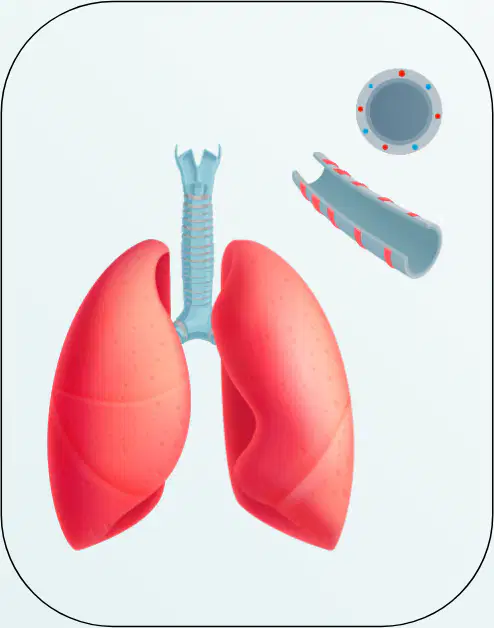
What is another name for the respiratory system?
Circulatory system
Pulmonary system
Digestive system
Nervous system
Which of the following best describes the main function of the respiratory system?
To digest food and absorb nutrients
To bring oxygen to the cells and remove carbon dioxide from the body
To pump blood throughout the body
To control body movements
What is the process called when you breathe in?
Exhalation
Expiration
Inhalation or inspiration
Perspiration
Which of the following terms refers to breathing out?
Inhalation
Inspiration
Exhalation or expiration
Respiration
Which of the following systems does the upper respiratory system help with, in addition to breathing?
Digestive, sensory, and immune systems
Circulatory, muscular, and skeletal systems
Endocrine, reproductive, and excretory systems
Nervous, integumentary, and lymphatic systems
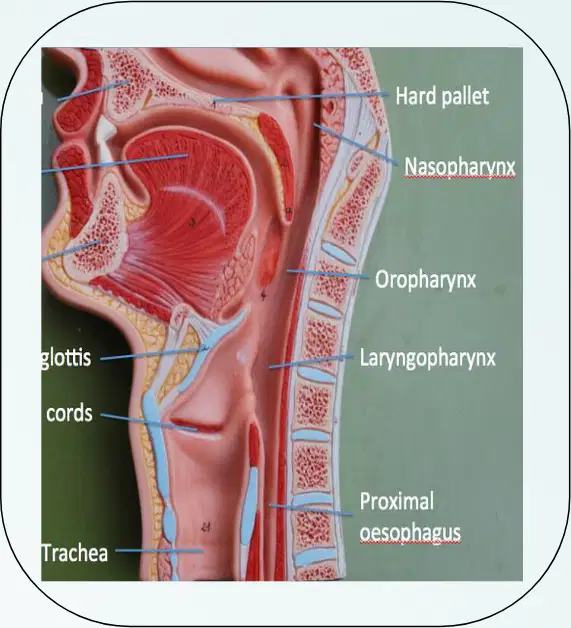
Which part of the pharynx is located above the soft palate at the back of the nose and contains adenoids?
Nasopharynx
Oropharynx
Laryngopharynx
Trachea
What is the main function of the oropharynx in the upper respiratory system?
It triggers the swallowing reflex when pressure is put on it.
It divides into two paths for food and air.
It filters dust from inhaled air.
It produces vocal sounds.
Which part of the pharynx divides into two paths, one for food and liquids and the other for air?
Nasopharynx
Oropharynx
Laryngopharynx
Hard palate
If a person has difficulty swallowing and food enters the airway, which part of the pharynx might not be functioning properly?
Nasopharynx
Oropharynx
Laryngopharynx
Hard palate
What is the primary function of the epiglottis in the upper respiratory system?
To help you speak
To filter dust from the air
To cover the trachea when you swallow and keep food heading to the esophagus
To produce mucus
Which structure does the epiglottis cover during swallowing to prevent food from entering the airway?
Esophagus
Trachea
Vocal cords
Larynx
What is another name for the larynx?
Voice box
Windpipe
Nasal cavity
Bronchi
How does the thickness of the vocal cords affect the sound produced?
Thicker cords produce deeper sounds
Thicker cords produce higher sounds
Thickness does not affect sound
Thicker cords stop sound production
Which of the following best explains how pitch is changed in the larynx?
By tightening and relaxing muscles attached to the vocal cords
By increasing the flow of air through the nose
By expanding the lungs
By swallowing more frequently
What is the main function of the trachea in the respiratory system?
To take air to the lungs
To pump blood to the lungs
To digest food
To filter blood
Why does the trachea have cartilage rings in its lining?
To help with digestion
To keep it open regardless of body position
To produce mucus
To absorb oxygen
What is the role of cilia in the trachea?
To produce oxygen
To brush mucus and debris up and out of the lungs
To absorb nutrients
To contract and relax the trachea
Into what does the trachea branch at its lower end?
Alveoli
Bronchi
Diaphragm
Esophagus
Explain how the structure of the trachea helps it perform its function in the respiratory system.
The trachea is flexible and collapses easily, allowing for food passage.
The trachea has cartilage rings that keep it open, ensuring air can always pass to the lungs.
The trachea is lined with muscle to help pump air.
The trachea is solid and does not allow any movement.
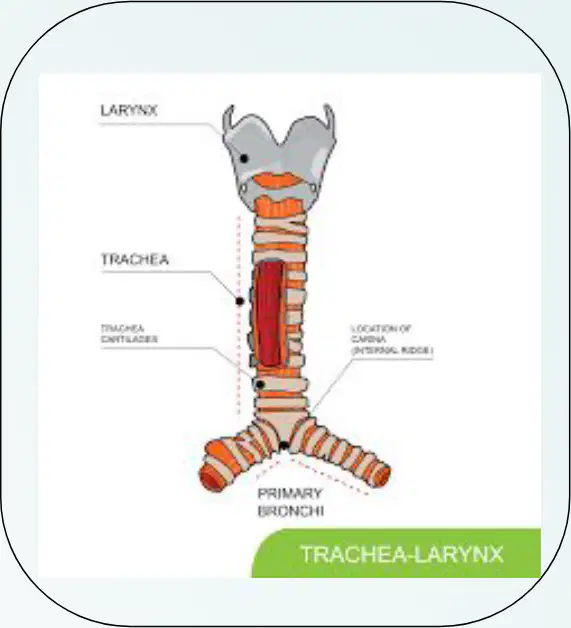
Which part of the respiratory system is shown branching into two tubes at the bottom of the diagram?
Larynx
Trachea
Esophagus
Nasal cavity
What happens to the trachea after it branches into the bronchi?
It becomes part of the lower respiratory system and continues to branch into bronchioles.
It ends and does not branch further.
It merges with the esophagus.
It becomes part of the digestive system.
Which lung has more lobes, and how many does it have?
The left lung, with 3 lobes
The right lung, with 3 lobes
The left lung, with 2 lobes
The right lung, with 2 lobes
Why is the left lung smaller than the right lung?
Because it has more lobes
Because the apex of the heart protrudes into its space
Because it contains more bronchioles
Because it is closer to the diaphragm
What is the function of the alveoli in the lungs?
To filter dust from the air
To produce mucus
To allow oxygen to enter the blood and carbon dioxide to leave it
To move air in and out of the lungs
If a person’s left lung only has two lobes, what anatomical feature explains this difference compared to the right lung?
The diaphragm is higher on the left side
The apex of the heart takes up space on the left side
The left lung is closer to the liver
The left lung has more bronchioles
What are the tiny air sacs, that are surrounded by capillaries, at the end of the bronchioles called?
Bronchi
Alveoli
Glomerulus
Lobes
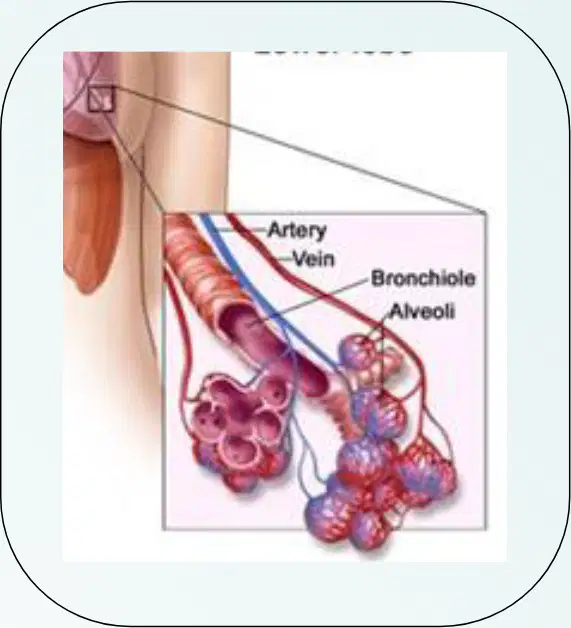
What is the primary function of the alveoli in the lower respiratory system?
To filter dust from inhaled air
To produce mucus
To allow oxygen to diffuse into capillaries
To contract and expand the lungs
Which blood vessels surround the alveoli and are involved in the exchange of gases?
Arteries
Capillaries
Lymphatic vessels
Bronchioles
After oxygen diffuses into the capillaries from the alveoli, where does the oxygen-rich blood go next?
Into the pulmonary veins and then to the heart
Into the pulmonary arteries and then to the lungs
Directly into the aorta
Into the bronchioles
Explain why the membranes of the alveoli are very thin. How does this structural feature support their function?
Thin membranes allow for faster diffusion of oxygen into the capillaries.
Thin membranes prevent bacteria from entering the lungs.
Thin membranes help trap dust particles.
Thin membranes make the lungs more flexible.
What is the primary function of the ribs in the lower respiratory system?
To help with digestion
To protect the lungs from getting punctured
To produce red blood cells
To filter air entering the lungs
Which cavity do the ribs help create, allowing for inhalation and exhalation?
Abdominal cavity
Cranial cavity
Thoracic cavity
Pelvic cavity
What is the role of the pleural membrane found in the ribs?
It produces oxygen for the lungs
It helps the ribs move during digestion
It is very slippery and reduces friction against the lungs
It stores nutrients for the body
Explain how the pleural membrane helps prevent damage to the lungs during breathing.
By producing mucus to trap dust
By creating a thin layer of fluid that reduces friction
By contracting to force air out
By absorbing carbon dioxide
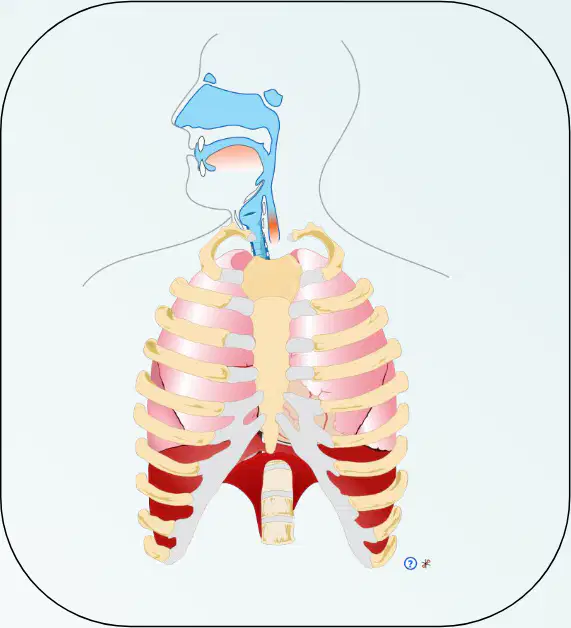
Why is it important for the thoracic cavity to be airtight?
To keep the heart in place
To allow for expansion and contraction during breathing
To prevent food from entering the lungs
To increase blood flow to the lungs
What is the main function of the diaphragm in the lower respiratory system?
To increase the internal volume of the thoracic cavity during inhalation
To pump blood throughout the body
To digest food in the stomach
To filter waste from the blood
What happens to the thoracic cavity when the diaphragm relaxes and returns to its dome-like shape?
The thoracic cavity shrinks and air is pushed out
The thoracic cavity expands and air is pulled in
The thoracic cavity fills with blood
The thoracic cavity becomes rigid
Which of the following best describes the diaphragm?
A sheet of muscle that goes across the torso under the lungs
A bone that supports the rib cage
A gland that produces hormones
A nerve that controls breathing
Explain how the diaphragm contributes to the process of inhalation and exhalation.
When the diaphragm contracts and pulls flat, it increases the internal volume of the thoracic cavity, pulling in air (inhalation). When it relaxes and returns to its dome-like shape, the thoracic cavity shrinks and pushes air out (exhalation).
When the diaphragm contracts, it pushes food down the esophagus. When it relaxes, it helps the heart beat.
The diaphragm filters air before it enters the lungs and removes carbon dioxide.
The diaphragm stores oxygen for later use in the body.
Why is the pulmonary system particularly susceptible to infections?
Because it is one of the main ways for pathogens to enter the body.
Because it is not protected by the immune system.
Because it is not connected to other body systems.
Because it is always exposed to sunlight.
What does the abbreviation "URI" stand for in the context of the upper respiratory system?
Upper Respiratory Infection
Unilateral Respiratory Illness
Upper Renal Infection
Uncommon Respiratory Issue
Which of the following is a mild form of a URI?
The common cold
Pneumonia
Asthma
Tuberculosis
A student is experiencing sneezing, watery eyes, sore throat, and fatigue. Based on these symptoms, what condition might they be suffering from?
Upper respiratory infection (URI)
Broken bone
Food poisoning
Skin allergy
What can happen if some upper respiratory infections (URI) migrate into the internal respiratory system?
They become a chest infection.
They cause immediate recovery.
They always remain harmless.
They turn into allergies.
Which of the following best describes how influenza differs from a typical upper respiratory infection (URI)?
Influenza only affects the respiratory system and never the digestive system.
Influenza often affects the digestive system, causing nausea and upset stomach, unlike a typical URI.
Influenza is not contagious, while a URI is.
Influenza is caused by bacteria, while a URI is caused by viruses.
Which of the following best describes asthma?
A condition where the muscles surrounding the bronchi overreact to stimuli, causing them to contract and making breathing out more difficult.
A condition where the heart beats irregularly due to electrical impulses.
A disease caused by bacteria infecting the lungs.
A disorder where the digestive system cannot process certain foods.
Why does asthma make breathing out more difficult?
Because the muscles around the bronchi contract, narrowing the airways.
Because the lungs fill with fluid.
Because the diaphragm stops working.
Because the nose becomes blocked.
Which age group is most commonly affected by emphysema?
Children
Teenagers
Elderly
Middle-aged adults
What is the main reason carbon dioxide builds up in the bloodstream of someone with emphysema?
The lungs produce too much carbon dioxide
The diaphragm is not strong enough to fully exhale
The person breathes in too much carbon dioxide
The blood cannot carry oxygen
Why might a person with emphysema act as if they have dementia?
Due to lack of sleep
Because of confusion caused by carbon dioxide buildup
Because of high oxygen levels
Due to dehydration
Why does a person with pneumonia have trouble getting enough air?
Because their lungs are filled with fluids, making it hard to breathe.
Because their lungs are filled with extra oxygen.
Because their lungs are not connected to the airway.
Because their lungs are too dry.
Explain how the inflammation and fluid buildup in the lungs during pneumonia can affect a person's ability to breathe.
The inflammation and fluid buildup reduce the space for air in the lungs, making it difficult for oxygen to enter the bloodstream.
The inflammation and fluid buildup increase the amount of oxygen in the lungs, making breathing easier.
The inflammation and fluid buildup have no effect on breathing.
The inflammation and fluid buildup make the lungs stronger.
What can listening to a person's breathing help reveal during an initial diagnosis?
If they are having trouble getting a breath or if there are unusual sounds
Their blood pressure
Their heart rate
Their temperature
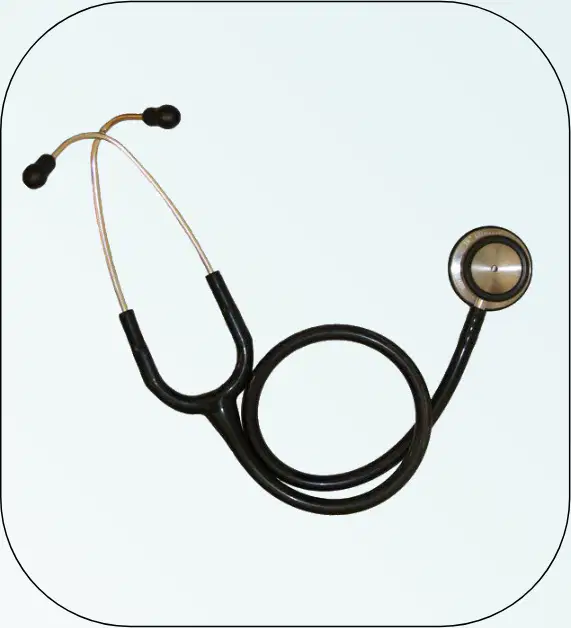
What is the primary purpose of using a stethoscope in medical diagnosis?
To listen to breathing in specific parts of the lungs and to the heart
To measure blood pressure
To check body temperature
To examine the eyes
Why might a doctor choose to use a stethoscope rather than just listening with their ear during a diagnosis?
A stethoscope allows for more specific listening to particular areas and frequencies of the lungs and heart.
A stethoscope is used to see inside the body.
A stethoscope is used to administer medication.
A stethoscope is used to take X-rays.
What is the main purpose of using an x-ray in medical diagnosis?
To get an idea of what is inside a person wihtout cutting or scoping
To measure blood pressure
To check body temperature
To monitor heart rate
Why can x-ray light more easily pass through certain materials?
Because x-ray light passes more easily through less dense materials
Because x-ray light is stronger than visible light
Because x-ray light is absorbed by all materials
Because x-ray light only passes through metals
What does "PA" stand for in the context of an x-ray?
Posterior to anterior
Anterior to posterior
Peripheral artery
Pulmonary analysis
What does a lateral X-ray refer to?
An X-ray taken from either of the two sides of the body.
An X-ray taken from the front of the body.
An X-ray taken from above the body.
An X-ray taken from below the body.

Which letter is the nasal cavity?
A
B
C
D
E
Which letter is the pharynx?
A
B
C
D
E
Which letter is the larynx?
A
B
C
D
E
Which letter is the trachea?
A
B
C
D
E
Which letter is the bronchi/bronchioles?
A
B
C
D
E

