
Font size
 Worksheets
Social 7 Final Exam Review
Total questions: 85
Worksheet time: 43mins
How did First Nations make decisions?
Mercantilist policies
Imperialist governance
Social Hierarchy
Consensus decision making
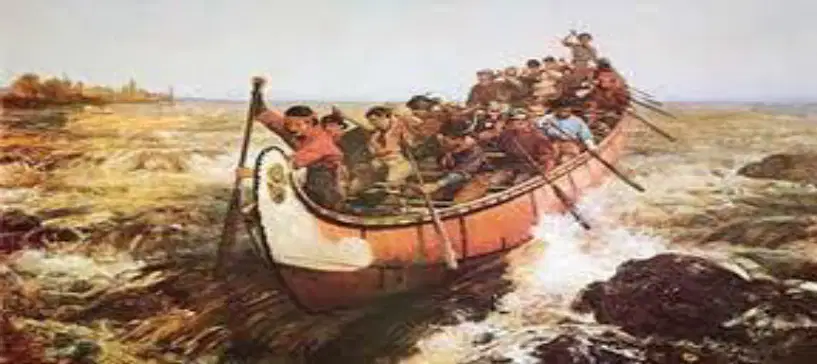
The picture above shows which First Nation’s characteristic:
trading
consensus
land usage
transportation
Oral histories are:
representations of historical events
a way to record information
a “telling of incidents”
all of the above
Tradition means:
something that stands for or represents an idea
making known through communication
telling stories, drawing pictures, and using ancient symbols
the handing down of beliefs and practices
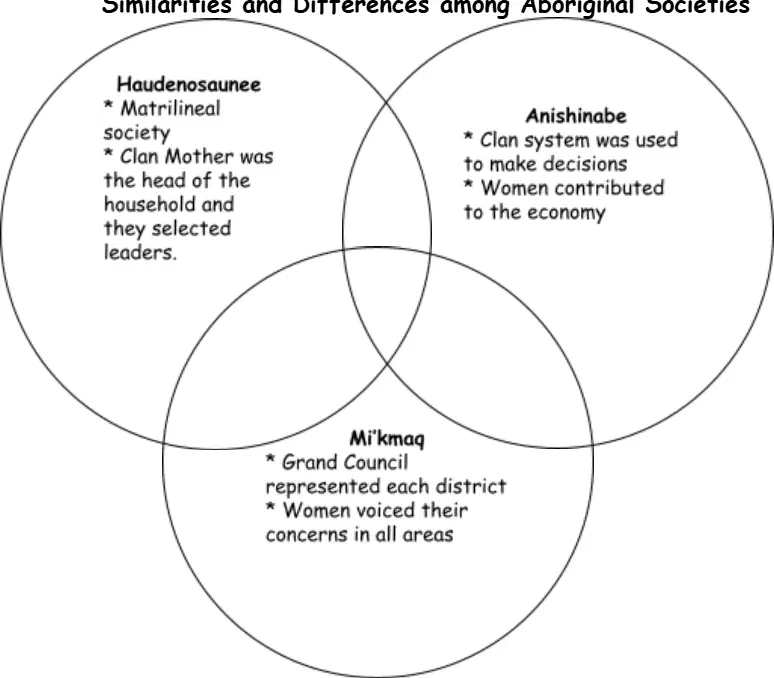
Select which quality is evident in ALL THREE Aboriginal societies.
the importance of male leaders
the importance of constructing permanent homes
the importance of working together to share benefits
the importance of women in Aboriginal Societies
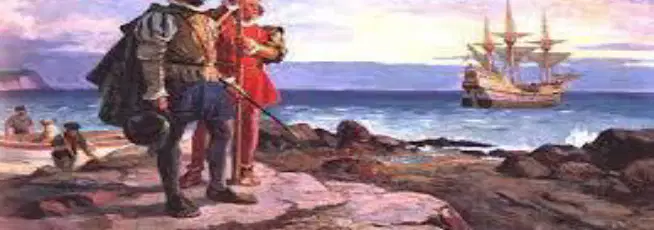
The above picture is an example of:
imperialism
deportation
assimilation
mercantilism
The first European people ever to step foot on what is today known as North America were the:
French
Vikings
British
Spanish
Which of the following was the main reason for European monarchies to sponsor exploration to the New World in the 1600’s:
curiosity of young adventurers
disruption of trade in Europe due to wars
desire for more wealth and power
European population explosion
Christopher Columbus didn’t find Asia but instead landed in:
France
The Middle East
The Caribbean/West Indies
South America
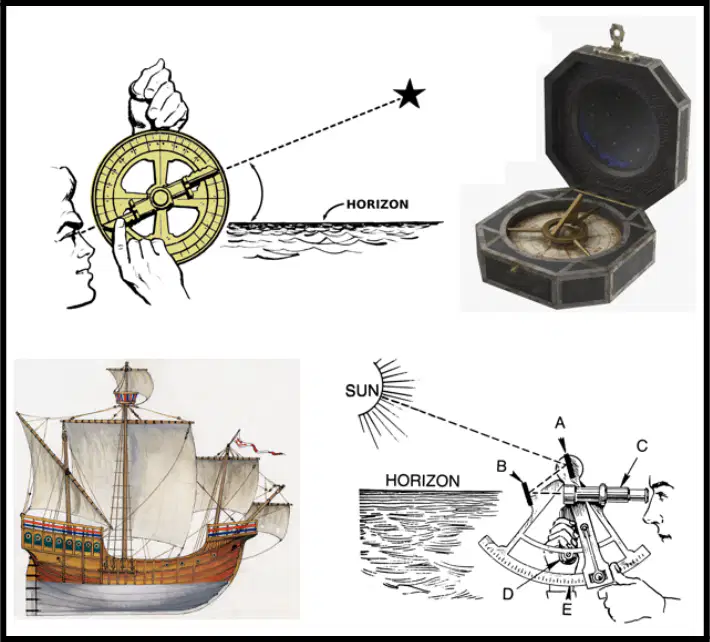
Which question does the picture above BEST answer?
What role did First Nations play in the European exploration of North America?
Why did Europeans arrive in the lands that became Canada?
What were explorers from Europe seeking?
How did technology enable European exploration?
After encountering the New World, which reason MOST STRONGLY encouraged the Europeans to stay?
discovery of rich resources
contact with unique cultures
discovery of the Northwest Passage
Discovery of a new route to Asia

Which of the impacts in the chart above would be considered a POSITIVE impact?
I
II
III
IV
The Beothuk people and the Europeans:
Agreed to share the land peacefully through treaties
did not establish friendly relations
were allies in war against the Mi’kmaq
Formed a positive trading relationship together
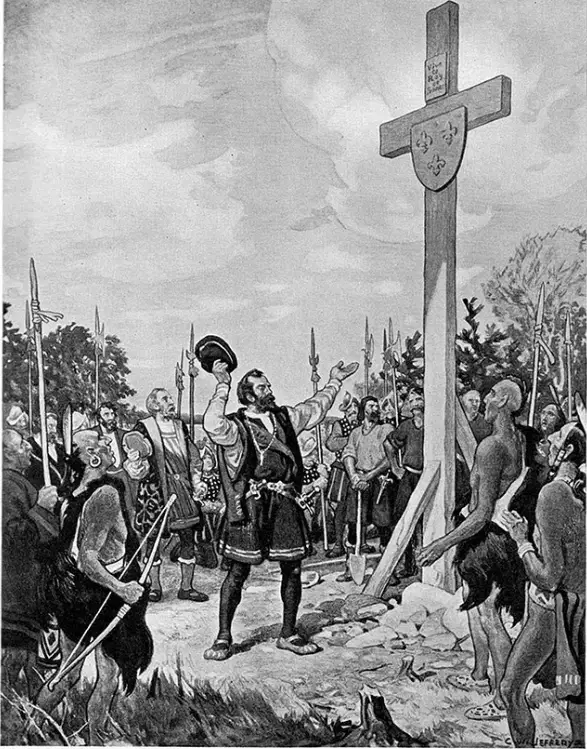
Which of the following is the MOST LIKELY reason that Jaques Cartier raised a cross on the Gaspe Peninsula?
To use as a landmark for future travels
Used as a symbol for claiming the land for France
It was an offering of peace to the Stadacona people
Created as an idol to pray to and worship
Who is the father of New France?
Christopher Columbus
Giovanni Caboto
Samuel de Champlain
Jacques Cartier
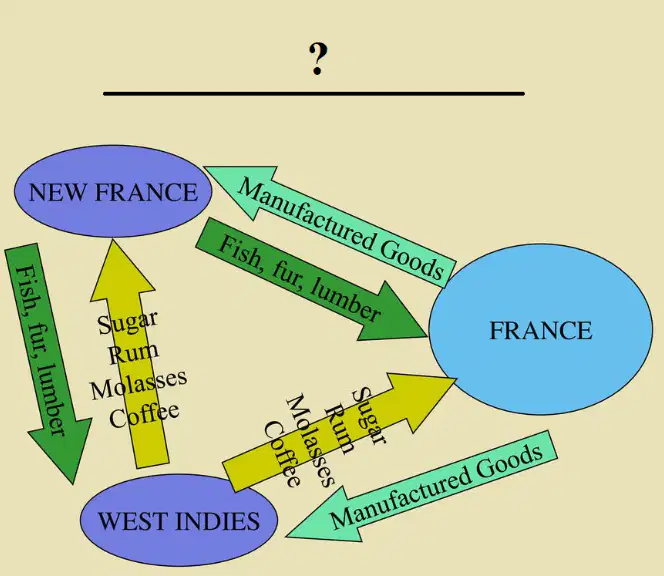
Who benefited the MOST in the policy demonstrated in the image?
France
New France
Manufacturers
French settlers

Which of the following could BEST be used as a correct title for the image above?
assimilation
mercantilism
cultural extinction
intercultural marriage

What conclusion about the population of the colonies is MOST ACCURATE?
the French colonies started to decline in population after 1750
the French population was growing at a more rapid rate than the British
the British colonies’ population leveled off for a while and then continued to grow
the British colonies had a larger population and were growing more quickly than the French

Why is this information useful in understanding why New France was destined to be taken over by the British?
It shows that the French King had strong control of the colony and was keeping growth consistent
It shows that the British got more help from Britain than the French colonists received from France
It shows that the British colonies were growing steadily and becoming stronger in numbers than the French
It shows that the French colonies had better relations with the First Nations
They cleared the land themselves, which was a huge and difficult task. They cut down the trees with axes, and used oxen to pull the stumps. Only after they had cleared the land could they plant crops and raise animals — provide the food they needed themselves, and that supplied the growing villages of New France.
Seigneurs
Habitants
Merchants
Fils du Roi
In the early years of colonization of North America, The British wanted the land for farming. What did the French want?
They also wanted land for farming.
They wanted resources, such as furs.
They wanted to convert First Nations peoples to their religion and move them to France.
They wanted to work with the British to own the land and get resources.
Which colony had a larger European population?
New France
Thirteen Colonies
Rupert’s Land
Acadia
Colonization had all but one of the following impacts on First Nations peoples. Which of the following was NOT an impact?
a. Colonists brought diseases which created epidemics.
b. Colonists made First Nations peoples give up their culture and adopt European ways.
c. Colonists brought guns and traded them with First Nations peoples for other resources.
d. Colonists wanted to capture First Nations peoples and sell them to Europeans as slaves.
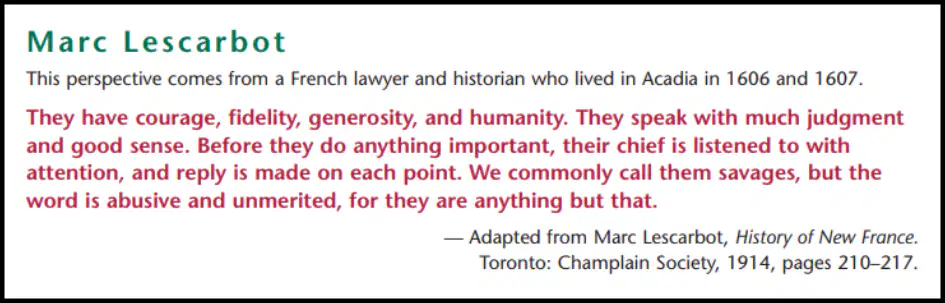
They have courage, fidelity, generosity, and humanity. They speak with much judgment and good sense. Before they do anything important, their chief is listened to with attention, and reply is made on each point. We commonly call them savages, but the word is abusive and unmerited, for they are anything but that. — Adapted from Marc Lescarbot, History of New France. Toronto: Champlain Society, 1914, pages 210–217. 24. Which of the following statements would the speaker above MOST agree with?
The First Nations were an uncivilized people
Europeans are more savage than First Nations
The First Nations’ method of decision making is unique
Europeans have unfairly judged First Nations

Which group in New France is being described above?
The Sovereign Council
Seigneurs
Habitants
The Catholic Church
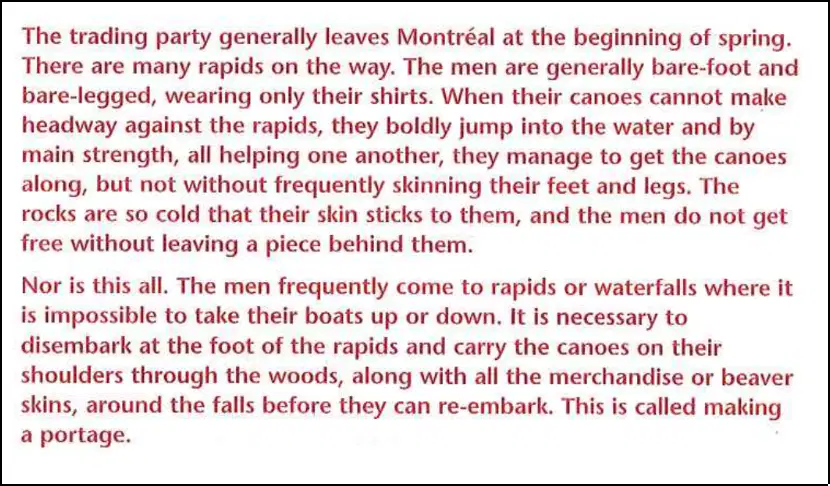
Whose role is being described in the passage above?
Scottish Metis
Voyageurs
Jesuit Missionaries
Fur trade middlemen
Part of assimilating the First Nations peoples included:
allowing them to keep their religious beliefs
allowing them to keep their language
converting them to Christianity and forcing them to give up their culture
all of the above
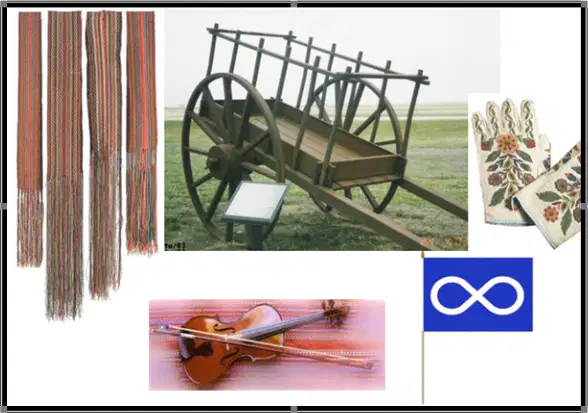
Which of the following would be the BEST title for the picture above?
The Role of Women in the Fur Trade
The Northwest Company, a Fur Trading Company
Voyageurs from New France, A Fur Trade Tradition
Symbols of the Métis, A Culture Created During the Fur Trade
One of the following is NOT a reason for the expansion into the west.
The lack of pelt supplies in the east
The American Revolution
The need for good farm land
Britain’s desire to claim the west before the United States claims it
The Metis people settled in an area called:
Quebec City
Trois Rivieres
Montreal
Red River
Metis women were NOT considered as:
trading and business partners
Valued companions
skilled interpreters
Political influencers
Once colonies were established in North America the main push factor for the migration of many people westward towards Quebec and Ontario was the:
fur trade
lack of jobs
middlemen
Metis Resistance
The best reason for Britain selling Rupert’s Land to Canada was because it:
was afraid of an American invasion
wanted money to go to the United States
had little interest in the fur trade
It needed the money to pay off their rapidly growing debt
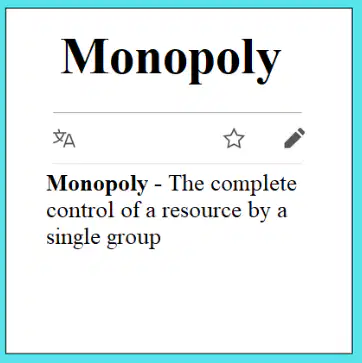
Which of the following would BEST be considered a monopoly during the Fur Trade era in British North America?
The Hudson’s Bay Company
The Colony of New France
The British Empire
The Red River Settlement
Which of the following statements is TRUE about the fur trade?
The French only wanted to marry First Nation women so that they could work as translators in the fur trade
First Nations peoples wanted to trade for european metal goods
The French wanted the land.
All First Nations peoples only wanted to be left alone.
In 1755, the British required an ____________ from the Acadians, but the Acadians refused.
oath of Neutrality
oath of Assimilation
oath of Religious freedom
The Acadians built “digues,” which were ____________.
salt marshes
crops of wheat, oat, barley, corn, and hemp
crops of swamp grass used to feed horses, cows, and oxen
The Great Deportation affected the Mi’kmaq people because they had a history of intermarriage, friendship, and _____________ with the Acadians.
neutrality
protection
settlements
The removal of the Acadians by the British is an example of ______________.
alliance
assimilation
colonization
Britain took control of Acadia through which treaty?
Treaty of Paris
Treaty of Royal Proclamation
Treaty of Louisbourg
Treaty of Utrecht
Which of the following factors best contributed to Britain’s decision to deport the Acadians?
The Acadians did not live up to their oath of neutrality.
The British settlers outnumbered the French settlers two to one.
The British assumed they could not trust the Acadians, because they were French and they may turn on the British if war ever broke out between Britain and France.
Even though the Acadians had lived under British rule for more than 40 years, they were unruly and were unable to live peacefully.
Under the Treaty of Paris, France kept the colony of ...
New France
Abraham
Guadeloupe

Which of the people would you label as a “Acadian Habitant”?
person A
person B
Person C
Person D
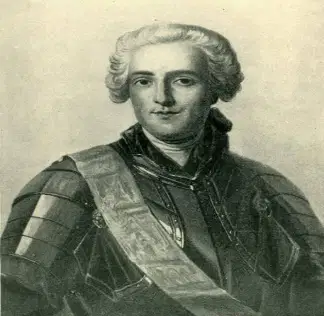
“The English are bringing their canons up the cliff at Quebec. The longer I wait, the stronger they become. I have more soldiers than they do on the field. I could wait for reinforcements, but if I attack now perhaps I will catch them before they are ready.”
During the Battle of the Plains of Abraham, who said this?
British
French
Spanish
First Nations

“The English are bringing their canons up the cliff at Quebec. The longer I wait, the stronger they become. I have more soldiers than they do on the field. I could wait for reinforcements, but if I attack now perhaps I will catch them before they are ready.”
During which important event in Canadian history would the quotation and photo be taken from?
French and Iroquois War
American War of Independence
Battle of the Plains of Abraham
The War of 1812
Which of the following moved to Quebec and Nova Scotia during the Loyalist migration?
Black Loyalists
the Haudenosaunee people
Mennonites
all of the above
Many Loyalists moved to Nova Scotia for the farmland. This, however, put the __________ Nation at a disadvantage, as they were not within the territory described as “Indian Territory.”
Cree
Mohawk
Oneida
The Constitutional Act of 1791 did all the following except:
divide Quebec into Upper and Lower Canada
give each colony a governor
set aside lands for Protestant churches
move the Mi’kmaq people into “Indian Territory”
The Americans declared war on British North America in 1812 because they:
were upset with Britain for blocking their trade with France
did not like the Loyalists
supported the French revolution
wanted to be a republic
The main reason the people of Upper Canada did not support the Americans was because:
they were happy with their land and farms
they did not like George Washington
they were afraid of their refugee status
they wanted to be a republic
Chief Tecumseh was an ally of the:
Americans
Canadiens
British
Cree
Tecumseh supported the British efforts in 1812 because he did not want:
his people killed
his land to be invaded
to betray the king
all of the above
The Term “Yankee” refers to a(n) _________ person.
Canadien
British
Aboriginal
A person who intends to establish a home and citizenship in a country that is not their native country is called a(n):
native
immigrant
colonist
visitor
Which of the following had the ability to make decisions and held the power in British North America?
the Bishop
governor of colony
councils
voters
What type of government did British North America have?
democratic
republican
colonial
majority
The group of wealthy English Canadian families that held power in the councils was known as the _______.
Reformers
Canadiens
Loyalists
Which of the following was NOT a reason people migrated from Britain to North America?
Potato Famine
Industrial Revolution
Poverty
Fur Trade
Which of the following colonies experienced political deadlock?
Canada
Nova Scotia
Newfoundland
New Brunswick
Which colony had the greatest population?
Nova Scotia
Upper Canada
Newfoundland
Prince Edward Island
What event caused the demographic change of a population between 1820 and 1850?
Great Migration
Napoleonic Wars
Cholera epidemic
American War of Independence
In which system of government do citizens elect their leaders?
republic
democracy
imperial
theocracy
Which of the following means an alliance among different groups?
coalition
rebellion
assimilation
Disagreement
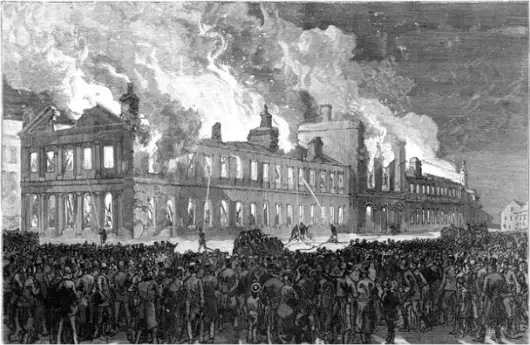
The signing of this bill guaranteed that self-government would work in Canada.
Rebellion Losses Bill
Union of Canada Bill
Independence of Regions Bill
Mathew Tkachuk sucks Bill
Confederation is important because:
it established a central government
it established bilingualism and biculturalism
it provided people with a national identity
all of the above
First Nations peoples:
were happy with confederation
initiated Confederation and later removed themselves from its development
were left out of confederation all together
were rebellious and vocal about Confederation’s development
All of the following leaders were involved in Confederation except:
John A Macdonald
Georges-Etienne Cartier
Chief Tecumseh
George Brown
Political deadlock happens when:
equally powerful parties can’t agree on a course of action
parties are locked in a room to vote
parties are not allowed to vote
the government structure has failed
All the following were concerns for the Canadiens when confederation was proposed except:
French culture and identity
Respecting their political rights
First Nations settlements in Quebec
Respecting their religious freedom
The Maritime provinces feared Confederation because they feared:
losing their independence
increased taxation
losing their land to First Nations peoples
a and b
The British North American Act (BNA Act):
divided power between the federal and provincial governments
guaranteed publicly funded schools
guaranteed that the government would pay for a railway linking the Maritimes with central Canada
all of the above
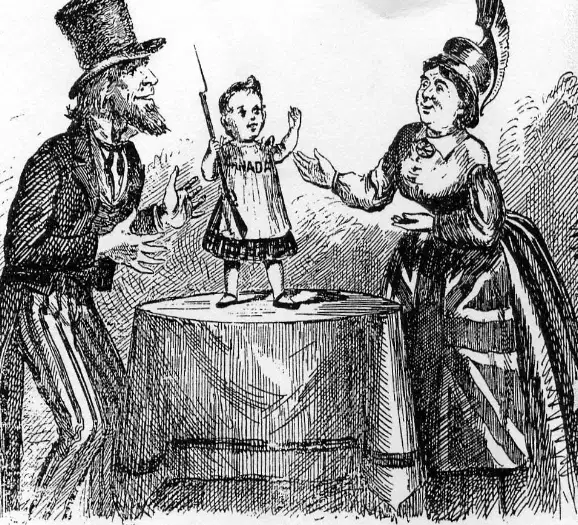
What is the cartoon suggesting?
Canada wants to be “caught” by the US.
The US is concerned that Britain is being overprotective of Canada.
Britain is trying to convince the US to take over Canada because it is too costly to support any longer.
The United States hopes to take control of Canada if Britain can be convinced to stop looking out for the young country.
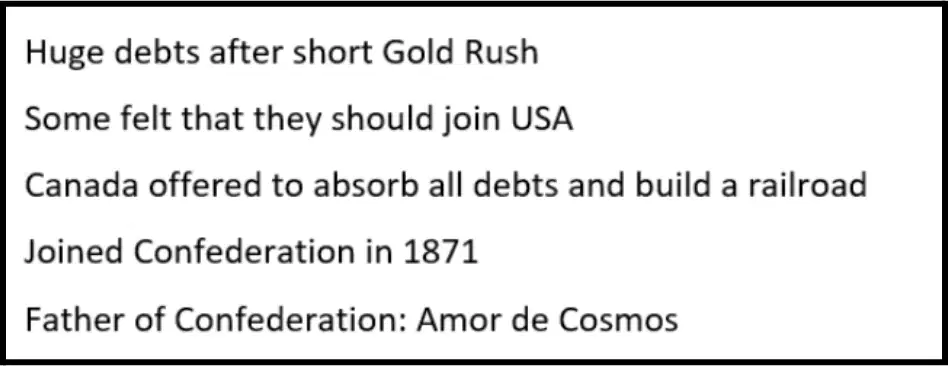
Which province is being described in the chart above?
Prince Edward Island
Manitoba
British Columbia
Newfoundland
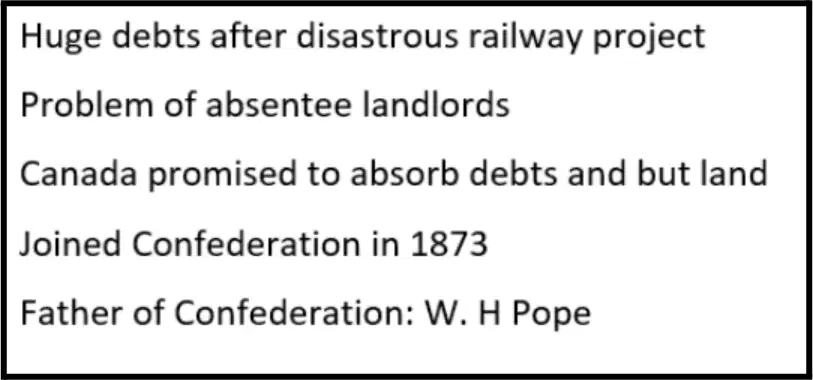
Which province is being described in the chart above?
Newfoundland
Manitoba
British Columbia
Prince Edward Island
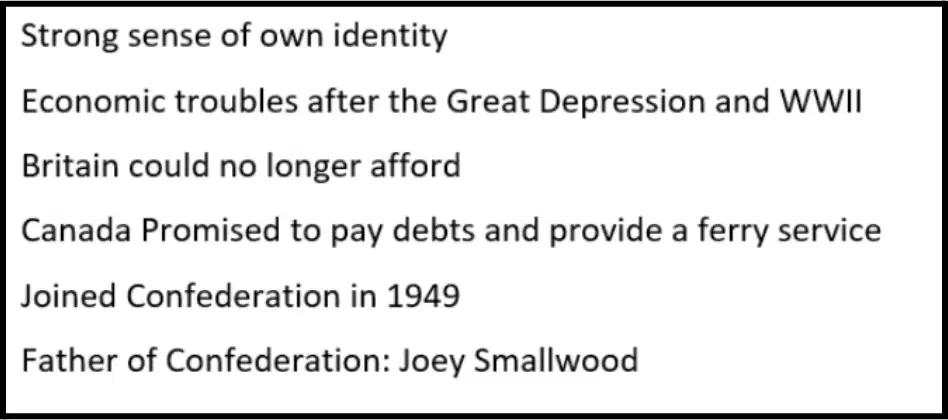
Which province is being described in the chart above?
British Columbia
Manitoba
Newfoundland
Prince Edward Island
Confederation originally acknowledged two founding nations:
the British and the Metis
the English and the French
the First Nations and the French
the British and the Americans
Many people were attracted to the Red River Settlement because of its:
culture
provisional government
climate
fertile/good farm land
Louis Riel wanted to mainly establish the Red River settlement as a:
English trading post
province
English settlement
Scottish settlement
The Manitoba Act was a _________, because many people felt they had a stake in how the Red River uprising was resolved.
revolt
mistake
disaster
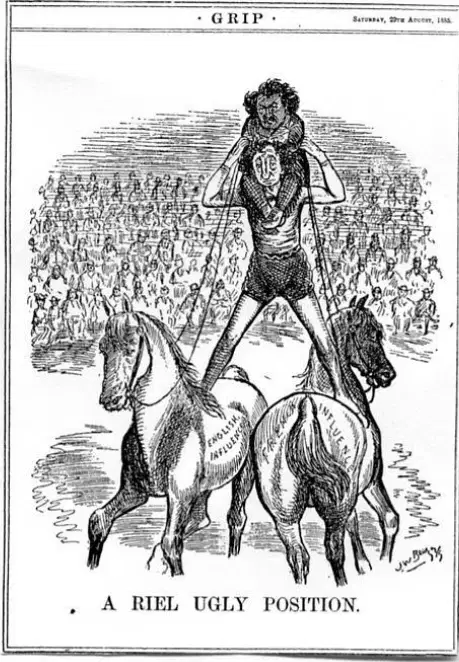
What is the message being suggested by the cartoon 'A Riel Ugly Position'?
Louis Riel was a circus performer who was known for his ability to ride two horses running in opposite directions.
John A. Macdonald is in a very difficult position whether he chooses to pardon or allow Riel to hang for treason; he will either upset the English or the French.
Both the French and the English want John A. Macdonald to pardon Riel for treason.
Both the French and the English want John A. Macdonald to let Riel hang for treason.
By 1880, which of the following were almost extinct due to over hunting by Canadian, American, and European hunters?
deer
black bears
buffalo
moose
The provisional government of Batoche decided to fight the Canadian troops and had the support of two _______ leaders.
Cree
Haudenosaunee
Mi’kmaq
To which area did many Metis people migrate after the uprising in Batoche?
Rupert’s Land
British Columbia
Manitoba
Alberta
Which province has the highest Metis population?
Alberta
Manitoba
British Columbia
Saskatchewan
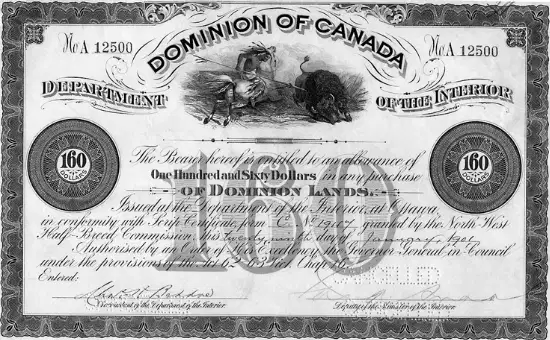
Which of the following did the government give to the Métis to use in exchange for land?
scrip
money
titles
wages

