
NEW
Font size
 Worksheets
Surgical Asepsis (IPAC)
Total questions: 35
Worksheet time: 18mins
What is the primary goal of surgical asepsis?
To destroy all pathogens before they can enter the body.
To reduce the number of pathogens to a safe level.
To clean the surgical instruments with soap and water.
To disinfect the operating room floor.
Which of the following best describes surgical asepsis?
An extension of medical asepsis, also known as sterilization.
A method of washing hands before surgery.
A process of using antibiotics during surgery.
A way to disinfect the skin before an injection.
Why is it important that no pathogens remain on surgical instruments before an operation?
So none are introduced into the body.
So the instruments look clean.
So the operation is faster.
So the instruments are easier to handle.
Which of the following is an example of surgical asepsis?
Sterilization of surgical instruments before an operation.
Washing hands with soap and water.
Wearing gloves during a procedure.
Cleaning the operating room floor.
Explain how surgical asepsis differs from medical asepsis and why this distinction is important in surgical procedures.
Surgical asepsis is an extension of medical asepsis, focusing on sterilization to ensure no pathogens remain on instruments, which is crucial to prevent introducing pathogens into the body during surgery.
Surgical asepsis and medical asepsis are the same and both involve basic cleaning.
Surgical asepsis only involves washing hands, while medical asepsis involves sterilization.
Surgical asepsis is less important than medical asepsis in preventing infection.
Which of the following best describes the purpose of surgical asepsis?
To reduce pain during surgery
To prevent infection during surgery and invasive procedures
To speed up the healing process
To minimize blood loss during surgery
What must be true about operating rooms according to the principles of surgical asepsis?
They must be well-ventilated
They must be sterile
They must be brightly lit
They must be soundproof
In which situation is a sterile technique required according to the principles of surgical asepsis?
When giving oral medication
When caring for an open wound or changing its dressing
When measuring blood pressure
When taking a patient’s temperature
A nurse is preparing to change the dressing on a patient’s open wound. Which procedure should the nurse follow to minimize the risk of infection?
Use a clean but non-sterile technique
Use a sterile technique
Use only gloves without washing hands
Use only soap and water
Which of the following best describes the purpose of sterilization in surgical asepsis?
To reduce the number of bacteria to a safe level
To destroy all microbial life, including highly resistant bacterial endospores
To clean surfaces with soap and water
To disinfect only visible contaminants
What is the primary method used in health care to protect patients from contamination with pathogens?
Hand washing
Sterilization of objects and instruments
Wearing gloves
Using antiseptic solutions
If you work in a hospital, which of the following responsibilities might you have related to surgical asepsis?
Ordering sterile equipment and maintaining stocks of sterile supplies
Prescribing medication to patients
Diagnosing diseases
Performing surgical procedures
Why is sterilization considered essential in health care settings?
It ensures all surfaces are clean
It prevents contamination of patients with pathogens
It makes instruments look new
It reduces the cost of medical supplies
What does the process of sterilization accomplish?
It destroys or eliminates all forms of microbial life.
It reduces the number of microbes to a safe level.
It only kills viruses.
It only removes dirt and debris.
Which methods are commonly used to carry out sterilization in health-care facilities?
Physical or chemical methods
Only biological methods
Only manual cleaning
Only ultraviolet light
Why are very high temperatures used in sterilization?
Because most microbes can only be destroyed by heat
Because it is cheaper than using chemicals
Because it is less effective than cold temperatures
Because it preserves microbial life
What are chemicals called when they are used to destroy all forms of microbiologic life?
Chemical sterilants
Disinfectants
Antiseptics
Detergents
A hospital is deciding between using heat or chemicals for sterilization. What should they consider if they want to ensure all forms of microbial life are destroyed, and some equipment cannot withstand high temperatures?
Use chemical sterilants for heat-sensitive equipment
Only use high temperatures for all equipment
Skip sterilization for heat-sensitive equipment
Use water to clean heat-sensitive equipment
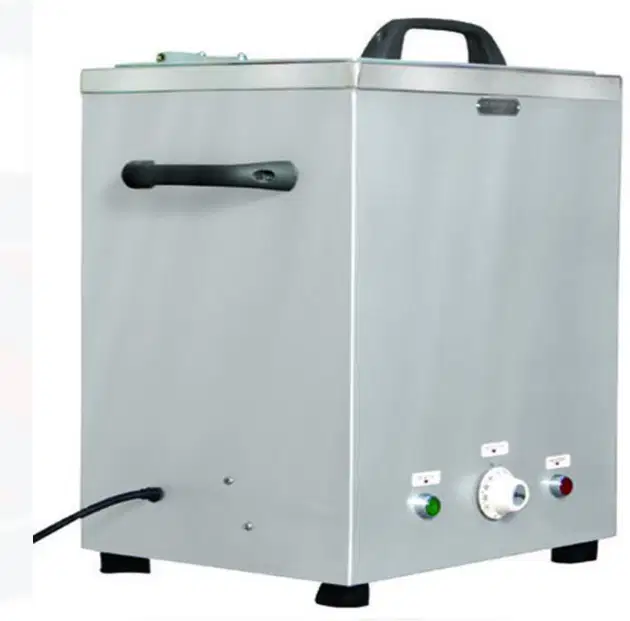
How long should items be boiled in water for sterilization according to the moist heat method?
10 minutes
20 minutes
30 minutes
60 minutes
Why is boiling water considered an unreliable method of sterilization?
It is too expensive
It cannot kill all spores and viruses
It takes too long
It damages all materials
Which of the following statements best explains why boiling water was once considered a fool-proof method of sterilization, but is now seen as unreliable?
Boiling water is now too costly to use regularly.
Newer methods are faster and more efficient.
Some spores and viruses can survive the boiling process, making it unreliable.
Boiling water damages most instruments.
Which method of sterilization is described as the most common and effective?
Steam Autoclaving
Dry Heat Sterilization
Chemical Sterilization
Radiation Sterilization
What is the temperature range used in steam autoclaving for sterilization?
100-110 degrees C
121-132 degrees C
80-90 degrees C
140-150 degrees C
How long are instruments typically exposed to pressurized steam in a steam autoclave?
10-15 minutes
20-25 minutes
30-40 minutes
50-60 minutes
What is the main principle behind the effectiveness of steam autoclaving?
Use of ultraviolet light
Use of intense pressure and steam
Use of chemical disinfectants
Use of dry heat
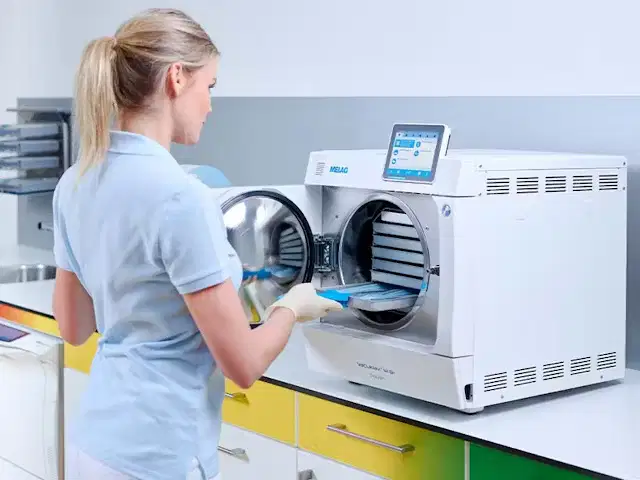
What is the device shown in the image commonly used for in medical and dental offices?
Mixing chemicals
Sterilizing instruments
Measuring blood pressure
Storing medications
Which of the following is used in chemical sterilization?
Liquid or gas chemicals
Only dry heat
Ultraviolet light
Microwave radiation
How long is the minimum time required when using chlorine for chemical sterilization?
2 hours
4 hours
6 hours
10 hours
Which chemical is mentioned as being used at a 6% concentration for sterilization?
Ethanol
Formaldehyde
Hydrogen peroxide
Iodine
CideX, a chemical sterilant, requires at least how many hours for effective sterilization?
2 hours
6 hours
8 hours
10 hours
A hospital is considering two chemical sterilization methods: one using chlorine and one using CideX. If they need to sterilize equipment as quickly as possible, which method should they choose and why?
Chlorine, because it requires a minimum of 6 hours
CideX, because it requires a minimum of 6 hours
Chlorine, because it requires a minimum of 10 hours
CideX, because it requires a minimum of 12 hours
Which method of sterilization is used for items that cannot be exposed to moist heat?
Dry Heat
Steam Sterilization
Chemical Sterilization
Radiation Sterilization
At what temperature range and for how long should items be exposed to dry heat for effective sterilization?
160 to 170 degrees C for at least 2 hours
100 to 110 degrees C for 30 minutes
200 to 210 degrees C for 10 minutes
80 to 90 degrees C for 4 hours
Why might dry heat sterilization be chosen over moist heat sterilization?
It is used for items that cannot be exposed to moist heat
It is faster than moist heat sterilization
It is less expensive than moist heat sterilization
It is more effective for all types of items
A hospital is considering different sterilization methods. If they choose a method that is difficult to monitor due to the lack of reliable indicators, which method are they most likely using?
Gas Sterilization
Boiling
Filtration
Ultraviolet Sterilization

