wayground logo

Free Printable Worksheets

NEW

Font size

S
M
L
XL
Worksheets

Advanced PE Anatomy Test

Total questions: 60

Worksheet time: 36mins

Name
Class
Date
1.

Name this muscle

a)

Biceps Femoris

b)

Gluteus Maximus

c)

Semitendinosus

d)

Vastus Medialis

2.
a)
Trapezius
b)
Gluteals
c)
Deltoid
d)
Hamstring
3.
a)
Abdominal
b)
External Oblique
c)
Pectorals
d)
Trapezius
4.
a)
Latissimius Dorsi
b)
Trapezius
c)
Triceps
d)
Erectors
5.
a)
Hamstring
b)
Quadriceps
c)
Gastronecmius
d)
Satorius
6.
a)
Hamstrin
b)
Quadricep
c)
Tibialis Anterior
d)
Gastrocenmius
7.
a)
Latissmius Dorise
b)
Erectors
c)
Deltoids
d)
Abdominal
8.

What muscle is the arrow pointing to?

a)

Biceps

b)

Triceps

c)

Lats

d)

Quads

9.

What muscle is the arrow pointing to?

a)

Pectoralis (Pecs)

b)

Biceps

c)

Triceps

d)

Lats

10.
a)
Quadriceps
b)
Satorius
c)
Hamstring
d)
Gastronecmius
11.

What are the primary muscles used for push ups?

a)

Rectus Abdominis

b)

Pectorals

c)

Obliques

d)

Deltoids

12.
a)

Latissimius Dorsi

b)

Erector spinae

c)

Deltoid

d)

Trapezius

13.
Which muscle group contracts to create shoulder abduction?
a)
Pectoral
b)
Deltoid
c)
Trapezius
d)
Quadriceps
14.

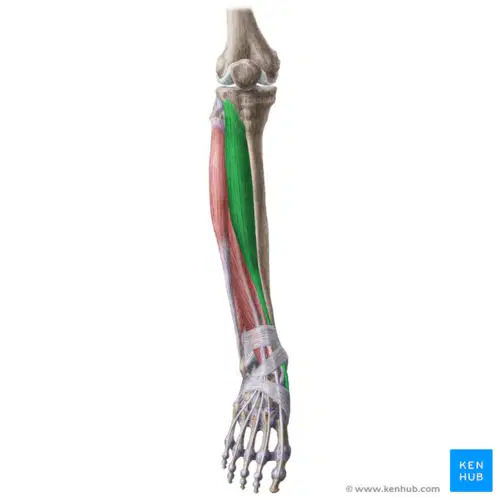
ID

a)

tibialis anterior

b)

peroneus group

c)

gastrocnemius

15.
The Vastus medialis, intermedius, lateralis and rectus femoris make up the...
a)
Hamstrings
b)
Calf muscles
c)
Quadriceps muscles
d)
Abdominal muscles
16.

What muscle points your toes, known as plantar flexion

a)

gastrocnemius

b)

tibialis anterior

17.
Adducts, extends, and medially rotates arm, pulls shoulder inferiorly.
a)
Trapezius
b)
Latissimus dorsi
c)
Diaphragm
d)
Quadratus lumborum
18.
The type of muscle contraction where the muscle tenses but does not shorten.  
a)
Isometric
b)
Isotonic
c)
Contraction
d)
relaxation
19.

What bone is the arrow pointing to?

a)

rib

b)

spine

c)

scapula

d)

clavicle

20.

What bone is the arrow pointing to (the bone closest to the thumb)?

a)

ulna

b)

humerus

c)

radius

d)

vertebrae

21.
a)
pelvis
b)
tibia
c)
sternum
d)
sacrum
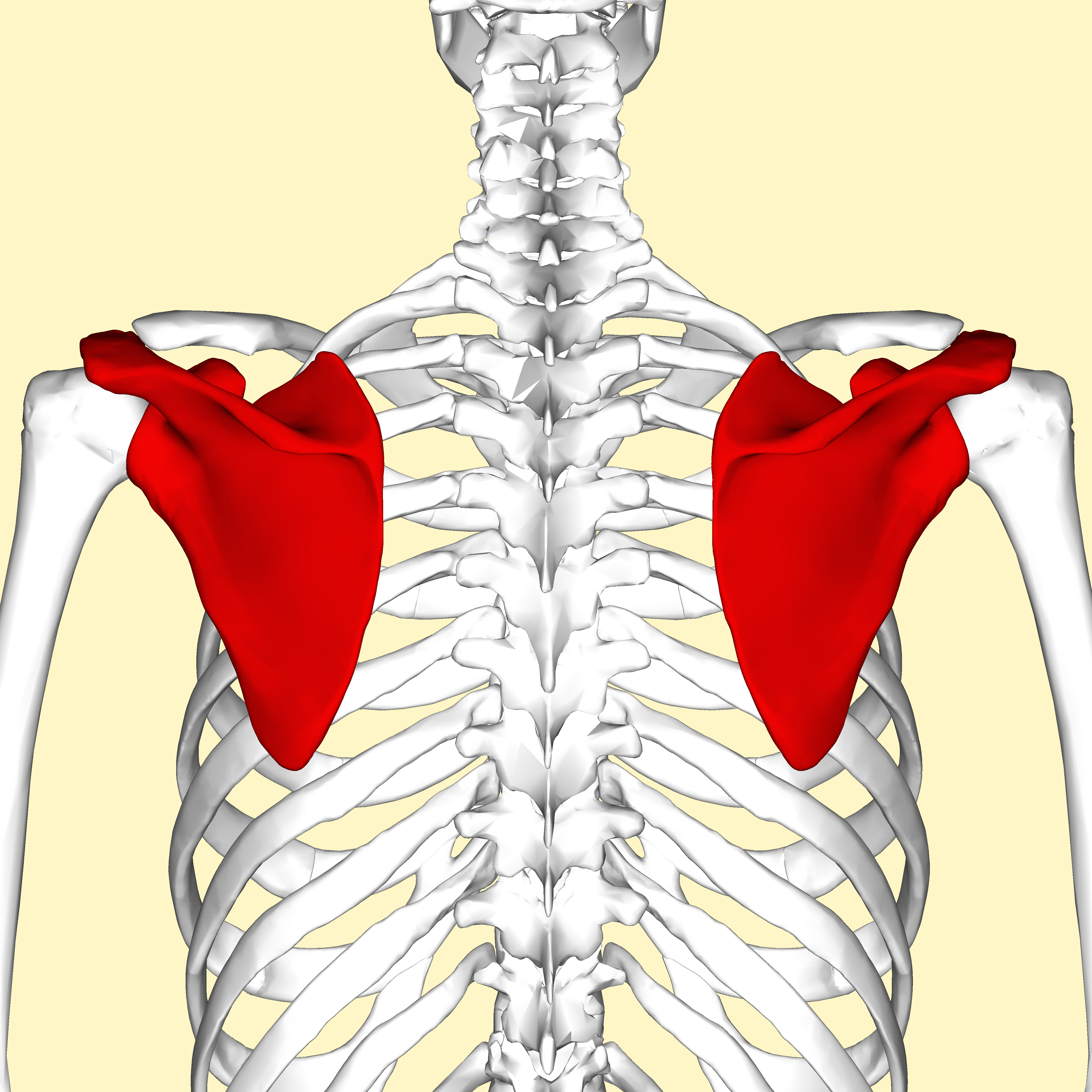
22.
What bones is represented in the  picture?
a)
Clavicle
b)
Scapula
c)
Sternum
d)
Carpals
23.
Also known as the kneecap
a)
Patella
b)
Tibia
c)
Fibula
d)
Femur
24.
Name this bone.
a)
femur
b)
humerus
c)
tibia
25.
Name this bone.
a)
femur
b)
radius
c)
tibia
26.
Name this bone.
a)
fibula
b)
tibia
c)
femur
27.
Name this bone.
a)
tibia
b)
fibula
c)
femur
28.

The section of this picture highlighted in green is called the _______________?

a)

Tibia

b)

Patella

c)

Ilium

d)

Fibula

29.

In this picture, what is represented in multi-colors?

a)

Carpals

b)

Tarsals

c)

Phalanges

d)

Radius

30.
The pink areas are the 
a)
appendicular skeleton
b)
axial skeleton
c)
blushing skeleton
31.

Which of these bones is not found in the arm?

a)

Ulna

b)

Femur

c)

Humerus

d)

Radius

32.

A ligament...

a)

Is a bone

b)

Help cushion at a joint

c)

attaches two muscles together

d)

Attaches bones to bones

33.

An example of a hinge joint is?

a)

The knee

b)

The hand

c)

The neck

d)

In your back

34.

A ball and socket joint are found?

a)

At the knee

b)

At the hip

c)

At the elbow

d)

Ankle

35.
Name the bone in red
a)
Ribs
b)
Tibia
c)
Metatarsals
d)
Phalanges
36.
Name the bone in green
a)
Phalanges
b)
Metatarsals
c)
TIbia
d)
Ribs
37.
Name the part of the spine in red
a)
Lumbar
b)
Cervicle
c)
Thoracic
d)
Sacral
38.
Name the part of the spine in red
a)
Thoracic
b)
Lumbar
c)
Cervicle
d)
Sacral
39.

Name the highlighted bone.

a)

femur

b)

axial skeleton

c)

fibula

d)

ulna

40.

What are the four types of bones?

a)

Long, short, medium, thin

b)

Regular, long, flat, short

c)

Flat, short, long, Irregular

d)

None of the options

41.

What type of bone is the patella?

a)

Sesamoid

b)

Irregular

42.

What is an example of an irregular bone?

a)

Humerus

b)

Phalanges

c)

Ribs

d)

Vertebrae

43.

Which of the following is a Blood vessel?

a)

Ventricles

b)

Heart

c)

Arteries

d)

Septum

44.

What is the role of veins in the cardiovascular system?

a)

Carry blood away from the heart

b)

Carry blood back to the heart

c)

Carry blood to the lungs

d)

Allows the exchanges of gases, nutrients and wastes between blood and the tissues

45.

What are the 3 main types of blood vessels?

a)

Capillaries, veins, aortas

b)

Capillaries, arteries, platelets

c)

Capillaries, veins, platelets

d)

Capillaries, veins, arteries

46.

Vasodilation can be defined as:

a)

A process in which blood vessels constrict causing a decrease in blood flow

b)

A process in which blood vessels increase their diameter causing an increase in blood flow

c)

A process in which blood vessels constrict causing an increase in blood flow

d)

A process in which blood vessels increase their diameter causing a decrease in blood flow

47.
What is the name of the circulation between the heart and lungs?
a)
Diastolic
b)
Systemic
c)
Pulmonary
d)
Coronary
48.
What is the name of the circulation between the heart and the body?
a)
Diastolic
b)
Systemic
c)
Pulmonary
d)
Coronary
49.
What is the name of the part labelled 3?
a)
Right Atrium
b)
Left Atrium
c)
Right Ventricle
d)
Left Ventricle
50.
What is the name of the part labelled 2?
a)
Right Atrium
b)
Left Atrium
c)
Right Ventricle
d)
Left Ventricle
51.
What is the function of a valve?
a)
Helps blood to clot
b)
Keeps blood flowing in all directions
c)
Keeps blood flowing in one direction
d)
Stops blood from flowing
52.
Which vessels carry blood away from the heart?
a)
arteries
b)
veins
c)
capillaries
53.
How many chambers does the heart have ? 
a)
4
b)
6
c)
3
d)
1
54.

Blood in the right atrium:

a)

Oxygenated

b)

Deoxygenated

55.

Blood in the left ventricle:

a)

Oxygenated

b)

Deoxygenated

56.

What carries oxygen around the body?

a)

Plasma

b)

Red Blood Cells

c)

Platelets

d)

White Blood Cells

57.

The number of times your heart beats in 1min (bpm)

a)

Heart Rate

b)

Stroke Volume

c)

Cardiac Output

58.

Cardiac Output Formula

a)

Breathing Rate x Heart Rate

b)

Heart Rate X Stroke Volume

c)

Liter/Minute X Heart Rate

59.

Normal blood pressure is...

a)

120/80 mmHg and below

b)

80/120 mmHg and below

c)

140/90 mmHg and below

d)

80/140 mmHg and below

60.

As a result of exercise, stroke volume is --------- in athletes

a)

Higher

b)

Lower