

wayground logo

Free Printable Worksheets

Font size

S
M
L
XL
Worksheets

Anatomy and Physiology revision quiz

Total questions: 60

Worksheet time: 33mins

Name
Class
Date
1.

Which of the following is NOT a muscle function?

a)

Movement of skeleton

b)

Heat generation

c)

stabilise joints

d)

Moves neurons around body

e)

maintain posture

2.

Flexion is best described as:

a)

a physical position that increases the angle between the bones of a limb at a joint

b)

a physical position that decreases the angle between the bones of the limb at a joint

3.

Extension is best described as:

a)

a physical position that decreases the angle between the bones of the limb at a joint

b)

a physical position that increases the angle between the bones of the limb at a joint

4.
Which of the following muscles extends the arm at the elbow?
a)
Triceps Brachii
b)
Quadricep
c)
Flexor Digitorum
d)
Brachioradialis
5.

Abduction is best described as:

a)

Movement away from the midline

b)

Movement towards the midline

6.

Adduction is best described as:

a)

Movement away from the midline

b)

Movement towards the midline

7.
Identify the joint action being performed.
a)
Extension
b)
Flexion
c)
Abduction
d)
Adduction
8.
Identify the joint action being performed.
a)
Extension
b)
Flexion
c)
Abduction
d)
Adduction
9.
What is the movement known as when the arms are taken away from the bodies midline in a lateral motion?
a)
Abduction
b)
Protraction
c)
Adduction
d)
Retraction
10.
When a muscle contracts and shortens developing tension it is known as a? 
a)
Isometric contraction
b)
Eccentric contraction
c)
Elasticity contraction
d)
Concentric contraction
11.
Which one of the following joint movements occur when you point your toes away?
a)
Dorsiflexion
b)
Plantar flexion
c)
Flexion
d)
Extension
12.
In the human body where would you find the Gastrocnemius?    
a)
Upper back
b)
Chest
c)
Lower leg
d)
Lower arm 
13.
What is the name given to the protective coating on the end of a bone?
a)
Cartilage 
b)
Ligament
c)
Tendon
d)
Periosteum
14.
The Hip and shoulder are both what type of synovial joint?
a)
Ball and socket
b)
Condyloid
c)
Hinge
d)
Gliding
15.
Which of the following is the name given to the connective tissue which connects ‘Bone to Bone’?
a)
Tendon
b)
Ligament
c)
Aponeurosis
d)
Muscle fascia
16.
What is the name given to the connective tissue that attaches muscle to bone?
a)
Ligament
b)
Tendon
c)
Patella
d)
Perimysium
17.

What term is given to the point where 2 or more bones meet?

a)

Joint

b)

Ligament

c)

Cartilage

18.
Which of the following movements can occur at the Elbow joint?  
a)
Abduction and Adduction 
b)
Rotation and Circumduction
c)
Flexion and Extension 
d)
Protraction and Retraction
19.
The elbows, knees, ankles and phalanges are examples of which type of synovial joint?
a)
Ball and socket
b)
Condyloid
c)
Gliding
d)
Hinge
20.
Rotation of the forearm until the palm faces upwards is called is known as?
a)
Supination
b)
External rotation
c)
Plantar flexion
d)
Pronation
21.

A hinge joint allows

a)

A wide range of movements

b)

Circumduction

c)

Rotation

d)

Movement in only one direction (ie. backwards & forwards)

22.

When kicking a football the knee

a)

Flexes

b)

Extends

c)

Abducts

d)

Adducts

23.
Identify the joint action being performed.
a)
Extension
b)
Flexion
c)
Abduction
d)
Adduction
24.
Identify the joint action being performed.
a)
Extension
b)
Flexion
c)
Abduction
d)
Adduction
25.
Identify the joint action being performed.
a)
Circumduction
b)
Lateral Rotation
c)
Medial Rotation
d)
Eversion
26.
Identify the joint action being performed.
a)
Inversion
b)
Eversion
c)
Plantarflexion
d)
Dorsiflexion
27.
The elbows, knees and phalanges are examples of this type of joint
a)
ball and socket
b)
condyloid
c)
gliding
d)
hinge
28.
This type of joint allows the your first two vertebrate to rotate as in shaking your head no
a)
condyloid
b)
gliding
c)
pivot
d)
saddle
29.
The knee joint is
a)
Hinge
b)
Gliding
c)
Ball and socket
d)
Pivot
30.

where are the hinge joints found

a)

fingers,skull,rib cage

b)

knees , elbows, wrist, skull

c)

fingers, toes, knees, elbows, and ankles.

d)

rib cage,wrist

31.

which direction does the hinge movement allows to move

a)

right

b)

left

c)

up only

d)

up and down

32.

Which movements are associated with hinge joints?

a)

bending, walking

b)

extension and flexion

33.
The type of muscle contraction where the muscle tenses but does not shorten.  
a)
Isometric
b)
Isotonic
c)
Contraction
d)
relaxation
34.
When a muscle shortens under tension, it is called_______
a)
isotonic eccentric contraction
b)
isotonic concentric contraction
c)
isometric concentric contraction
d)
isometric eccentric contraction
35.
When a muscle is under tension, it is not possible for it to be lengthening
a)
True
b)
False
36.
As the athlete lowers the weights, his biceps undergo-
a)
isometric concentric contraction
b)
isotonic eccentric contraction
c)
isometric contraction
37.
As this athlete jumps into the air, his quadriceps undergo-
a)
concentric contraction
b)
eccentric contraction
c)
isometric contraction
38.

What type of contraction is happening here??

a)

isostabilize

b)

isokinetic

c)

isotonic

d)

isometric

39.

identify the skeletal bone in the picture that is highlighted green and blue; also known as the breastbone

a)

clavilce

b)

Sternum

c)

Rib Cage

d)

verterbrae

40.

Identify the skeletal bone in the picture highlighted green

a)

fibula

b)

femur

c)

tibia

d)

phalanges

41.

Identify the skeletal bone in the picture highlighted red that is the upper arm or forelimb, forming joints at the shoulder and the elbow

a)

ribs

b)

phalanges

c)

patella

d)

humerus

42.

Identify the skeletal bone in the picture highlighted in red

a)

sternum

b)

ribs

c)

femur

d)

vertebrae

43.

What bone makes up your fingers and your toes?

a)

phalanges

b)

tibia

c)

femur

d)

scapula

44.

What bone is also known as your shoulder blade?

a)

Sternum

b)

Scapula

c)

Thorax

d)

Vertebrae

45.

What bone is also known as your collar bone and links the sternum?

a)

scapula

b)

vertebrae

c)

humerus

d)

clavicle

46.

Identify the skeletal bone in the picture highlighted in green; cartilage surrounds this bone to act as a shock absorber

a)

femur

b)

mandible

c)

humerus

d)

patella

47.

The functions are the skeletal system are

a)

To support the body, facilitate movement, protect the organs, and produce blood cells

b)

to regulate the composition of body fluids by removing metabolic wastes and retain the balance of water, salt, and other nutrients to reg the composition of body fluids by removing metabolic wastes and retain the balance of water, salt, and other nutrients

c)

to regulate and maintain bodily functions by producing hormones and releasing them into the blood stream

d)

to enable the diffusion of oxygen into the bloodstream and the removal of carbon dioxide from the bloodstream

48.

Whats Newtons First Law?

a)

The more force applied to an object the faster it will accelerate.

b)

An object in motion will stay in motion and an object at rest will stay at rest unless acted by an outside force.

c)

for every ection there is an equal and oposite reaction
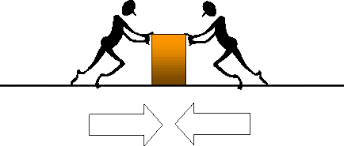
49.
If an object is stationary (not moving) the forces acting upon it are _____________
a)
unbalanced
b)
weak
c)
balanced
d)
Hulk Smash!
50.
For every action, there is an equal and opposite reaction.
a)
Newton's
1st
Law of Motion
b)
Newton's
2nd
Law of Motion
c)
Newton's
3rd
Law of Motion
51.

Newton's third law states that any action will have a(n) ___ and ___ reaction

a)

Equal and similar

b)

Equal and opposite

c)

Equal and different

d)

Greater and opposite

52.
What is Newtons 2nd law of motion?
a)
Pancakes 
b)
Force= Mass multiplied by acceleration
c)
For every action there is a equal and opposite  re-action.
d)
Law of gravity 
53.

What are the four types of bones?

a)

Long, short, medium, thin

b)

Regular, long, flat, short

c)

Flat, short, long, Irregular

d)

None of the options

54.

What are examples of long bones?

a)

Tibia

b)

Humerus

c)

Vertebrae

d)

Pelvis

e)

Femur

55.

What is the main function of long bones?

a)

Protection

b)

Shape

c)

Support

d)

Movement

56.

What is an example of a short bone?

a)

Phalanges

b)

Carpals

c)

Patella

d)

Vertebrae

57.

What is the main function of short bones?

a)

Movement

b)

Storage of minerals

c)

Support and stability

d)

Protection

58.

What are examples of flat bones?

a)

Ribs

b)

Phalanges

c)

Humerus

d)

Scapula

e)

Sternum

59.

What is the main function of flat bones?

a)

Protection

b)

Movement

c)

Blood cell production

60.

What is an example of an irregular bone?

a)

Humerus

b)

Phalanges

c)

Ribs

d)

Vertebrae
