
 Worksheets
Semester A Final Test
Total questions: 113
Worksheet time: 57mins
Name
Class
Date
1.

Who was John D. Rockefeller?
a)
Robber Baron of Steel
b)
Robber Baron of Cotton
c)
Robber Baron of Oil
d)
Robber Baron of Sugar
2.
Yellow Journalism
a)
exaggerated stories to attract attention
b)
tall tales
c)
yellow paper for journals
d)
journal entries about yellow objects
3.
Who were muckrakers?
a)
people who cleaned the streets
b)
people that went swimming in the river
c)
people who went undercover to expose corrupt crimes
4.
What is isolationism?
a)
remaining apart from the affairs of other countries
b)
to isolate yourself
c)
to isolate a country from trade
d)
to isolate a world leader from trade
5.
What is reparations?
a)
to repair buildings
b)
to repair plumbing
c)
to pay money back for wrongdoing
d)
to repay a friend
6.
What is hyperinflation?
a)
a hyper child inflating a balloon
b)
a general increase in prices and fall in the purchasing value of money.
c)
inflation in the stock market on an item
d)
online currency
7.
The Dawes Plan
a)
was to help rebuild Europe in the aftermath of bombings
b)
american banks lend money to Germany for reparations
c)
the US plan to intervene in Latin American Affairs
d)
The US plan to intervene in world affairs
8.
Mass production
a)
large scale manufacturing with machinery
b)
operation broken to simple tasks
c)
selling of goods through advertisements
d)
production using a massive machine
9.
Assembly line
a)
large scale manufacturing with machinery
b)
operation broken to simple tasks
c)
selling of goods through advertisements
d)
production using a massive machine
10.
What new technology was introduced in peoples homes during the 1920s?
a)
Television
b)
Internet
c)
Radio
d)
Microwaves
11.
What did Henry Ford do for the common man?
a)
ability to afford a car
b)
ability to own a mansion
c)
ability to go to college
d)
ability to own a share
12.
What happened with the Wright Brother's patent?
a)
the railroad industry formed
b)
the oil industry formed
c)
the car industry formed
d)
the airline industry formed
13.
What new idea was used during the 1920s of buy now, pay later?
a)
Foreclosure
b)
Credit
c)
Debt
d)
Karma
14.
What was the trigger that started the chain of events for the Great Depression?
a)
Stock Market Crash October 21, 1929
b)
Stock Market Crash November 4, 2007
c)
Farmers Market Crash October 4, 1929
d)
Farmers Market Crash November 8, 1930
15.
A bank run is
a)
when people rush to withdraw their money
b)
when the bank run to the government for money
c)
a run for free money
d)
an organization that transfers money to the banks
16.
The Hawley-Smoot Tariff
a)
intended to protect farmers turned to protect other industries
b)
intended to protect unions turned to protect individuals
c)
intended to protect capitalists turned to protect socialists
17.
tariff
a)
tax on an exported good putting burden on consumers (buyers)
b)
tax on an imported good putting burden on consumers (buyers)
18.
Speakeasies
a)
an underground venue established to sell alcohol
b)
an underground venue to protest against the government
c)
a venue to to share political beliefs
d)
a venue to share art
19.
Why did the United States practice isolationism?
a)
they did not want to get involved in Latin American Affairs
b)
the did not want to get involved in West African Affairs
c)
They did not want to get involved in East Asian Affairs
d)
They did not want to get involved in European Affairs
20.
What was the farming crisis?
a)
Overproduction of food, not enough demand
b)
Overproduction of food, too much demand
c)
Underproduction of food, not enough demand
d)
Underproduction of food, too much demand
21.
What happened to the land in the Great Plains of the Midwest?
a)
grassland, overworked, erosion, drought
b)
grassland, fertile, healthy, water
c)
rocky, overworked, dry, drought
d)
rocky, maintained, erosion, water
22.
What was Black Sunday?
a)
tornadoes that destroyed crops and life
b)
dust storms that buried crops and life
c)
tsunamis that destroyed crops and life
d)
droughts that destroyed crops and life
23.
Who were the Okies?
a)
Migrants that came from the east coast escaped the dust bowl and settled in California
b)
Migrants that came from Canada who escaped the dust bowl and settled in California
c)
Migrants from the great plains who escaped the dust bowl and settled in California
d)
Migrants that came from the southwest who escaped the dust bowl and settled in California
24.
What was President Herbert Hoover's response to the Great Depression?
a)
worked to have more economic policies passed to help americans
b)
broke up big business and monopolies
c)
introduced the New Deal
d)
declared war
25.
What was President Franklin Delano Roosevelt's response to the Great Depression?
a)
worked to have more economic policies passed to help americans
b)
broke up big business and monopolies
c)
introduced the New Deal
d)
declared war
26.
What were the 3 R's for the New Deal?
a)
Relief, Revenge, Resort
b)
Reform, Relax, Resistance
c)
Relief, Reform, Recovery
d)
Rebel, Recovery, Resort
27.
What was the 2nd new deal about?
a)
the 3 R's
b)
have reform on green energy
c)
have reform on the factory system
d)
new set of government programs
28.
What event ended the Great Depression?
a)
The bombing of Pearl Harbor
b)
The bombing of Hiroshima
c)
The bombing of Nagasaki
d)
The bombing of London
29.
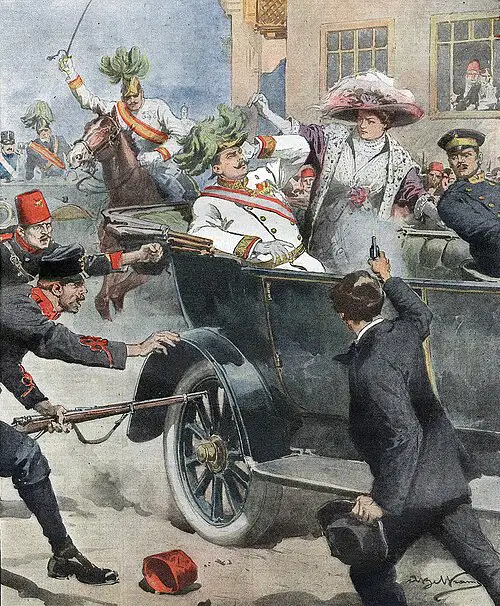
What was the "spark" that started WWI?
a)
Assassination of JFK
b)
Assassination of Czar Nicolas II
c)
Assassination of Archduke Franz Ferdinand
d)
Assassination of Archduke Franklin Frankfurter
30.
Who was Serbia's (the groups that carried out the assassination) ally in the event war would break out?
a)
Germany
b)
Austria Hungary
c)
France
d)
Russia
31.
What is militarism?
a)
aggressive preparation for war
b)
training in the mountains
c)
preparation for changing the land
d)
training soldiers with sticks
32.
Alliances are
a)
mutual support in establishing trade corporations
b)
mutual support of one another in the event of a war
c)
invasion of a country
d)
establishing influence over colonies
33.
The Triple Alliance (Central Powers) were
a)
Austria- Hungary, Germany, Italy
b)
France, Great Britain, Russia
34.
The Triple Entente (Allied Powers) were
a)
Austria- Hungary, Germany, Italy
b)
France, Great Britain, Russia
35.
Imperialism
a)
mutual support of one another
b)
aggressive build up of military power
c)
extreme pride of your country
d)
competition for lands abroad
36.
Nationalism
a)
mutual support of one another
b)
aggressive build up of military power
c)
extreme pride of your country
d)
competition for lands abroad
37.
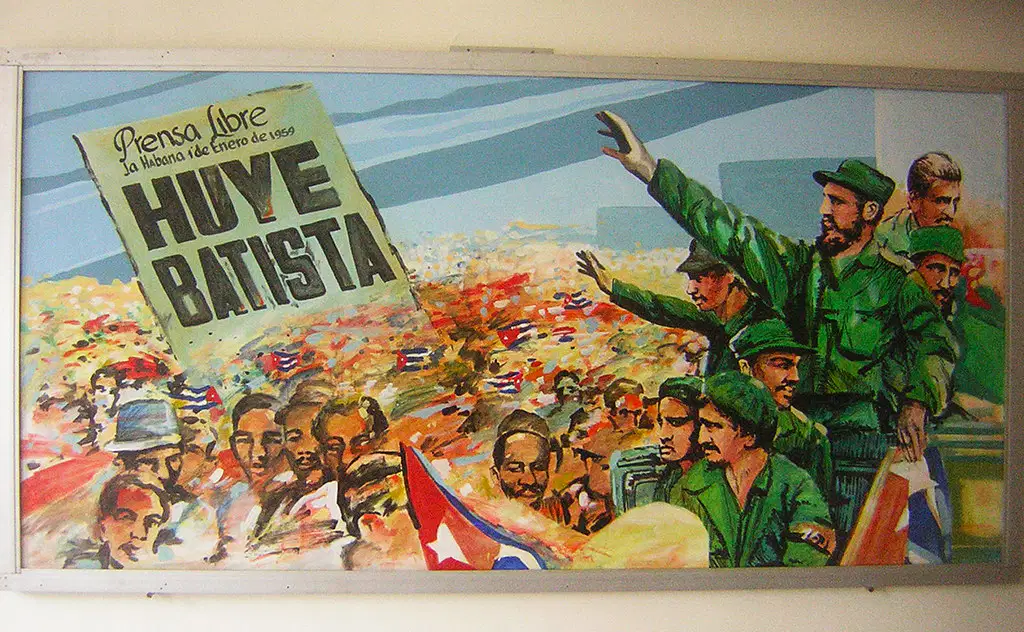
Propaganda is used
a)
to influence you and use of misinformation
b)
to make you buy something and donate your money
c)
to spread influence towards religion
d)
to make you join a team
38.
The amendment for women's suffrage was
a)
17th
b)
18th
c)
19th
d)
20th
39.
What events got the US involved during WWI?
a)
Zimmerman Telegram and bombing of Lusitania
b)
Zimmerman Telegram and the bombing of the Maine
c)
Ziggler Telegram and bombing of Arizona
d)
Ziggler telegram and bombing of California
40.
isolationism
a)
to be away from others
b)
to exclude a country from trade
c)
to exclude a world leader
d)
remaining away from political/economic affairs of others
41.
What is a draft?
a)
where you win a lottery ticket
b)
you get a grocery bill
c)
where men and women join the army to serve
d)
where children work in factories
42.
Rationing
a)
use of reason
b)
influence peoples opinion
c)
increasing use of food, supplies, materials
d)
scaling back on food, supplies, materials
43.
European nations set up
a)
free market economies
b)
planned economies
44.
The National War & Labor Board
a)
prevented strikes, organized 8 hr work days, allowed unions
b)
organized strikes, prevented 8 hr workdays, not allow unions
45.
Espionage Act
a)
illegal to aid the enemy, share state secrets
b)
illegal to speak against war
c)
illegal to protest against courts
d)
illegal to share information in the newspapers
46.
Sedition Act
a)
illegal to aid the enemy, share state secrets
b)
illegal to speak against war
c)
illegal to protest against courts
d)
illegal to share information in the newspapers
47.
How were early planes used during WWI?
a)
to drop atomic bombs
b)
as surveillance
c)
for blitzkrieg attacks
d)
for dogfights
48.
war of attrition
a)
fast surprise attacks sabotaging equipment
b)
wearing down other side constant attacks & heavy losses
c)
lightning strikes with equipment
49.
why did Russia withdraw from WWI?
a)
sank into a civil war
b)
assassination of the czar
c)
coup of the government
d)
elections for a new president
50.
Armistice
a)
continue fighting wear down the enemey
b)
right to bear arms
c)
lay down of weapons and open to peace talks
d)
arms wide open festival
51.
When was the Armistice signed?
a)
November 6, 1919
b)
November 11, 1918
c)
May 30, 1918
d)
May 4, 1918
52.
What country did NOT join the League of Nations
a)
United States
b)
United Kingdom
c)
Greece
d)
Japan
53.
What happened to the Austria-Hungary Empire?
a)
it maintained the empire
b)
it had to give up territory
c)
it broke down into new nations
54.
Who were the Big Three at the Paris Peace Conference?
a)
Russia, France, Germany
b)
Russian, France, Great Britain
c)
United States, France, Great Britain
d)
United States, Germany, Great Britain
55.
What did President Woodrow Wilson want to create
a)
a world order for democracy and cooperation - League of Nations
b)
a world order for democracy and cooperation - United Nations
c)
a world order for tyranny and oppression - League of Doom
d)
a world order for tyranny and oppression - United Communism
56.
What is NOT an example of a Democratic Reform?
a)
Primary elections
b)
Tariffs
c)
Initiatives
d)
Referendum
e)
Recall
57.
What is suffrage?
a)
the right to bear arms
b)
to suffer
c)
to vote
d)
to arrest
58.
What demographic (group of people) advocated for social reforms?
a)
Women
b)
Men
c)
Children
59.
What was a change in city codes after the Triangle Shirtwaist fire?
a)
having closed and locked doors
b)
close together work spaces
c)
use of sprinkler systems and alarrns
d)
no windows in buildings
60.
What amendment was passed banning the manufacture, selling, and transportation of alcohol?
a)
17th
b)
18th
c)
19th
d)
20th
61.
What was the temperance movement (WCTU) about?
a)
to stop gambling
b)
to stop organized sports
c)
to preserve land
d)
to stop or moderate alcohol consumption
62.
What is socialism?
a)
individuals control the means of production for profit
b)
government owns and operates the means of production
c)
government own and controls all aspects of production
63.
Social Darwinism is
a)
nations compete where only the strongest survive
b)
people join a secret society
c)
buying up stock in a company
64.
Environmental Conservation
a)
creating safe building codes
b)
preserving natural resources
c)
violent overthrow of the government
d)
establishing trade routes
65.
What divided the Republican Party under President Howard Taft?
a)
Parks
b)
Buildings
c)
Tariffs
d)
Monopolies
66.
Who became President in the election of 1912?
a)
Theodore Roosevelt
b)
William Howard Taft
c)
Woodrow Wilson
d)
Franklin Delano Roosevelt
67.
Spheres of Influence is
a)
the right to vote
b)
a section of a country where a foreign nation enjoys special privileges
c)
industrial region in S California and the Deep South
d)
a place where beverages are sold illegally
68.
Open Door Policy
a)
a door of free access to home
b)
a housing policy for immigrants
c)
the White House press briefings
d)
allowing foreign nation in China to trade freely in the other nation’s sphere
69.
Dollar Diplomacy
a)
a policy of joining the business interests of a country abroad
b)
a policy to give into unjust demands
c)
a way to increase the money supply
d)
a way to decrease the money supply
70.
Guerillas
a)
An animal native home in Africa
b)
motar shell attacks
c)
quick surprise attacks sabotaging areas
71.
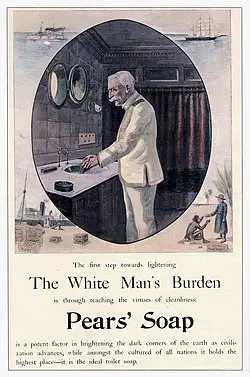
White Man's Burden
a)
to take care of the middle class
b)
to take care of less "civilized people"
c)
to take care of the lower class
72.
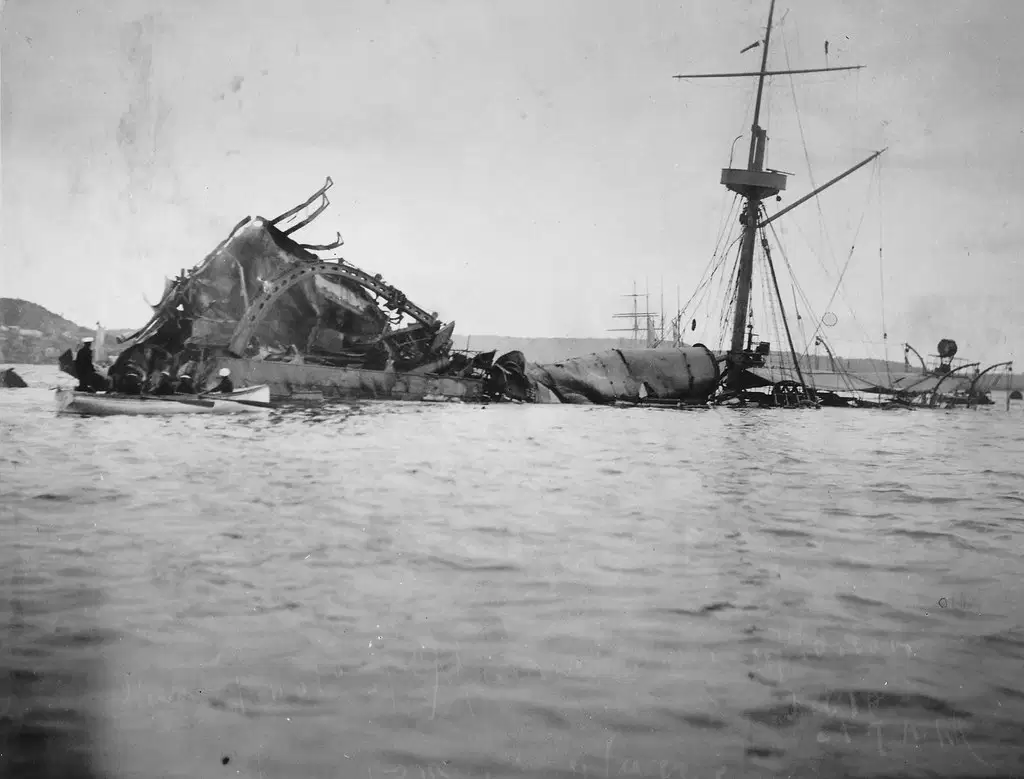
Remember the ______ from Spain!
a)
Vermont
b)
Maine
c)
California
d)
Nevada
73.
What was the outcome of the Battle of Manila Bay?
a)
America helped Filipino rebels control of the Philippines
b)
America helped Cuban rebels gain control of Cuba
c)
America helped Japanese rebels gain control of China
74.

What happened to Cuba?
a)
became a US territory
b)
became a colony
c)
became an independent nation
75.

What happened to Guam?
a)
became a US territory
b)
became a colony
c)
became an independent nation
76.

What happened to the Philippines?
a)
became a US territory
b)
became a colony
c)
became an independent nation
77.
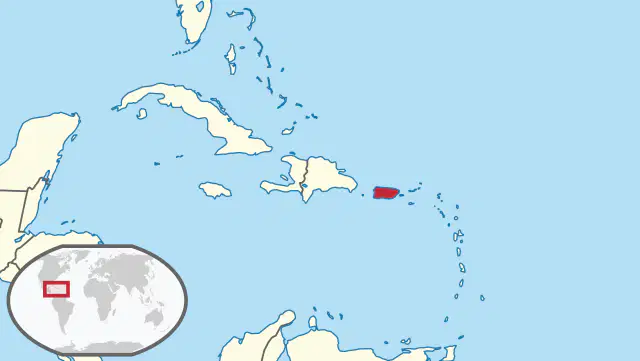
What happened to Puerto Rico?
a)
became a US territory
b)
became a colony
c)
became an independent nation
78.
Ho much did the US pay Spain for the Philippines?
a)
$20,000
b)
$20,000,000
c)
$2,000,000
d)
$2
79.
What is NOT a condition of the PLATT Amendment?
a)
Cuba not make a treaty with another nation
b)
Cuba allow US to buy or lease naval stations (especially Guantanamo Bay)
c)
Cuba’s debts had to be low to prevent foreign countries to enforce payment
d)
Establish a democratic government
e)
US would intervene to protect Cuban independence and keep order
80.
When did the Philippines gain independence?
a)
1899
b)
1917
c)
1946
d)
1980
81.
What was built in Panama?
a)
a bridge
b)
a monument
c)
a canal
d)
a freeway
82.
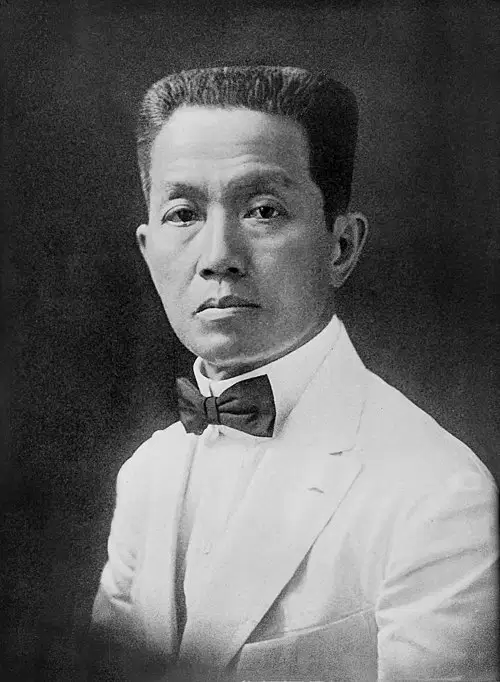
Who is this?
a)
Theodore Roosevelt
b)
William Howard Taft
c)
Emilio Aguinaldo
83.

Who is this?
a)
Theodore Roosevelt
b)
William Howard Taft
c)
Emilio Alguinaldo
84.

Who is this?
a)
Theodore Roosevelt
b)
William Howard Taft
c)
Emilio Aguinaldo
85.
What was the Roosevelt Corollary?
a)
The US would intervene in Europe's affairs when necessary
b)
The US would intervene in Latin American affairs when necessary
c)
The US would intervene in E Asia affairs when necessary
86.

Extra Credit: What does this represent?
a)
Imperialism
b)
Dollar Diplomacy
c)
Yellow Journalism
d)
Guerilla Warfare
87.
Who was Andrew Carnegie?
a)
Robber Baron of Steel
b)
Robber Baron of Cotton
c)
Robber Baron of Oil
d)
Robber Baron of Sugar
88.

What industry was Henry Ford in charge of?
a)
Clothing
b)
Automobiles
c)
Food
d)
Steel
89.
What did J.P. Morgan invest in?
a)
Cotton
b)
Sugar
c)
Steel
d)
Electricity
90.
Laissez-faire
a)
to impose a tax
b)
a tool to fight lobbying of unions
c)
a proposed law by a governing body
d)
"let it be" - government interfere as little as possible
91.
Tariffs
a)
Tax on imported goods
b)
Tax on exported goods
92.
What did Henry Bessemer do?
a)
Refined kerosene to gasoline
b)
Refined corn to syrup
c)
Refined the steel making process
d)
Refined the cotton process
93.
Who was Nikola Tesla?
a)
Apprentice to John Adams, introducing DC technology
b)
Apprentice to Thomas Edison, introducing DC technology
c)
Apprentice to Thomas Edison, introducing AC technology
d)
Apprentice to Elon Musk, introducing AC technology
94.
What company was Carnegie Steel changed to by J.P. Morgan?
a)
Exxon Steel
b)
US Steel
c)
Standard oil
d)
Volks Steel
95.
What was being built in Panama?
a)
A bridge
b)
A building
c)
A museum
d)
A canal
96.
What system did Henry Ford innovate?
a)
The Iron Curtain
b)
hydraulic mining
c)
the assembly line
d)
homesteading
97.
What was the verdict of US v Standard Oil?
a)
Standard Oil can continue operating as is
b)
Standard Oil can expand outside the US
c)
Standard Oil needed to break up in smaller companies
98.
Who won in Ford v. A.L.A.M? (Automobile case)
a)
A.L.A.M because the patent was unique
b)
A.L.A.M because the patent was the same
c)
Ford because the patent was unique
d)
Ford because the patent was the same
99.
A monopoly is
a)
when a person sells stock to raise money
b)
when a person or company has control of a good or service
c)
when a company buys up a company's shares
d)
when a company controls the stock of another business
100.
A strike is
a)
refusal to work until employer agrees to negotiate for better conditions for employees
b)
a cut in a workers pay
c)
an increase in salary
d)
cooperating to work under an employer in great working conditions
101.
What Act was passed in 1882?
a)
The Marriage Act
b)
The Chinese Exclusion Act
c)
Tax Act
d)
Homestead Act
102.
What islands did immigrants go through to come to the US?
a)
Honolulu and Ellis
b)
Alcatraz and Angel
c)
Ellis and Angel
d)
Angel and Manila
103.
Who was "Boss Tweed"?
a)
Party Boss that ran Tammany Hall in New York
b)
Party Boss that ran Orpheum Theater in San Francisco
c)
Party Boss than ran Tammany Hall in San Francisco
d)
Party Boss that ran Carnegie Hall in New York
104.
What book did Upton Sinclair write?
a)
Adventures of Huckleberry Finn
b)
The Gilded Age
c)
The Jungle
d)
Animal Farm
105.
What book did Mark Twain write?
a)
The Adventures of Huckleberry Finn
b)
Birth of a Nation
c)
The Jungle
d)
Animal Farm
106.
What did Charles Darwin propose?
a)
Heliocentric
b)
Trigonometry
c)
Literacy Tests
d)
Natural Selection
107.
Philanthropy
a)
Acts of prayer
b)
Acts of helping the poor
c)
Acts of strength
d)
Acts of helping the wealthy
108.
Americanization
a)
Teaching English and history for the workforce
b)
Teaching Christianity and making converts work the land
c)
Teaching English and farming
d)
Teaching Catholicism and converts work the land
109.
What was the South's response to the 15th Amendment?
a)
passed Jim Crow laws, economic policies, allow free votes
b)
passed Jim Crow laws, literacy tests, and gave money to vote
c)
passed Jim Crow laws, poll taxes, literacy tests to vote
110.
What were some reasons that immigrants came to America?
a)
American Dream, escape religious persecution, social class
b)
Fame, wealth, power
c)
Land, bread, peace
d)
Land, Liberty, Property
111.

Who is this?
a)
Woodrow Wilson
b)
Theodore Roosevelt
c)
Howard Taft
d)
Franklin Roosevelt
112.

Who is this?
a)
Herbert Hoover
b)
Theodore Roosevelt
c)
Woodrow Wilson
d)
Franklin Roosevelt
113.

Who is this?
a)
Woodrow Wilson
b)
Theodore Roosevelt
c)
Herbert Hoover
d)
Franklin Roosevelt
100 %

