
 Worksheets
Genetically Modified Organisms and Transgenics Quiz
Total questions: 100
Worksheet time: 50mins
Qual é o tema principal do material de aprendizagem mostrado na imagem?
O processo de fotossíntese
Organismos geneticamente modificados e transgênicos
O ciclo da água
Anatomia humana
A que disciplina pertence o material de aprendizagem?
Química
Física
Biologia
Matemática
Com base no título, que questão está sendo explorada nesta lição?
Todos os organismos geneticamente modificados são transgênicos?
Como as plantas crescem?
Qual é a função do coração?
Como a gravidade funciona?
O que significa a sigla OGM no contexto da biologia?
Organismos Geneticamente Modificados
Mecanismo de Crescimento Orgânico
Material Genético Organizado
Mutação Genética Original
Qual dos seguintes tópicos NÃO está listado como área de conteúdo no material de aprendizagem?
Organismos Geneticamente Modificados (OGM)
Transgênicos
Biossegurança
Fotossíntese
Qual é um dos objetivos de estudar Organismos Geneticamente Modificados (OGM) de acordo com o material?
Reconhecer o que são Organismos Geneticamente Modificados (OGM)
Aprender sobre a história da agricultura
Estudar o comportamento animal
Memorizar a tabela periódica
De acordo com os objetivos, por que é importante discutir a biossegurança?
Para preservar e conservar a biodiversidade
Para aumentar os preços dos alimentos
Para reduzir o número de espécies
Para eliminar todos os organismos geneticamente modificados
Por que é importante entender a diferença entre OGM e transgênicos?
Porque isso ajuda na aplicação de medidas de biossegurança e na compreensão de seu impacto sobre a biodiversidade
Porque isso ajuda a aprender novos idiomas
Porque é necessário para receitas de culinária
Porque é necessário para o treinamento esportivo
Qual é a origem do nome "cupuacu"?
Vem das palavras tupi "kupu" e "uasu"
Vem da palavra latina para fruta
É nomeado em homenagem a um rio na Amazônia
É um termo científico moderno
O que pesquisadores do Instituto de Biociências (IB) da USP descobriram sobre o cupuaçu?
É uma espécie domesticada por populações indígenas
É uma espécie selvagem encontrada apenas na África
É uma fruta descoberta recentemente
É um tipo de cacau
De acordo com a pesquisa, há quanto tempo ocorreu a domesticação do cupuaçu pelas populações indígenas?
Há mais de 5.000 anos
Há 500 anos
Há 100 anos
Há 50 anos
Qual era a crença anterior sobre o cupuaçu antes das pesquisas recentes?
Pensava-se que era uma espécie nativa
Acreditava-se que era venenoso
Era considerado um vegetal
Pensava-se que estava extinto
O que significa a palavra Tupi "kupu"?
Que se parece com cacau
Fruta grande
Fruta doce
Planta amazônica
O que significa a palavra tupi "uasu"?
Grande
Doce
Marrom
Selvagem
Por que a descoberta sobre o cupuaçu é importante para entender a história amazônica?
Mostra o papel dos povos indígenas na domesticação de plantas
Prova que o cupuaçu não é comestível
Mostra que o cupuaçu não é da Amazônia
Revela que o cupuaçu é um tipo de animal
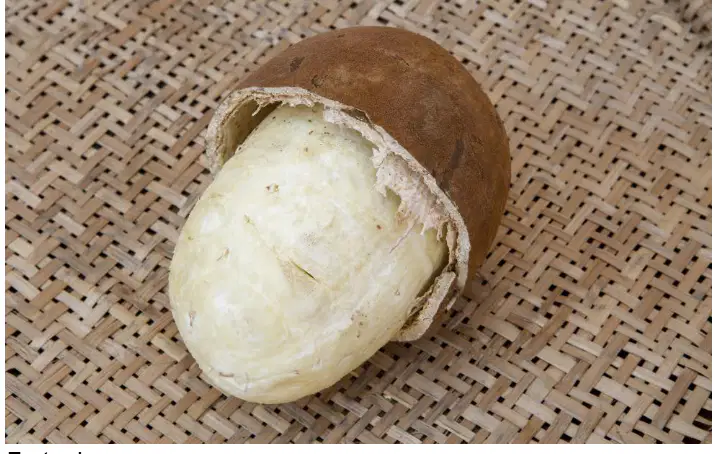
Que fruta está mostrada na imagem?
Cupuacu
Banana
Manga
Abacaxi
Que processo levou ao surgimento do cupuaçu como fruta cultivada?
Evolução natural sem intervenção humana
Domesticação do cupuí pelos povos indígenas
Importação de outros continentes
Mutação causada por mudanças climáticas
O que significa o termo "retrocruzamento" no melhoramento de plantas?
Cruzar duas plantas não relacionadas
Cruzar um descendente de planta com a planta parental
Misturar sementes de diferentes espécies
Cultivar plantas em diferentes solos
De acordo com o texto, o que os povos indígenas fizeram para desenvolver frutos de cupuaçu maiores?
Eles usaram fertilizantes químicos
Eles selecionaram e cruzaram frutos maiores ao longo das gerações
Eles importaram sementes de outras regiões
Eles plantaram apenas na estação chuvosa
Por que o retrocruzamento é importante na domesticação de plantas como o cupuaçu?
Ajuda a criar novas espécies rapidamente
Permite o desenvolvimento de características desejadas ao longo das gerações
Impede que as plantas cresçam demais
Reduz a necessidade de água
Com base nas informações, qual é o significado genético da domesticação do cupuaçu?
Ela aumenta a diversidade genética da espécie
Ela fixa características desejáveis, como frutos maiores, por meio da seleção artificial
Ela torna a planta resistente a todas as doenças
Ela elimina a necessidade de novos cruzamentos
Qual é um exemplo de seleção artificial na agricultura mencionado no texto?
Milho
Trigo
Arroz
Batata
De acordo com análises de DNA, como era o ancestral do milho moderno?
Uma planta com poucos grãos e uma casca dura
Uma planta com muitos grãos e uma casca macia
Uma árvore com folhas grandes
Um arbusto com flores vermelhas
Qual é uma característica de interesse na seleção artificial do milho?
A cor do grão
A altura da planta
O formato das folhas
O sabor das raízes
Por que diferentes populações realizaram cruzamentos no milho ao longo de 9.000 anos?
Para beneficiar características desejáveis
Para tornar a planta mais alta
Para reduzir o número de grãos
Para transformar a planta em uma árvore
Hoje, o que diferentes variedades da mesma espécie de milho produzem?
Grãos com propriedades físicas distintas
Grãos idênticos
Apenas grãos amarelos
Grãos sem casca
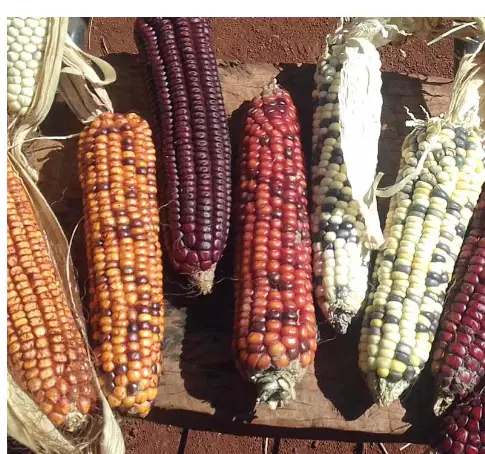
Esta imagem mostra:
A diversidade de variedades de milho resultante da seleção artificial.
Diferentes tipos de trigo.
Uma plantação de milho.
Um experimento de laboratório.
O que significa a sigla OGM?
Organismos Geneticamente Modificados
Organismos Geralmente Modificados
Organismos Geneticamente Modernos
Organismos Globalmente Misturados
Qual é uma característica chave dos Organismos Geneticamente Modificados (OGMs)?
Eles têm alterações em seus genes feitas artificialmente.
Eles são encontrados apenas na natureza.
Eles não podem ser usados na agricultura.
Eles são sempre prejudiciais aos humanos.
O que significa o termo "transgênico"?
Organismos com genes de outros organismos inseridos neles.
Organismos que são apenas selecionados naturalmente.
Organismos que não foram geneticamente modificados.
Organismos que são encontrados apenas na água.
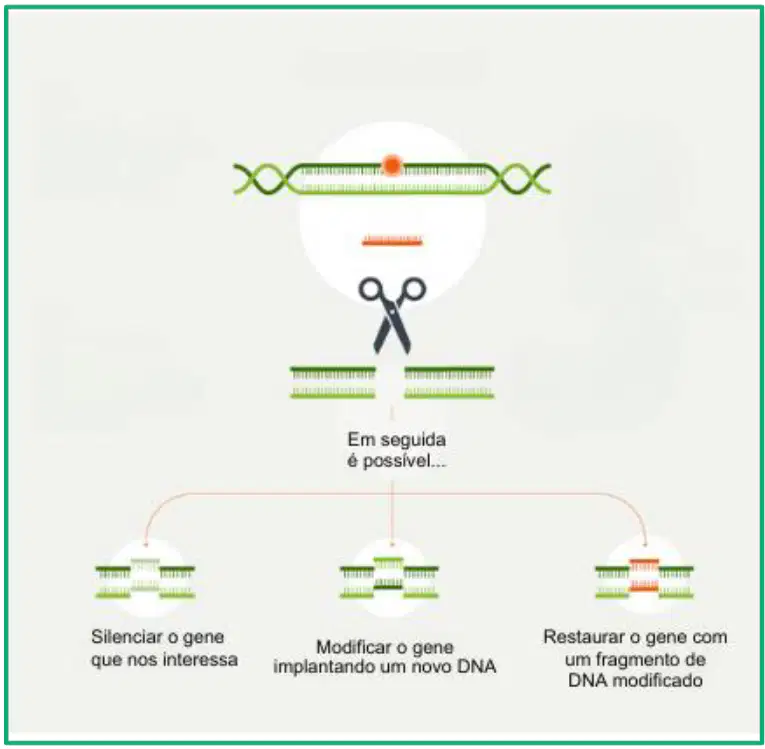
Qual é um dos passos que os cientistas podem tomar após identificar e isolar uma região de DNA que desejam modificar?
Silenciar o gene de interesse
Multiplicar o gene aleatoriamente
Remover todo o DNA da célula
Mudar a cor do organismo
Por que os cientistas usam moléculas que agem como tesouras na modificação genética?
Para cortar regiões específicas do DNA para modificação
Para tornar o DNA mais longo
Para colorir o DNA
Para fazer o organismo crescer mais rápido
A seleção artificial é um processo utilizado na agricultura para melhorar as características de plantas e animais. Qual das opções a seguir melhor descreve um resultado desse processo?
Aumento da biodiversidade em ecossistemas naturais.
Desenvolvimento de variedades com características desejadas.
Redução da produção de alimentos em áreas agrícolas.
Extinção de espécies de plantas cultivadas.
A seleção artificial é um processo utilizado na agricultura para melhorar as características de plantas e animais. Qual das alternativas a seguir melhor descreve um resultado desse processo?
Aumento da biodiversidade em ecossistemas naturais.
Desenvolvimento de variedades com características desejadas.
Redução da produção de alimentos em áreas agrícolas.
Extinção de espécies de plantas cultivadas.
O que é transgênese?
Uma técnica em que genes de outros organismos são inseridos em um ser vivo para modificá-lo.
Um processo de seleção natural em plantas.
Um método de clonagem de animais.
Uma forma de aumentar o tamanho dos frutos usando fertilizantes.
O que acontece com o “novo material genético” após ser inserido no organismo receptor?
Ele é destruído pelo organismo.
Ele é replicado, modificando o organismo receptor.
Ele faz com que o organismo morra.
Ele se transforma em um vírus.
Em um laboratório, o que é removido da espécie doadora para ser inserido na receptora?
Uma proteína
Um gene (pedaço de DNA)
Uma membrana celular
Uma molécula de açúcar
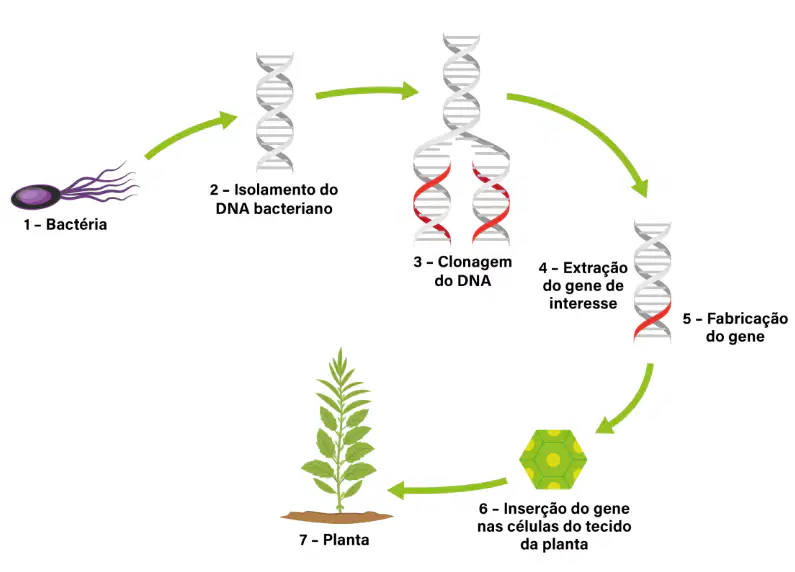
Com base no diagrama, qual é a etapa final no processo de criação de uma planta transgênica?
Clonagem do DNA
Isolamento do DNA bacteriano
Inserção do gene nas células da planta
Extração do gene de interesse
Por que o gene da espécie doadora é inserido no organismo receptor?
Para tornar o organismo receptor idêntico ao doador
Para modificar o organismo receptor com novo material genético
Para remover características indesejadas do receptor
Para aumentar o tamanho do organismo receptor
Qual das alternativas a seguir melhor descreve um organismo transgênico?
Um organismo que possui apenas seus genes originais
Um organismo que recebeu genes de outra espécie
Um organismo que foi clonado
Um organismo que foi exposto à radiação
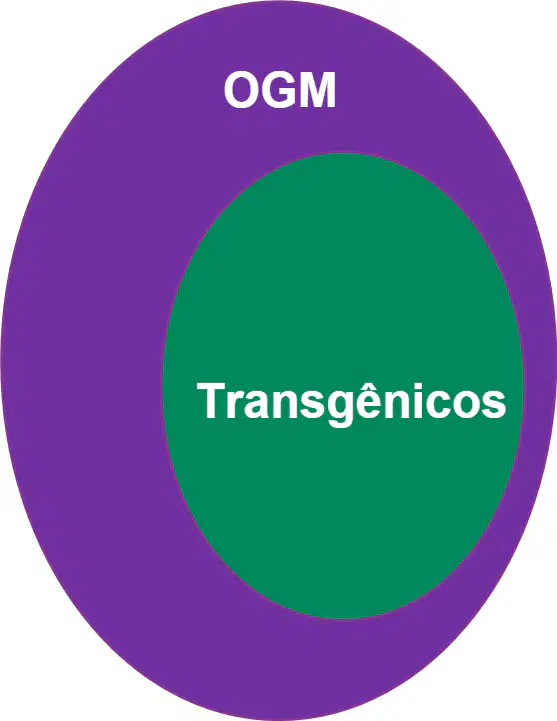
Com base nas informações anteriores e na observação do diagrama, qual das duas afirmações está correta?
Apenas a afirmação 1 está correta.
Apenas a afirmação 2 está correta.
Ambas as afirmações estão corretas.
Nenhuma das afirmações está correta.
Qual é a principal diferença entre organismos geneticamente modificados (OGMs) e organismos transgênicos?
OGMs são sempre organismos transgênicos.
Organismos transgênicos são um tipo específico de OGM que receberam genes de outra espécie.
OGMs não podem ter nenhuma alteração em seu DNA.
Organismos transgênicos não possuem nenhuma modificação genética.
Todos os organismos geneticamente modificados (OGMs) são considerados transgênicos?
Sim, todos os OGMs são transgênicos.
Não, apenas aqueles que receberam genes de outra espécie são transgênicos.
Sim, se eles tiverem qualquer alteração no DNA.
Não, OGMs nunca têm genes de outras espécies.
O que acontece com os genes de outras espécies em organismos transgênicos?
Eles são ignorados pelo organismo receptor.
Eles são replicados e fazem com que o receptor apresente características desejadas.
Eles são removidos do organismo receptor.
Eles fazem o organismo perder suas características originais.
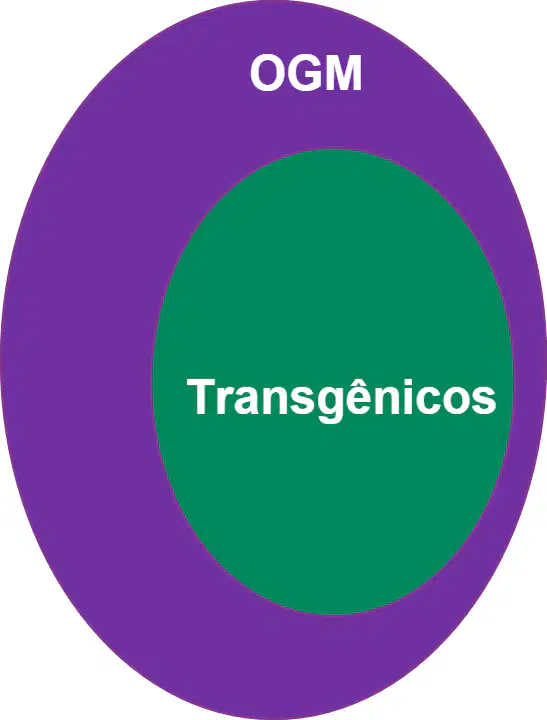
Com base no diagrama, qual afirmação está correta?
Todos os OGMs são transgênicos.
Todos os organismos transgênicos são OGMs.
OGMs e organismos transgênicos são grupos completamente separados.
Organismos transgênicos não são geneticamente modificados.
Qual é o principal objetivo de criar organismos transgênicos?
Obter características desejadas em uma espécie inserindo genes específicos de outras espécies.
Aumentar o tempo de vida natural dos organismos.
Fazer com que todos os organismos tenham a mesma aparência.
Reduzir a necessidade de água nas plantas.
Qual das alternativas a seguir melhor descreve um organismo geneticamente modificado (OGM)?
Um organismo cujo DNA foi alterado pela adição de genes de outra espécie.
Um organismo que foi pintado de uma cor diferente.
Um organismo que foi cultivado em laboratório.
Um organismo que é encontrado apenas na natureza.
No Brasil, o que é especial sobre o milho Bt?
Ele é resistente a insetos e pragas.
Ele cresce apenas no inverno.
Ele é azul.
Ele não precisa de luz solar para crescer.
Por que insetos e pragas morrem quando comem as folhas do milho Bt?
Porque o milho Bt contém um gene que o torna tóxico para eles.
Porque as folhas são muito duras para mastigar.
Porque o milho é cultivado em um solo especial.
Porque o milho é regado com um líquido especial.
Como a inserção de genes de outras espécies pode beneficiar as culturas agrícolas?
Aumentando a produtividade e a resistência a pragas.
Fazendo com que as culturas tenham gosto de outras frutas.
Mudando a cor das culturas.
Fazendo com que as culturas cresçam apenas à noite.
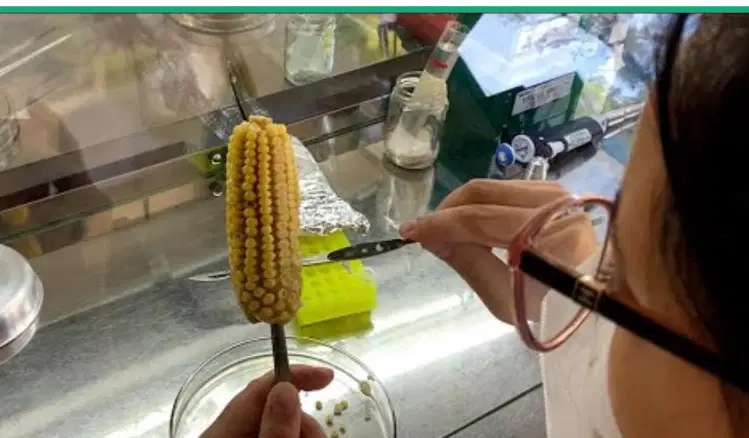
What is the scientist likely demonstrating in the image?
The process of modifying corn to introduce genes from other species.
The process of cooking corn for a meal.
The process of painting corn for an art project.
The process of measuring the size of corn kernels.
What is one possible negative effect of cultivating transgenic plants on a large scale?
It can increase the number of native plant species.
It can cause the dissemination of transgenes, affecting biodiversity.
It guarantees the elimination of all plant diseases.
It always improves soil fertility.
According to the text, what does the threat to biodiversity from transgenic organisms depend on?
The color of the plants.
The properties specific to each transgene.
The amount of water used.
The type of fertilizer applied.
Which of the following is NOT mentioned as a possible undesirable effect of introducing transgenic plants into a plant community?
Alteration in population dynamics.
Elimination of non-domesticated species.
Increase in animal biodiversity.
Exposure to new pathogens or toxic agents.
What is "genetic pollution" and "genetic erosion" according to the text?
Concepts that are beneficial to biodiversity.
Concepts that will be discussed in future lessons and are harmful to biodiversity.
Types of fertilizers for transgenic plants.
Methods to increase crop yield.
Why is it difficult to estimate the effects of transgenes on biodiversity?
Because all transgenes are the same.
Because the effects, especially on biodiversity components, are hard to predict.
Because transgenes never affect biodiversity.
Because biodiversity is not important.
What could be a consequence of the interruption of nutrient and energy recycling mentioned in the text?
Improved plant growth.
Erosion of genetic diversity.
Increase in water supply.
Decrease in soil erosion.
What is the main purpose of biosafety (biossegurança) in relation to genetically modified organisms (transgênicos)?
To ensure these organisms follow established rules set by regulatory agencies.
To increase the number of genetically modified organisms.
To eliminate all scientific research on genetics.
To allow free manipulation of genetic material without restrictions.
Why should scientific research in biotechnology be continuous?
To ensure technological advances are also applied to population and biodiversity safety.
To stop the development of new technologies.
To reduce the number of scientists working in the field.
To make sure only old methods are used.
What does biosafety (biossegurança) correspond to?
A set of measures to prevent and reduce risks related to genetic manipulation.
A way to increase the risks of genetic manipulation.
A method to ignore safety in scientific research.
A process to create more genetically modified organisms.
Which of the following best describes the goal of biosafety regulations?
To prevent unwanted risks and effects from genetic manipulation.
To encourage unregulated genetic experiments.
To stop all scientific progress.
To allow anyone to manipulate genes freely.
A scientist wants to introduce a new genetically modified plant. According to biosafety principles, what should they do first?
Follow established safety rules and get approval from regulatory agencies.
Release the plant without any safety checks.
Ignore all regulations and proceed quickly.
Only ask friends if it is safe.
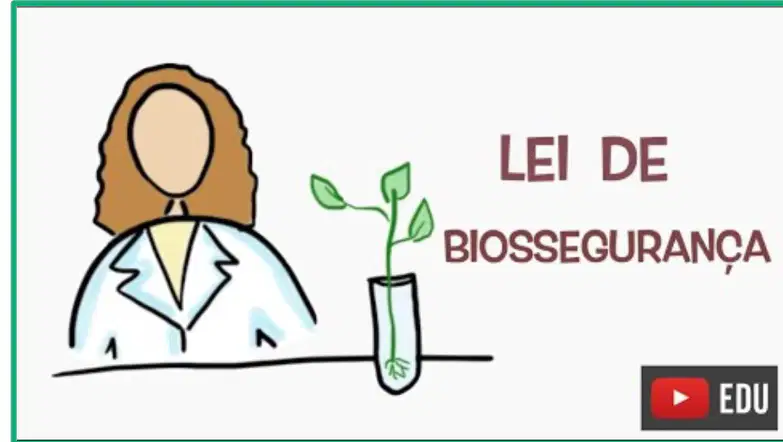
This image represents which concept?
This image represents the concept of biosafety and the laws that regulate genetic manipulation.
This image shows a cooking recipe.
This image is about space exploration.
This image is about animal behavior.
According to the text, what process led to the development of the modern cupuaçu fruit?
Natural selection in the wild
Selective breeding by indigenous peoples
Genetic engineering in a laboratory
Accidental mutation due to climate change
What was the main difference between the progenitor of cupuaçu and the modern cupuaçu fruit?
The progenitor had a larger fruit
The progenitor had a less voluminous pulp and smaller fruit
The progenitor was genetically modified in a lab
The progenitor was a completely different species
Based on the information in the text, is the modern cupuaçu considered a genetically modified organism (GMO) or a transgenic organism?
It is a transgenic organism because it contains genes from another species
It is a genetically modified organism because it was selectively bred by humans
It is neither, because it changed naturally
It is both, because it was bred and genetically engineered
Why did indigenous peoples select and cross the cupuí fruits with larger pulp?
To create a new species
To increase the size and volume of the fruit's pulp
To make the fruit resistant to diseases
To change the fruit's color
What process led to the development of the cupuaçu as we know it today?
Artificial selection through crossing individuals with desired traits
Natural selection without human intervention
Genetic modification using genes from other organisms
Mutation caused by environmental factors
Which characteristic was selected for in the development of the modern cupuaçu?
Larger and more voluminous pulp
Smaller fruit size
Resistance to drought
Faster growth rate
Why is the modern cupuaçu not considered a transgenic organism?
Because no genes from other organisms were used
Because it was created in a laboratory
Because it is not edible
Because it grows only in the wild
Explain the difference between an organism genetically modified by artificial selection and a transgenic organism.
Artificial selection involves choosing and breeding individuals with desired traits, while transgenic organisms have genes from other species inserted into their DNA.
Both involve inserting genes from other species.
Artificial selection is only used for animals, not plants.
Transgenic organisms are always healthier than those from artificial selection.

What is the difference between a GMO (Genetically Modified Organism) and a transgenic organism?
A GMO is any organism with altered DNA, while a transgenic organism specifically has DNA from another species.
A GMO is always a plant, while a transgenic organism is always an animal.
A GMO is created naturally, while a transgenic organism is created in a laboratory.
There is no difference; both terms mean the same thing.
Why is biosafety important for the protection of biodiversity?
It helps prevent the spread of harmful organisms and protects native species.
It increases the number of genetically modified organisms in the environment.
It reduces the need for scientific research.
It makes all organisms identical.
What does artificial selection mean?
The process by which humans choose specific traits to breed in plants or animals.
The natural process of evolution without human interference.
The random mixing of genes in nature.
The use of machines to create new species.
What is the main difference between a GMO (OGM) and a transgenic organism?
All GMOs have genes from other species, while transgenic organisms do not.
Not all GMOs include genes from other species, but transgenic organisms have genes from other organisms inserted into their DNA.
GMOs and transgenic organisms are exactly the same.
Transgenic organisms are natural, while GMOs are artificial.
Why is biosafety important for the protection of biodiversity?
It helps plants grow faster.
It is a set of measures to regulate or develop biotechnology techniques to prevent possible risks of their use.
It increases the number of species in an area.
It makes all organisms immune to diseases.
What does "artificial selection" mean?
The process of organisms reproducing naturally in the wild.
A set of crossing and reproduction techniques aimed at obtaining organisms with desired characteristics.
The random selection of organisms for study.
The natural evolution of species without human intervention.
What is the main purpose of inserting genes from Bacillus thuringiensis into corn (Milho Bt)?
To make the corn grow faster
To produce proteins that are toxic to certain insects
To increase the sweetness of the corn
To make the corn resistant to drought
How do the Cry proteins produced by Bacillus thuringiensis affect insects that eat the modified corn?
They make the insects grow larger
They block the digestive tract of the insects, leading to their death
They make the insects immune to diseases
They help the insects digest food better
Why are Cry proteins not harmful to birds and mammals that eat the modified corn?
Birds and mammals have a different digestive system that destroys Cry proteins
Birds and mammals do not eat corn
Cry proteins are only active in water
Birds and mammals are naturally immune to all toxins
Explain why the action of Cry proteins in birds and mammals is different from their action in insects. Use evidence from the text to support your answer.
Because birds and mammals have acidic digestion that inactivates Cry proteins, unlike insects
Because birds and mammals eat more corn than insects
Because insects are stronger than birds and mammals
Because Cry proteins are only produced in the presence of sunlight
Which alternative correctly indicates one positive and one negative effect of the genetic modification of corn for humans?
Increase in the nutritional value of corn / Possibility of developing an allergy to Cry protein in vulnerable people.
Shorter grain maturation time / Possibility of invasion of native vegetation by the transgenic plant.
Facilitation of plant pollination / Risk of local extinction of other varieties of corn.
Water savings by reducing irrigation / Greater exposure to agricultural pesticides.
Higher productivity of corn crops / Greater emergence of caterpillars resistant to Cry protein.
Which of the following alternatives correctly indicates one positive and one negative aspect of the effects of genetic modification of corn for humans?
Increase in the nutritional value of corn / Possibility of developing an allergy to Cry protein in vulnerable people.
Shorter grain maturation time / Possibility of invasion of native vegetation by the transgenic plant.
Facilitation of plant pollination / Risk of local extinction of other varieties of corn.
Water savings due to reduced irrigation / Greater exposure to agricultural pesticides.
Higher productivity of corn crops / Greater emergence of caterpillars resistant to Cry protein.
According to archaeological analyses, what did the genetic signatures of maize samples from Minas Gerais and Peru reveal about maize in pre-Columbian Brazil?
Maize was already fully adapted for agriculture and consumption.
Maize was not yet completely transformed for agriculture and consumption.
Maize was only used for animal feed.
Maize was originally from Africa.
Which indigenous populations likely continued the process of transforming maize for agriculture and consumption in Brazil?
Populations from the Andes
Populations from the Amazon
Populations from Europe
Populations from North America
What experience did the indigenous people of the Amazon region already have at the time maize arrived in Brazil?
Experience in building cities
Experience in managing and selecting a variety of species like beans, squash, and cassava
Experience in mining gold
Experience in raising cattle
About a thousand years ago, what was different about the second wave of maize that arrived in the Amazon?
It was genetically identical to the first wave.
It was genetically different and already completely adapted for consumption.
It was only used for rituals.
It was not suitable for planting in the Amazon.
Based on the information provided, why might the meeting of the two waves of maize in northern Minas Gerais be significant for the history of agriculture in Brazil?
It shows that maize was only grown in one region.
It suggests a complex process of domestication involving genetic diversity and adaptation.
It proves that maize was not important to indigenous people.
It indicates that maize was imported from Europe.

The text discusses a process that involves:
Natural selection that produces an advantageous phenotype for individuals, which is then maintained in populations.
Natural selection in which, without mutations, no changes would occur in species populations.
Artificial selection in plant species that generates a disadvantageous phenotype, reducing their chances of survival.
Artificial selection, meaning a process by which humans select desirable characteristics in plants or animals.
What process is described as one in which humans select desirable characteristics in plants or animals?
Natural selection that produces an advantageous phenotype for individuals, which is then maintained in populations.
Natural selection in which, without mutations, no changes would occur in species populations.
Artificial selection in plant species that generate a disadvantageous phenotype, reducing their chances of survival.
Artificial selection, meaning a process by which humans select desirable characteristics in plants or animals.
What is the main focus of the skill EM13CNT206 mentioned in the learning material?
Discussing the importance of biodiversity preservation and conservation
Learning about the history of the planet
Studying the solar system
Understanding the water cycle
Which of the following is NOT a part of the skill described in the material?
Evaluating the effects of human action on the environment
Considering qualitative and quantitative parameters of biodiversity
Learning about ancient civilizations
Assessing environmental policies for sustainability
Why is it important to evaluate the effects of human action and environmental policies, according to the skill EM13CNT206?
To guarantee the sustainability of the planet
To increase pollution
To reduce biodiversity
To promote industrial growth only
Imagine a city wants to improve its environmental policies. Based on the skill EM13CNT206, what should they consider to ensure sustainability?
The qualitative and quantitative aspects of biodiversity, and the effects of human actions
Only the economic growth of the city
The number of cars on the road
The color of public buildings
What is the main idea behind the domestication of plants, as described in the learning material?
The process of growing plants in greenhouses.
The manipulation of plant species through successive crossings to meet human needs.
The natural growth of plants in the wild.
The use of fertilizers to increase plant growth.
Which fruit is mentioned as being very common in the North of Brazil and similar to cacao?
Banana
Cupuaçu
Mango
Orange
Why might many students not know the cupuaçu fruit, according to the material?
It is only found in other countries.
It is a typical plant from the North region, and students may only know the processed pulp.
It is a new fruit that was recently discovered.
It is only used for making chocolate.
How does the material suggest teachers introduce the topic of plant domestication to students?
By showing a video about farming.
By reading a news headline and asking students about their knowledge of cupuaçu.
By giving a written test.
By taking students to a farm.
What could the domestication of plants mean in genetic terms?
It means plants are grown faster.
It involves genetic changes through selective breeding to suit human needs.
It means plants are only grown indoors.
It involves using more water for plants.
Which of the following is a book that provides research-based strategies for teachers?
Principles of Instruction – Research-Based Strategies That All Teachers Should Know
Biologia de Campbell
Currículo em Ação
Vestibular indígena 2022

