
 Worksheets
MCQ A2
Total questions: 100
Worksheet time: 1hrs 3mins
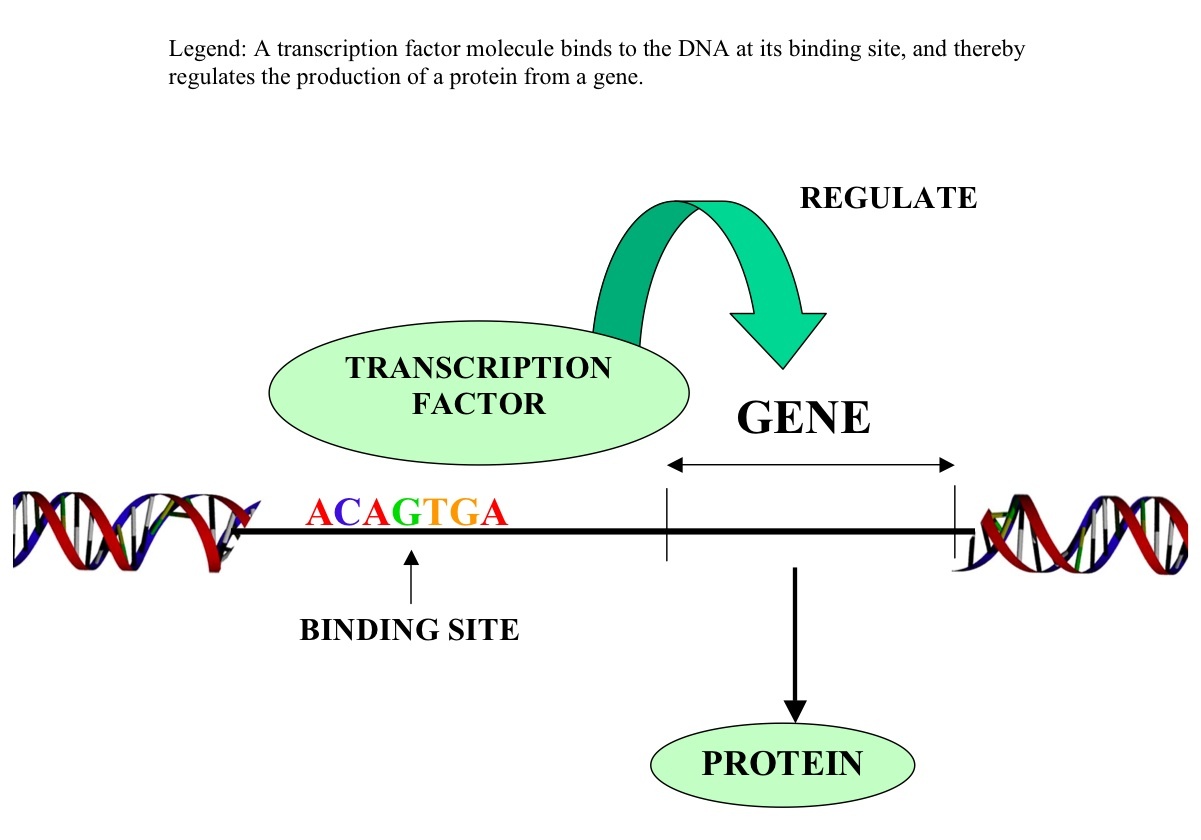
Within the operon, RNA polymerase binds to.......
The regulatory gene
The operator region
The promoter region
What is the correct order of regions on the lac operon?
Operator, structural genes, promoter
Promotor, operator, structural genes
operator, promoter, structural genes
The homeobox genes code for an area on a protein called.....
Hox domian
Homeiotic domain
Homeodomain
How many long is the sequence of DNA in in a homeobox ?
160 bp
180 bp
60 bp
Homeobox genes:
regulate body formation and patterns in embryos
regulate gene expression in ageing
express traits morphologically
code for characteristics only in embryonic stages
The number of legs an insect has, or the number of joints in a digit and location of limbs are influenced by ___________ genes
Haploid
Introns within
Heterotic
Hox

Recall where in the kidney the Bowman's capsules are found.
Renal Medulla
Renal Cortex
Renal Pelvis

Recall where in the kidney the glomeruli are found.
Renal Medulla
Renal Pelvis
Renal Cortex

Recall where in the kidney the convoluted tubules are found.
Renal Medulla
Renal Pelvis
Renal Cortex

Recall where in the nephron ultrafiltration occurs.
Proximal convoluted tubule
Collecting duct
Urethra
Bowman's capsule

Recall where in the nephron reabsorption of glucose occurs.
Loop on Henle
Bowman's capsule
Proximal convoluted tubule
Distal convoluted tubule

Recall where in the nephron reabsorption of amino acids occurs.
Proximal convoluted tubule
Distal convoluted tubule
Loop of Henle
Ureter

Recall where in the nephron reabsorption of water using a counter current system occurs.
Collecting duct
Bowman's capsule
Loop of Henle
Urethra

Recall what structure carries filtrate from the nephron to the renal pelvis.
Collecting duct
Bowman's capsule
Loop of Henle
Distal convoluted tubule

Recall which hormone controls the levels of water reabsorbed from the collecting ducts.
Testosterone
Anti-diuretic hormone
Adrenaline
Progesterone
State what urine is a combination of
Faecal matter
Water
Blood
Salts
Urea

What is A?
Hepatic portal vein
Hepatic vein
Hepatic artery
Interlobular vessels

What is B?
bile duct
bile calaliculi
hepatic artery
sinusoid

What is C?
hepatic vein
sinusoid
hepatic portal vein
bile canaliculi

What is D?
heptic artery
heptic vein
sinusoid
Kupffer cells

What is E?
sinasoid
sinusoid
sinusoed
What type of cell is a Kuppfer cell?
platelet
leucocyte
APC
macrophage
What is the term used to describe how the action potential moves along a myelinated axon?
Saltatory Propagation
Propagation
Salutatory Conduction
Saltatory Conduction
What is an energy transducer?
A receptor that sends a nerve impulse
A receptor that sends an action potential
A receptor that is adapted to detect changes
A receptor that converts one form of energy to another
What type of receptor is a Pacinian Corpuscle?
Thermoreceptor
Chemoreceptor
Photoreceptor
Mechanoreceptor
What are the name of the channels in the Pacinian corpuscles?
Voltage gated sodium channel
Stretch mediated sodium channel
Ligated chanel
Sodium-Potassium Channel
In the pacinian corpuscles resting state the channel is too narrow to allow (a) to pass through.
The influx of positive changes changes the potential of the membrane. It becomes (a)
This results in a generator potential being created. This initiates an (a) along the sensory neuron.
This results in a generator potential being created. This initiates an (a) along the sensory neuron.


Which is true of prokaryotic and eukaryotic cells?
Prokaryotic cells are larger than eukaryotic cells.
Eukaryotic cells do not have nuclei, and prokaryotic cells do have nuclei.
Prokaryotic cells lack membrane-bound organelles, and eukaryotic cells contain membrane-bound organelles.
Eukaryotic cells are simpler than prokaryotic cells.
Glycolysis occurs in the _____.
mitochondrial matrix
inner membrane
cytoplasm
cell membrane
Glycolysis splits glucose into 2 molecules of
Acetyl CoA
pyruvate
citric acid
fructokinase
Glycolysis splits glucose into 2 molecules of
Acetyl CoA
pyruvate
citric acid
fructokinase
In the absence of oxygen, ____ follows glycolysis.
the link reaction
the citric acid cycle
fermentation
the calvin cycle
In the absence of oxygen, ____ follows glycolysis.
the link reaction
the citric acid cycle
fermentation
the calvin cycle
During the link reaction (a.k.a. transition reaction), electrons from pyruvate are accepted by:
NAD+
NADH
FADH2
oxygen
The inner membrane of the mitochondria has an increased surface area due to numerous foldings. These foldings are called:
stroma
cristae
matrix
ER
Chemiosmosis occurs as H+ ions move through ____ in the cristae, making ATP.
foldings
ATP synthase
protein channels
The ETC provides the energy needed to make the majority of the cell's ATP in a process known as:
chemiosmosis
substrate level phosphorylation
oxidative phosphorylation
The ETC provides the energy needed to make the majority of the cell's ATP in a process known as:
chemiosmosis
substrate level phosphorylation
oxidative phosphorylation
What part of cellular respiration produces carbon dioxide?
glycolysis
the link reaction
the citric acid cycle
chemiosmosis
The ETC provides the energy needed to make the majority of the cell's ATP in a process known as:
chemiosmosis
substrate level phosphorylation
oxidative phosphorylation
What part of cellular respiration produces carbon dioxide?
glycolysis
the link reaction
the citric acid cycle
chemiosmosis
What part of cellular respiration produces carbon dioxide?
glycolysis
the link reaction
the citric acid cycle
chemiosmosis
What produces ATP during glycolysis?
chemiosmosis
oxidative phosphorylation
substrate level phosphorylation
fermentation
What is the net yield of ATP produced by glycolysis?
4
2
1
During fermentation, _____ is regenerated and it returns to glycolysis to pick up more electrons.
ATP
glucose
pyruvate
NAD+
The amount of oxygen needed to get rid of lactate produced during fermentation in muscle cells.
oxygen debt
oxygen deprivation
oxygen replacement
The final electron acceptor in the electron transport system is _____.
water
NAD+
oxygen
FADH2
How many ATP molecules are produced when FADH2 delivers electrons to the electron transport system?
1
2
4
36
In yeast, what product of fermentation is lethal when it builds up?
carbon dioxide
lactate
alcohol
When NADH produced during the transition reaction and Citric Acid cycle delivers electrons to the electron transport system, _____ ATP is/are produced.
1
2
3
36
The energy released by the electron transport system produces ATP by _____.
photophosphorylation
substrate level phosphorylation
oxidative phosphorylation
A poison which inhibits the activity of cytochrome oxidase will result in the following reaction:
Excess ATP
oxygen production
Insufficient ATP
water synthesis


Steroid action hormones triggers the conversion of ATP to cAMP.
Correct
Incorrect
Oestrogen is an example of a steroid action hormone.
True
False
Non-steroid action hormones are hydrophilic and can pass through the membrane. True or false?
True
False
cAMP is a second messenger
True
False
Adrenaline is an example of a steroid action hormone.
Correct
Incorrect
Which of the following are steroid hormones?
Oestrogen
Glucagon
FSH
Testosterone
The adrenal glands are made up of two parts. The adrenal (a) and the adrenal cortex.
The adrenal cortex produces hormones such as (a)
(a) regulates metabolism by controlling how the body converts fats, proteins and carbs to energy.
(a) controls blood pressure by balancing salt and water concentration
The medulla releases which of the two hormones when stimulated by the sympathetic nervous system?
Adrenaline, Melancholic
Noradrenaline, Aldosterone
Noradrenaline, Adrenaline
Epinephrine, Adrenalline

The pancreas produces _____ when your blood sugar level is high.
Thyroxin
Melatonin
Glucagon
Insulin
Most control mechanisms in living organisms use a ................ feedback control loop to maintain homeostatic balance.
positive
negative
none
both positive and negative

