
 Worksheets
Production Activity Control
Total questions: 97
Worksheet time: 49mins
Which of the following is Production Activity Control responsible for executing?
Sales forecasting
Master production schedule (MPS)
Materials requirements plan (MRP)
Both B and C
Production Activity Control is responsible for executing the ________ and the ________.
Master production schedule (MPS); Materials requirements plan (MRP)
Sales forecast; Inventory turnover
Capacity planning; Demand forecasting
Order entry; Customer service
Which of the following is NOT a goal of Production Activity Control?
Make good use of labor, machines, and materials
Minimize work-in-process inventory
Increase finished goods inventory
Maintain customer service
One of the objectives of Production Activity Control is to minimize work-in-process inventory.
True
False
List two objectives of Production Activity Control mentioned in the slide.
Make good use of labor, machines, and materials; Minimize work-in-process inventory; Maintain customer service (any two)
Increase product prices and reduce quality; Delay customer orders and increase inventory; Focus only on machine maintenance; Ignore labor utilization and maximize overtime
What is one of the responsibilities of Production Activity Control (PAC)?
Release work orders
Design new products
Market finished goods
Purchase raw materials
Production Activity Control (PAC) is responsible for controlling work orders to complete on time.
True
False
Fill in the blank: Production Activity Control (PAC) controls the flow of production through _______, carrying out the plan, and to completion.
manufacturing
distribution
marketing
accounting
Which of the following is NOT a step in controlling the flow of production according to PAC?
Through manufacturing
Carrying out the plan
To completion
Product marketing
Production Activity Control (PAC) manages day-to-day activity and provides support.
True
False
Fill in the blank: PAC reports on schedule completion, WIP, and _______.
scrap/yield
inventory turnover
machine downtime
employee attendance
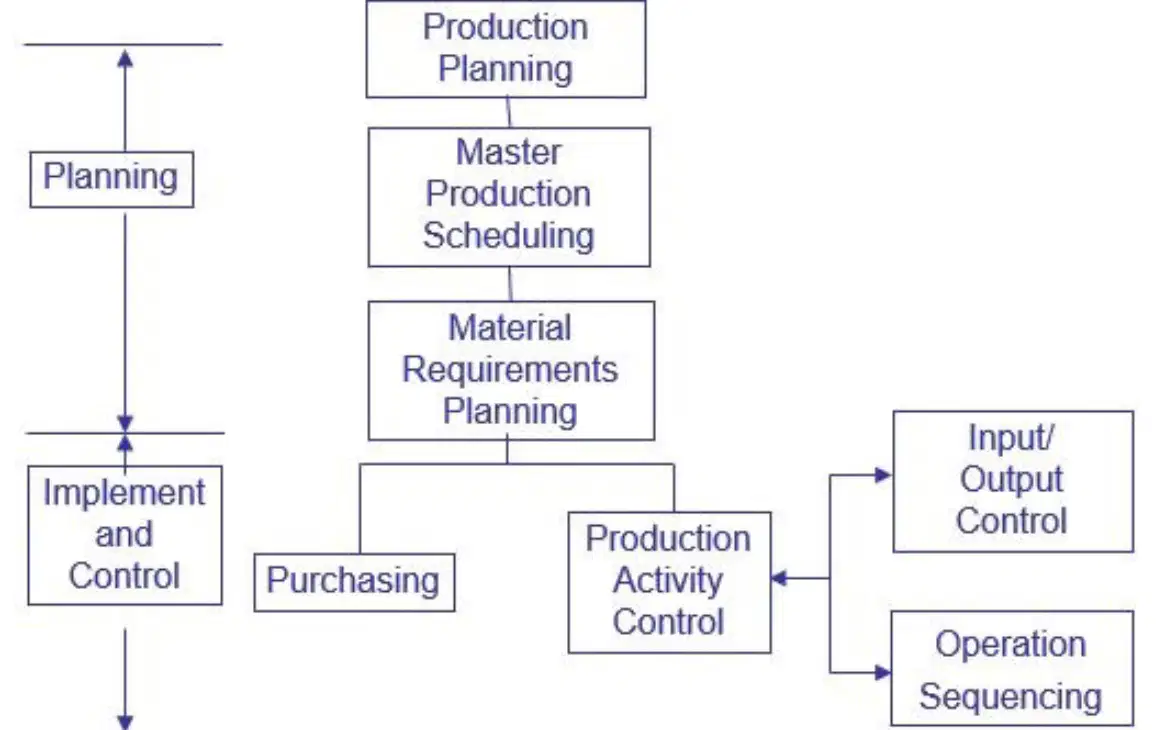
Refer to Figure 6.1 Priority planning and production activity control. What is the first step in the priority planning process?
Implement and Control
Planning
Purchasing
Production Activity Control
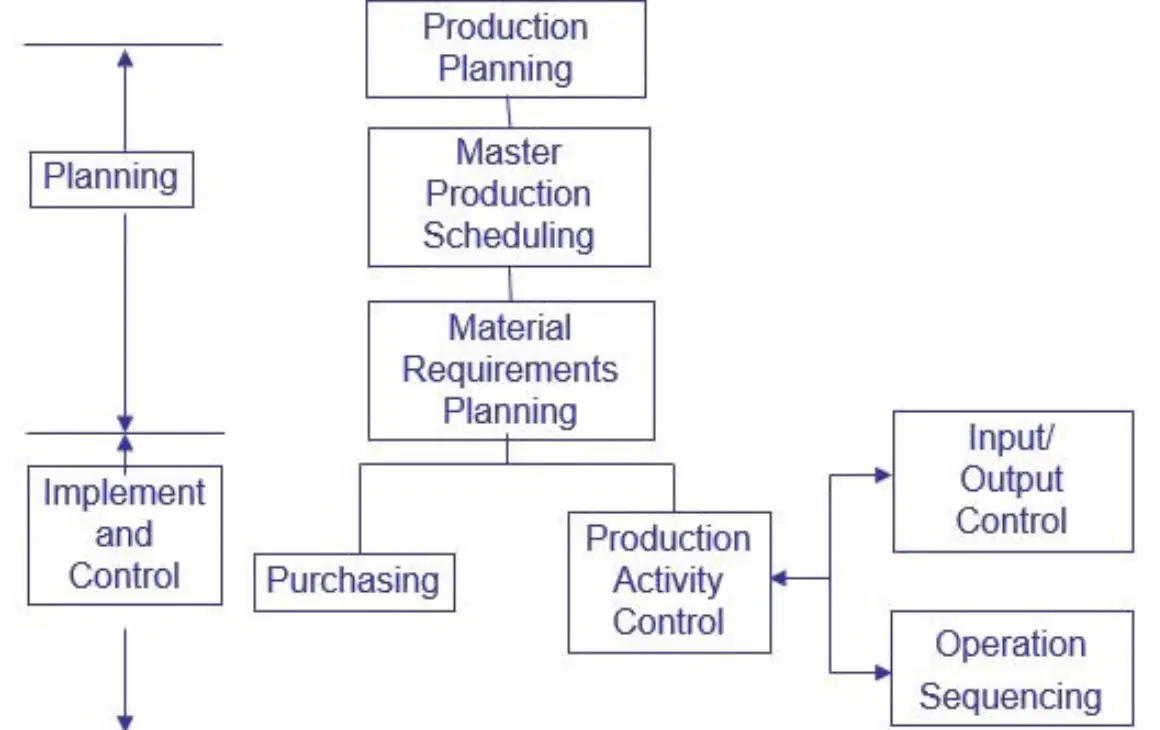
Refer to Figure 6.1 Priority planning and production activity control. Which of the following comes directly after 'Planning' in the process flow?
Production Planning
Implement and Control
Purchasing
Material Requirements Planning

Refer to Figure 6.1 Priority planning and production activity control. Fill in the blank: 'Material Requirements Planning' leads to ________ and 'Production Activity Control'.
Purchasing
Inventory Counting
Sales Forecasting
Product Design
What is one of the main purposes of planning in production?
To increase costs
To meet delivery dates
To reduce personnel
To delay schedules
Which of the following is NOT something that planning ensures?
Required materials
Tooling
Personnel
Marketing
Fill in the blank: Planning ensures required materials, tooling, personnel, and _________?
information
machinery
transportation
budget
What does scheduling in planning involve?
Developing marketing strategies
Start and completion times for each production order
Hiring new employees
Increasing production costs
Fill in the blank: Scheduling in planning helps develop load profiles for the _________
work centers
employees
machines
departments
Fill in the blank: One of the steps in implementation is to ________ information needed to make the product.
gather
ignore
hide
destroy
Which of the following is authorized by the material requirements plan?
Gather information needed to make the product
Release orders to the production floor
Dispatching
Quality control
Fill in the blank: ________ is a step in implementation that follows the release of orders to the production floor.
Dispatching
Scheduling
Inspection
Packaging
What is one action that can be taken if corrective action is necessary in production order control?
Rank the orders by priority
Ignore the issue and continue production
Delay all orders indefinitely
Cancel all production orders
What is the purpose of establishing a dispatch list in production order control?
To organize and prioritize the sequence of jobs or tasks to be performed.
To record employee attendance.
To calculate machine depreciation.
To monitor cafeteria supplies.
Tracking performance to planned schedule is an example of what type of action in production order control?
Corrective action
Preventive action
Routine action
Strategic action
What should be done if the current production schedule is not meeting requirements?
Replan, reschedule, adjust capacity
Ignore the issue and continue as planned
Increase product prices immediately
Reduce the quality standards
What does monitoring and controlling WIP, lead times, and queues help achieve in production order control?
It helps ensure efficient workflow and timely completion of production orders.
It increases the number of defects in the production process.
It causes unnecessary delays and bottlenecks.
It reduces the visibility of production progress.
Reporting work center efficiency, times, quantities, and scrap is part of which process in production order control?
Corrective action and performance monitoring
Order release and scheduling
Material requirements planning
Capacity planning
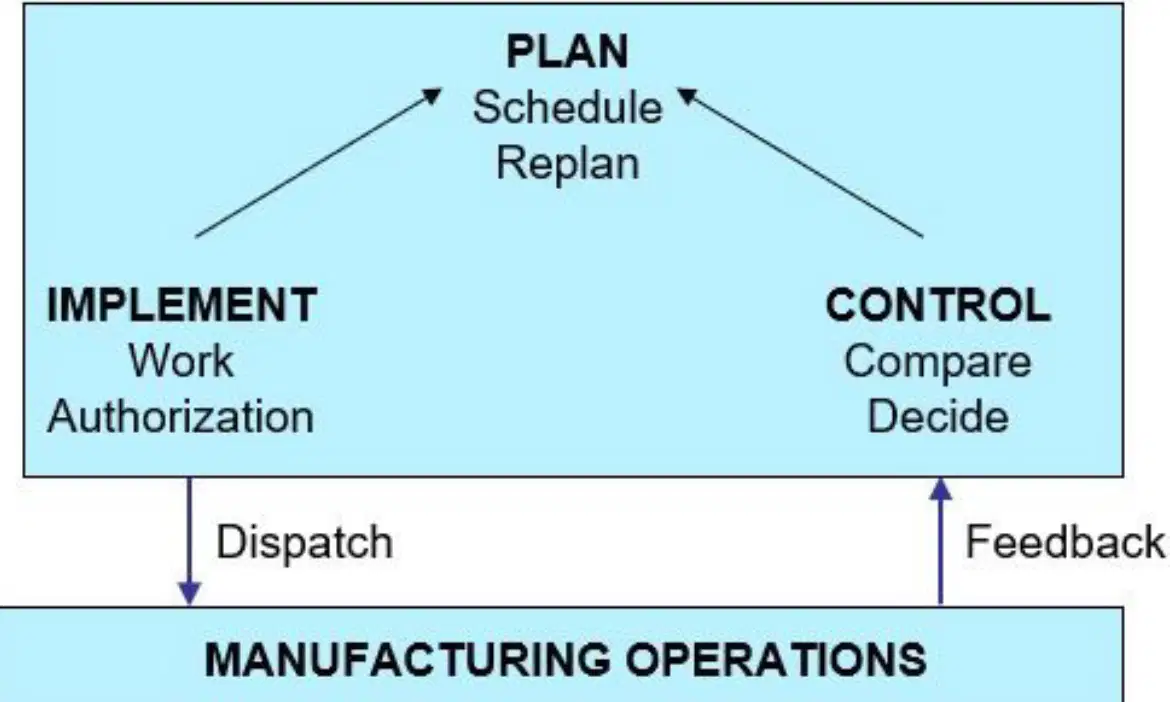
According to Figure 6.2 Production control system, what are the two main activities under PLAN?
Schedule and Replan
Monitor and Control
Procure and Store
Dispatch and Deliver
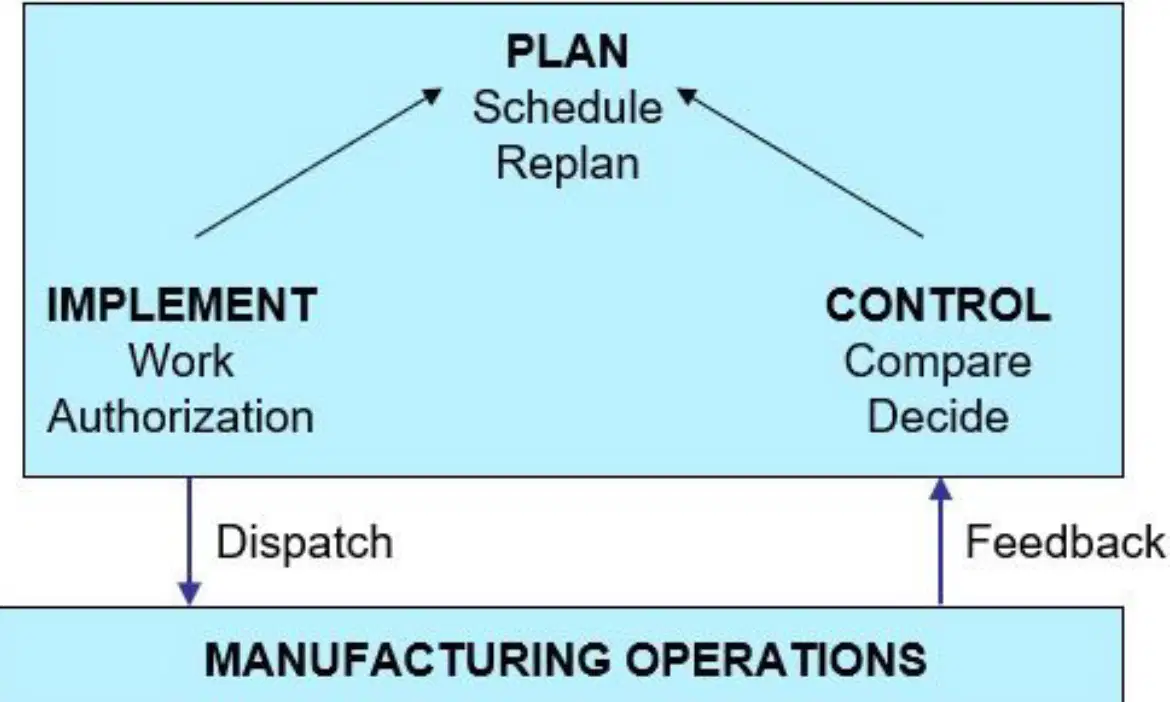
In the Production control system diagram, which activity is responsible for Work Authorization?
IMPLEMENT
PLAN
MONITOR
EVALUATE
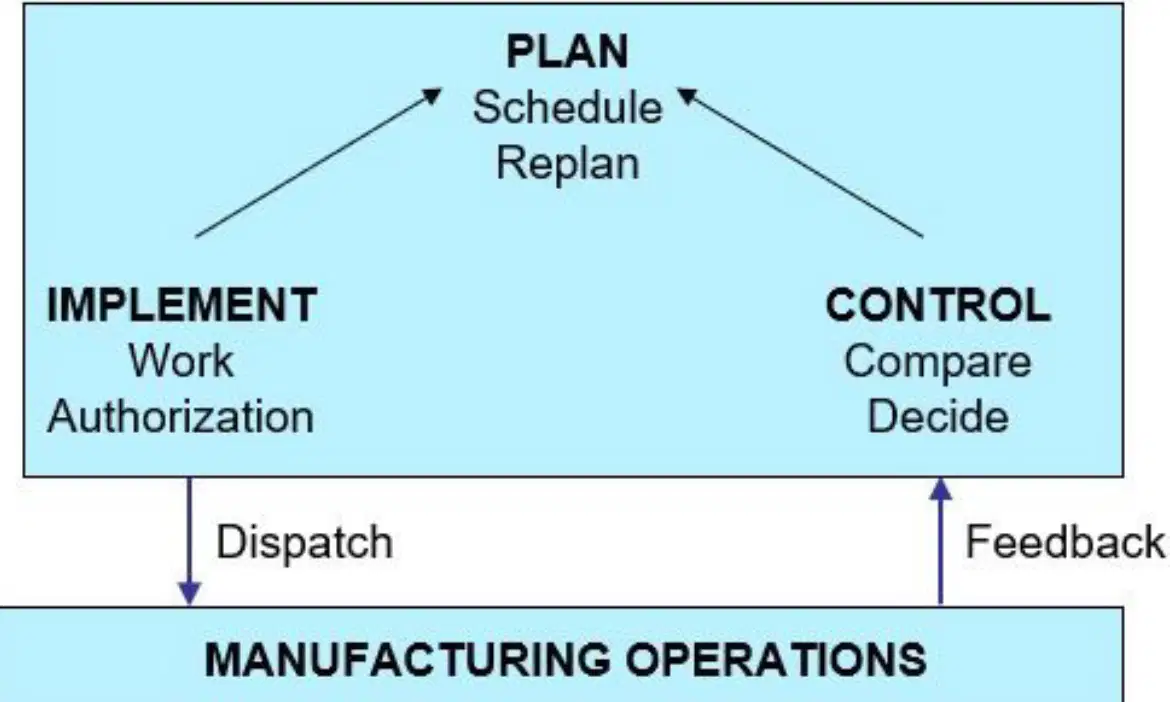
According to the Production control system diagram, which activities are associated with CONTROL?
Compare and Decide
Plan and Schedule
Procure Materials
Dispatch Orders
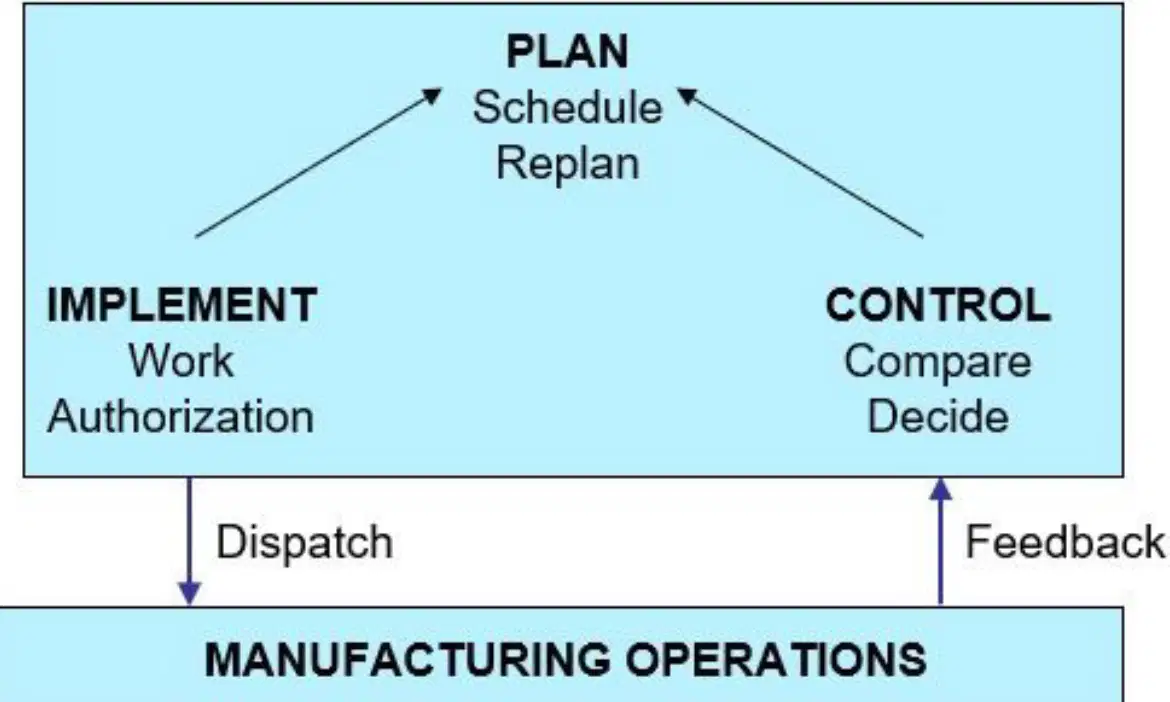
In the Production control system, what is the flow from IMPLEMENT to MANUFACTURING OPERATIONS called?
Dispatch
Feedback
Inventory
Procurement
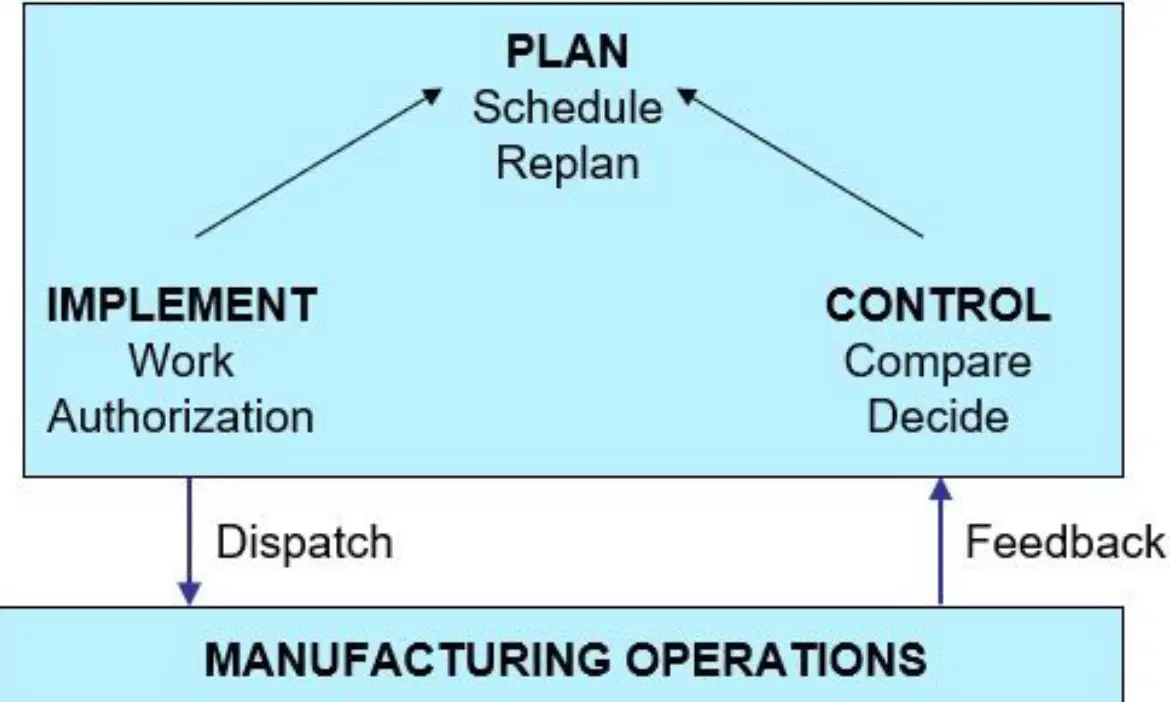
In the Production control system, what is the flow from MANUFACTURING OPERATIONS to CONTROL called?
Feedback
Feedforward
Inventory
Dispatch
Which of the following is a type of manufacturing system?
Flow manufacturing
Continuous manufacturing
Batch processing
Lean production
Which of the following is NOT listed as a type of manufacturing system?
Intermittent manufacturing
Project manufacturing
Flow manufacturing
Mass customization
Fill in the blank: ________ manufacturing is one of the types of manufacturing systems listed in the image.
Project manufacturing
Batch manufacturing
Continuous manufacturing
Job shop manufacturing
What type of products are typically produced in flow manufacturing?
High volume, standard products
Low volume, custom products
One-of-a-kind prototypes
Handcrafted luxury goods
Flow manufacturing is usually:
Repetitive or continuous
Intermittent
Custom-made
Project-based
In flow manufacturing, routings are ________.
fixed
variable
optional
eliminated
In flow manufacturing, work centers are arranged according to what?
the routing
the product color
the worker's preference
the supplier's location
Flow manufacturing is dedicated to a ________ range of products.
limited
wide
unpredictable
expanding
What type of equipment is used in flow manufacturing for a limited range of products?
Specifically designed equipment
General purpose equipment
Manual tools
Flexible manufacturing systems
What is the effect of using transfer devices in flow manufacturing?
High WIP and throughput times
Low WIP and throughput times
No effect
Increases product variety
In flow manufacturing, capacity is fixed by the ________.
line
operator
shift
product
Fill in the blank: In flow manufacturing, production activity control plans the _________
flow of work
purchase of raw materials
employee benefits
marketing strategy
Which of the following is a responsibility of production activity control in flow manufacturing?
Plans the flow of work
Designs the product
Markets the product
Delivers the product
Fill in the blank: In flow manufacturing, implementation and control are relatively _________
simple
complex
expensive
unpredictable
Which of the following are there many variations in, according to Intermittent Manufacturing?
Product design
Process requirements
Order quantities
All of the above
In Intermittent Manufacturing, the flow of work is ______—work flow not balanced.
varied
continuous
uniform
steady
In Intermittent Manufacturing, machinery and workers must be flexible.
True
False
In Intermittent Manufacturing, machinery and workers are usually grouped according to ______.
function
product
location
process
Throughput times in Intermittent Manufacturing are generally:
Short
Long
Unchanged
Decreasing
Capacity required in Intermittent Manufacturing depends on ______.
product mix
machine speed
employee age
factory location
Which of the following is often considered complex to plan and control due to the number of products made, variety of routings, scheduling problems, and PAC being a major activity?
Continuous Manufacturing
Intermittent Manufacturing
Mass Production
Just-in-Time Manufacturing
List two reasons why intermittent manufacturing is considered complex to plan and control.
Number of products made, Variety of routings
Low labor cost, High automation
Single product focus, Simple scheduling
Minimal inventory, Standardized processes
Intermittent manufacturing is controlled through _______ or detailed schedules for each batch.
production orders
purchase orders
maintenance requests
sales invoices
What is a characteristic of Project Manufacturing?
Large number of units
One or a small number of units
Performed in multiple places
No planning required
Project Manufacturing is usually performed in _________.
one place
multiple countries
various continents
different time zones
Which of the following is NOT an activity in Project Manufacturing?
Initiating project, requirements
Planning project scope, schedule, tasks, budget, resources, risks
Executing tasks
Mass production of identical items
Which of the following is an example of Project Manufacturing?
Shipbuilding
Car assembly line
Bakery production
Textile weaving
List any two activities involved in Project Manufacturing.
Initiating project, requirements; Planning project scope, schedule, tasks, budget, resources, risks; Executing tasks; Monitoring and controlling tasks and resources; Closing project, documenting results (any two)
Painting and decorating the project site; Organizing team parties and celebrations
Purchasing office furniture; Hiring a celebrity for project inauguration
Arranging team lunches; Conducting yoga sessions for employees
Project Manufacturing involves monitoring and controlling tasks and resources.
True
False
Fill in the blank: One of the data requirements is to know what and how much to ________.
produce
consume
store
transport
Fill in the blank: Data requirements include knowing when ________ are needed.
parts
colors
locations
tools
Fill in the blank: Data requirements include knowing what ________ and times are required.
operations
colors
locations
temperatures
Fill in the blank: Data requirements include knowing work center ________.
capacities
locations
schedules
managers
Which of the following is NOT one of the two types of information data requirements are organized into?
Planning
Control
Marketing
Both A and B
Fill in the blank: Data requirements are organized into two types of information: ________ and control.
planning
storage
output
input
An Item master in the context of Planning Information is:
a central repository of information about items used in planning processes
a document listing only finished goods for sales
a tool for managing employee schedules
a report showing only inventory shortages
Product structure in Planning Information refers to:
The arrangement and relationship of components within a product
The marketing strategy for a product
The financial plan for product development
The distribution channels for a product
Routing in the context of Planning Information refers to:
the process of determining the path or sequence of operations for a product or service
the allocation of financial resources to different departments
the scheduling of employee shifts
the analysis of market trends for planning purposes
A Work center master in Planning Information is:
A record containing details about a specific production area or machine used for planning and scheduling.
A document listing all employees in a company.
A financial report for the planning department.
A software tool for customer relationship management.
What is an item number in the context of an Item Master?
An item number is a unique identifier assigned to each item in the Item Master.
An item number is the price of the item in the Item Master.
An item number is the quantity of the item in the Item Master.
An item number is the supplier code for the item in the Item Master.
What does item description refer to in an Item Master?
Item description refers to the details or characteristics of an item listed in the Item Master.
Item description refers to the price of an item in the Item Master.
Item description refers to the supplier of an item in the Item Master.
Item description refers to the stock quantity of an item in the Item Master.
What is manufacturing lead time in the context of an Item Master?
Manufacturing lead time is the amount of time required to manufacture an item from start to finish.
Manufacturing lead time is the cost incurred during the manufacturing process.
Manufacturing lead time is the number of workers required to manufacture an item.
Manufacturing lead time is the storage space needed for raw materials.
What does lot size quantity mean in an Item Master?
Lot size quantity is the amount or number of units of an item that are produced or ordered at one time.
Lot size quantity is the total value of all items in stock.
Lot size quantity is the expiration date of an item batch.
Lot size quantity is the weight of a single unit of the item.
What does a bill of material provide a list of?
Single-level components and quantities to make an assembly
Financial transactions for a project
Employee schedules for a department
Shipping addresses for customers
A bill of material forms a basis for what?
A picking list
A sales invoice
A marketing plan
A financial statement
Fill in the blank: Routing provides step-by-step instructions on how to make the product, including _______ and their sequence.
operations
materials
locations
costs
Fill in the blank: Routing includes brief _______ descriptions.
operation
material
color
location
Fill in the blank: Routing specifies the equipment, tools, and _______ needed for production.
accessories
locations
colors
brands
Fill in the blank: Routing provides information about operation _______ times.
setup
idle
shutdown
maintenance
Fill in the blank: Routing includes operation _______ times.
run
stop
pause
reset
Fill in the blank: Routing details the lead times for each _______.
operation
employee
department
supplier
Fill in the blank: One of the details on each work center is the ________ number.
work center
employee
serial
department
Fill in the blank: The ________ of a work center refers to the maximum output it can produce.
capacity
efficiency
layout
schedule
Fill in the blank: Shifts, machine hours, and ________ hours per week are important details for each work center.
labor
break
lunch
training
Fill in the blank: ________ is a measure of how well a work center performs relative to its potential.
Efficiency
Capacity
Flexibility
Cost
Fill in the blank: ________ refers to the extent to which a work center's capacity is being used.
Utilization
Efficiency
Productivity
Throughput
Fill in the blank: The average ________ time is a key detail for each work center.
queue
cycle
setup
run
Fill in the blank: Alternative ________ centers are considered as part of the details for each work center.
work
study
supply
design
A production line produces 120 units per hour. If the line operates for 7 hours in a shift, how many units are produced in one shift?
960 units
720 units
600 units
840 units
If the standard time to complete a job is 4 hours and a worker completes it in 3.5 hours, what is the worker's efficiency?
87.5%
100%
114.3%
125%
A batch of 500 parts is scheduled for production. If the scrap rate is 4%, how many good parts are expected after production?
480
480.8
500
520
A production line is scheduled to produce 500 units in an 8-hour shift. If the actual output at the end of the shift is 420 units, what is the production efficiency percentage?
84%
92%
76%
105%
A work center has a capacity of 40 hours per week. If the scheduled load for the week is 50 hours, what is the load percentage, and what action should be taken?
Load is 125%; consider rescheduling or increasing capacity
Load is 80%; reduce capacity
Load is 100%; no action needed
Load is 50%; increase scheduled load
An order requires 200 parts to be produced. During inspection, 10 parts are found defective and scrapped. What is the yield percentage for this order?
95%
90%
85%
98%

