
NEW
Font size
 Worksheets
Diode Functionality and Applications Quiz
Total questions: 20
Worksheet time: 10mins
What is one method used to test a diode?
Using a multimeter
Observing light emission
Measuring resistance with an ohmmeter
Checking temperature changes
In which application are diodes commonly used?
Signal amplification
Voltage regulation
Data storage
Frequency modulation
What is a diode?
A device that stores electrical energy
A device that allows current to move through it in one direction with far greater ease than in the other
A device that converts electrical energy into mechanical energy
A device that amplifies electrical signals
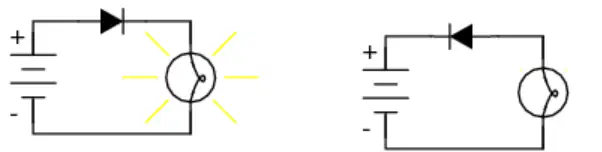
What happens to a diode when the battery polarity allows electrons to flow through it?
It becomes reverse-biased
It becomes forward-biased
It becomes neutral
It becomes inactive
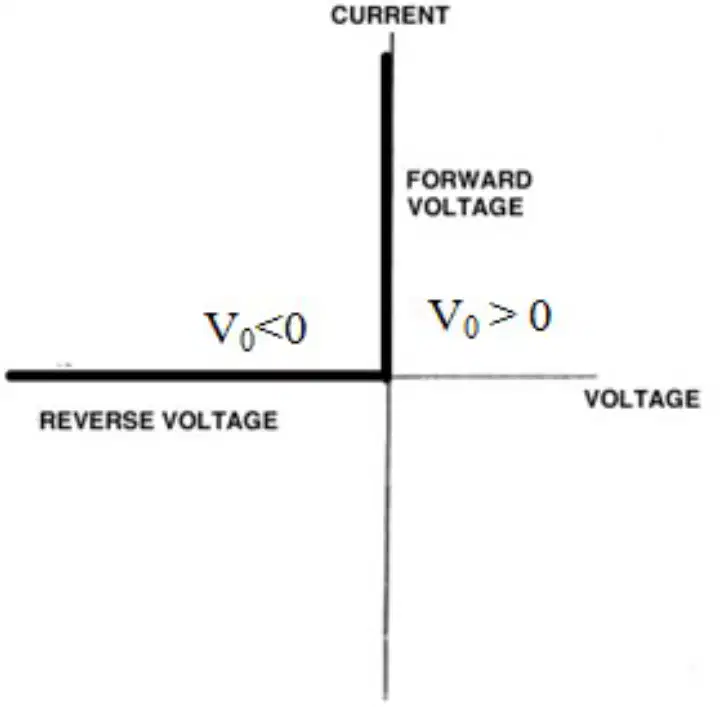
What does the diagram of an ideal diode illustrate about the relationship between current and voltage?
Current flows only when forward voltage is applied.
Current flows only when reverse voltage is applied.
Current flows regardless of the voltage applied.
Current does not flow at all.
Which layer of a diode is positively charged?
N-type
P-type
A-type
B-type
What happens when p-type and n-type semiconductors are joined?
Electrons flow from p-type to n-type
Electrons flow from n-type to p-type
Protons flow from n-type to p-type
Protons flow from p-type to n-type
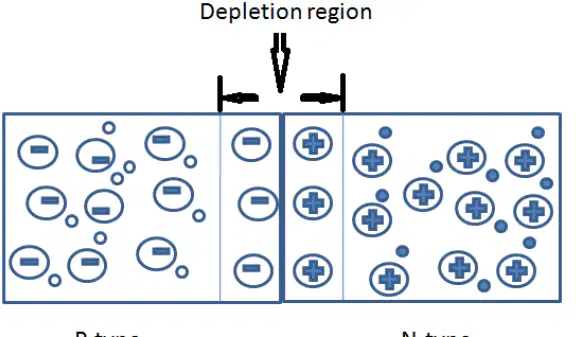
What is the region called that is created by the flow of electrons in a P-N junction?
Depletion region
Saturation region
Conduction region
Valence region
What is the term used for the tiny amount of current that flows in a real diode under reverse bias?
Forward current
Reverse current
Leakage current
Saturation current
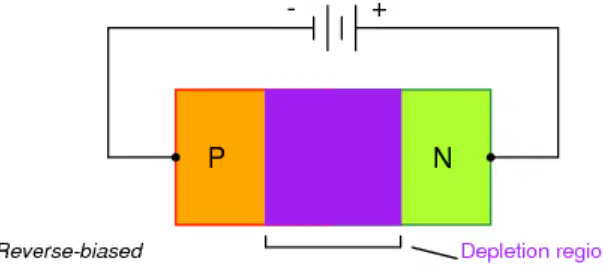
During reverse bias, what does the negative terminal of the battery do?
Attracts electrons in the positive region.
Attracts holes in the positive region.
Repels holes in the negative region.
Repels electrons in the positive region.
What happens to the depletion region in a diode when forward bias voltage increases?
It gets wider
It gets narrower
It remains the same
It disappears immediately
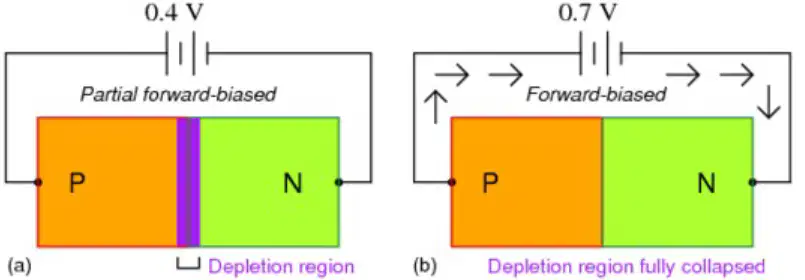
What is the result of forward biasing on the depletion region of a diode?
It widens the depletion region.
It narrows the depletion region.
It has no effect on the depletion region.
It creates a new depletion region.
Which of the following is a configuration that contains multiple diodes in a single package?
Zener Diode
Light Emitting Diode (LED)
Diode Array
Tunnel Diode
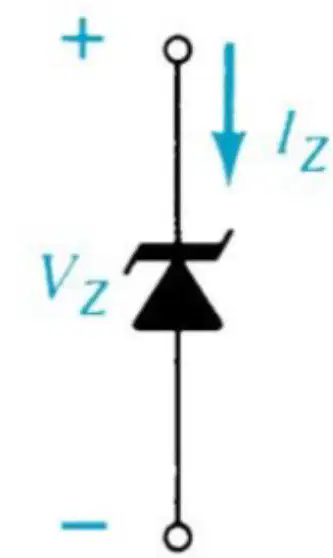
What is the symbol for a Zener diode?
A triangle with a line
A rectangle with a line
A triangle with a bent line
A circle with a line
What does a Light Emitting Diode (LED) emit when forward biased?
Electrons
Photons
Neutrons
Protons
In which spectrum can the photons emitted by an LED be found?
Infrared
Ultraviolet
Visible
X-ray
What is a diode array?
A single diode used in a circuit
Multiple diodes packaged together in an integrated circuit
A type of resistor used in circuits
A single diode with multiple functions
What type of rectification can diodes be used for?
Half wave and full wave
Quarter wave and three-quarter wave
Single wave and double wave
Triple wave and quadruple wave
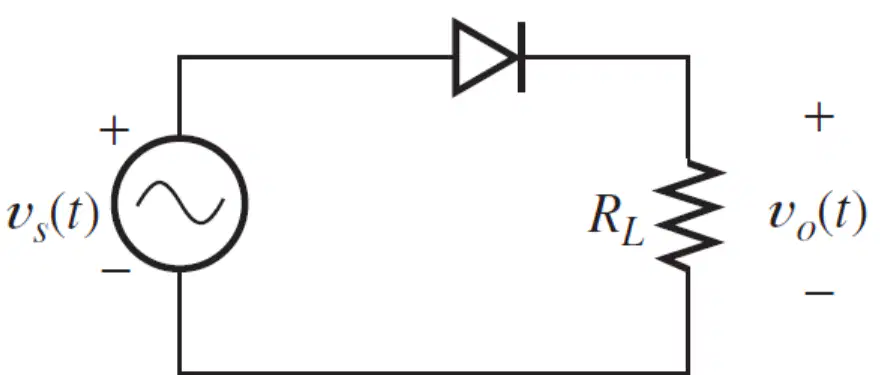
What is the primary component used in half wave rectification to rectify AC voltage?
Transistor
Capacitor
Diode
Inductor
In a half wave rectification circuit, what is the role of the diode?
To amplify the signal
To convert AC to DC
To store energy
To filter noise

