
 Worksheets
Heart Circuits Quiz
Total questions: 71
Worksheet time: 36mins
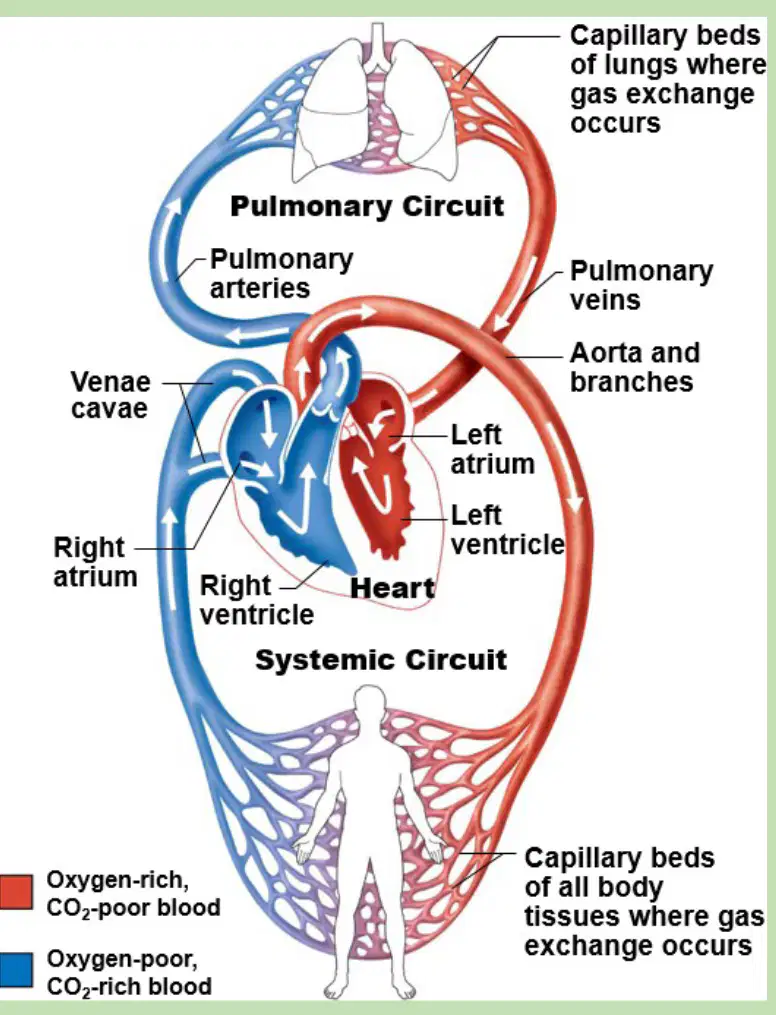
What is the primary function of the pulmonary circuit in the heart?
To receive oxygen-rich blood from the lungs
To pump oxygen-poor blood to the lungs
To distribute oxygenated blood to body tissues
To receive oxygen-poor blood from the lungs
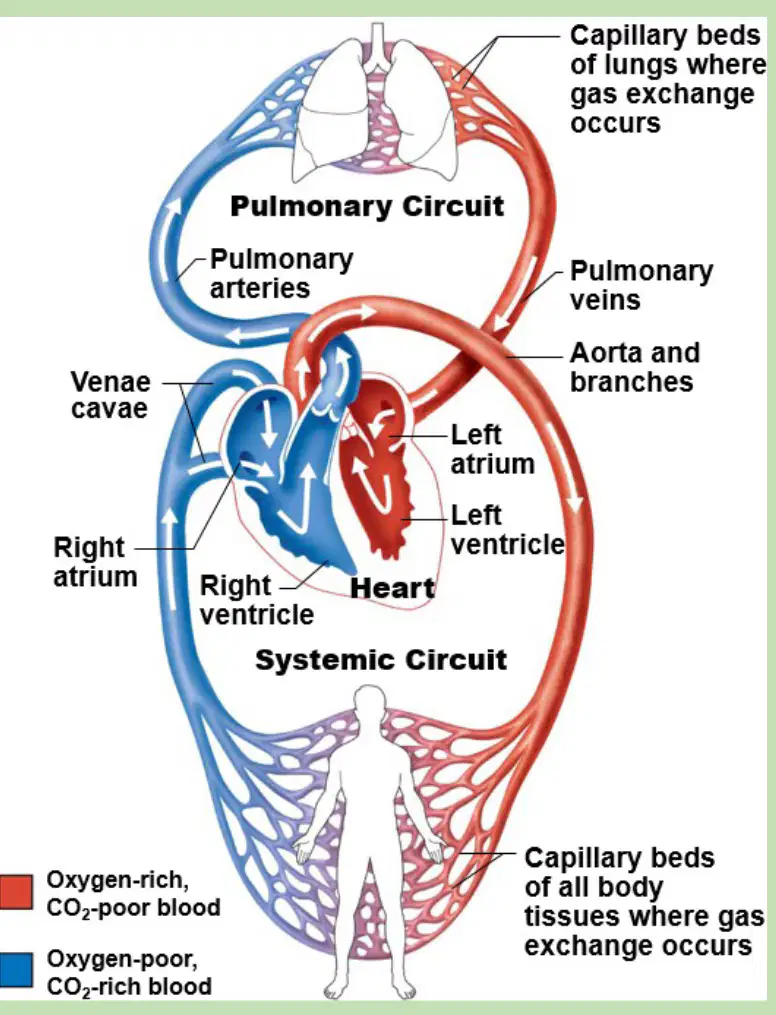
Which circuit receives oxygenated blood from the lungs?
Pulmonary circuit
Systemic circuit
Coronary circuit
Lymphatic circuit
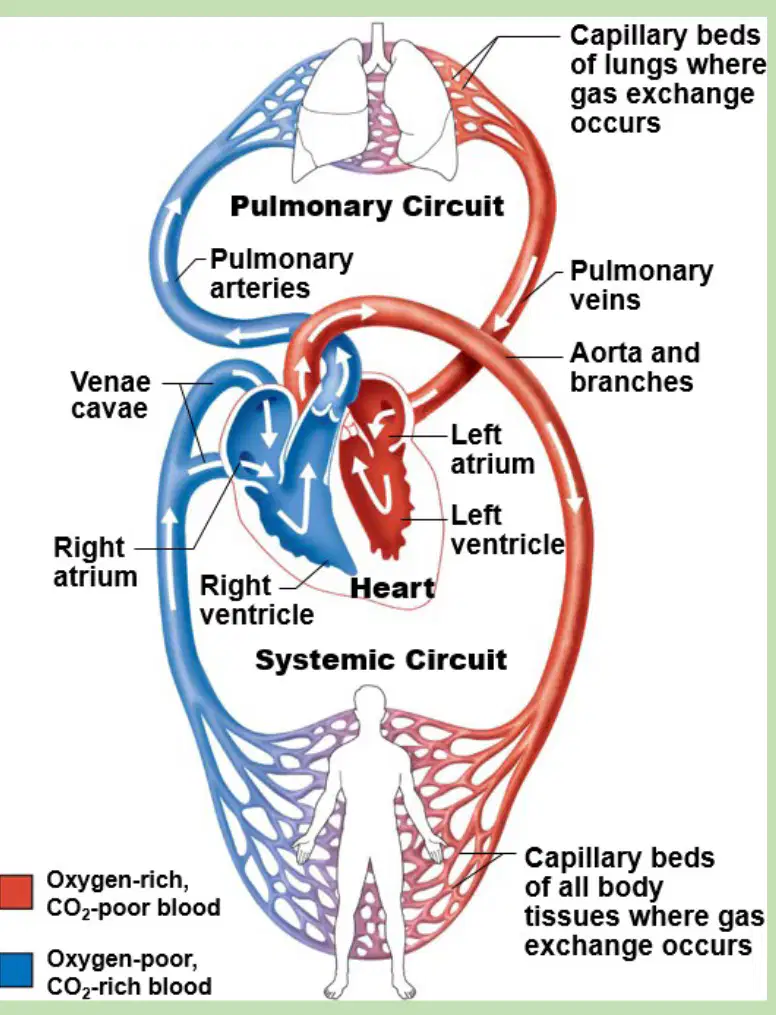
What happens to blood in the pulmonary circuit?
It becomes oxygen-poor
It picks up carbon dioxide
It gets rid of carbon dioxide and picks up oxygen
It circulates through the body tissues
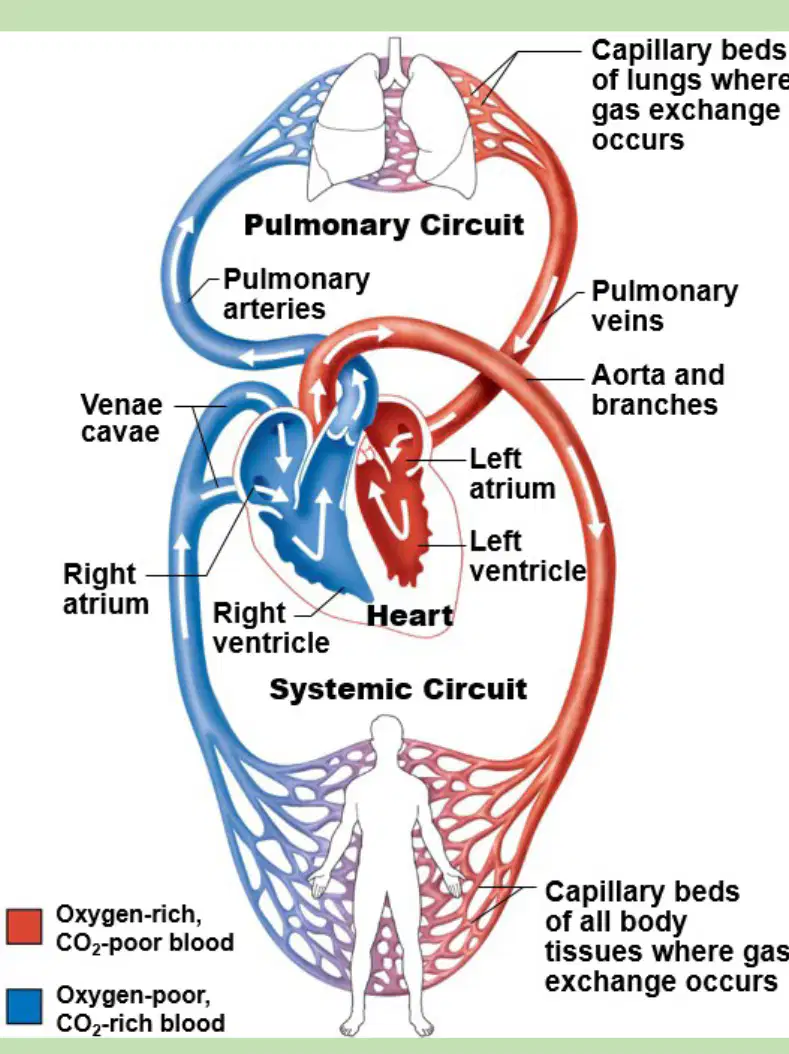
Which chamber of the heart receives blood returning from the systemic circuit?
Right atrium
Left atrium
Right ventricle
Left ventricle

What is the function of the left ventricle?
Receives blood from the systemic circuit
Pumps blood through the pulmonary circuit
Pumps blood through the systemic circuit
Receives blood from the pulmonary circuit

Which chamber of the heart pumps blood through the pulmonary circuit?
Right atrium
Left atrium
Right ventricle
Left ventricle
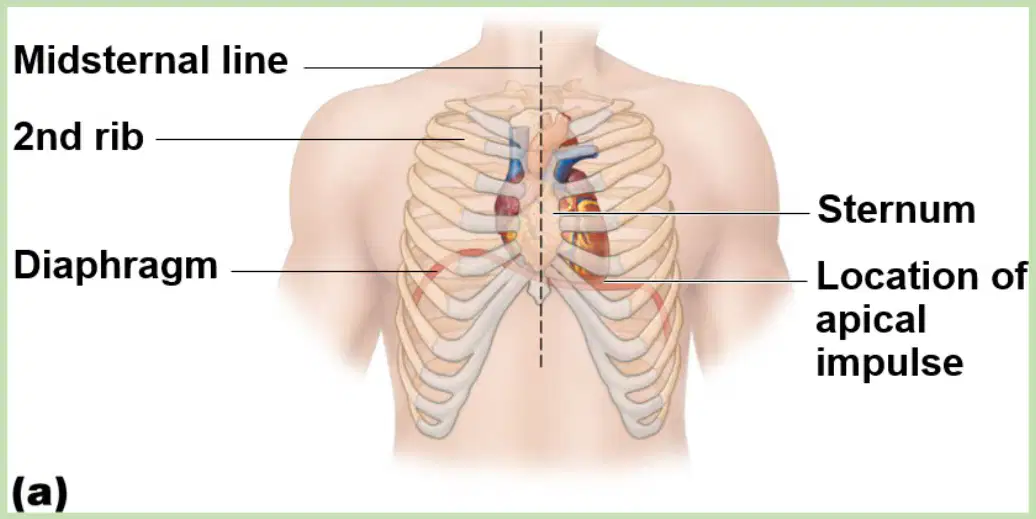
Where is the heart located in relation to the ribs?
Between the first and third rib
Between the second and fifth intercostal space
Between the third and sixth rib
Between the fourth and seventh intercostal space
What direction does the apex of the heart point towards?
Right shoulder
Left hip
Right hip
Left shoulder
What is the position of the heart in relation to the vertebral column and sternum?
Posterior to vertebral column, anterior to sternum
Anterior to vertebral column, posterior to sternum
Lateral to vertebral column, anterior to sternum
Anterior to vertebral column, lateral to sternum
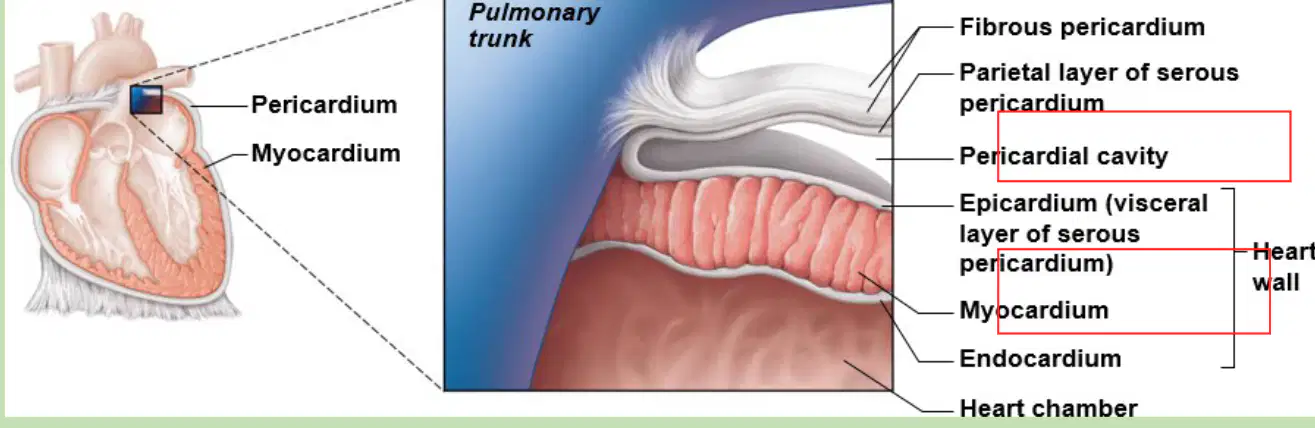
What is the primary function of the superficial fibrous pericardium?
To line the internal surface of the fibrous pericardium
To protect, anchor the heart to surrounding structures, and prevent overfilling
To contain serous fluid and protect against friction
To form the external surface of the heart
Which layer lines the internal surface of the fibrous pericardium?
Visceral layer
Superficial fibrous pericardium
Parietal layer of the serous pericardium
Myocardium
What does the pericardial cavity contain, and what is its function?
Contains blood; helps in circulation
Contains air; aids in respiration
Contains serous fluid; protects against friction
Contains muscle; aids in contraction
What is another name for the visceral layer of the pericardium?
Endocardium
Myocardium
Epicardium
Fibrous pericardium

Which layer of the heart wall is the visceral layer of the serous pericardium?
Myocardium
Endocardium
Epicardium
Pericardium
What is the primary function of the cardiac skeleton in the myocardium?
Pumps blood
Anchors cardiac muscle fibers
Produces hormones
Stores energy

Which layer of the heart wall lines the heart chambers and covers the cardiac skeleton of valves?
Epicardium
Myocardium
Endocardium
Pericardium

What are the four chambers of the heart?
Two superior ventricles and two inferior atria
Two superior atria and two inferior ventricles
Two superior atria and two superior ventricles
Two inferior atria and two inferior ventricles

What is the function of the interatrial septum?
Separates the ventricles
Connects the atria
Separates the atria
Connects the ventricles

What is the fossa ovalis a remnant of?
Interventricular septum
Foramen ovale of fetal heart
Pulmonary valve
Aortic valve

What does the foramen ovale allow in the fetal heart?
Blood to bypass the liver
Atria to be connected and blood to bypass nonfunctional fetal lungs
Ventricles to be connected
Blood to bypass the kidneys

What is the function of the interventricular septum?
Separates the atria
Connects the atria
Separates the ventricles
Connects the ventricles

What is the primary function of the atria in the heart?
Pump blood to the lungs
Receive blood from the body
Increase blood pressure
Filter blood

What is the role of auricles in the heart?
Decrease atrial volume
Increase atrial volume
Pump blood to the ventricles
Filter deoxygenated blood
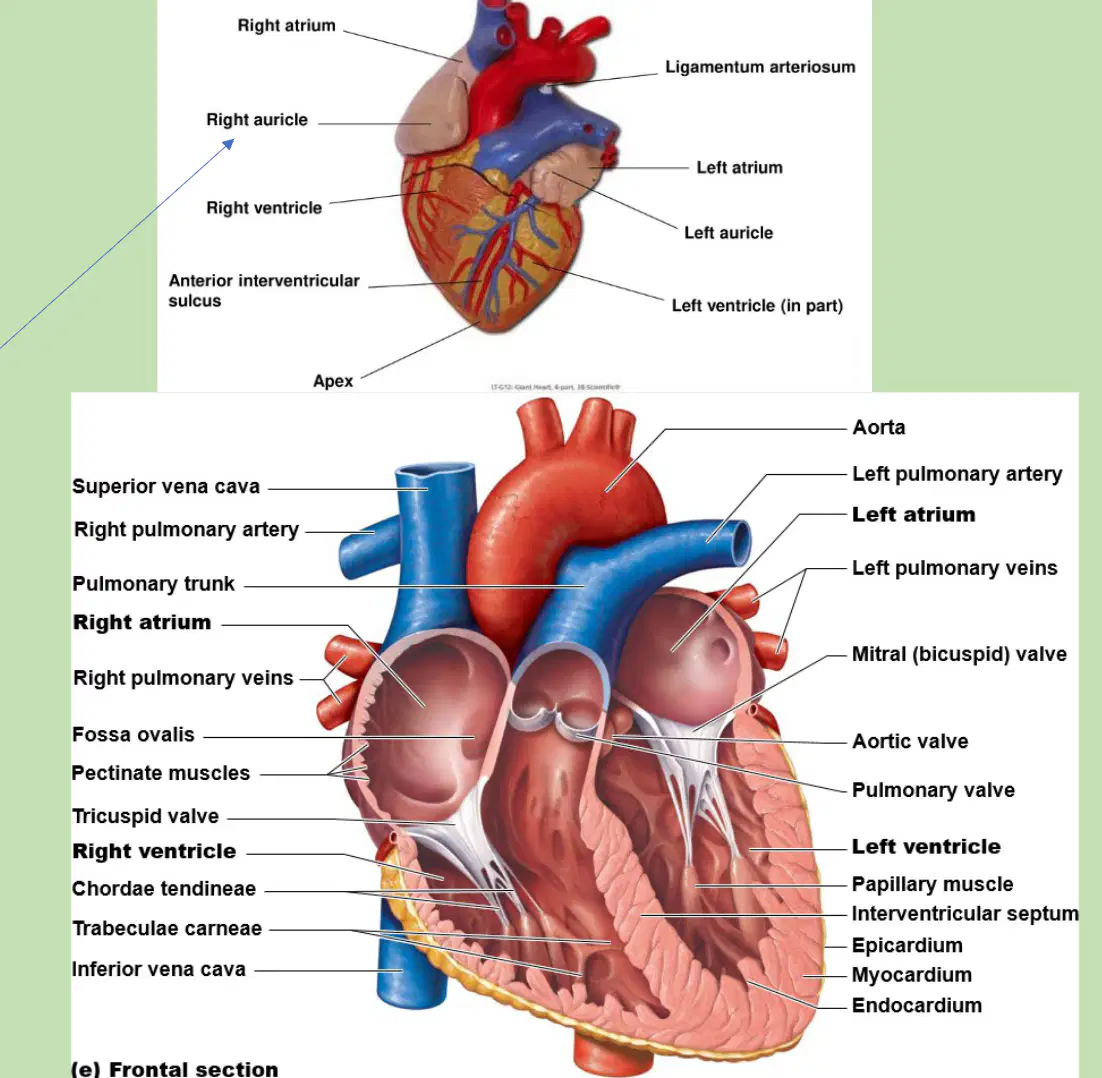
Which part of the right atrium is smooth-walled?
Posterior portion
Lateral portion
Anterior portion
Inferior portion

What is the function of pectinate muscles in the right atrium?
Pump blood to the ventricles
Stretch to increase volume
Filter blood
Decrease blood pressure
Which vein returns blood from body regions above the diaphragm?
Inferior vena cava
Coronary sinus
Superior vena cava
Pulmonary vein
What is the function of the left atrium?
Pumps blood to the lungs
Receives deoxygenated blood from the body
Receives oxygenated blood from the lungs
Pumps blood to the body
Which structure returns blood from coronary veins?
Superior vena cava
Inferior vena cava
Coronary sinus
Pulmonary trunk
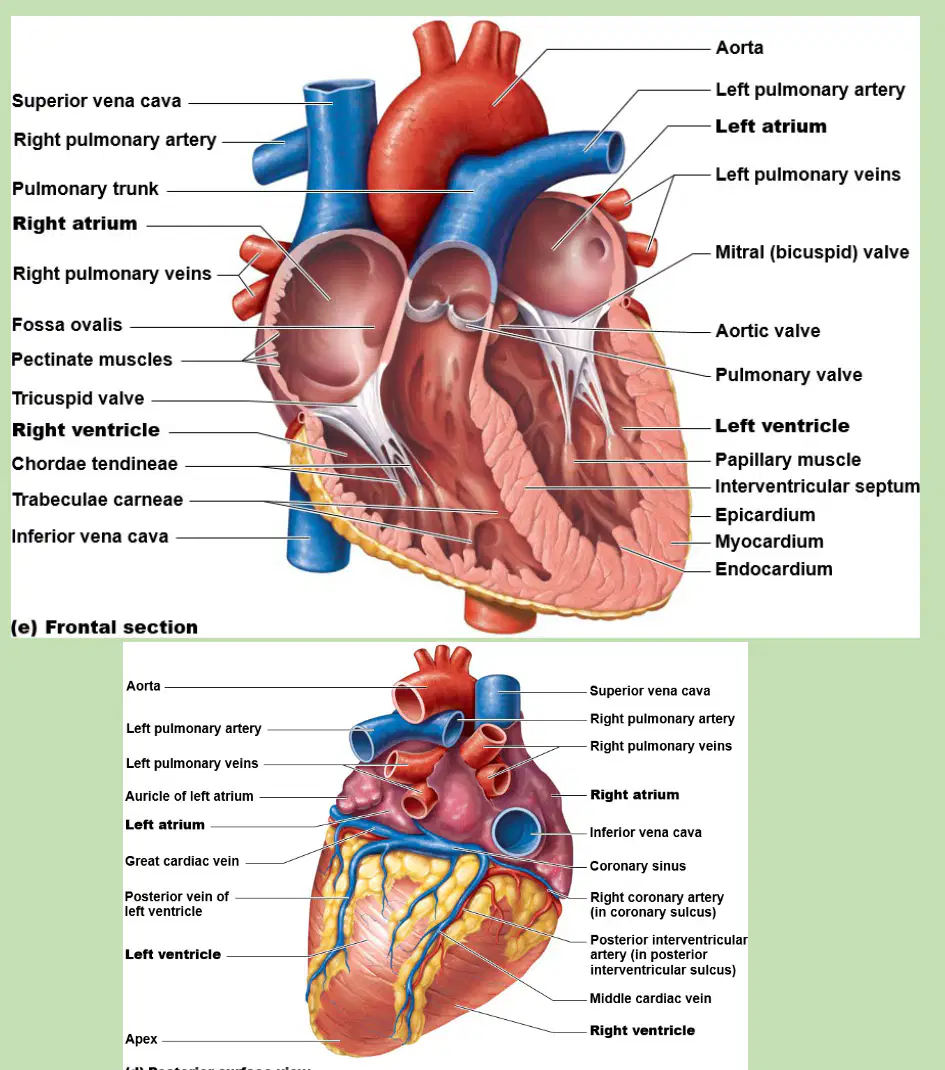
What is the role of pectinate muscles in the atria?
Pump blood to the ventricles
Stretch and increase volume
Close the heart valves
Prevent backflow of blood
What is the primary function of the ventricles in the heart?
To receive blood from the body
To discharge blood from the heart
To filter blood
To oxygenate blood
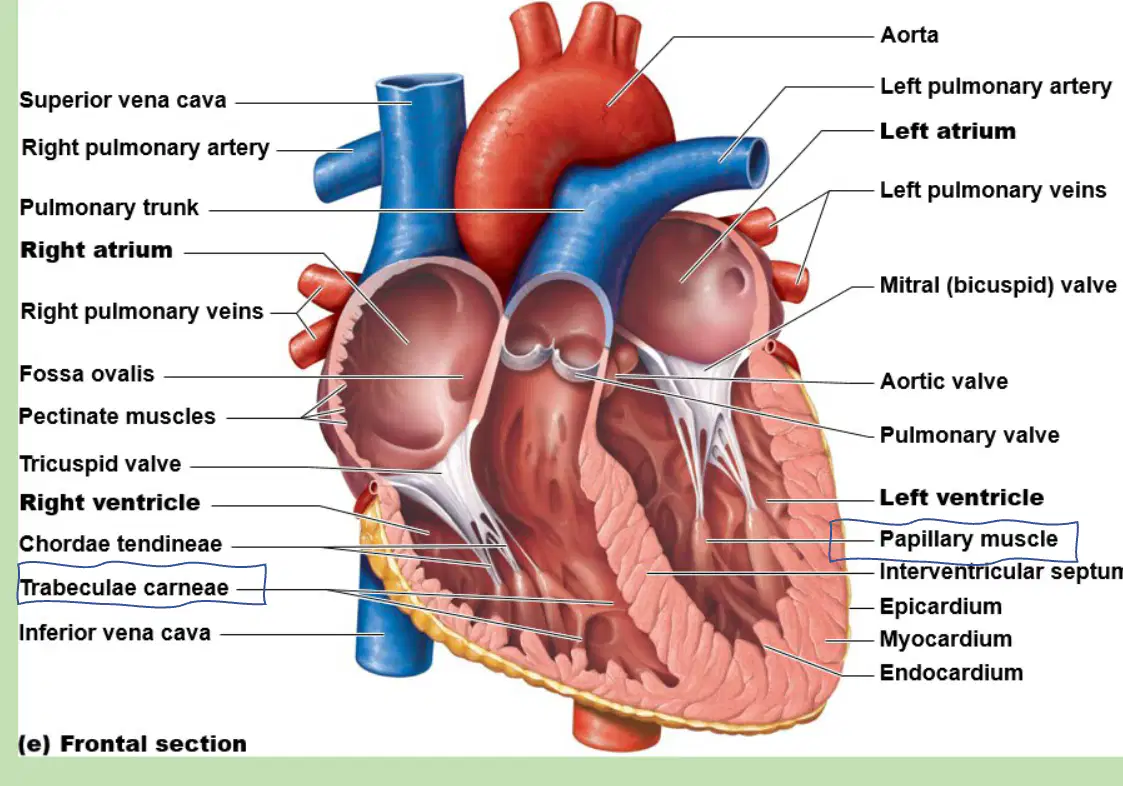
What are trabeculae carneae?
Smooth muscle fibers in the atria
Irregular ridges of muscle on ventricular walls
Valves that prevent backflow of blood
Arteries supplying the heart

What is the role of papillary muscles in the heart?
To pump blood into the aorta
To anchor chordae tendineae attached to heart valves
To regulate heart rate
To supply oxygen to the heart muscle

Which part of the heart pumps blood into the pulmonary trunk?
Left atrium
Right ventricle
Left ventricle
Right atrium

What is the function of the left ventricle?
Pumps blood into the pulmonary trunk
Pumps blood into the aorta
Receives blood from the body
Receives blood from the lungs

Which chamber of the heart has thicker walls than the atria?
Right atrium
Left atrium
Right ventricle
Left ventricle
What is the primary function of heart valves?
To pump blood
To ensure unidirectional blood flow
To produce blood cells
To regulate body temperature
Where are atrioventricular valves located?
Between ventricles and major arteries
Between atria and ventricles
In the pulmonary veins
In the aorta
What triggers the opening and closing of heart valves?
Electrical impulses
Pressure changes
Hormonal signals
Temperature changes

Where are semilunar valves located?
Between atria and ventricles
Between ventricles and major arteries
In the superior vena cava
In the right atrium

What is the primary function of the atrioventricular (AV) valves?
To increase blood pressure in the ventricles
To prevent backflow into the atria when ventricles contract
To regulate the heart rate
To oxygenate the blood
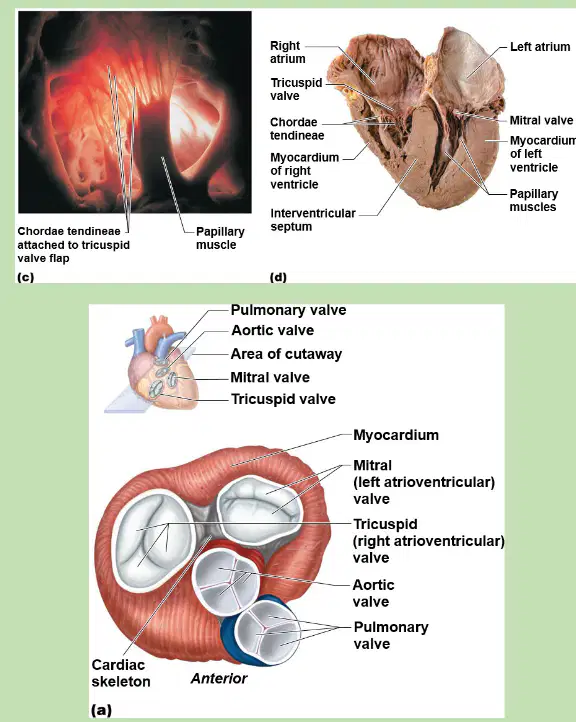
What role do the chordae tendineae play in heart function?
They pump blood into the ventricles
They anchor the cusps of AV valves to papillary muscles
They generate electrical impulses
They regulate blood pressure
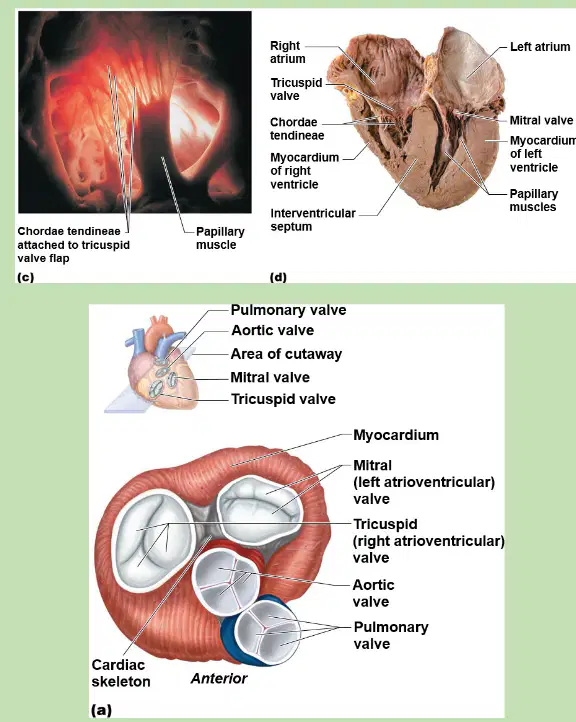
Where is the tricuspid valve located?
Between the left atria and ventricle
Between the right atria and ventricle
Between the left ventricle and aorta
Between the right ventricle and pulmonary artery
How many cusps does the mitral valve have?
One
Two
Three
Four
What is the function of semilunar (SL) valves in the heart?
To pump blood into the ventricles
To prevent backflow from major arteries into ventricles
To regulate blood pressure in the veins
To oxygenate the blood
Where is the pulmonary semilunar valve located?
Between the left atrium and left ventricle
Between the right atrium and right ventricle
Between the right ventricle and pulmonary trunk
Between the left ventricle and aorta
How many cusps does each semilunar valve have?
One
Two
Three
Four
What shape do the cusps of semilunar valves resemble?
Full moon
Crescent moon
Half moon
New moon
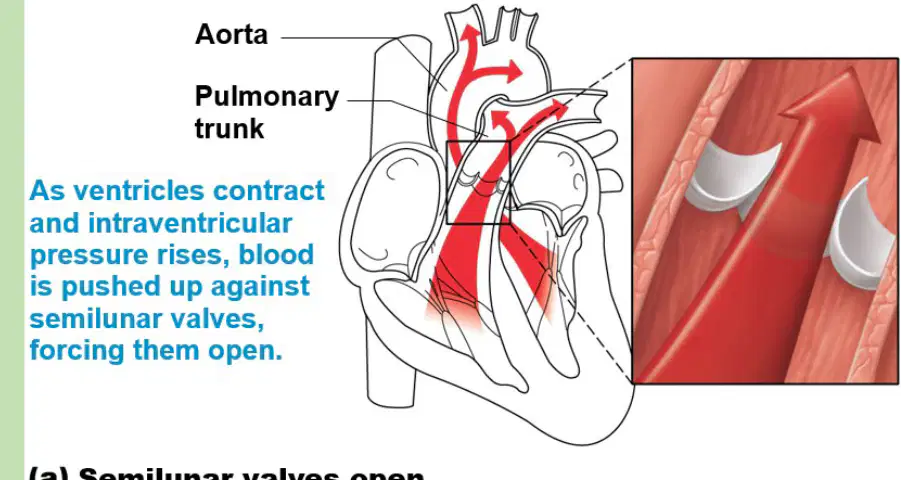
What happens to semilunar valves when ventricles contract?
They close
They open
They dissolve
They thicken
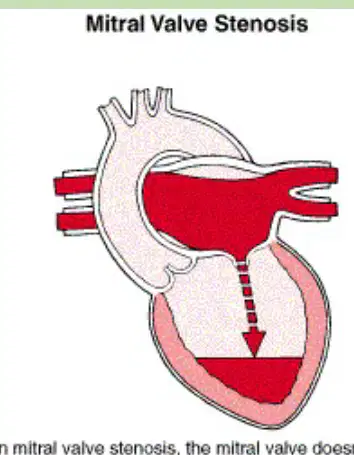
What is valvular stenosis?
A condition where the heart valves are too flexible
Stiff flaps/valves that constrict opening, narrowing the flow
A condition where the heart pumps too slowly
A condition where the heart valves are missing
What happens in an incompetent valve, also known as regurgitation?
Blood flows smoothly in one direction
Blood backflows, causing the heart to repump the same blood
The heart stops pumping blood
Blood flow is completely blocked
How can a defective valve be replaced?
With a synthetic heart
With a mechanical, animal, or cadaver valve
With a new heart
With a pacemaker

What is the function of the heart as described in the image?
It acts as a single pump supplying one circuit.
It acts as a double pump, each side supplying its own circuit.
It acts as a triple pump supplying three circuits.
It acts as a quadruple pump supplying four circuits.
Which valve is located between the right atrium and the right ventricle?
Bicuspid valve
Aortic valve
Tricuspid valve
Mitral valve
Where does the blood go after passing through the pulmonary semilunar valve?
Left atrium
Pulmonary trunk
Right atrium
Coronary sinus
What type of blood is carried to the lungs via the pulmonary arteries?
Oxygen-rich blood
Carbon dioxide-rich blood
Oxygen-poor blood
Nutrient-rich blood
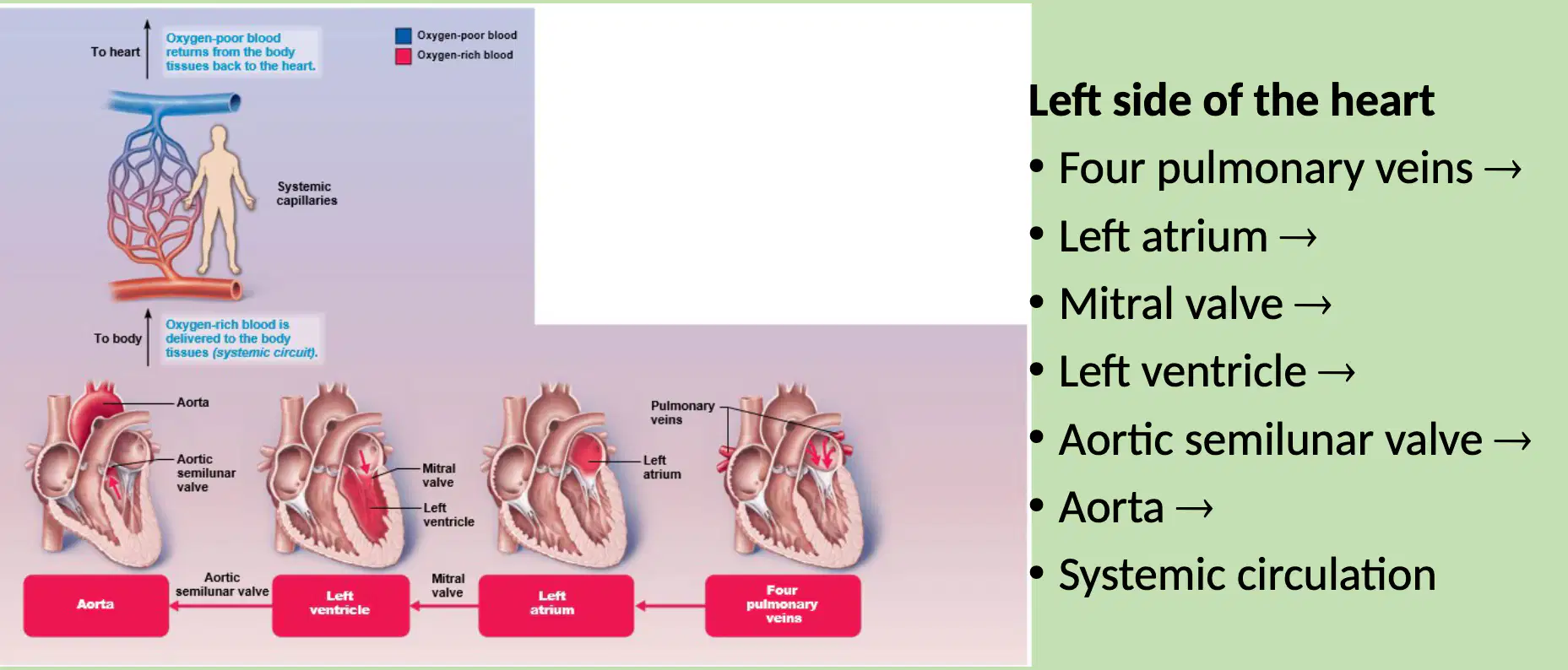
What is the function of the heart as described in the image?
It acts as a single pump for the entire body.
It is a double pump, each side supplying its own circuit.
It only pumps oxygen-poor blood.
It only pumps oxygen-rich blood.
Which part of the heart is responsible for systemic circulation?
Right atrium
Left ventricle
Right ventricle
Pulmonary veins
What is the role of the mitral valve in the heart?
It prevents backflow into the right atrium.
It prevents backflow into the left atrium.
It prevents backflow into the right ventricle.
It prevents backflow into the left ventricle.

What is the first chamber of the heart that oxygen-poor blood enters?
Left atrium
Right atrium
Left ventricle
Right ventricle

Which valve does blood pass through after leaving the right atrium?
Mitral valve
Aortic semilunar valve
Tricuspid valve
Pulmonary semilunar valve

Where does oxygen-poor blood go to become oxygenated?
Systemic capillaries
Pulmonary capillaries
Aorta
Left ventricle

What is the final chamber of the heart that oxygen-rich blood enters before being pumped to the body?
Right atrium
Left atrium
Right ventricle
Left ventricle
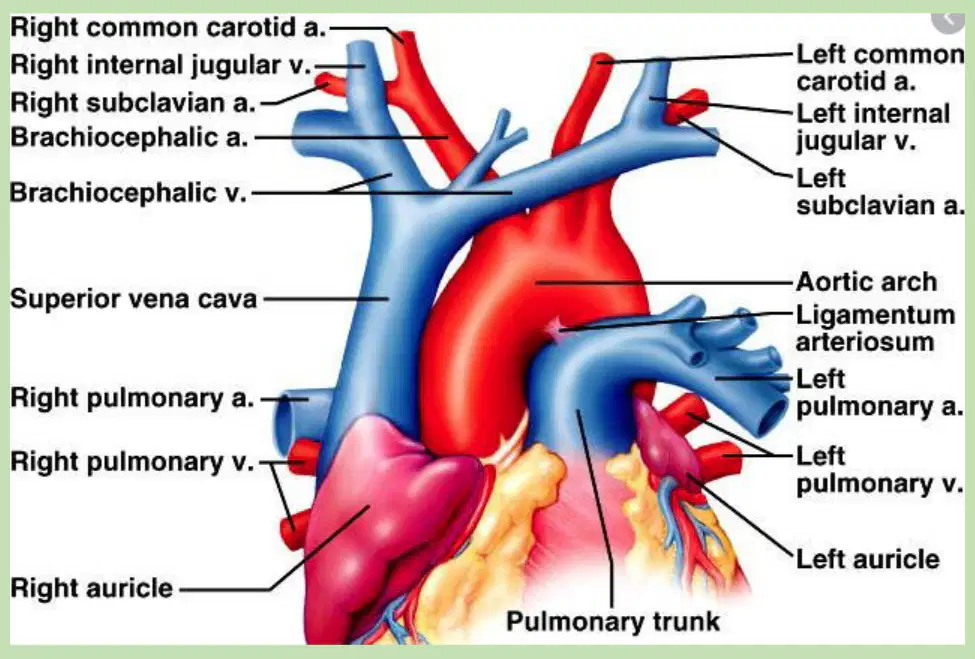
Which artery branches from the brachiocephalic trunk?
Left common carotid artery
Right common carotid artery
Left subclavian artery
Descending aorta
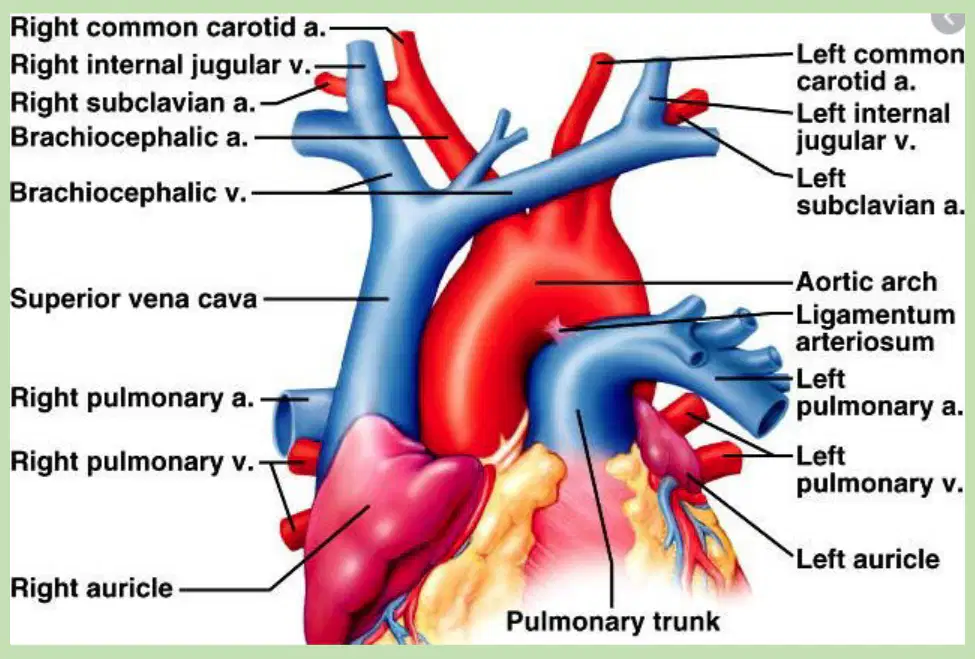
What is the function of the aorta in systemic circulation?
To carry oxygenated blood from the heart to the body
To carry deoxygenated blood from the body to the heart
To carry oxygenated blood from the lungs to the heart
To carry deoxygenated blood from the heart to the lungs
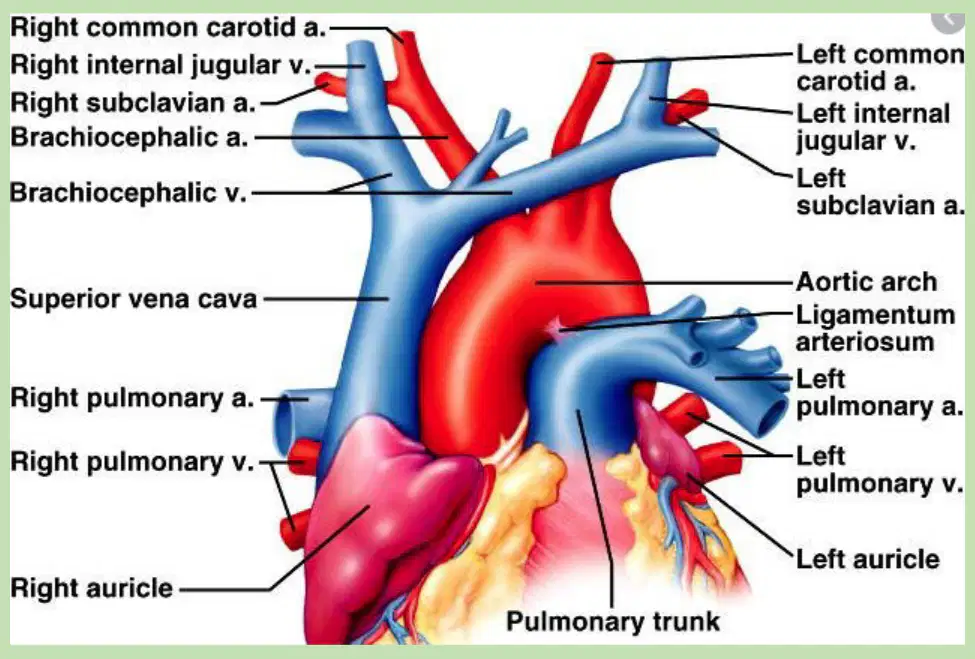
Which of the following is a direct branch of the aorta?
Right subclavian artery
Superior vena cava
Inferior vena cava
Pulmonary trunk

What is the primary function of coronary circulation?
To supply blood to the lungs
To supply blood to the heart muscle itself
To supply blood to the brain
To supply blood to the digestive system
When is coronary blood delivered to the heart muscle?
When the heart is contracting
When the heart is relaxed
During exercise
During sleep
Which part of the heart receives most of the coronary blood supply?
Right atrium
Left atrium
Right ventricle
Left ventricle
What is notable about the coronary circulation in terms of its length?
It is the longest circulation in the body
It is the shortest circulation in the body
It is the most complex circulation in the body
It is the least important circulation in the body
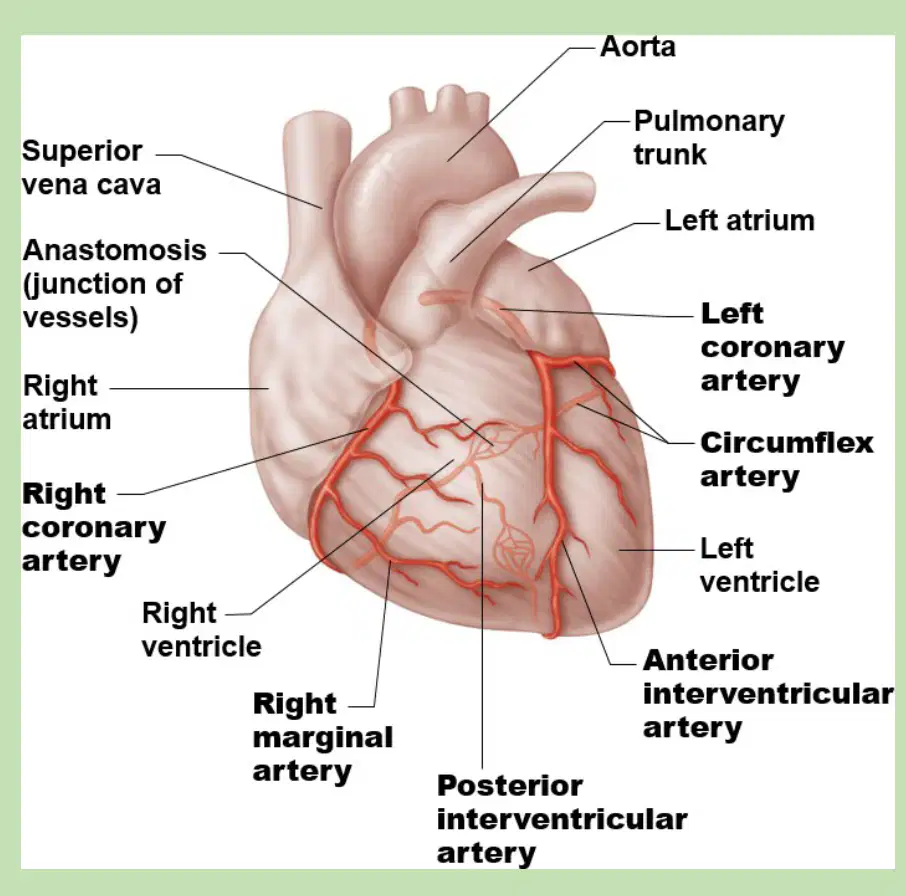
Where do the left and right coronary arteries arise from?
Base of the aorta
Left ventricle
Right atrium
Pulmonary trunk

What is the function of anastomoses in coronary arteries?
Supply oxygen to the lungs
Provide additional routes for blood delivery
Remove waste from the heart
Control heart rate

