
 Worksheets
SENIOR ONE- MID TERM II, 2025
Total questions: 150
Worksheet time: 2hrs 57mins


What are the three states of matter?
solid, volume, mass
density, volume, mass
solid, liquid, gas
density, gas, volume

I am anything that has mass and takes up space!
energy
matter
molecules
atoms

What form of matter has a definite shape?
Solid
Liquid
Gas
Square

What can causes ice to transform from a solid to a liquid?
The air.
The cold.
Shape
Heat

This state of matter does not have a definite size or shape.
Gas
Liquid
Solid
Milk

When you see steam, fog or clouds, which state of matter is it?
solid
liquid
gas


What is an example of a solid?
wind
water
rock
juice


Particles closest together
solid
liquid
gas
solid, liquid and gas

Particles move quickest
solid
liquid
gas
solid, liquid and gas


Most gases are clear and not visible. What is the evidence that gases are matter?
no evidence
They have mass and occupy space— air in a ball, menthol, and the water are evidence.

When a substance is cooled, will it always return to a solid state?
The menthol, when cooled, returned to a solid state. Water vapor, when cooled, returned to a liquid state. Cooling does not always mean something turns into a solid; a gas could cool and become a liquid.
no evidence

Why is it important to pay attention to temperature when talking about a substance?
Temperature affects the state of matter a substance is in.
no evidence

What state of matter is salt at room temperature?
gas
liquid
solid
white

What state of matter is apple juice at room temperature?
gas
liquid
solid
yellow

What state of matter is helium (as in a helium balloon) at room temperature?
gas
liquid
solid
clear

What state of matter was the menthol at the beginning of the activity (before it was heated)?
gas
liquid
solid
crystals

How does cooling or heating affect the state of matter?
Cooling makes something turn into a solid.
Heating makes something turn from solid to a liquid. A liquid that is heated turns into a gas.
no evidence

Solids can be held in the hand, liquids and gases cannot.
true
false

Liquids and gases take the shape of the container, solids do not.
true
false

Gases fully occupy the volume of the container, but
liquids and solids do not.
true
false

What are some forms that water can be in?
ice
frozen water
snow
sleet
hail

What are some forms that water can be in?
condensation
steam
fog
water vapor

The water vapor hit the watch glass, and the dish fogged up. Eventually drops of __________ formed on the watch glass.
water
air
space
time

As the water boils, the water level will increase.
true
false


Liquid
Solid
Gas

Solid
Liquid
Gas

A table is a...
Solid
Liquid
Gas

Coffee is a...
Solid
Liquid
Gas

Air is a...
Solid
Liquid
Gas

Which one is a liquid?
Window
Yogurt
Balloon

What is the image modeling?
gas compression
gas expansion
condensation

When your nose detects an odor it means that tiny pieces of that substance get into the air and travel into your nose.
True
False

The energy of motion/movement is ___.
potential energy
kinetic energy
mechanical energy
The higher the temperature and kinetic energy, the _____ the particles move.
slower
faster
The forces of attraction that occur between molecules are called:
intermolecular forces
intramolecular forces
chemical bonds

These properties describe a ___.
solid
liquid
gas

These properties describe a ___.
solid
liquid
gas

These properties describe a ___.
solid
liquid
gas

Which one of these is NOT an assumption of the Kinetic Molecular Theory of Gases?
The collisions of gas particles are elastic, so no kinetic energy is gained or lost
Gas particles are strongly attracted to one another.
Gas particles do not take up space.

Liquid particles have more kinetic energy than ________ particles.
solid
gas

The particles of ___ _____generally have the least amount of kinetic energy.
solids
liquids
gases
Condensation involves a change of state from ___ to ___
Liquid to Solid
Liquid to Gaseous
Solid to Liquid
Gaseous to Liquid
Drying clothes in sunlight is the example of ______
condensation
evaporation
Condensation occurs when water vapour....
loses heat
gains heat
what is evaporation?
(a)
When a glass of water is kept in the hot sun it changes to ice in the process of condensation.
TRUE
FALSE
when water is heated and changes to vapour it is called ______
condensation
evaporation
cooling
none of these
Which is required during a phase change?
a. energy
b. sublimation
c. vibration
d. water

At constant temperature, as volume increases, pressure ________________.
increases
decreases
At constant pressure, as temperature increases, volume ______________.
increases
decreases
How does the physical appearance of dry ice differ from regular ice?
Dry ice is a liquid with a bluish color.
Dry ice looks like soft fluffy snow.
Dry ice is a solid white material.
Dry ice is a gas with a strong odor.
How does the cooling effect of dry ice compare to regular ice?
Dry ice and regular ice have the same cooling effect.
Regular ice has a stronger cooling effect than dry ice.
Dry ice has a stronger cooling effect than regular ice.
Dry ice has a weaker cooling effect than regular ice.
Compare the density of dry ice to that of water. Does dry ice sink in liquid water?
No
Yes
What is the chemical formula of dry ice?
O2
CH4
H2O
CO2
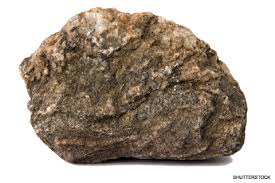
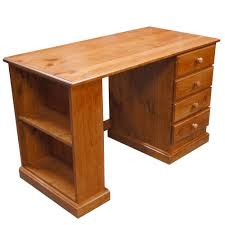

liquid


A student measures the mass of an object on a balance. The balance reads 23.5 grams. This is a type of ________________ data.
quantitative
qualitative
A student designs an experiment that measures the height of a plant after being exposed to different amounts of sunlight. The independent variable in this experiment is
amount of sunlight
height of the plant
type of plant
amount of water
Which variable do you measure in an experiment?
After completing an experiment, which of the following steps should be completed next?
Form a hypothesis
Collect and record data
Draw conclusions
Make an observation
___________ variables stay the same during an experiment.
independent
dependent
controlled
Before doing an experiment, which of the following should be done? (Select all that apply)
Ask a question
Draw conclusions
Collect data
Form a hypothesis
What is the purpose of hazard symbols?
To indicate the dangers associated with the substance inside
To decorate containers
To provide nutritional information
To show the price of the substance
What is a hazard?
A type of food
Something that has the potential to cause harm or damage
Something that is always safe
A type of clothing
What can concentrated acids do?
Clean surfaces
Make food taste better
Heal wounds
Corrode metal, stonework, clothes, and skin
What is risk in the context of hazards?
The chance that a hazard will cause harm
The guarantee of safety
The cost of a substance
The color of a substance
Why are hazard symbols important even if a person cannot read the writing?
They are colorful
They are used for decoration
They provide a warning through symbols
They are written in multiple languages
What should a risk assessment describe?
How to increase the risk of harm
How to reduce the risk of harm when carrying out an experiment
The price of the substance
The history of the substance
What is an example of a corrosive substance?
Salt
Sugar
Concentrated acids
Water
What can hazards cause?
Good luck
Adverse health effects, either straightaway or later
Happiness
Improved vision
What is the role of hazard symbols in the laboratory?
To entertain students
To give information about how to work safely with the substance
To provide recipes
To show the expiration date
What is NOT a function of hazard symbols?
Indicating dangers
Providing safety information
Decorating the container
Warning about potential harm
This risk mostly occurs when the individuals are working around live electrical apparatus.
Chemical accidents
Electrical accidents
Ergonomic accidents
Physical accidents
This hazard affects individuals whose work stresses on their body.
Chemical accidents
Electrical accidents
Ergonomic accidents
Physical accidents
This hazard threatens employees because their roles exposed them to dangerous liquids, solvents, or flammable gases.
Chemical accidents
Electrical accidents
Ergonomic accidents
Physical accidents
These hazards may not be noticeable at first which makes them much harder to identify.
Chemical accidents
Electrical accidents
Ergonomic accidents
Physical accidents
Occupational hearing loss, postural defects, falls, and accidents are an example of what kind of hazard?
Chemical accidents
Electrical accidents
Ergonomic accidents
Physical accidents

