
 Worksheets
The UK's Relationship with the Wider World
Total questions: 54
Worksheet time: 27mins
What is one of the learning objectives for understanding the UK's relationship with the wider world?
To explore the difference between local, regional, and national governance.
To learn about ancient civilizations.
To study the geography of the UK.
To memorize the capitals of Europe.
Which of the following is included in the UK's relationship with the wider world, according to the learning objectives?
The Commonwealth and Europe
Only the United States
Only Asia
Only Africa
What is a good way to start discussing the UK's links with the rest of the world, as suggested in the material?
Discuss with your partner and make a list.
Write an essay alone.
Watch a documentary.
Read a novel.
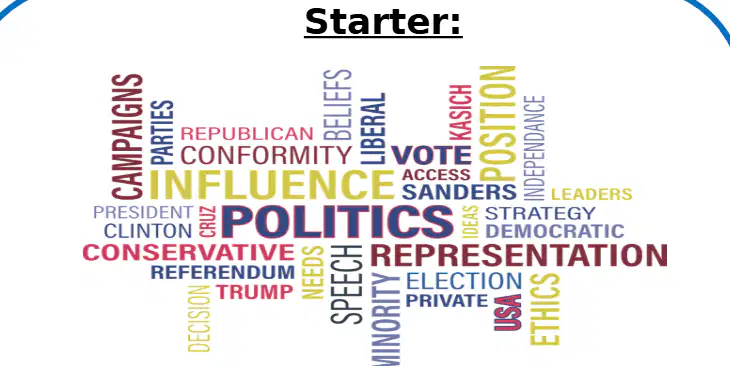
What is the main theme of the word cloud shown in the starter section?
Politics and government
Sports and recreation
Science and technology
Art and literature
What is the main purpose of a government according to the provided definition?
To entertain people
To organize people and divide up authority and power to achieve goals
To create art
To make money for individuals
What do we call the goals that governments try to achieve to improve life for groups of people?
Laws
Policies
Traditions
Elections
According to the definition, how do governments usually seek to improve life for groups of people in a society?
By running services
By increasing taxes
By holding parties
By writing books
Explain, in your own words, why dividing up authority and power is important for a government to achieve its goals.
It helps prevent one person from having too much control and allows for better organization to achieve common goals.
It makes the government more confusing.
It allows only the strongest people to rule.
It stops people from working together.
Which of the following is a group that governments may aim to improve life for?
Young people
Only business owners
Only tourists
Only athletes
Why might a government set goals to improve the environment?
To ensure a healthy and sustainable place for people to live
To increase the number of cars on the road
To reduce the number of parks
To make the weather colder
Which of the following is NOT typically a group that governments focus on when setting goals to improve life?
Older people
The environment
Young people
Only celebrities
If you were a government official, which of the following would be a reasonable goal to help older people?
Improve healthcare services
Increase homework for students
Build more amusement parks
Reduce public transportation
What do we call the goals that governments set to improve life for people?
Policies
Laws
Traditions
Celebrations
Which of the following is an example of a government policy mentioned in the material?
Building amusement parks
Ensuring that citizens are safe and protected
Organizing sports events
Promoting fashion shows
Which service is mentioned as a way governments achieve their policies?
National Health Service (NHS)
National Bank Service
National Transport Service
National Food Service
Why might a government want to safeguard the environment by improving recycling?
To increase pollution
To protect natural resources and promote sustainability
To reduce education levels
To make healthcare more expensive
Which of the following is NOT listed as a government goal or policy in the material?
Keep the population healthy
Make sure that young people are educated
Increase the number of shopping malls
Safeguard the environment by improving recycling
Which of the following is part of the National level of government in the UK?
UK Parliament
Parish Councils
Mayor of London
Town Councils
Which of these is a Regional authority in the UK government structure?
London Assembly
County Councils
Scottish Parliament
District Councils
Which of the following is NOT a type of Local Government council in the UK?
County Councils
District Councils
Scottish Parliament
Parish Councils
If a citizen wanted to address a local issue in their town, which type of council would they most likely contact?
Town Council
UK Parliament
Scottish Parliament
National Assembly of Wales
Which of the following is a responsibility of local government?
Controlling the entire nation
Providing social care and waste collection
Making international treaties
Managing national defense
What is the most common type of local authority mentioned in the text?
National parliament
Local councils
Regional assemblies
City mayors
Which statement best describes the role of national government?
It manages only local schools and hospitals.
It is the government or political authority that controls a nation.
It is responsible for waste collection in cities.
It only supports business licensing.
How do regional governments differ from local governments according to the text?
Regional governments cover smaller areas than local governments.
Regional governments are responsible for only one city.
Regional governments cover larger areas and have powers transferred from the national government.
Regional governments are elected by the public in local elections.
Why might a national government transfer powers and budgets to regional governments?
To reduce the number of local elections
To allow regions to manage larger areas and responsibilities
To focus only on pest control
To eliminate local councils
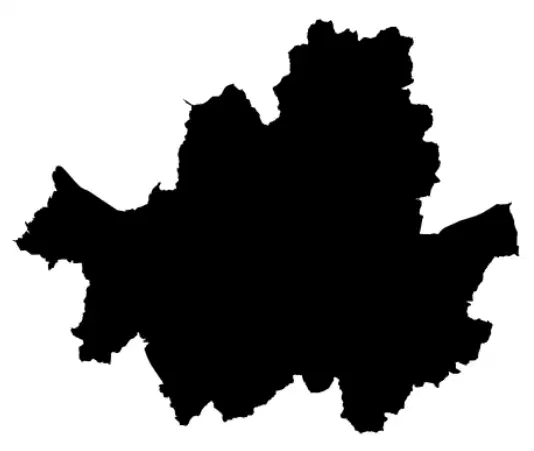
Which type of government has powers in a local area like a town, city, or county?
Local government
Central government
Federal government
International government
What is the main difference between local government and central government in terms of geographic area?
Local government holds power over the whole country, while central government only controls towns.
Local government has powers in a local area, while central government holds power over the whole country.
Both local and central governments have the same geographic powers.
Central government only controls cities, while local government controls the countryside.
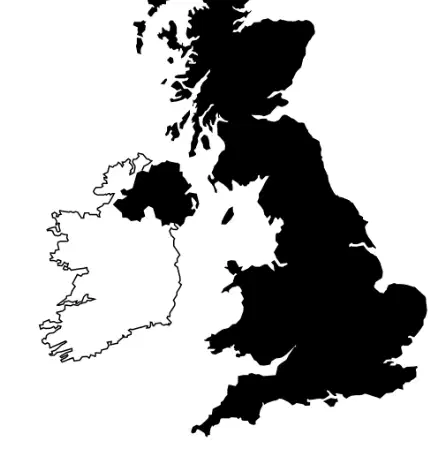
Which government holds power over the whole of the United Kingdom on many issues?
Local government
State government
Central government
Regional government

Which level of government is responsible for applying laws set by the central government through Parliament?
Local government
Central government
State government
Federal court
What is the main responsibility of the central government?
Deciding how local services are run
Setting laws and policies for the whole country
Collecting local taxes
Managing city parks
How does the local government decide how local services are run?
By following instructions from the central government directly
By applying laws set by the central government through Parliament
By making their own national laws
By asking citizens to vote on every issue
Explain the difference between the roles of local government and central government.
Local government manages national security, while central government manages parks.
Local government sets laws for the whole country, while central government applies them locally.
Local government decides how local services are run, while central government sets laws and policies for the whole country.
Local government and central government have the same responsibilities.
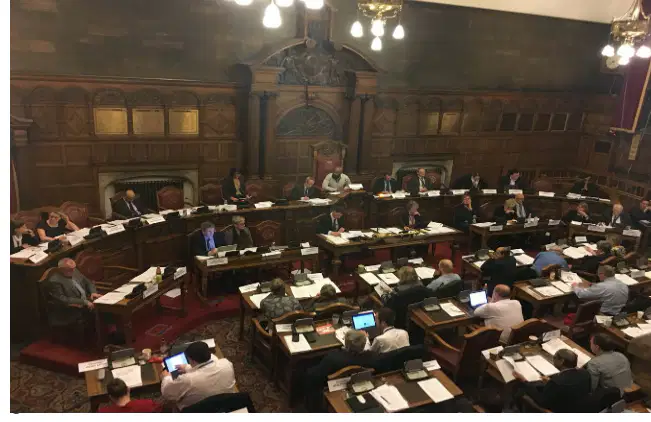
Which group is responsible for making decisions at the local level by following laws set by Parliament?
Local government
Central government
The police
The judiciary
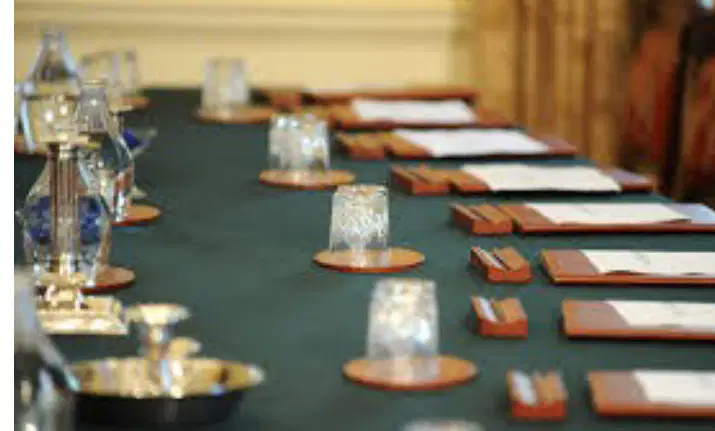
Who are the individuals that make decisions in the central government?
Local councillors
Government ministers who are either MPs or Lords
School principals
Mayors
Explain the main difference between local government and central government decision makers.
Local government makes decisions for the whole country, while central government only makes decisions for cities.
Local government decisions are made by elected councillors for local residents, while central government decisions are made by ministers who are MPs or Lords and run government departments.
Central government follows local laws, while local government creates national laws.
Local government is not elected, while central government is elected by local residents.
At its peak, what proportion of the world's land area did the British Empire cover?
About one third
About one tenth
About one half
About one quarter
Which of the following is NOT mentioned as a region where the British Empire had colonies?
Africa
Asian Pacific
Antarctica
Americas
What happened to many former colonial countries of the UK in the 20th century?
They became part of the United States
They gained independence
They joined the European Union
They became monarchies
Which international organizations does the UK continue to have influence in today?
G8, NATO, and UN Security Council
ASEAN, OPEC, and FIFA
EU, NAFTA, and AU
UNESCO, WHO, and IMF
Why is the UK highly regarded internationally?
Its large population
Its fairness, tolerance, legal system, democratic principles, and cultural heritage
Its tropical climate
Its agricultural exports
Explain how the UK's global influence has changed from the peak of the British Empire to today.
The UK has shifted from direct colonial control to influence through international organizations and cultural impact.
The UK has expanded its empire further.
The UK has become isolated from world affairs.
The UK only influences its former colonies.
In what year did the UK become a member of the European Union (EU)?
1985
1973
1992
2001
How many countries has the European Union expanded to over the years?
15
20
28
35
What was the original purpose of the EU when the UK joined in 1973?
A military alliance
A trading group of industrial countries
A cultural exchange program
A scientific research group
Which of the following best describes the EU’s influence over its members today?
Only economic influence
Only military influence
Political influence as well as being an important trading group
No influence at all
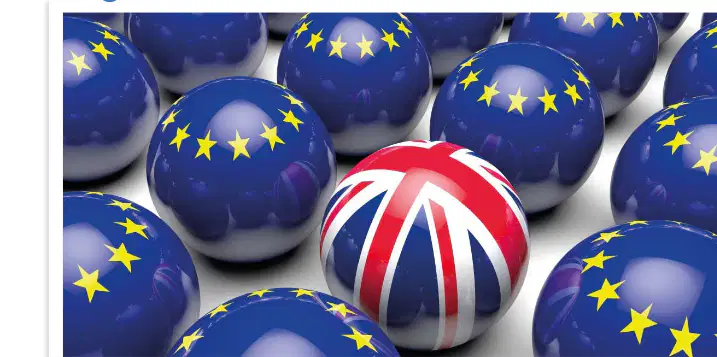
Why might the expansion of the EU to 28 countries be significant for its members?
It reduces the number of trading partners
It increases the diversity of GDP levels among members
It limits political cooperation
It makes the EU less important globally
What is the Commonwealth?
A group of 54 independent and equal countries
A single country in Europe
A type of government
A historical event
How many people are part of the Commonwealth?
2.5 billion
500 million
1 billion
5 billion
Which of the following is a goal shared by Commonwealth member governments?
Development, democracy, and peace
Military expansion
Economic isolation
Colonization
What document expresses the values and principles of the Commonwealth?
The Commonwealth Charter
The Magna Carta
The United Nations Charter
The Bill of Rights
Which country was the last to join the Commonwealth as of 2009?
Rwanda
India
Australia
Canada
What is true about membership in the modern Commonwealth?
Any country can join
Only former British colonies can join
Only European countries can join
Membership is by invitation only
Why do you think the Commonwealth includes both advanced economies and developing countries? Use evidence from the information provided to support your answer.
Because it is a voluntary association open to any country, regardless of economic status
Because only rich countries are allowed to join
Because it is limited to island nations
Because it only includes countries from Africa

