
 Worksheets
Cells: Worksheet
Total questions: 59
Worksheet time: 30mins
All living things are composed of cells and all cells come from earlier cells.
True
False
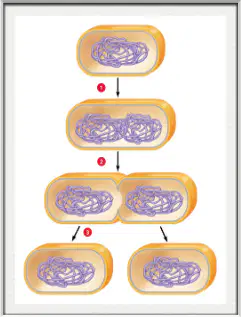
Every cell was formed by division of a previously living cell.
True
False
Cells are separated from the surrounding environment by a boundary. What is this boundary called?
Cell Membrane
Nucleus
Cytoplasm
Mitochondria
Each cell must take in raw materials and expel waste through its boundary. What is the name of this boundary?
Cell Membrane
Nucleus
Cytoplasm
Mitochondria
Each cell must absorb energy. Which of the following is NOT a usual source of energy for cells?
Light
Chemical bonds in molecules
Sound
Cells build biological molecules and cell parts for repair, growth, and reproduction.
True
False
Each cell must have all its activities closely regulated and coordinated.
True
False
Cells are specialized depending upon which of the following?
A) Shapes
B) Size
C) Organelles
D) All of the above
What are the two main cell types?
Prokaryotic and Eukaryotic
Animal and Plant
Red and White
Somatic and Germ
Which of the following is NOT an example of a eukaryotic cell?
A) Protists
B) Plants
C) Bacteria
D) Animals
A limiting factor on the size of prokaryotic cells is the ability to ______________ nutrients and wastes efficiently throughout (and into and out of) the cell. As a cell increases in size, so do distances within the cell.
transport
digest
store
synthesize
Which of the following is NOT a main region of a cell?
Nucleus
Cytoplasm
Plasma membrane
Cell wall
Functions of the cell membrane include: Regulates materials moving in and out of the cell, ______________, boundary, and attachment.
identification
digestion
photosynthesis
respiration
The plasma membrane defines the extent of the cell.
True
False
Proteins make up what percentage of the membrane mass?
50%
10%
80%
25%
What is the main difference between eukaryotic and prokaryotic cells regarding organelles?
Eukaryotic cells have membrane bound organelles, while prokaryotic cells do not.
Prokaryotic cells have more organelles than eukaryotic cells.
Both have the same types of organelles.
Eukaryotic cells lack any organelles.
What does the 'Fluid Mosaic' model describe about the cell membrane?
Molecules are fixed in place
Molecules move freely within the membrane
The membrane is made only of proteins
The membrane is solid
What does the 'Mosaic' part of the Fluid Mosaic model refer to?
The membrane is made of only one type of molecule
Diversity of protein in the membrane
The membrane is a solid structure
The membrane is made of carbohydrates
Fill in the blank: Membranes are ______ permeable, allowing some substances to cross more easily than others.
selectively
completely
impermeably
randomly
Which of the following is NOT a function of the cell membrane?
Acts as a barrier against substances outside the cell
Allows all substances to pass freely
Has receptors for cellular communication
Blocks passage of some substances altogether
Name the three components of cytoplasm mentioned in the worksheet.
Cytosol, Organelles, Inclusion (won't cover this)
Nucleus, Mitochondria, Ribosome
Cell wall, Plasma membrane, Nucleolus
Lysosome, Golgi apparatus, Endoplasmic reticulum
What is the function of ribosomes in the cell?
To make lipids
To make proteins (protein synthesis)
To store genetic material
To break down waste
Fill in the blank: Free ribosomes float in the ______.
cytosol
nucleus
mitochondria
cell membrane
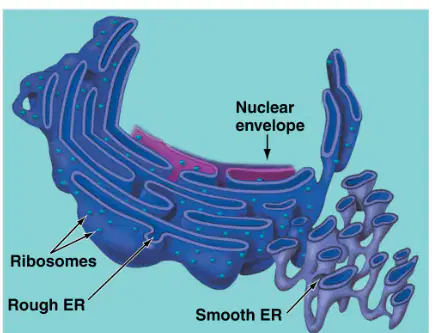
Which type of endoplasmic reticulum has ribosomes attached to the outside?
Smooth ER
Rough ER
Both
Neither
List one function of the Rough ER.
Makes membranes / Helps synthesis proteins / Packages the proteins into transport vesicles (any one)
Stores genetic information
Produces energy through cellular respiration
Synthesizes lipids
What are the functions of the Smooth ER?
Produces lipids
Detoxifying in liver cells
Stores calcium
Produces proteins
What is the main function of the Golgi Apparatus?
Produces energy
Modifies & processes the proteins produced by the rough ER
Stores calcium
Digests macromolecules
The mitochondria is considered to be the ______ of the cell.
powerhouse
nucleus
membrane
factory
What is the main function of mitochondria?
Packing and shipping
Generates most of the cell's energy (ATP) via cellular respiration
Digests macromolecules
Produces lipids
The inner membrane of the mitochondria folds in forming shelf-like structures called ______.
cristae
thylakoids
grana
cisternae
True or False: Mitochondria contain their own DNA called maternal DNA (nuclear DNA).
True
False
What is the function of lysosomes?
Produces energy
Digests macromolecules including defunct organelles
Stores calcium
Modifies proteins
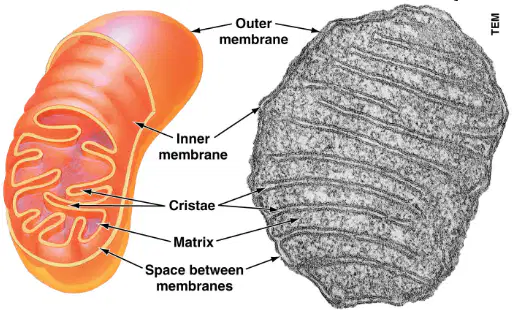
Label the parts of the mitochondria shown in the diagram:
Outer membrane, Inner membrane, Cristae, Matrix, Space between membranes
Nucleus, Cytoplasm, Ribosome, Golgi apparatus, Lysosome
Cell wall, Chloroplast, Vacuole, Nucleolus, Centriole
Plasma membrane, Endoplasmic reticulum, Peroxisome, Microtubule, Flagellum
What is the function of the cytoskeleton in a cell?
Produces energy
Creates the infrastructure within the cell, provides mechanical support, maintains cell shape, and provides machinery for cellular movement
Stores genetic information
Synthesizes proteins
Name the three types of cytoskeletal elements mentioned in the worksheet.
Microtubules, Micro filaments, Intermediate filaments
Actin, Myosin, Tubulin
Collagen, Elastin, Keratin
Desmosomes, Hemidesmosomes, Gap junctions
Special microtubules for locomotion are called ______ and ______. (Fill in the blanks)
Cilia and Flagella
Ribosomes and Lysosomes
Mitochondria and Plastids
Centrioles and Chromosomes
What is the central core of the cell called?
Mitochondria
Nucleus
Ribosome
Cytoplasm
List the three parts of the nucleus as described in the worksheet. (Fill in the blanks)
Nuclear envelope, Nucleoli, Chromatins
Cell membrane, Cytoplasm, Mitochondria
Ribosomes, Lysosomes, Golgi apparatus
Centrioles, Microtubules, Peroxisomes
How many chromosomes are in a typical human cell?
46 (but 23 pairs)
23 (but 46 pairs)
44 (but 22 pairs)
48 (but 24 pairs)
Review: Solute + Solvent = ______ (Fill in the blank)
solution
mixture
compound
element
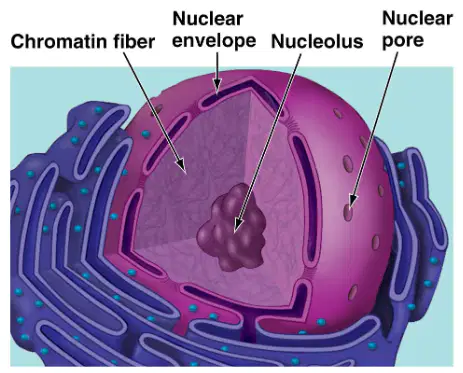
Label the following parts in the diagram of the nucleus:
Chromatin fiber, Nuclear envelope, Nucleolus, Nuclear pore
Mitochondria, Cell wall, Ribosome, Cytoplasm
Golgi apparatus, Lysosome, Endoplasmic reticulum, Vacuole
Plasma membrane, Chloroplast, Centriole, Peroxisome
What is diffusion?
The movement of a substance from a region of low concentration to high concentration
The movement of a substance from a region of high concentration to a region of low concentration by random molecular motion
The movement of water only
The movement of molecules using energy
Diffusion requires energy.
True
False
Fill in the blank: The rate of diffusion is dependent upon temperature, initial concentration of the substance, distance of diffusion, and other factors including size, weight, and ________.
barriers
color
taste
magnetism
Which of the following is NOT a factor that affects the rate of diffusion?
Temperature
Initial concentration of the substance
Color of the substance
Distance of diffusion
What is a concentration gradient?
Movement from low concentration to high concentration
Movement from high (no energy) concentration to low concentration
Movement of water only
Movement of solids only
Osmosis is the diffusion of ________.
water
salt
sugar
oxygen
Osmosis is a special case of diffusion.
True
False
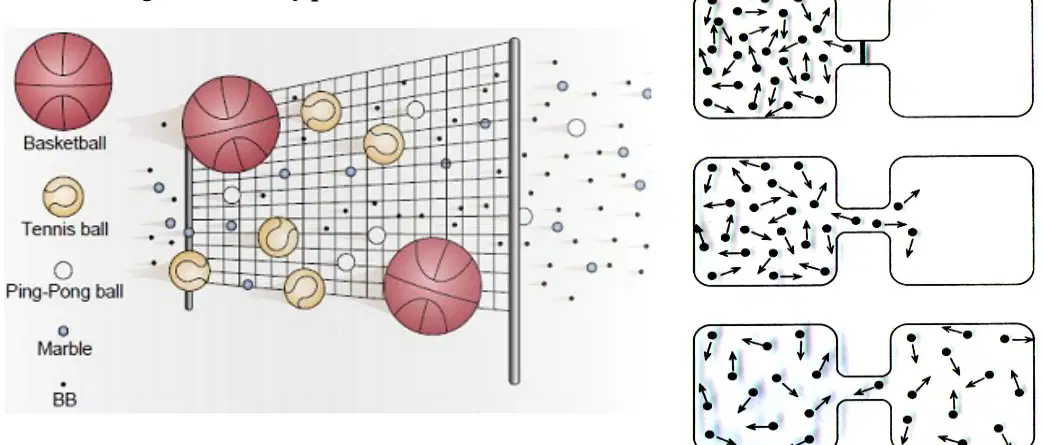
Diffusion through a selectively permeable barrier allows only certain molecules to pass based on their size, weight, and other factors.
True
False
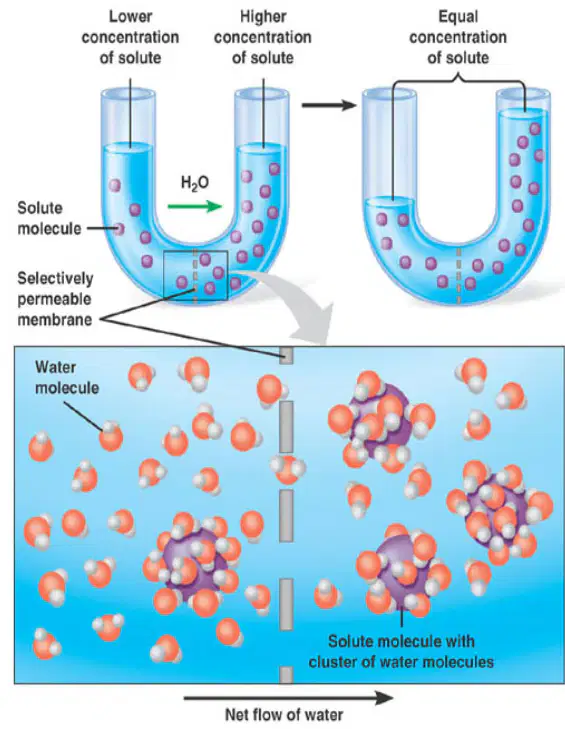
Osmosis is the diffusion of _______ in response to a __________ gradient (of solute) across a ______________ ________________ membrane.
water, concentration, selectively, permeable
salt, pressure, non-selective, impermeable
glucose, temperature, fully, permeable
ions, voltage, partially, permeable
Tonicity: The distribution of ________________.
water
proteins
glucose
ions
Tonicity is the relative ____________ concentration of a solution.
solute
water
pressure
temperature
Tonicity is used in ________________ the solute concentration of two solutions.
comparing
mixing
diluting
measuring
Hypertonic: Hyper = ________ Tonic = Solute. Solution with the ___________ solute concentration.
more, higher
less, lower
equal, same
none, lowest
Hypotonic: Hypo = _________ Tonic = Solute. Solution with the ___________ solute concentration.
less, lower
more, higher
equal, same
none, highest
Isotonic: Iso = _________ Tonic = Solute. Solutions with __________ solute concentrations.
equal, equal
same, different
different, same
high, low
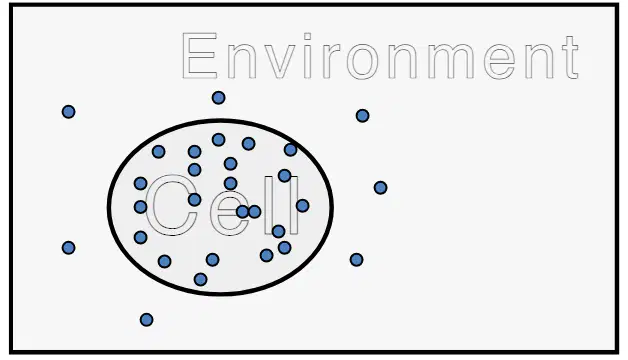
The tonicity of the cell relative to its environment is:
hypotonic
isotonic
hypertonic
neutral
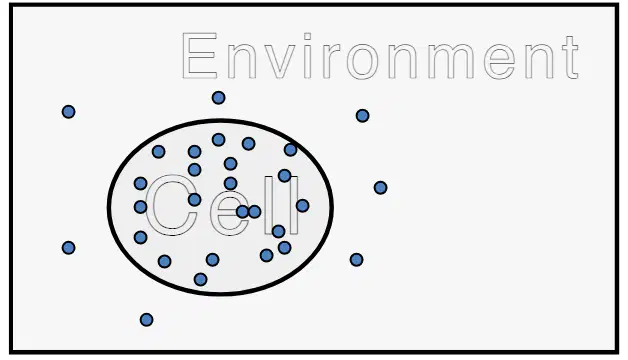
The tonicity of the environment relative to the cell is:
isotonic
hypertonic
hypotonic
hypotonic and hypertonic
Indicate the net direction of water movement across the cell membrane using an arrow.
→ (from outside to inside the cell)
← (from inside to outside the cell)
↑ (upward across the membrane)
↓ (downward across the membrane)

