
 Worksheets
5th UIL science 15-16 part 2
Total questions: 209
Worksheet time: 3hrs 20mins
In which situation is a new substance forming?
salt dissolves in water
a nail rusts
ice melts
a glass breaks
Which of the following is an example of a chemical change?
ice cream melts
glass shatters
water evaporates
paper burns
What process results in the creation of a new substance?
tearing a piece of paper
mixing sand and salt
freezing juice
cooking an egg
Which action leads to a new substance being formed?
burning wood
melting butter
crushing a can
boiling water

Ripping up paper is a (a)

This an example of a (a) change
chemical

Is this an example of a (a) where the particles are (b) because heat is being (c) ?
This is an example of a (a) change
chemical

This an example of a (a) change
chemical
A (a) changes the form or shape of the substance. An example would be (b) .
A (c) changes what the substance is. An example would be (d) .
Breaking chalk is a (a) change.
Rusting iron is a (b) change.
Subliming dry ice is a (c) change.
Match the following:
Physical Changes
Changes that change the appearances of the substance, not is identify.
Chemical Changes
changes that cause a substance to change into a new substance
Freezing, Grinding, Chopping, Tearing, Evaporating
Examples of Physical Changes
Combustion, Rusting, Burning, Corroding
Examples of Chemical Changes
Physical change
(Shape)
Cutting paper
Physical change
(solubility)
Dissolving
Kool-Aid
Chemical Change
(Flammability)
Lighting a match
Chemical Change
Creating a new substance
Both a Physical & Chemical change
Bubbles
A (a) change results in a new substance.
A (b) change does not result in a new substance.
Photosynthesis is an example of a (a) change.
Match the change and reasoning with the example
Physical Change (Changing Shape) (a)
Chemical Change (Heat and gas Produced) (b)
Physical Change (Changing State-Liquid to Solid) (c)
Physical Change (Changing State Liquid to Gas) (d)
Chemical Change (Changes Identity, weaker substance) (e)

Chemical change
Physical change
Which of the following is a sign that a chemical reaction has occurred?
change in shape
melting
formation of a gas
dissolving


Water is heated and changed to steam ________________
Physical Change
Chemical Change
Food is digested in the stomach ________________
Physical Change
Chemical Change


which one demonstrates chemical change?
odor
combustibility
solubility
all of the above

If a teacher mixes vinegar and milk together, which of the following a correct statement?
chemical change that produces a precipitate
physical change that creates a new substance
physical combination creates a solid
two liquid start to corrode
If you make a pizza, which step is a Chemical Change?
Mix spices in sauce
put cheese on the dough
slice pepperoni
baking dough to form a crust
Which is a chemical change of water?
Ice melting to liquid water
Boiling to form vapor
Freezing water to form ice
Change to individual hydrogen and oxygen molecules


When salt dissolves is water, that is a _____.



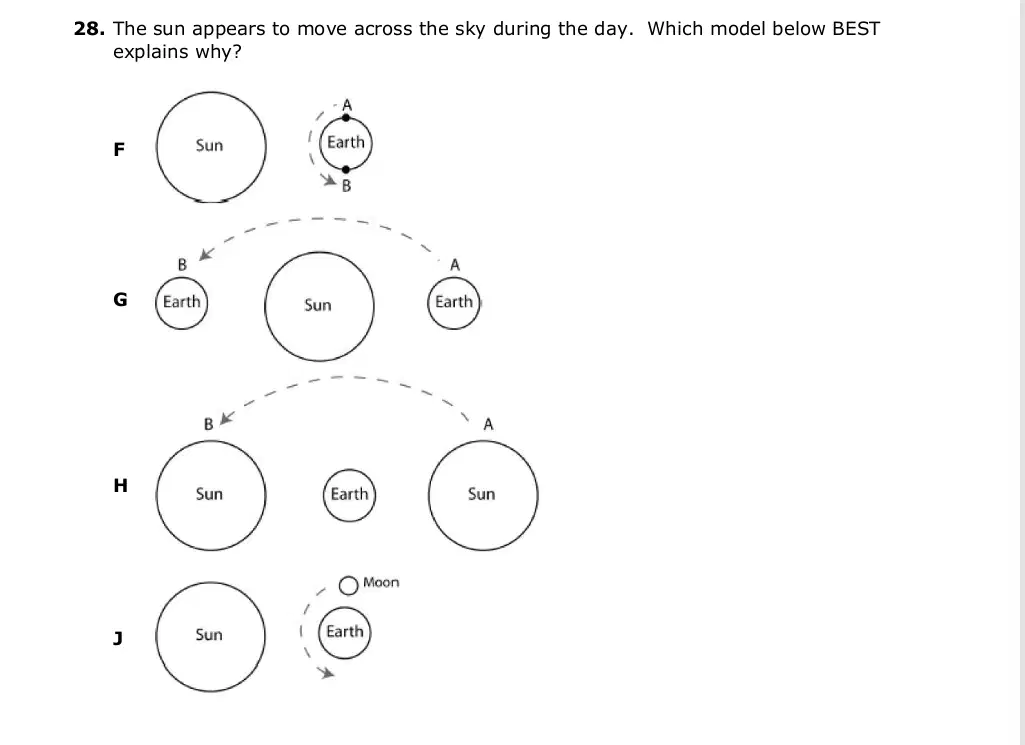
The sun appears to move across the sky during the day. Which model below BEST explains why?
Diagram: Sun and Earth, Earth rotating
Diagram: Earth revolving around Sun
Diagram: Sun and Earth, Earth moving between two Suns
Diagram: Sun, Earth, and Moon, Earth rotating
Which of the following diagrams BEST shows why we experience day and night on Earth?
Diagram: Earth revolving around the Sun with no rotation
Diagram: Earth rotating on its axis with Sun shining on one side
Diagram: Sun moving around a stationary Earth
Diagram: Earth and Moon both rotating around the Sun
What causes the Sun to appear to rise in the east and set in the west each day?
The Sun moving around the Earth
Earth's revolution around the Sun
The Moon blocking the Sun
Earth's rotation from west to east
Which model BEST explains why different parts of Earth experience daylight at different times?
Diagram: Earth revolving around Sun with no rotation
Diagram: Sun revolving around Earth
Diagram: Earth and Sun both stationary
Diagram: Earth rotating on its axis with sunlight hitting only one side
Match these things about Earth!
Earth's Rotation
1 day/24 hours
Earth's Revolution
1 year/365 days
How many Seasons
4
How long each season lasts
3
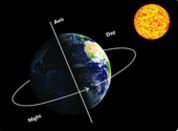
How does Earth’s rotation cause day and night?
As Earth rotates toward the east, the sun appears to rise in the west and set in the east.
As Earth rotates toward the east, the sun appears to rise in the east and set in the west.
Earth rotates in a clockwise direction, which makes the sun appear in the sky during the day.
Earth’s rotation does not cause day and night; its revolution does.
When the sun gets higher in the sky, shadows get ______.
longer
gone
shorter
darker
Shadows are longest during _______.
morning and evening
noon
night

What time is it in picture A
12 P.M.
8 A.M.
4 P.M.
12 A.M.
What time is it in picture B
12 P.M.
8 A.M.
4 P.M.
12 A.M.
What time is it in picture C
12 P.M.
8 A.M.
4 P.M.
12 A.M.

Which of the pictures presents the pattern of shadows in the summer?
A
B
Neither A or B
Both A and B
Which of the pictures presents the pattern of shadows in the winter?
A
B
Neither A or B
Both A and B
When the sun rises in the morning, your shadow is _______ and points ________
short, west
long, west
short, east
long, east
In the morning a shadow will point in a different direction than it will in the afternoon
True
False

Which position of the sun will make the longest shadow?
A
B
C
What do shadows on Earth help show?
Earth's rotation
Earth's revolution
Earth's equator
Earth's axis

The diagram above suggests that the next event that can be expected in Houston in a couple of hours is–
sunrise
noon
sunset
midnight

Which of the students gave a correct explanation?
Student 1 only
Students 2 and 4
Student 2 only
Student 1 and 3 only


Which number most likely shows the position of the Sun at noon? The picture shows an event that happens every day.
1
2
3
4

What time is at position 1?
12 p.m. (noon)
9 a.m.
3 p.m.
6 a.m.
What time is at position 3?
12 p.m. (noon)
9 a.m.
3 p.m.
6 p.m.

This causes day and night:
revolution
rotation
Label the diagram
Day
Night
Label the following diagram.
Day
Night
Winter
Summer

How long does the earth's revolution last?
346.25 days
24 hours
365.25 days
29 days


What degree is the earth tilted?
24
25
23.5
25.5

A term that is used to describe Earth’s path around the Sun is Earth’s ________________________.
Axis
Equator
Orbit
Lane
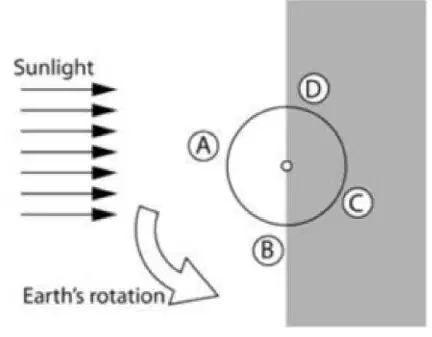
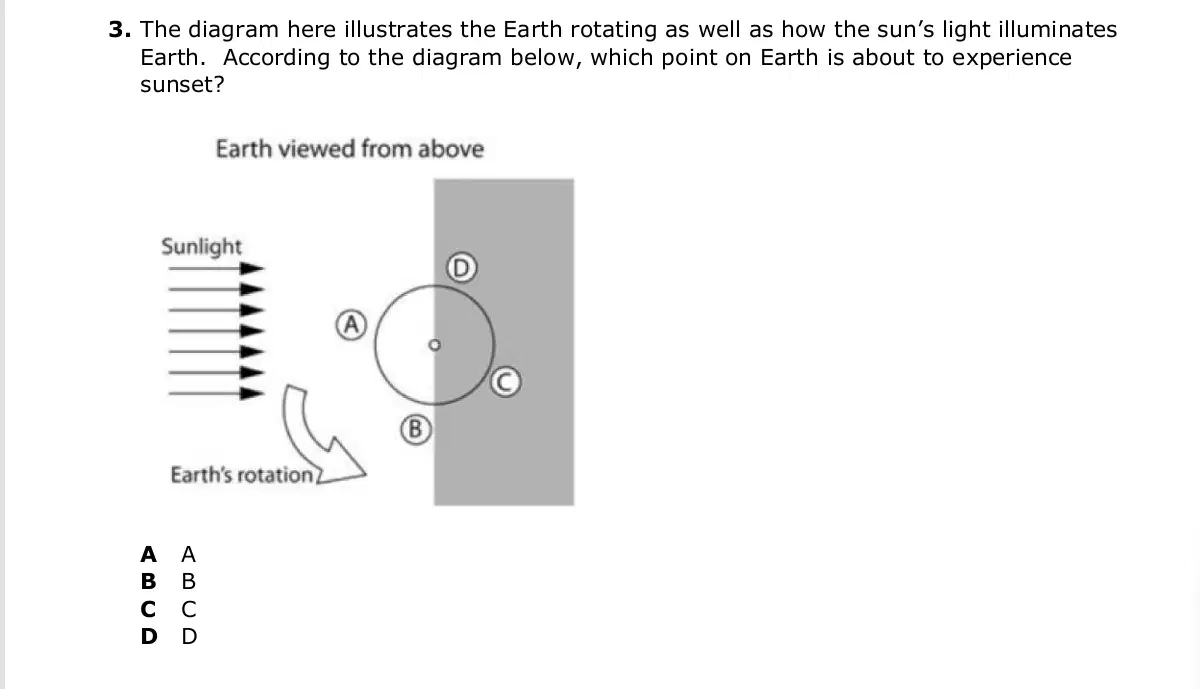
According to the diagram below, which point on Earth is about to experience sunset?
A. A
B. B
C. C
D. D
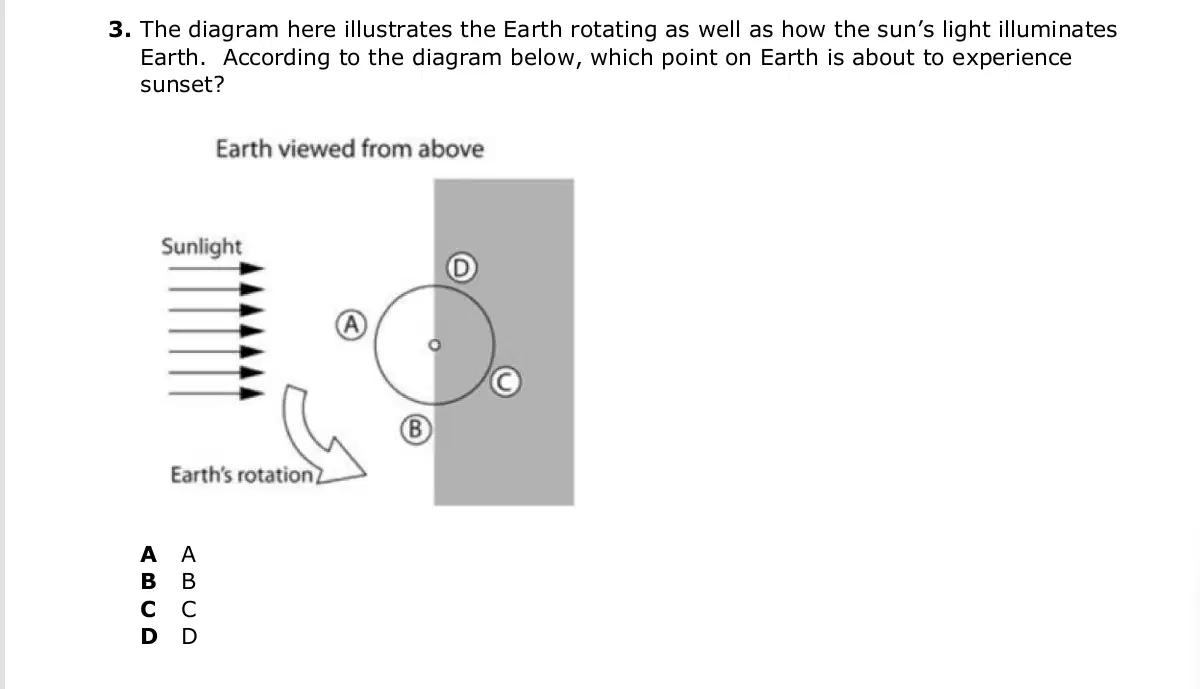
Which point on Earth, as shown in the diagram, is currently experiencing sunrise?
A. A
B. B
C. C
D. D
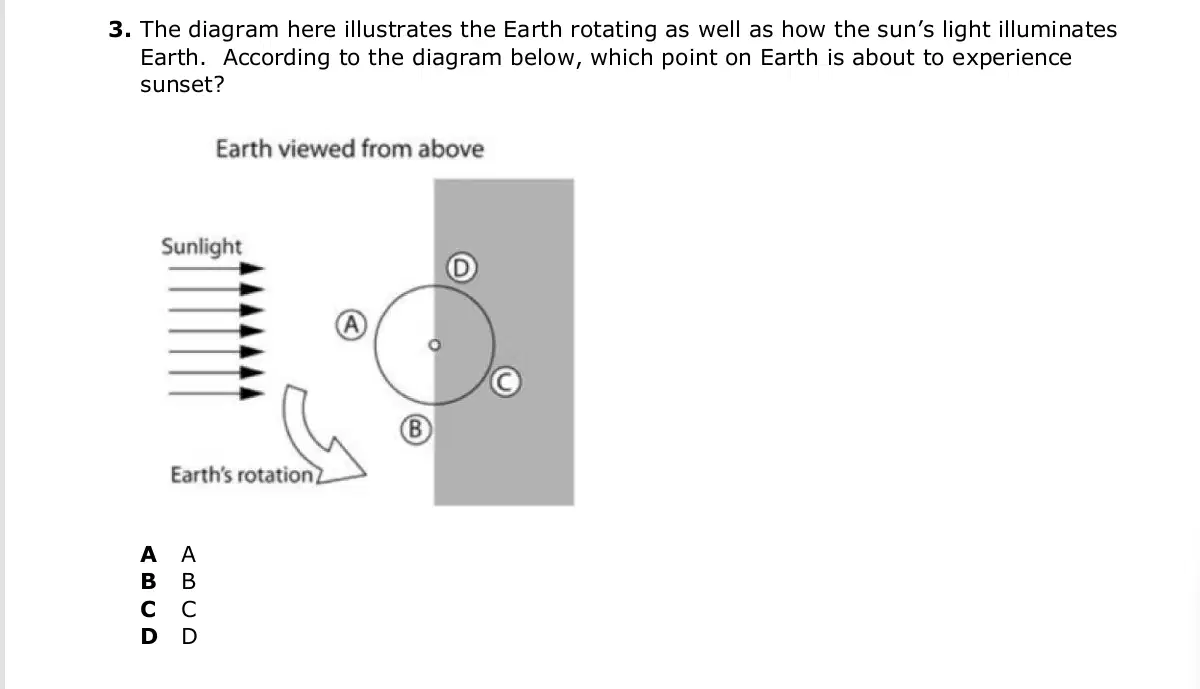
Based on the diagram, which point is experiencing midday (solar noon)?
A. A
B. B
D. D
C. C
According to the diagram, which point is currently in the middle of the night?
C. C
B. B
A. A
D. D
The Earth is tilted at _________________ degrees.
23.5
25.3
25.5
28.0
It takes (a) hours for earth to do a complete spin on the axis
The sun appears to rise in the ________ and set in the __________.
(a)
As Earth completes its revolution it orbits the (a)
What causes Earth's day and night pattern?
Earth’s revolution around the Sun
the Moon’s revolution around Earth
Earth’s rotation on its axis
the Moon’s rotation on its axis
Which motion causes Earth to experience a year?
the Earth's revolution around the Sun
the Sun's revolution around Earth
the rotation of Earth on its axis
the rotation of the Sun on its axis
An imaginary line that runs through the center of Earth.
axis
tilt
orbit
rotation
How long does it take Earth to complete one rotation on its' axis?
once every 24 hours
once every 365 days
2 times a day
4 times a day
How long does it take for Earth to rotate once on its axis?
1 day
24 hours
1/7th of a week
All of the above
The path one objects in space takes around another.
tilt
orbit
revolution
rotation

The students observed the Sun throughout a school-day, over the school's play ground. The Sun appeared in different position each time all through the day. This was caused by:
the Earth's revolution around the Sun
the earth orbiting and revolving around other planets
the Sun's orbit of the Solar System
the Earth's rotation on its axis
The Earth is constantly rotating on its axis in specific patterns, called cycles. These cycles of Earth's rotation cause -
the phases of the moon
the 4 seasons
day and night
the water cycle

As we observe the Sun moving into different positions in the sky all throughout the day; we have noticed that the shadow of object/s around us change in size and position as well. Look at the drawing; at which point will the shadow of the building, will appear about 11:00 am?
A
B
C
D

Jose has learned that the Eart is constantly rotating on its axis. Which of the following provides him with evidence that the Earth is always rotating on its axis?
the moon phases
the sun's rotation in the solar system
the shadows changing their position and appearance throughout the day
the changes in seasons


Shadow casts by objects change throughout the day. The picture below shows the shadow cast by a tree at 3:00 p.m. Which picture shows how the tree's shadow most likely looked at 9:00 a.m. ?


A student draws a model showing the movements on Earth, the moon, and the sun. Which arrow shows the movement that caused day and night on Earth?
Arrow 1, because it shows the rotation of the sun
Arrow 2, because it shows the orbit of Earth around the sun
Arrow 3, because it shows the orbit of the moon around Earth
Arrow 4, because it shows the rotation of the Earth
A student draws diagrams of her house and the location of the sun in the sky. Which diagram below does NOT correctly represent the location of the sun at the time indicated?


What would happen if the Earth's rotation was faster?
There would be more seasons
There would be shorter days
There would be less days in a year
There would be no high or low tides.
A student notices the sun in the eastern part of the sky. The time of day could be all of the following EXCEPT -
8:00 A.M.
10:00 A.M.
4:00 A.M.
9:30 A.M.
A student looks outside and observes the sun in the western sky. Which of the following times could it be?
Sunrise
Sunset
Noon
Midnight

In an activity, students make a sundial. the sundial uses the sun to tell the approximate time of day.
How is the possible?
The sun moves across the sky each day because it spins around Earth.
The sundial measures the distance from Earth to the sun as it moves across the sky.
Earth moves around the sun each day, causing the sun to appear to move across the sky.
The position of the sun appears to change during the day because Earth rotates.

This photograph shows the night sky over a period of many hours.
Why does the night sky appear to move in a circular pattern?
Earth rotates on its axis once a day.
The night sky rotates over Earth.
Stars travel in a circular direction around the Earth.
Earth rotates on its axis once every 12 hours.

Which position shows where the sun would most likely be at 12:00 P.M. ?
Position A
Position B
Position C
Answer is not here

Students are asked to draw a diagram to show the process that causes day and night. Which of the following student diagrams correctly shows the process that causes the day/night cycle?
A
B
C
D
The Earth ROTATING on its axis causes:
a year/365 days
the seasons
night and day
a hurricane
What would change if Earth rotated more quickly?
The day would be longer.
The day would be shorter.
There would be only two seasons.
The year would be longer.
What would happen if Earth rotated more slowly?
The year would be shorter.
The day would be longer.
The day would be shorter.
There would be no seasons.
If Earth's rotation stopped completely, what would be the immediate effect?
There would be more months in a year.
The year would be longer.
There would be no day and night cycle.
The seasons would change more quickly.
How does Earth's rotation affect the length of a day?
It affects the shape of Earth's orbit.
It sets the duration of day and night.
It causes the seasons to change.
It determines how long a year is.
Which arrow shows the movement that causes day and night on Earth?

Our days and (a) are caused by the (b) (c) on its (d) .

The Earth rotates on its axis every (a) . This causes the Earth's (b) .

Rotation is the (a) of an object. Earth rotates on its (b) in a (c) motion. Each rotation takes (d) and causes the phenomenon of (e) .
An unknown chemical splashed into the eyes of a student while doing a laboratory activity. The student’s friends immediately took him to the eyewash station to wash out her eyes. Which of the following should also be done?
Allow the student to rub her eyes
Leave the students contacts in
Notify the teacher
Run around the classroom, screaming
While conducting an experiment, a student accidentally spills a chemical on her skin. What is the first action she should take?
Cover the area with a bandage immediately
Rinse the affected area with plenty of water
Wipe the chemical off with a paper towel
Ignore it and continue the experiment
Which of the following is the best way to prevent accidents in the laboratory?
Read and follow all safety instructions before starting an experiment
Work as quickly as possible to finish early
Leave spills on the floor for the janitor to clean
Mix chemicals without asking the teacher
If a fire starts in the laboratory, what should a student do first?
Notify the teacher and follow their instructions
Try to put out the fire with water immediately
Throw paper towels on the fire
Run out of the classroom without telling anyone
Match the following

Safety Goggles

Fire Extinguisher

Lab Coat

Gloves

Eye Wash Station

If you break glass in the lab, you should (a) .
What should you do if there is an accident in the science room?
Tell the teacher
Tell your lab partner only
Don't tell anyone
Only tell your friends on Instagram after school

Long hair in the laboratory must be -
cut short
held away from the experiment with one hand
always neatly groomed
tied back or kept entirely out of the way with a hair band

Approved eye protection devices (such as goggles) are worn in the laboratory -
to avoid eye strain
to improve your vision
only if you do not have corrective glasses.
any time chemicals, heat, or glassware are used.
A fifth grade class is conducting a lab to measure and record the temperature, air pressure, and rainfall at the beginning of every hour for a full month. Four lab groups proposed plans for collecting the data. Which plan will provide the most dependable and accurate data?
A. A thermometer, barometer, and collecting nets are supplied to each lab group. Group members take turns measuring and recording the temperature, air pressure, and rainfall at the beginning of each hour.
B. A thermometer, barometer or rain gauge is provided to each student. Group members take turns measuring and recording the temperature, air pressure, and rainfall.
C. A thermometer, pan balance, and collecting nets are supplied to each lab group. Group members take turns measuring and recording the temperature, air pressure, and rainfall at the beginning of each hour.
D. A thermometer, barometer or rain gauge is provided to each student. Each student uses the same instrument each day to measure and record data at the beginning of each hour.
Which of the following tools would be most appropriate for a class to use when measuring daily changes in weather conditions such as temperature, air pressure, and rainfall?
B. Thermometer, ruler, and stopwatch
C. Pan balance, barometer, and beaker
A. Thermometer, barometer, and rain gauge
D. Rain gauge, graduated cylinder, and magnet
A teacher wants students to collect weather data at the same time each day for a week. Which procedure will help ensure the data is consistent and reliable?
A. Students use different instruments each day to measure the weather.
B. Students record data whenever they remember throughout the day.
C. Students use the same instruments and record data at the same time each day.
D. Students estimate the weather conditions without using any instruments.
Why is it important for all groups in a class to use the same type of thermometer when measuring temperature during a weather experiment?
D. To make the experiment more interesting
C. To allow students to use different measurement units
B. To ensure the results are accurate and can be compared
A. To make sure the data is collected quickly
Match the following
examine data or observations methodically in detail in order to explain or interpret.
analyze
evidence; information gathered from observations
data
a procedure carried out to gather data about an object or event
investigation
A summary based on evidence or facts
conclusion
A research method in which an investigator manipulates one independent variable to observe the effect on a dependent variable.
experiment
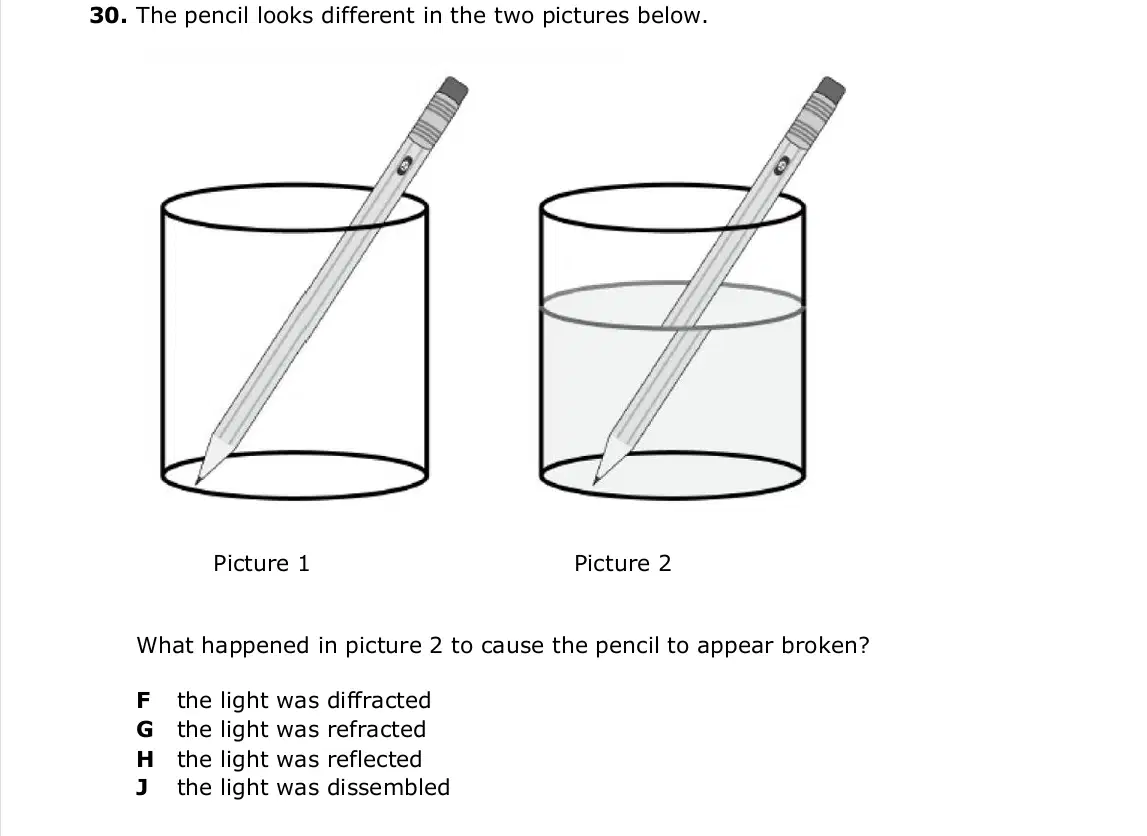
What happened in picture 2 to cause the pencil to appear broken?
the light was diffracted
the light was refracted
the light was reflected
the light was dissembled

When sunlight passes through raindrops in the sky, we see (a)

Why does this apple look red?
The apple reflects red light and absorbs all other colors
The apple absorbs red light and reflects all other colors
The apple reflects all the light shinning on it
The apple is red because we see that color.
Which color ABSORBS all wavelengths of light?
Red
Black
White
Pink
Reflect means_________.
light bounces back
light goes through and bends.
light goes straight through.
light gets taken in.
What wave behavior allows the human eye to see color?
Interference
Refraction
Diffraction
Reflection
Refract means________.
light gets taken in
Light goes straight through
light goes through and bends
light bounces back

When you look through water, the light is_______.
reflected
refracted
transmitted
absorbed

When looking through a window, light is _______.
reflected
transmitted
refracted
absorbed

When light hits a dark colored shirt, it is_________.
absorbed
reflected
refracted
transmitted
Objects that allow NO light to pass through
transparent
translucent
opaque
When light bounces off an object- If the surface is smooth and shiny, like glass, water or polished metal, the light will reflect at the same angle as it hit the surface.
reflection
refraction
diffusion


A straw sitting in a glass of water looks broken because light travels more slowly through the water than air. This is an example of ____________.
Reflection
Refraction
Absorbing
Transmitting

This is an example of?
fog
Reflection
Refraction
translucent

Which of the tested substances are soluble in water?
Substances 1, 2, and 4
Substances 3 and 7
Substances 5 and 6
Substance 7

Which of the following substances is insoluble in water?
Substance 1
Substance 5
Substance 2
Substance 4

Physical or chemical?
Physical
Chemical

Physical or chemical?
Chemical
Physical

Physical or chemical?
Physical
Chemical

Ability of substance to dissolve into another substance:
magnetism
malleability
solubility
appearance
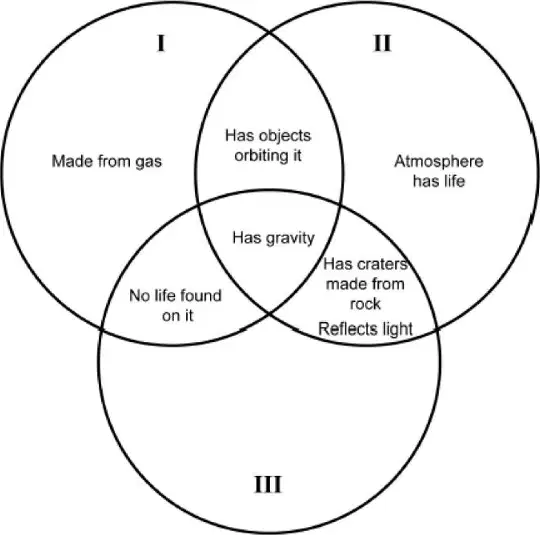
Which of the following correctly labels the areas of the Venn diagram?
A. I. Sun, II. Earth, III. Moon
B. I. Sun, II. Moon, III. Earth
C. I. Moon, II. Earth, III. Sun
D. I. Earth, II. Sun, III. Moon
Label the axises of the HR Diagram shown
luminosity
temperature

What kind of tide does this picture represent?
spring tides
neap tides
tidal wave
tsunami

What type of tide is represented by this picture?
spring tide
neap tide
tidal wave
tsunami

Earth has seasons because...
Earth's Axis is tilted
The sun gets hotter and colder each year
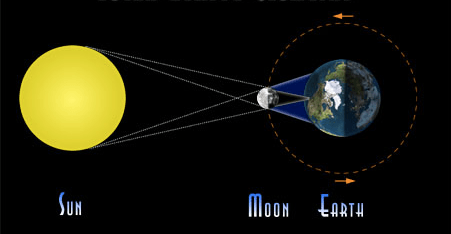
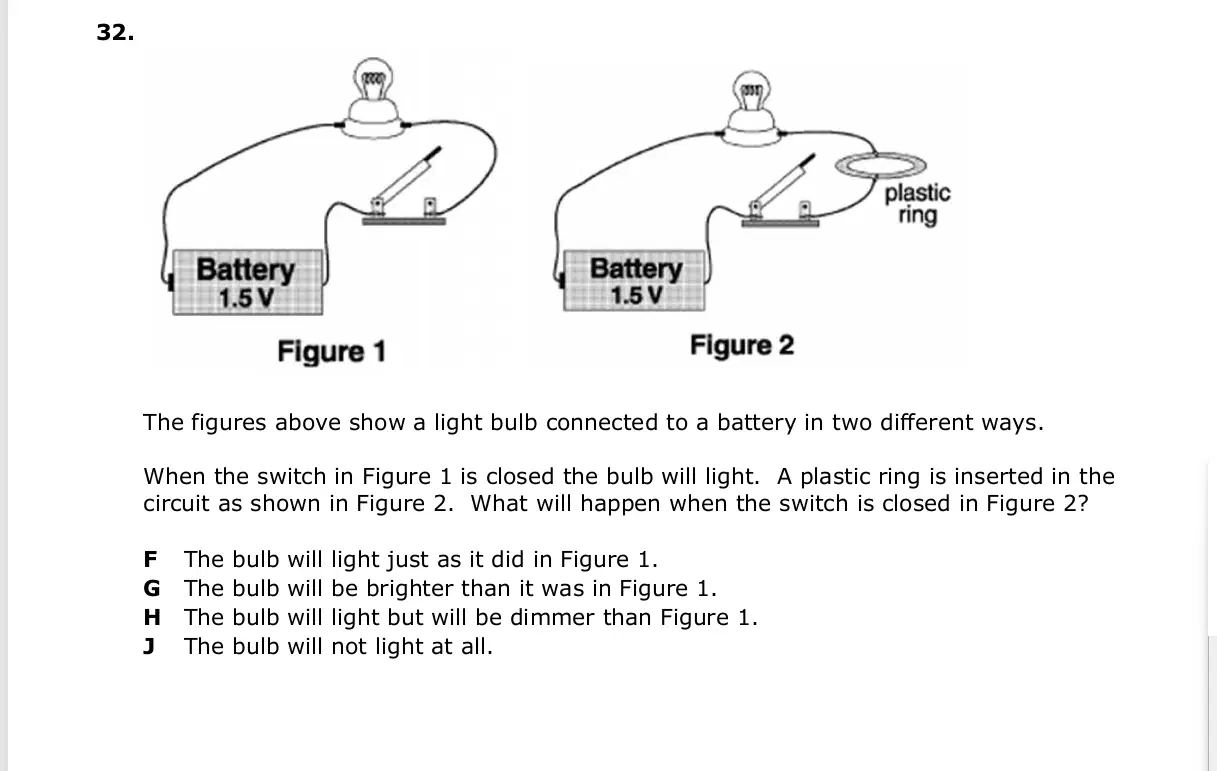
The figures above show a light bulb connected to a battery in two different ways. When the switch in Figure 1 is closed the bulb will light. A plastic ring is inserted in the circuit as shown in Figure 2. What will happen when the switch is closed in Figure 2?
The bulb will light just as it did in Figure 1.
The bulb will be brighter than it was in Figure 1.
The bulb will light but will be dimmer than Figure 1.
The bulb will not light at all.

Glass, rubber, wood, and plastic are all examples of (a) since electricity cannot pass through them.

What is electricity?
a closed path that allows electricity to flow
the flow of electrical energy
converts chemical energy to electrical energy
What is a circuit?
a closed path that allows electricity to flow
the flow of electrical energy
converts chemical energy to electrical energy
What is a conductor?
things electricity CAN EASILY flow through
things electricity CANNOT EASILY flow through
What is an insulator?
things electricity CAN EASILY flow through
things electricity CANNOT EASILY flow through
What is a series circuit?
circuit with only 1 path for electricity to flow
circuit with more than 1 path for electricity to flow
What is a parallel circuit?
circuit with only 1 path for electricity to flow
circuit with more than 1 path for electricity to flow

this circuit is -?-
integrated
Which is NOT a good electrical conductor?
silver
copper
iron
plastic
What is a material that allows energy to pass through easily?
parallel circuit
rubber band
conductor
electron

What supplies the energy in these electrical circuits?
a conductor
a light bulb
a wire
a battery
Which item(s) is/are acting as resistors in Circuit B?
light bulbs
battery
wire
air
What do we know about the penny in Circuit A?
it conducts electricity
it provides extra power like a battery
it melts
it will prevent sparks
Which material is an electrical conductor?
plastic
glass
copper
wood

The circuit shown is -?- and if a bulb is removed -?-.
series, both lights will go out
series, one light will go out
parallel, one light will go out
parallel, both lights will go out


wood

Which of the following schematic diagrams represents this circuit?


Select the symbol for SWITCH


Name this component:
Ampere
Switch
Bulb
Battery

Which schematic circuit matches this circuit picture?


Which schematic circuit matches this circuit picture?

Which schematic circuit matches this circuit picture?

This circuit has a single route for electric current to flow through the lamps.
series
parallel
alternate

If lamp 2 burns out, which row on the table correctly shows what will happen to lamps 1 and 3?
Lamp 1 and lamp 3 becomes brighter.
Lamp 1 and lamp 3 become dimmer.
Lamp 1 and lamp 3 go out.

