
 Worksheets
9 ECB T1 Revision
Total questions: 81
Worksheet time: 41mins
What is the term for the following definition: 'the production, distribution and consumption of goods and services, and the supply of money of a country or region (e.g. Australia)'?
Economy
Geography
Democracy
Ecology
What is the term for the following definition: 'the level of economic activity of the world’s individual countries considered together, as a single economic system.'?
Global Economy
National Budget
Local Market
Regional Trade
What is the term for the following definition: 'An organisation, enterprise or business engaged in the production and trade of goods and services.'?
Business
Employee
Consumer
Government
Fill in the blank: ______ are items that you purchase (e.g. pens, pencils, computers).
Good
Services
Experiences
Ideas
Fill in the blank: ______ is an activity provided by another person (e.g. washing a car, teaching).
Service
Product
Material
Tool
Which of the following best defines 'Good'?
An activity provided by another person (e.g. washing a car, teaching)
Items that you purchase (e.g. pens, pencils, computers)
Which of the following best defines 'Service'?
Items that you purchase (e.g. pens, pencils, computers)
An activity provided by another person (e.g. washing a car, teaching)
Which of the following is an example of a good or service that Yeppoon offers?
Tourism services
Automobile manufacturing
Space exploration services
Oil drilling operations
Identify the correct way to choose 5 items in the classroom and find out where they were made.
Select 5 items in the classroom and check their labels for the country of manufacture.
Guess the country of manufacture for any 5 items in the classroom without checking.
Choose 5 random items from outside the classroom and identify where they were made.
Select only electronic items in the classroom and identify their brand.
Australia is known for making/providing:
Wool and opals
Swiss chocolate
Japanese electronics
French wine
The purpose of the circular flow of income model is to:
Show how money moves between households and firms in an economy.
Explain the process of photosynthesis in plants.
Describe the structure of the human heart.
Illustrate the water cycle in nature.
To meet the success criteria for this lesson, you must:
Achieve the lesson objectives.
Skip the lesson activities.
Ignore the lesson instructions.
Complete only half of the tasks.
What is the term for the following definition? 'A model that provides a simplified representation of the complex workings of an economy and depicts the interdependence between the various sectors of the economy and the flows between them.'
Circular flow of income model
Production possibility frontier
Aggregate demand curve
Law of diminishing returns
What is the term for the following definition? 'The amount of goods or services that consumers are willing and able to purchase at a particular point in time.'
Demand
Supply
Production
Revenue
What is the term for the following definition? 'The strengthening of economic ties between countries and the resulting trade and investment opportunities.'
Globalisation
Isolationism
Protectionism
Nationalisation
What is the term for the following definition? 'The organised exchange of goods, services, or resources between buyers and sellers.'
Market
Monopoly
Barter
Inflation
Australia has a free market economy.
True
False
Resources are allocated to satisfy ______ needs and wants.
unlimited
limited
basic
temporary
Who intervenes in the market to redistribute resources in Australia?
The Australian Government
Private Companies
Foreign Investors
Local Communities
The circular flow of income model represents the flows between the different sectors of the Australian economy.
True
False
Why is the circular flow of income model important?
It shows the interdependence between the various sectors of the economy, the flows between them and how decisions affect income.
It only shows government spending.
It focuses only on exports.
It ignores the role of households.

In the Circular flow of income 4 sector model, which sector provides economic resources such as land, labour, capital, and enterprise?
Business Sector
Household Sector
Finance Sector
Government Sector

In the Circular flow of income 4 sector model, what does the Business Sector provide to the Household Sector?
Economic resources
Income (Y)
Consumption (C)
Savings (S)

Fill in the blank: In the Circular flow of income 4 sector model, payments for goods and services made by the Household Sector to the Business Sector are called _________.
Consumption (C)
Investment (I)
Government Spending (G)
Exports (X)

Which of the following is considered a leakage in the Circular flow of income 4 sector model?
Investments (I)
Government Spending (G)
Savings (S)
Output (O)
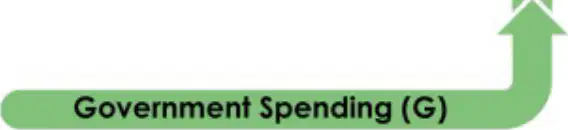
In the Circular flow of income 4 sector model, Government Spending (G) is considered an injection into the economy.
True
False
Fill in the blank: In the Circular flow of income 4 sector model, the flow from the Business Sector to the Household Sector that consists of rent, wages, interest, and profit is called _________.
Income (Y)
Expenditure (E)
Savings (S)
Investment (I)
In a four sector model, households provide economic resources. What are the four types of economic resources provided by households?
Land, labour, capital, and enterprise
Money, goods, services, and taxes
Wages, salaries, profits, and rents
Imports, exports, savings, and investments
Businesses provide goods and services to households. What is this known as?
Input (I)
Output (O) or production
Consumption
Investment
What is the outer flow of resources where no money changes hands called?
The real flow of resources
The monetary flow
The fiscal flow
The virtual flow
The outer flow is representative of which type of economy?
Market economy
Barter economy
Mixed economy
Command economy
Households pay for goods and services provided by businesses. This is known as _________.
Consumption expenditure (C)
Government expenditure (G)
Investment expenditure (I)
Net exports (X-M)
Businesses pay households for resources. This is known as _________.
Income (Y) or the factor returns (rent, wages, interest and profit)
Consumption (C) or spending on goods and services
Investment (I) or purchase of capital goods
Taxation (T) or government revenue
Which of the following is NOT a factor return paid by businesses to households?
Rent
Wages
Taxes
Interest
The inner flow of money or the real money flow includes which of the following?
Rent for land
Wages for labour
Interest for capital
All of the above
Refer to the diagram of the 'Circular flow of income 4 sector model.' Which sector provides economic resources such as land, labour, capital, and enterprise?
Household Sector
Business Sector
Finance Sector
Government Sector
Refer to the diagram of the 'Circular flow of income 4 sector model.' What is the term for payments for goods and services made by the Household Sector to the Business Sector?
Output (O)
Consumption (C)
Income (Y)
Savings (S)

Refer to the diagram of the 'Circular flow of income 4 sector model.' Fill in the blank: The flow of money from the Household Sector to the Finance Sector is called ________.
Savings (S)
Investment (I)
Taxation (T)
Exports (X)
Injections in the circular flow of income include Investments (I) and Government Spending (G).
True
False
What types of organisations are included in the finance sector?
Banks, building societies, life insurance companies, and the stock exchange
Supermarkets and restaurants
Schools and hospitals
Factories and farms
Households save some of their income. This is known as ________ (S).
Savings
Expenditure
Investment
Borrowing
Savings are deposited with financial institutions. Financial institutions lend households’ savings to businesses. This is known as ________ (I).
Investment
Consumption
Taxation
Production
Savings (S) are a leakage from the basic money flow between households and businesses.
True
False
Which of the following is NOT one of the four sectors in the Circular flow of income 4 sector model?
Household Sector
Business Sector
Finance Sector
Education Sector
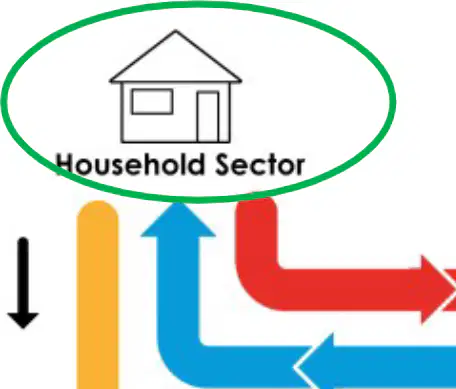
In the Circular flow of income 4 sector model, which sector is responsible for providing economic resources such as land, labour, capital, and enterprise?
Household Sector
Business Sector
Finance Sector
Government Sector
Fill in the blank: In the Circular flow of income 4 sector model, ________ refers to payments for goods and services.
Consumption (C)
Investment (I)
Savings (S)
Exports (X)
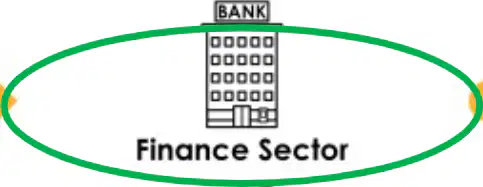
Which sector in the Circular flow of income 4 sector model is associated with Savings (S) and Investments (I)?
Household Sector
Business Sector
Finance Sector
Government Sector
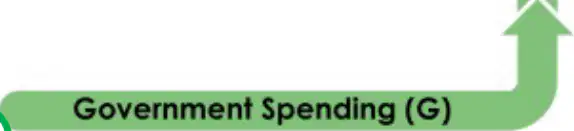
Fill in the blank: In the Circular flow of income 4 sector model, Government Spending (G) is an example of ________.
Injections
Leakages
Savings
Exports
According to the passage, which levels of government are included in the government sector?
Only federal
Only state
Federal, state, and local
Only local
Fill in the blank: The government sector collects ______ and uses them to help pay for public services.
taxes
loans
products
votes
Which of the following is NOT mentioned as a public service funded by the government sector?
Health
Education
Infrastructure
Entertainment
Select two examples of public services that the government sector helps pay for.
Police and public schools
Movie theaters and shopping malls
Private clubs and restaurants
Theme parks and hotels
What is the main objective of an economy according to the passage?
To satisfy unlimited needs and wants with limited resources.
To increase government spending on infrastructure.
To maximize the profits of businesses.
To reduce the number of workers in the economy.
According to the passage, what is the main problem that economies face?
Unlimited resources
Unlimited needs and wants but limited resources
Limited needs and wants
No need for choices
Fill in the blank: Choices need to be made about how to allocate _______ to best satisfy needs and wants.
resources
opinions
locations
colors

In the diagram, what does 'scarcity' represent?
Scarcity represents the need to make choices because resources are limited while needs and wants are unlimited.
Scarcity represents the abundance of resources available to everyone at all times.
Scarcity represents the idea that resources are only limited for some people, not everyone.
Scarcity represents the unlimited supply of goods and services in an economy.
What is the government's objective in managing the Australian economy?
To improve living standards.
To increase government debt.
To reduce international trade.
To lower the population.
Economic growth can be measured using which of the following?
Inflation rates
GDP growth rates
Unemployment rates
Interest rates
Higher economic growth is achieved through increased production of goods and services to satisfy ________.
unlimited needs and wants
limited resources
government policies
technological advances
GDP or Gross Domestic Product is a measure of the value of all the goods and services produced by an economy in a period of time.
True
False
What does every country require for its goods and services?
Markets
Factories
Raw materials
Technology
Markets can be ________, regional, national and international.
local
seasonal
temporary
virtual
Expansion into international markets is a source of economic growth.
True
False
Businesses depend on global expansion after saturating their domestic markets because:
they seek new growth opportunities beyond their home country.
they want to reduce their product quality.
they aim to avoid competition entirely.
they prefer to operate only in small markets.
Imagine a School as an 'Economy': What is the local market in this scenario?
Class of 30 consumers
Year level of 100 consumers
Whole school of 1000 consumers
Potential consumers from other schools
Imagine a School as an 'Economy': What is the regional market in this scenario?
Class of 30 consumers
Year level of 100 consumers
Whole school of 1000 consumers
Potential consumers from other schools
Imagine a School as an 'Economy': What is the national market in this scenario?
Class of 30 consumers
Year level of 100 consumers
Whole school of 1000 consumers
Potential consumers from other schools
Imagine a School as an 'Economy': What is the international market in this scenario?
Class of 30 consumers
Year level of 100 consumers
Whole school of 1000 consumers
Potential consumers from other schools

This is Tim. Imagine he runs a business selling watches to his classmates. What happens when he has sold a watch to everyone at the school?
Growth is limited unless trade with other school economies is possible.
He can continue to grow his business without any changes.
He will have unlimited customers within the school.
He can increase sales by raising prices for the same customers.
What does the four sector circular flow of income model assume about Australia's economy?
It is an open economy with foreign trade.
It is a closed economy with no foreign trade.
It is a mixed economy.
It is a command economy.
Why is it necessary to add the overseas sector to the four sector circular flow of income model for Australia?
Because the assumption that Australia is a closed economy with no foreign trade is unrealistic.
Because the overseas sector determines the value of government spending.
Because the overseas sector controls the level of household savings.
Because the overseas sector replaces the financial sector in the model.
What does the five sector model show in the context of the Australian market economy?
It shows how resources are allocated and distributed in a five sector Australian market economy.
It shows the historical development of the Australian market economy.
It explains the political structure of Australia.
It describes the climate zones of Australia.
Refer to the diagram of the Circular flow of income 5 sector model. Which of the following is NOT a sector in the model?
Household Sector
Business Sector
Finance Sector
Education Sector

In the Circular flow of income 5 sector model, what does the 'S' in the equation S + T + M = I + G + X stand for?
Savings
Subsidies
Sales
Supply
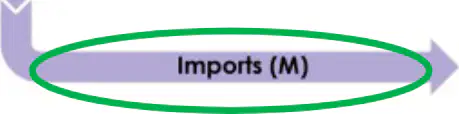
According to the Circular flow of income 5 sector model, which of the following is considered a leakage?
Investments (I)
Government Spending (G)
Exports (X)
Imports (M)

Fill in the blank: In the Circular flow of income 5 sector model, ________ are considered injections into the economy.
Investments (I), Government Spending (G), Exports (X)
Savings (S), Taxes (T), Imports (M)
Household Consumption, Depreciation, Imports
Wages, Rent, Interest
What is the exchange of goods, services, and capital in the overseas sector known as?
Domestic trade
International trade
Local trade
Regional trade
Trade is not a new process. It started with the great colonial expansion by which group of countries around the world several hundred years ago?
European countries
Asian countries
African countries
South American countries
There was a big expansion in world trade in the late 19th century and again after which major event?
World War Two
The Great Depression
The Industrial Revolution
The Cold War
Since the late 19th century, governments have cooperated to encourage freer trade with other countries.
True
False
International trade has grown exponentially, despite a dip during which global event?
the Global Financial Crisis of 2008-09
the Industrial Revolution
the Dot-com Bubble of 2000
the Brexit Referendum

