
 Worksheets
Vertebral Column
Total questions: 30
Worksheet time: 15mins

How many cervical vertebrae are there?
5
7
12
8

Which of the following is not a function of the vertebral column?
Protection of the spinal cord
Support of body weight
Blood cell production
Movement and posture

Which bones are part of the axial skeleton?
Femur, humerus, scapula
Tibia, fibula, patella
Pelvis, radius, ulna
Cranium, ribs, vertebral column

Vertebrae are classified as what type of bone?
irregular bones
sesamoid
flat bones
long bones

Which of the following is a component of a typical vertebra?
Medullary Canal
articular disc
sacral crest
vertebral arch

The vertebral foramen is formed by the vertebral body and the:
Vertebral arch
Spinous Process
Transverse process
Intervertebral disc
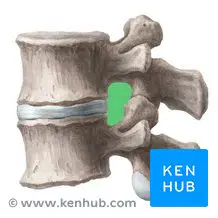
What forms the intervertebral foramen?
Spinous processes of adjacent vertebrae
Laminae of adjacent vertebrae
Superior and inferior vertebral notches
Intervertebral discs

What is the main role of articular facets in vertebrae?
To anchor spinal ligaments
To transmit spinal nerves
To form joints with adjacent vertebrae
To protect the spinal cord
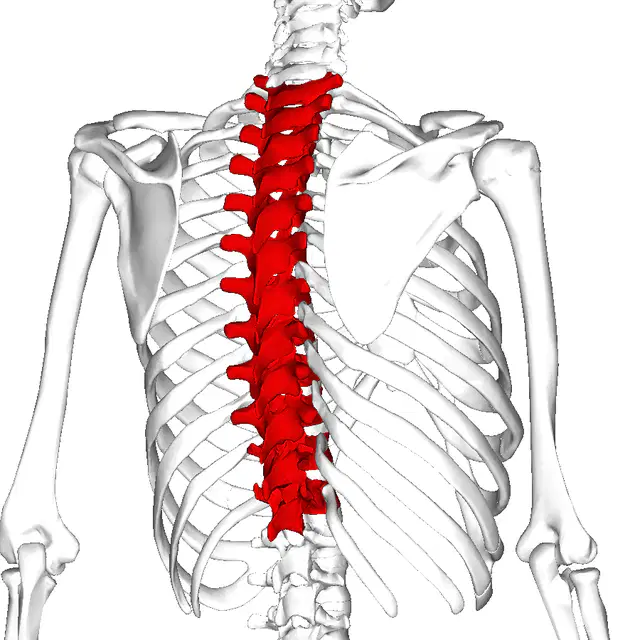
Which cervical vertebrae are considered typical?
C1-C2
C3-C6
C6-C7
C4-C7

Which feature is most characteristic of thoracic vertebrae?
Bifid spinous process
Transverse foramina
Costal facets for rib articulation
Large kidney-shaped body
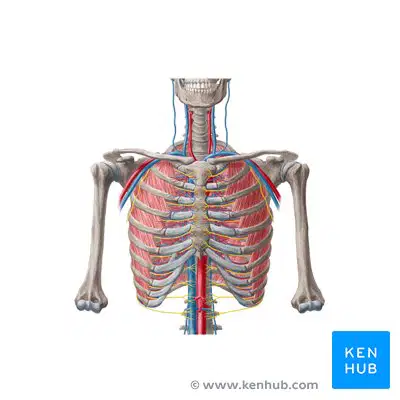
Which movement is most permitted in the thoracic region?
flexion
extension
rotation
hyperextension
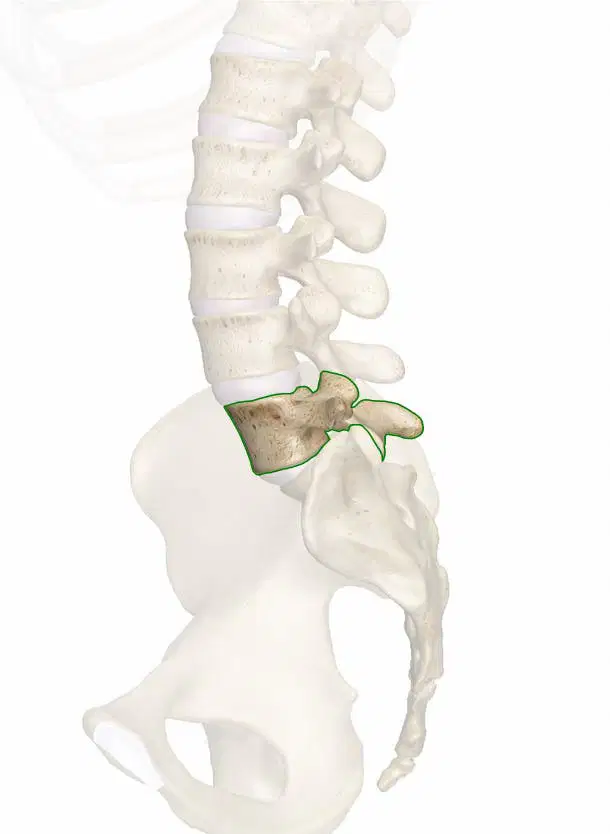
Why is L5 structurally unique?
It lacks a spinous process
It is the longest vertebra
It articulates with the skull
It is wedge-shaped and weight bearing
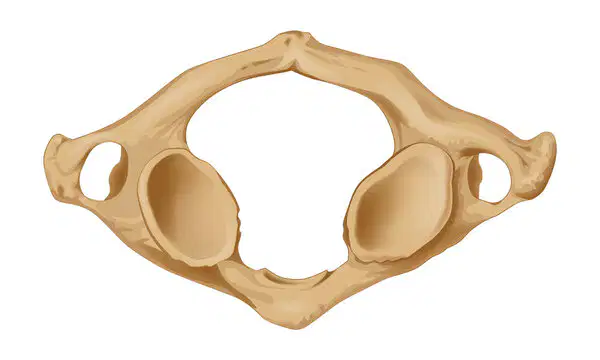
Which feature is unique to the atlas (C1)?
Dens
Lateral masses
Vertebral body
Bifid Spinous process

What is the dens (odontoid process) part of?
C1
C3
T12
C2
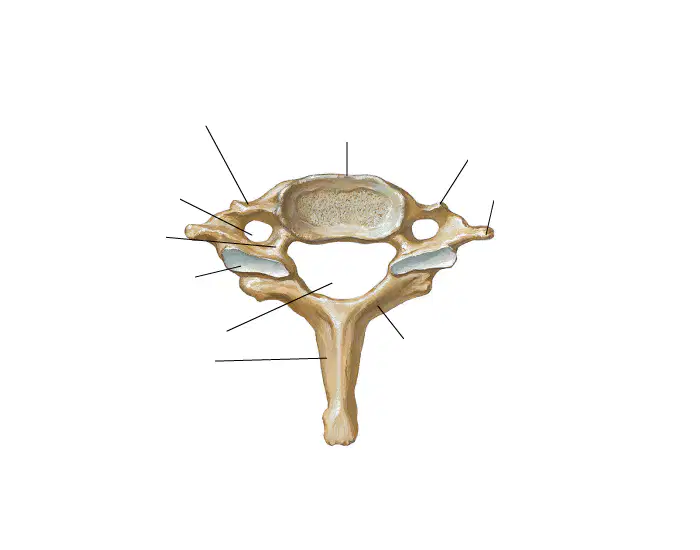
C7 is called the vertebra prominens because:
It has a very large body
Its spinous process is long and palpable
It lacks transverse foramina
It articulates with the first rib
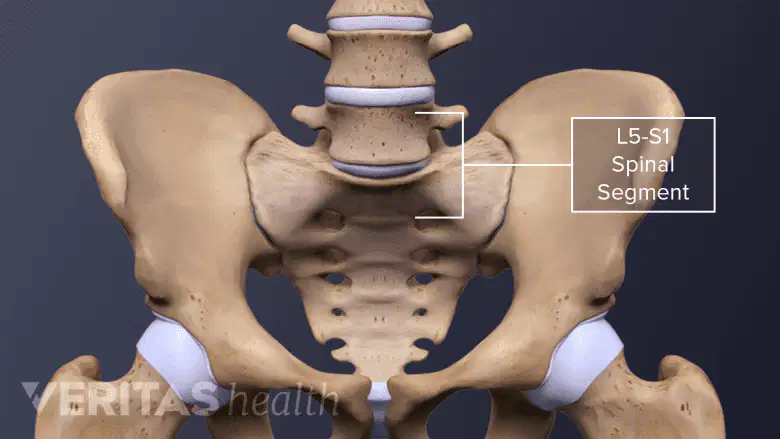
What makes L5 distinct from other lumbar vertebrae?
Bifid Spinous Process
Largest vertebral foramen
Absence of articular facets
Largest body and transverse processes
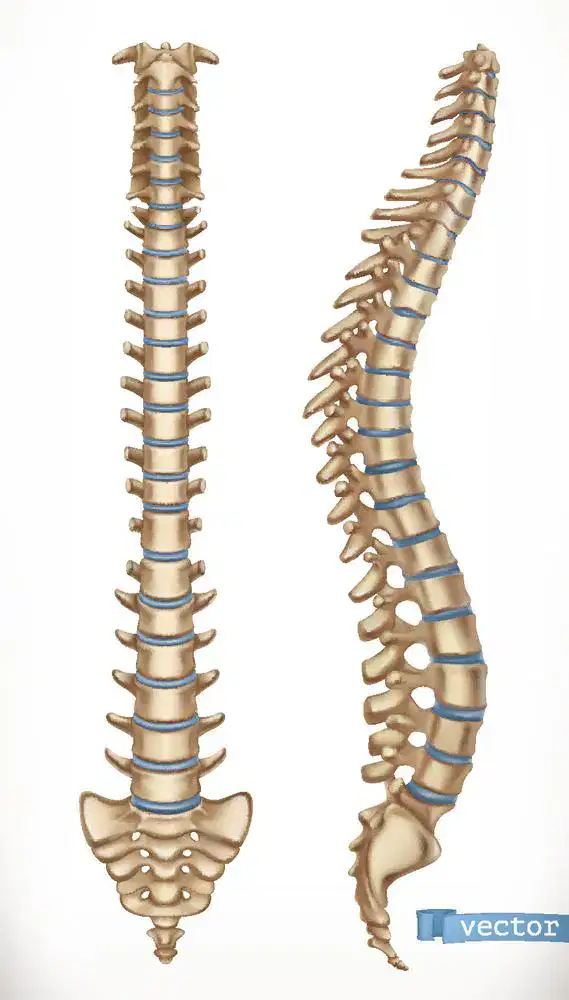
Which curvatures are primary?
Thoracic and sacral
Cervical and lumbar
Cervical and thoracic
Lumbar and sacral
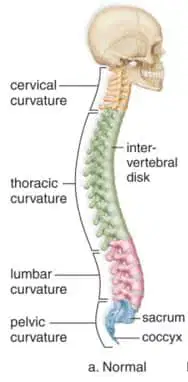
What is a function of the vertebral column curvatures?
Reduce spinal cord movement
Increase rigidity
Minimize flexibility
Shock absorption and balance

A 13-year-old patient presents with a painless spinal curvature detected during a school screening. Imaging reveals a lateral curvature with vertebral rotation and no evidence of vertebral malformations. Which of the following is the most likely diagnosis.
Congenital scoliosis
Neuromuscular scoliosis
Idiopathic scoliosis
Degenerative scoliosis
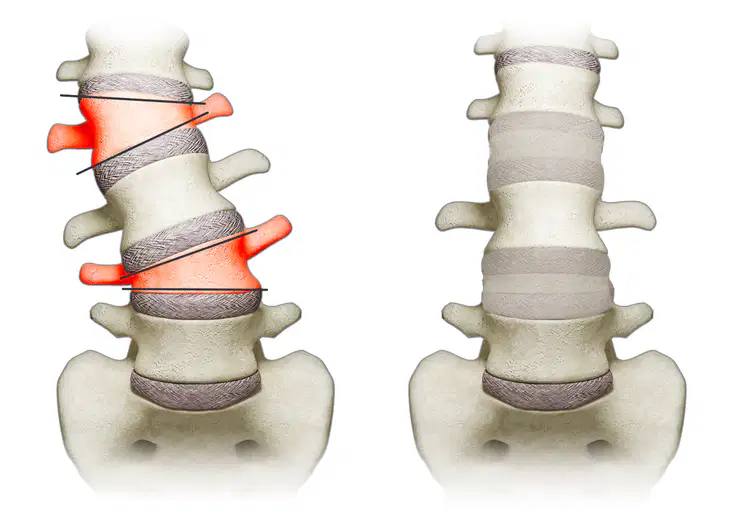
A hemivertebra is associated with:
Degenerative disc disease
Lumbar disc herniation
Absent spinal nerves
Congenital scoliosis

What type of joint is between vertebral bodies?
Synovial
Symphysis/
cartilaginous
Pivot
Saddle

Craniovertebral joints involve which vertebrae?
C5 and C6
C2 and C3
T1 and T2
C1 and C2
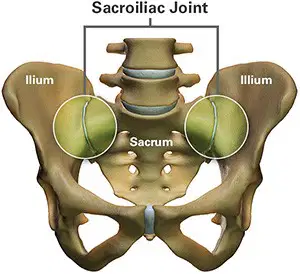
What is the function of the sacroiliac joint?
Weight transfer from spine to pelvis
Movement of the ribs
Flexion and extension of spine
Cushioning vertebral shocks
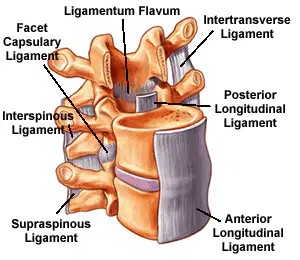
Which ligament prevents hyperextension of the vertebral column?
Ligamentum flavum
Interspinous ligament
Anterior longitudinal ligament
Posterior longitudinal ligament
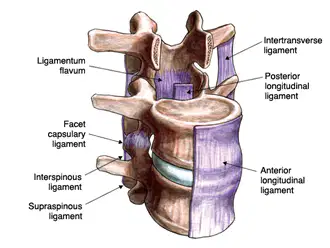
The posterior longitudinal ligament functions to:
Resist hyperextension
Anchor intervertebral discs
Assist lateral flexion
Resist hyperflexion and herniation
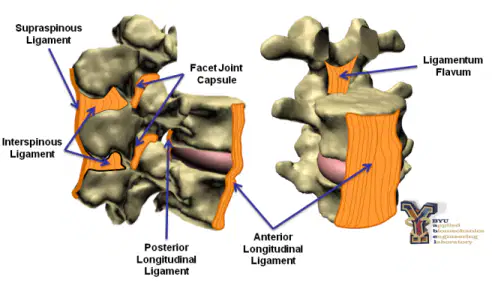
Which ligament helps return the spine to upright position after flexion?
Intertransverse ligament
Supraspinous ligament
Ligamentum flavum
Nuchal ligament

The nuchal ligament connects the skull to which vertebral region?
Cervical
Thoracic
Lumbar
Sacral

Where is a lumbar puncture performed in an adult?
L1-L2
L2-L3
L3-L4
L5-S1
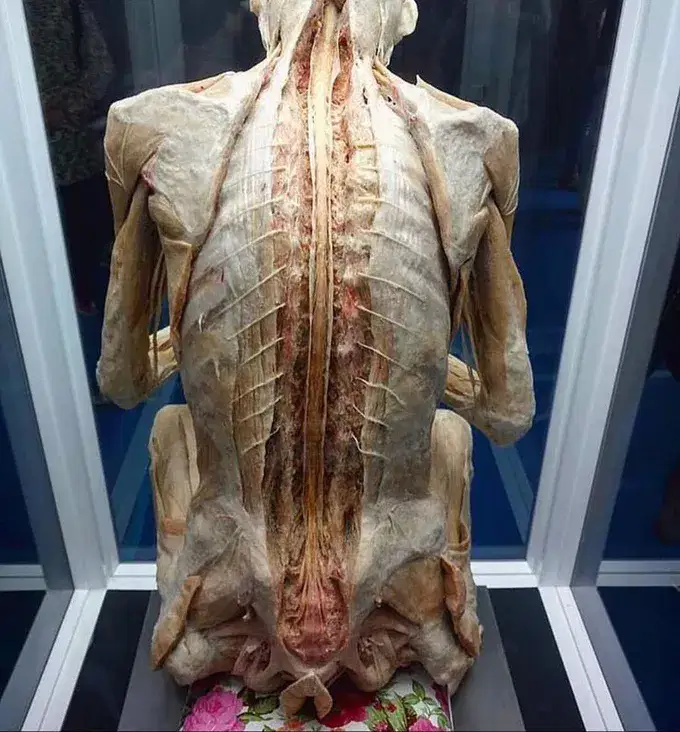
At what vertebral level does the adult spinal cord typically end?
L1-L2
L3-L4
L5-S1
T12

Which ligament connects the tips of spinous processes from C7 to the sacrum?
Interspinous ligament
Ligamentum flavum
Supraspinous ligament
Posterior longitudinal ligament

