
 Worksheets
Practice Test 2
Total questions: 60
Worksheet time: 2hrs 11mins
Which of the following is true about temperature?
It's the total energy of a substance
It measures the average kinetic energy per particle
It is the same as heat
It depends on potential energy only
Absolute zero corresponds to:
Zero entropy
Zero gravitational potential
No translational motion of particles
The freezing point of water
Which temperature scale is used most often in scientific work?
Fahrenheit
Celsius
Kelvin
Rankine
The Kelvin scale sets 0 K and is called _____ zero. Water boils at _____ K.
absolute, 373
absolute, 273
relative, 373
absolute, 100
Heat is best defined as:
The amount of temperature in an object
The energy stored in a material
The transfer of thermal energy due to temperature difference
The potential energy of molecules
Which of the following units can be used to measure heat?
Newton
Joule
Watt
Kelvin
In the absence of external work, heat always flows from a _____ object to a _____ one, until they reach equilibrium.
hotter, colder
colder, hotter
solid, liquid
liquid, solid
Entropy is:
The loss of energy in a system
A measure of how many ways energy can be distributed in a system
The total heat contained within a system
A force opposing heat flow
Which of the following statements aligns with the First Law of Thermodynamics?
Energy is created during chemical reactions
The total energy of a closed system remains constant
Heat flows from cold to hot naturally
All systems move toward lower energy
What does the Second Law of Thermodynamics say?
Energy cannot be transferred
Entropy remains unchanged in all processes
Energy tends to spread out and become more evenly distributed
Temperature always decreases in closed systems
As substances are heated, they usually _____ in volume.
expand
contract
dissolve
solidify


When your feet touch hot sand, heat moves from the sand to your feet. What type of heat movement is this? (a)
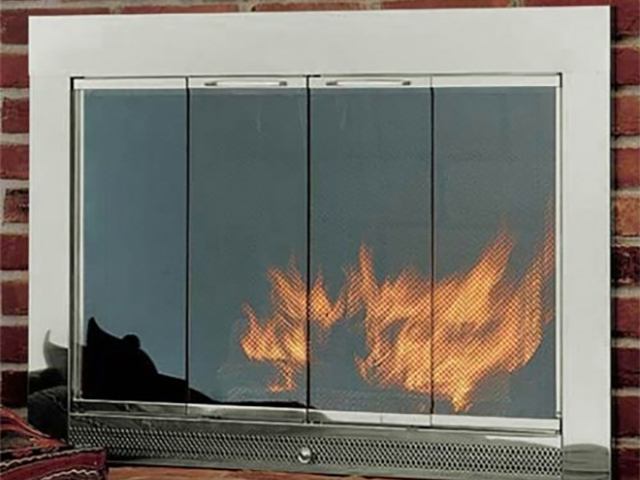
Match the following scenarios with the correct method of heat transfer.
Convection
Warm air rising from a heater and circulating in a room
Conduction
Heat traveling through a metal rod when one end is heated
Radiation
Heat from the sun warming your face
Label the heat transfers in this image.

Boiling Water demonstrates TE transfer by (a)
Conduction
Convection
Radiation

Heat lamps warming food are an example of (a)
Conduction
Convection
Radiation

Lava Lamp (a)
Conduction
Convection
Radiation
When ice is put into a glass of room temperature lemonade, heat flows from the warmer (a) to the colder (b) .
To increase the thermal energy transfer of something you could (a)
Specific heat is the amount of (a) needed to increase the temperature of one (b) of any material one degree Celcius.
(a) is when heat is transferred across space.
If an object has a high specific heat, it requires (a) energy to (b) its temperature.
When work is done to an object, the internal energy of that object (a)
(a) is when heat is transferred through direct contact with the heat source.


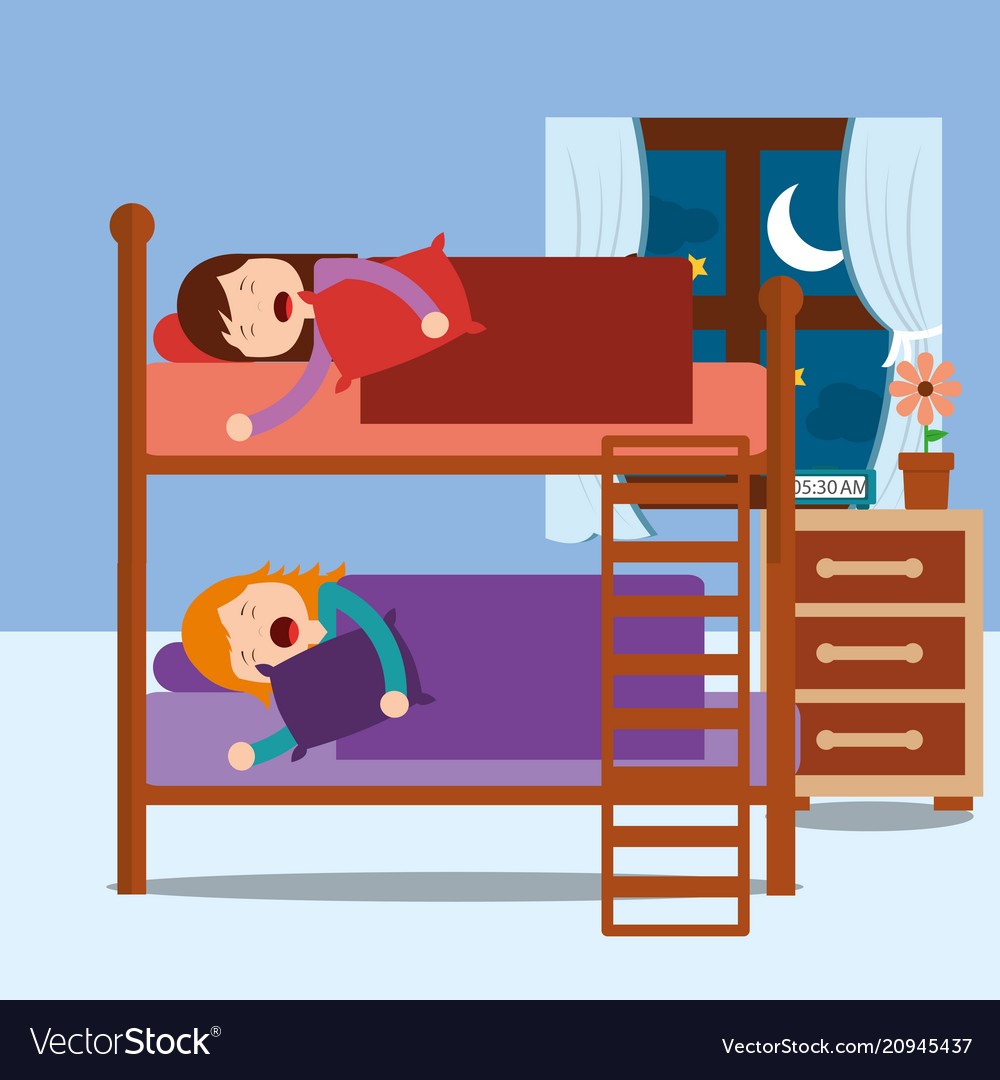
Match the following scenarios with the type of heat transfer they represent.
Convection
Warm air rising to the top bunk
Conduction
Heat transfer through a metal rod
Radiation
Sunlight warming your skin
Which is an example of decreasing entropy in a closed system?
Boiling water
Freezing water
Cells in a body coming together
Ice melting
What is the melting point of ice?
Which would have the highest entropy?
What is the formula for pressure in fluids?
P = F/V
P = F*d
P = F/A
P = A/F
Explain how the pressure in a fluid changes with depth.
The pressure in a fluid is not affected by depth.
The pressure in a fluid decreases with depth.
The pressure in a fluid increases with depth.
The pressure in a fluid remains constant with depth.
State Archimedes' principle.
The buoyant force on an object is equal to the density of the fluid displaced by the object.
The buoyant force on an object is equal to the pressure of the fluid displaced by the object.
The buoyant force on an object is equal to the weight of the fluid displaced by the object.
The buoyant force on an object is equal to the volume of the fluid displaced by the object.
"The ability of a a fluid (liquid or gas) to exert an upward force on the object immersed in it" is the BEST definition for which of the following terms:
Density
Weight
Buoyancy
Pressure
"Fluid velocity increases when the flow of the the fluid is restricted" is the basis for which of the following principles:
Pascal's Principle
Bernoulli's Principle
the Quantum Entanglement Principle
Archimedes' Principle
If the buoyant force on an object is equal to the the weight of the object, then the object will...
Sink
Float
Swim
Combust
If the buoyant force on an object is less than the the weight of the object, then the object will...
Sink
Float
Swim
Combust
"Rocks sink and a Rubber Ball floats" is MOST likely and example of which principle:
Pascal's Principle
Bernoulli's Principle
the Quantum Entanglement Principle
Archimedes' Principle
An object is placed in a tub of water. If the objects density is less than the density of water, the the object will...
Float
Sink
Swim
Combust
"The force exerted per unit of area" is the BEST definition for which of the following terms:
Density
Weight
Buoyancy
Pressure

Which of the following principles BEST explains the this image:
Pascal's Principle
Bernoulli's Principle
the Quantum Entanglement Principle
Archimedes' Principle
How do you convert Kelvin to Celsius?
Add 273
Subtract 273
You can't convert those
They are the same thing


A personal submarine is spherical and can reach depths of up to 1 mile below the surface of the water. Which statement is true?
The pressure is equal on all sides of the sphere
The pressure is slightly larger on the bottom of the sphere than the top
The pressure is slightly larger on the top of the sphere than the bottom

Four blocks are suspended in water as shown. Which blocks experiences the greatest buoyant force?
A
B
C
D

Which block has the largest buoyant force when floating?
A
B
C
D

Which block has the smallest buoyant force?
A
B
C
D

A dam is constructed with wider and thicker base. Why is it wider and thicker at the base than at the top?
Much water is at the base than at the top.
Water is heavier at the base than at the top.
Liquid pressure is greater at the base than at the top.
It is easier to construct a structure with wider base & narrow top.
A constant pressure of 2 N/m2 acts on a given surface. This means ________
a force of 2 N acts on every 1 m2 of the surface.
a force of 2 N acts on every 1 m of the surface.
a force of 2 N acts on the whole surface.
the area of the whole surface is 2 m2.
Which statement about force and pressure is correct?
Force and pressure are the same but expressed in different units.
Force is greater than pressure.
Pressure depends on the force acting on a given area.
Force is pressure per unit area.

This principle states that the faster a fluid moves, the less pressure the fluid exerts.
Bernoulli's Principle
Newton's Principle
Pascal's Principle
Archimedes' Principle

Bend Air like Aang

The diagrams show, to the same scale, the vertical sections of a set of circular vessels, each containing the same depth of water.
The water exerts the same pressure on the base of each vessel.
The water exerts the greatest pressure on the base of vessel S.
The water exerts the greatest pressure on the base of vessel P.
The water exerts the same force on the base of each vessel.

